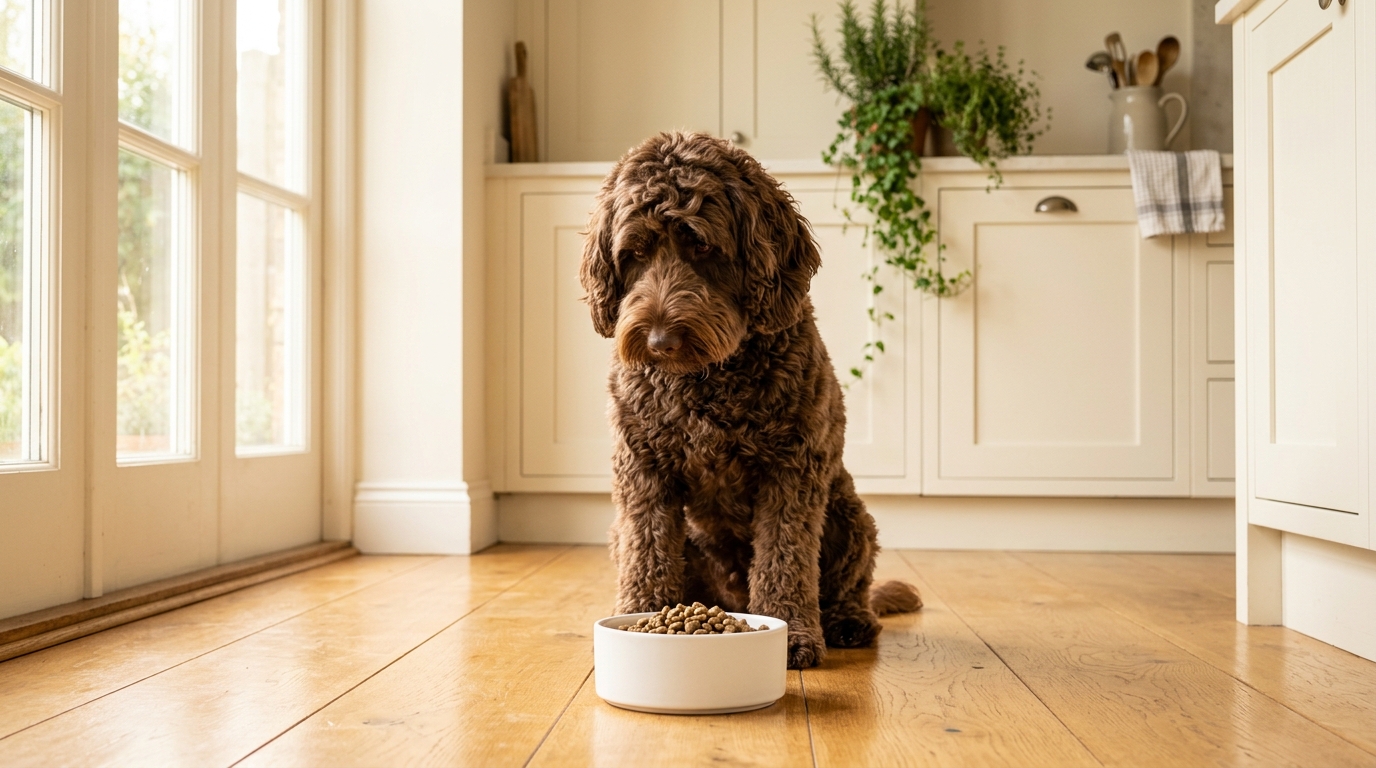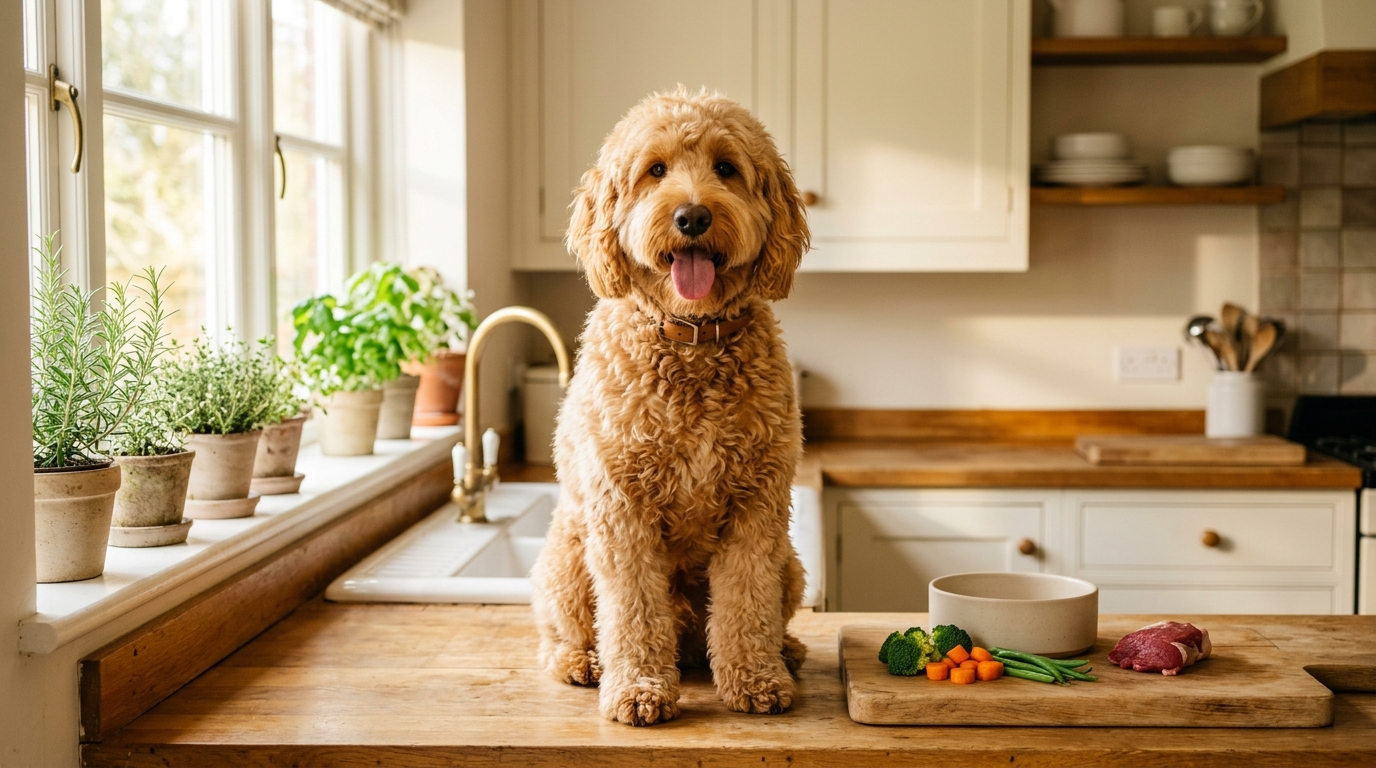
Is a raw diet good for doodles? It can genuinely help some, especially doodles with a sensitive stomach, itchy skin or food allergies that kibble has not fixed, because it removes fillers and lets you control every single ingredient. But it carries real drawbacks too: bacterial risk, higher cost, the time it takes, and the need to get the nutrition properly balanced. Raw is not magic, and it is not right for every household.
We feed raw at home and have for years, with premium kibble and freeze-dried raw for travel, so this comes from living it with three dogs rather than from reading about it. And because this is a decision that affects your doodle's health and your family's kitchen, we want to weigh it honestly rather than sell it to you.
If you already know you want to try raw and just need the safe way in, skip ahead to our kibble to raw transition plan for doodles. For everyone still deciding, read on.
Why doodle owners ask about raw in the first place
Most people who search for a raw diet for doodles are not raw-feeding enthusiasts. They are tired. They have a Goldendoodle with soft stool that never firms up, an Australian Labradoodle who licks his paws raw, or a Bernedoodle who throws up bile most mornings, and the kibble merry-go-round has not solved it.
That matters, because the honest answer to "is raw food good for doodles" depends entirely on what is actually wrong with your dog. Raw helps some problems and does nothing for others.
A quick note on breed claims, because the internet muddles this: the poodle line carries a documented predisposition to allergic skin disease and food sensitivities, and that genuinely shows up across poodle crosses. But a Labradoodle, an Australian Labradoodle, a Goldendoodle and a Bernedoodle are different crosses with different parent breeds. There is no single "doodle gut." Your individual dog is what you are feeding, not a category.
The real benefits of a raw diet for doodles
Let us start with what raw genuinely does well, because the benefits are real when the problem fits.
Total control over ingredients
This is the single biggest reason raw helps allergy-prone and sensitive doodles. When you build the bowl yourself, you know every ingredient in it. No hidden chicken fat in a salmon recipe, no vague "animal by-product," no mystery broth. For a dog like our Gunnar, whose trigger is chicken and who spent his first two years in a yeast-and-ear cycle, that level of control is the whole point.
If you suspect a specific food trigger, raw pairs naturally with an elimination diet, because you decide exactly what goes in and what stays out.
Fewer fillers and additives
Many kibbles lean on grains, legumes and plant proteins to hit their numbers cheaply. Some sensitive doodles do better without that filler load. Raw is, by nature, mostly meat, bone and organ, with the balance made up thoughtfully. For dogs whose stomachs react to the "stuff" rather than the meat, this can be the difference.
Potential digestion and coat improvements
This is where we can speak from our own kitchen. Sven is our most sensitive stomach of the three: morning bile vomiting every single morning through his whole first year, and loose stool after every food change. Going raw is what ended the morning bile. That is our experience, not a promise for your dog, but it is why we stuck with raw.
Many owners also report firmer, smaller stools and a glossier coat on raw. Some of the coat improvement is simply good fat and protein; some is the removal of a food the dog was mildly reacting to.
Allergen control for the poodle-line itch
If your doodle's itching is genuinely food driven, cutting the trigger entirely and keeping the ingredient list short is powerful. Raw makes that easy.
The real drawbacks, written honestly
Raw-feeding content online is often evangelical. We are not. Here are the genuine downsides, and they are not small.
Bacterial risk is real
Raw meat can carry salmonella and E. coli, and this is a risk to your dog and to the people handling the food and the bowls. This is not fearmongering: the FDA and most veterinary bodies, including the AVMA, are openly cautious about raw diets for exactly this reason, and the AVMA has a published position discouraging feeding raw animal products that have not been treated to eliminate pathogens.
Our view is that the risk is manageable with careful sourcing, cold-chain handling and tight kitchen hygiene, but it is not zero, and pretending otherwise would be dishonest. If you want the full protocol, we keep it in raw food safety for doodles and, for families, raw feeding with kids in the house. The specific pathogen question is covered in salmonella and E. coli in raw dog food.
Getting the nutrition balanced is on you
A bowl of muscle meat is not a complete diet. Dogs need the right ratios of meat, bone, organ, fat and micronutrients, and getting that wrong over months causes real harm. AAFCO sets the nutritional profiles that complete commercial foods must meet; a homemade raw diet has to meet them too, and nobody is checking your math but you.
This is the drawback that worries vets most, and fairly so. A varied, properly balanced raw diet needs bone material as well as meat, which is also why raw-fed dogs do well with cartilage pieces and similar chews. An unbalanced cheap raw diet is genuinely worse than a good kibble.
Cost adds up fast
Raw almost always costs more than kibble, and the bigger the dog, the bigger the gap. Our Gunnar and Sven are standard size at around 55 lb (25 kg) each, and Gösta is a medium at roughly 35 to 37 lb (16 to 17 kg). Three doodles eating raw is a real grocery line. You can bring the cost down with smart sourcing and bulk buying, but budget honestly before you commit.
Time, freezer space and routine
Raw means thawing, portioning, cleaning and a freezer that is always half full of dog food. It is not hard once it is a habit (our whole daily kitchen routine takes about five minutes), but it is a daily commitment, not a bag you pour from.
Vet skepticism, and why it is worth hearing
Many vets are cautious or outright against raw, mostly over the bacterial and balance issues above. That caution is reasonable. Loop your vet in rather than around, especially for a puppy, a senior, or a dog with an existing health condition.
Pros and cons side by side
Here is the honest ledger for a raw diet, doodle sensitive stomach included.
| Factor | The upside | The real drawback |
|---|---|---|
| Ingredient control | You decide every ingredient, easy to avoid chicken and known triggers | Requires discipline and label reading if using commercial raw |
| Digestion | Can firm stool and, for us, ended Sven's morning bile | Any food change can cause temporary loose stool |
| Skin and coat | Helps food-driven itch; often glossier coat | Does nothing for environmental allergies or yeast alone |
| Nutrition | Mostly meat, bone and organ, few fillers | You are responsible for AAFCO-level balance |
| Safety | Manageable with good hygiene | Real salmonella / E. coli risk to dog and people |
| Cost | Can be reduced with bulk sourcing | Higher than kibble, worse for standard 55 lb (25 kg) dogs |
| Effort | 5-minute daily routine once established | Thawing, portioning, freezer space, cleanup |
Will raw help YOUR doodle? Match it to the problem
This is the part generic raw posts skip. Raw is a tool, not a cure-all, so match it to what your dog actually has.
If the problem is a food trigger or allergy
Raw is one of your strongest tools here, because ingredient control is exactly what food allergies need. Read food allergies in doodles first, and note that chicken is a common trigger. We never feed or recommend chicken in any form for this reason.
If the problem is a genuinely sensitive stomach
This is where raw helped us most. If your dog reacts to additives and fillers, removing them can settle things. But a sensitive dog is also the one most likely to have loose stool during the switch, so transition slowly. Our full picture of what a sensitive stomach actually looks like is in signs your doodle has a sensitive stomach.
If the problem is yeast, ears or itchy paws
Raw can help if the itch is food driven, but it is not a yeast treatment. Gunnar is our ears-and-yeast dog, and a protein change plus the right routine mattered more than the rawness itself. Start with why is my doodle so itchy rather than assuming raw alone fixes it.
If you are honestly not sure raw is right
Then it probably is not the first move. A good limited-ingredient kibble or a sensitive-stomach food solves many cases without the raw commitment, and the kibble vs fresh food comparison lays out the middle ground.
How three doodles actually eat in our house
To make this concrete: all three eat raw at home. Gösta is the easy one. He has eaten raw from the start, plus premium kibble and freeze-dried raw when we travel, and he has never had a gut-driven problem in his life. If we need a dog who eats anything without trouble, that is Gösta.
Sven, by contrast, taught us to go slow with everything. Loose stool followed every food change in his first year, so even moving him onto raw meant small steps and a close eye on the bowl's other end. It was worth it: raw ended his morning bile.
When we travel, raw is impractical to keep cold, so we switch to kibble or freeze-dried. Gösta does not blink. A more sensitive dog needs the gentler changeover, which is exactly what our travel feeding playbook and freeze-dried transition plan are for.
If you decide to try raw, do it safely
Do not switch overnight. A sudden change is the fastest route to the loose stool raw is supposed to prevent.
A probiotic can smooth the gut through a diet change; see probiotics for doodles. And if loose stool does appear, pumpkin and slippery elm are gentle helpers while things settle.
FAQ
It can be, and in our house going raw ended Sven's year of morning bile vomiting, but it is not guaranteed for every dog. Raw removes the fillers and additives some sensitive doodles react to and lets you control each ingredient, which helps if the problem is a specific trigger. The catch is that any food change can cause loose stool at first, so you must transition slowly and watch the stool closely.
Some do, because raw lets you cut suspected triggers like chicken entirely and keep the ingredient list short, which helps dogs with food-driven itching. But a raw diet does not treat environmental allergies (pollen, dust mites) and it will not cure a yeast cycle on its own. If the itch is food related, control of ingredients is the real benefit, not the rawness itself.
Raw carries genuine bacterial risk (salmonella, E. coli) to both the dog and the people handling it, which is why the FDA and most vets urge strict hygiene. It can be done safely with careful sourcing, cold-chain handling and good kitchen routines, but households with young children, elderly members or anyone immunocompromised should weigh this carefully and talk to their vet first.
It almost always costs more than kibble, and the gap grows with the dog's size. A standard doodle around 55 lb (25 kg) eats a lot, so three doodles add up fast. You can reduce the cost by sourcing whole cuts and buying in bulk, but you should budget honestly before you commit, because an unbalanced cheap raw diet is worse than a good kibble.
Yes, and that is exactly what we do. We feed raw at home and switch to premium kibble or freeze-dried raw when we travel, because raw is hard to keep cold on the road. Some dogs handle the switch back and forth easily (Gösta does), while a more sensitive dog may need a gentler changeover, so watch the stool and go slowly.
Where to go from here
Raw is worth considering if your doodle has a food-driven problem that kibble has not solved, if you can commit to safe handling and proper balance, and if the cost and time fit your household. It is not a cure, and it is not the only good answer.
If you are ready, start with the kibble to raw transition plan for doodles and read the raw food safety playbook alongside it. If you are still weighing your options, the kibble vs fresh food comparison is the fairest next read, and you can always see how we feed our own three.