Travel is where most raw-feeding routines break — not because the food fails, but because the cold chain, the kitchen hygiene, and the bowl-cleaning rules don't pack into a suitcase. Owners who try to travel with fresh raw end up either compromising on safety or stressing about logistics for the whole trip.
The practical answer: don't try to make fresh raw work outside your kitchen. Switch tiers temporarily, and switch back when you get home. This guide is the protocol — what to feed for day trips vs. overnight vs. kennel stays vs. extended travel, what to ask of kennels and hotels, and the one rule we never bend regardless of destination.
What this guide covers. This is one of the guides in our Raw Food Safety series, focused on travel logistics. For the broader playbook, see the main Raw Food Safety guide. For the freeze-dried tier specifically (the most common travel solution), see our freeze-dried transition guide.
Three Travel Categories, Three Different Protocols
Travel logistics split cleanly by duration and accommodation type. Each has its own protocol; conflating them is where most owners go wrong.
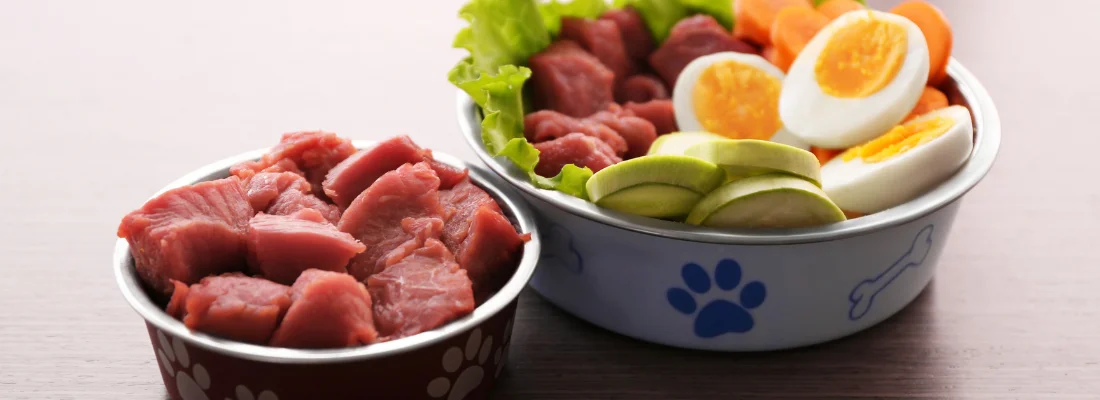
Day trip / single overnight. Out and back same day, or one night away. The dog can stay on fresh raw if you're returning to your kitchen within 12-18 hours and bringing a portable cooler.
Weekend / multi-night stay. 2-7 nights at a hotel, vacation rental, or family home. Switch to freeze-dried for the duration. Pack enough for the full trip plus 2-3 spare days.
Extended travel / kennel boarding. A week or more, or any kennel/boarding situation. Freeze-dried as the default; premium kibble as the backup if the kennel can't accommodate freeze-dried preparation. The dog is on a different food for 5-30+ days; that's fine for a healthy raw-fed doodle.
The principle: pick the tier that fits the logistics, not the tier that requires the logistics to bend.
Day Trip / Single Overnight
For our three Australian Labradoodles, this happens often enough that we've defined a specific protocol.
The cooler approach (single overnight, returning home next morning):
- Pre-thaw evening's portion in the fridge before leaving home.
- Pack in a hard cooler with frozen ice packs or freezer blocks. Insulated cooler keeps food at safe temperatures (below 4 °C / 40 °F) for 12-18 hours.
- Bring the dog's regular bowl, a dedicated travel sponge, and a small bottle of dish soap.
- Feed at the destination from the cooler. Wash bowl with hot water and the soap; dry with a paper towel.
- Pack out anything you packed in.
This works for one night. Two nights is the practical limit for a cooler — beyond that, ice packs lose effectiveness and you're managing a slow-warming food situation.
Limitations of the cooler approach:
- Requires hotel or accommodation with a fridge to refresh ice packs.
- Hotel rooms without kitchens make bowl-washing inconvenient.
- Doesn't work for trips with shared bathrooms, hostels, or anywhere you can't control the meal environment.
For a single overnight at a hotel with a fridge: cooler approach works fine. For anything more complex, switch tiers.
Weekend / Multi-Night Stay
This is where freeze-dried earns its place. Most multi-night travel — 2-7 days at hotels, vacation rentals, or family homes — goes smoothest with the dog on freeze-dried for the duration.
Why freeze-dried for travel:
- Shelf-stable. No fridge or freezer needed in transit or at the destination.
- Lightweight. A bag of freeze-dried weighs roughly a third of the equivalent fresh raw food.
- Hotel-friendly. Just add water and serve. No cold-chain anxiety.
- Bacterial load lower than fresh raw. The freeze-drying process reduces pathogen counts, which means the relaxed kitchen environment of a hotel room or vacation rental matters less.
- Nutritionally close to fresh raw. The dog isn't on a different tier of nutrition; they're on a slightly more processed version of the same tier.
Travel pack list for a multi-night raw-fed doodle:
- Enough freeze-dried for the trip + 2-3 spare days (luggage delays, extended stays).
- Resealable bags or a dedicated travel container (zip-top freezer bag works fine).
- Dog's regular bowl from home — dogs eat better from familiar bowls.
- A second smaller bowl for water rehydration.
- Travel sponge and small dish soap bottle (3 oz size for flights).
- A clean dishtowel.
- Plastic measuring scoop (the freeze-dried portion sizes are different from fresh raw — the package will tell you).
The hotel meal:
- Fill the second bowl with warm water from the tap.
- Measure freeze-dried into the regular bowl.
- Add water; let rehydrate for 10-15 minutes (the package will specify; usually around 1 part water to 2 parts food).
- Serve. Pick up bowl when done. Wash with the travel soap and sponge in the bathroom or kitchen sink. Dry with the dishtowel.
Total time: 15-20 minutes including rehydration. Same protocol every meal. The dogs adapt to it within 1-2 meals.
Transitioning your doodle to freeze-dried before a trip:
If your doodle has been on fresh raw long-term and hasn't eaten freeze-dried before, do a brief introduction at home before the trip — 2-3 days of mixed fresh-raw and freeze-dried meals so the gut isn't doing two transitions at once (food change + travel stress). See the freeze-dried transition guide for the full protocol.
Extended Travel / Kennel Boarding
A week or more away, or any situation involving a kennel, boarding facility, or pet sitter who isn't you.
Default: freeze-dried. Pack the dog's full meals for the duration plus 2-3 spare days. Bag and label per-meal portions ("Friday morning," "Friday evening") so a kennel staffer or pet sitter can feed without thinking about it. Include a written feeding schedule with portion sizes, water-to-food ratios, and feeding times.
Backup: premium kibble. Some kennels and pet sitters won't manage freeze-dried preparation. In that case, switch to a clean, sensitive-formulation kibble for the duration. This is a real tier-down for raw-fed doodles, but it's better than asking a stressed kennel staffer to portion and rehydrate freeze-dried for one dog out of twenty.
What to pack for a multi-day kennel stay:
- Pre-portioned daily meals in labeled bags.
- The dog's bowl from home (some kennels prefer their own, but offer yours).
- A written feeding schedule and contact info for any food allergies or sensitivities.
- A small bag of "comfort food" — extra freeze-dried in case of delayed pickup.
- Veterinary records and emergency vet contact.
- A copy of your raw-feeding background — what the dog has been on, when the last fresh-raw meal was, what to watch for. Pass this to the kennel; it helps any vet who treats the dog know the diet history.
Pre-trip transition check:
If your doodle hasn't been on freeze-dried in a while, do a 2-3 day pre-trip transition at home. If your doodle hasn't eaten kibble in months and is going to a kibble-only kennel, do a 5-7 day pre-trip transition (kibble is harder for raw-adapted guts than freeze-dried is). The pre-trip transition is the difference between a smooth kennel stay and a stressed one.
What to feed, by trip length
| Trip | Feed | Why |
|---|---|---|
| Day trip / single overnight | Fresh raw in a cooler with ice packs | Cold chain holds comfortably for one meal |
| Weekend / multi-night | Freeze-dried raw | No freezer needed, no cold-chain risk, same nutritional tier |
| Kennel boarding | Freeze-dried, or a clean kibble if the kennel cannot rehydrate | Kennel staff should not have to manage raw handling |
| Extended travel | Freeze-dried, with a re-transition at home | Weeks of improvised cold chain is where things go wrong |
Hotel and Vacation Rental Hygiene
Hotels and rentals are not your kitchen. The protocol bends but doesn't break.
Bowl hygiene rules that travel:
- Bring your own bowls. Never use a hotel-provided bowl (often plastic, scratched, dishwasher-cycled with everyone else's stuff).
- Wash bowls in the bathroom or kitchen sink with hot water and your own dish soap. Dry with your travel towel, not hotel towels.
- Pick up bowls immediately after meals. Don't leave food sitting in the bowl in a hotel room.
Where the dog eats:
- Pick a corner of the room away from the bed, away from where you eat or work.
- Use a folded towel or a small wipeable mat under the bowl to protect carpet from any spills.
- Same spot every meal of the trip — gives the dog routine.
What's different from home:
- You have less control over the cleanliness of the floor. Wipe-up is more diligent.
- Bathrooms are smaller; managing bowl-washing in a tiny hotel bathroom is a real friction point. Most hotels with a coffee station or kitchenette will work; a strict bathroom-only setup is harder.
- You're more likely to skip steps when tired from travel. The protocol has to be foolproof enough that "tired Emma on day 4 of vacation" still follows it. Pre-portioned meals and a packed bowl-washing kit help.
International Travel and Customs
A specific subcase. Carrying raw or freeze-dried pet food across international borders is regulated.
General principles:
- Most countries restrict or prohibit fresh raw meat imports — including for pet food.
- Freeze-dried, dehydrated, or commercially packaged dry pet food is usually permitted in small quantities for personal use, but rules vary substantially by country.
- Always check the destination country's customs rules before travel. EU, UK, US, Canada, Australia, and New Zealand all have different specifics. Australia and New Zealand are particularly strict.
- For dogs accompanying you on international travel, plan to source food at the destination if possible, and bring only enough in transit for the journey itself.
Practical advice:
- For trips of a week or more in countries with raw-feeding markets (most of Europe, the US, Canada, much of Asia), source freeze-dried locally at the destination to avoid customs hassle.
- For shorter trips, bring sealed commercial freeze-dried in original packaging with clear ingredient labels — easier for customs to assess than home-portioned bags.
- Carry a written record of the dog's diet history in case any customs or veterinary questions come up at the destination.
We don't have firsthand experience with every country's rules; check destination-specific guidance before you fly.
The One Rule We Never Bend
Across all travel scenarios — day trip to extended international stay — there's one rule that doesn't change.
Bowl hygiene. Wherever the dog is eating, the bowl gets washed in hot soapy water after every meal, dried, and stored separately from anything that contacts human food. We don't compromise on this. A hotel bowl, a kennel bowl, a borrowed bowl at a friend's house — none of those are part of our protocol. Our dog's bowl travels with us, gets washed by us, and never sits dirty in a strange kitchen.
This is the rule that keeps the cumulative risk low even when other parts of the protocol bend (e.g., feeding location changes, meal timing slips, dog eats on a slightly less ideal floor surface). The bowl hygiene is the constant.
Coming Home: Resuming the Routine
After a trip, the dog has been off fresh raw for some number of days. Going back smoothly is a small protocol of its own.
For 1-3 days off fresh raw (freeze-dried only): Resume fresh raw immediately. The gut has minimal adaptation overhead; freeze-dried is close enough to fresh raw that there's no real transition.
For 4-14 days off fresh raw (freeze-dried, or freeze-dried + some kibble): Resume fresh raw in two halves. First two days: 50% freeze-dried, 50% fresh raw. Days 3-4: 100% fresh raw with the protein the dog was already adapted to before the trip. Day 5 onwards: normal rotation.
For 14+ days off fresh raw (full kibble for an extended kennel stay): This is closer to a small re-transition. Run a modified 7-day plan from kibble back to fresh raw, similar to the kibble-to-raw transition guide but compressed since the dog is already raw-adapted. Don't expect to go from kibble Day 1 back to full fresh raw on Day 2 — give the gut a week.
Watch stool quality and energy for the first 48-72 hours of any re-transition. Mild softness is normal; persistent issues mean slow down.
Frequently Asked Questions
Technically possible — vacation rental with a freezer, ice-pack-managed transit, full home-protocol kitchen — but rarely worth the logistics. Most owners are better off switching to freeze-dried for the duration and switching back at home. The dog's nutritional baseline doesn't materially change over 5 days of freeze-dried, and the friction reduction is significant.
Switch to a clean kibble for the kennel stay. It's a real tier-down for a raw-fed doodle, but it's the right call when the alternative is asking a stressed kennel staffer to portion and rehydrate freeze-dried for one dog. Do a 5-7 day pre-trip transition to the kibble at home so the kennel stay isn't a food change on top of the boarding stress. Resume the normal raw routine when you get home.
Strongly yes. Hotel and rental bowls are usually plastic, often scratched, and often dishwasher-cycled with other guests' items — not the standard you want for raw or freeze-dried feeding. Bring the dog's regular bowl from home; it weighs almost nothing and removes the bowl-quality variable from the trip.
Dry, in its sealed bag: months at room temperature. Once rehydrated, treat it like fresh food — 30 minutes max in the bowl, then pick it up. Rehydrated freeze-dried left out for hours has the same risk profile as fresh raw left out for hours.
Pet stores in most US, EU, UK, Canadian, and Australian cities carry at least one major freeze-dried brand (Stella & Chewy's, Primal, Vital Essentials). Worst case, a trip to a local pet specialty store usually solves the gap. For destinations without ready commercial options, the fallback is a clean kibble until you can get home — a 1-2 day kibble bridge isn't a problem for a raw-fed doodle.
The Bottom Line
Travel doesn't have to compromise the diet. It just requires switching tiers temporarily — usually to freeze-dried raw, occasionally to a clean kibble for kennels that can't manage freeze-dried preparation. The dog's nutritional baseline holds; the household routine doesn't have to bend across the country. Because any tier switch is still a food change, a canine probiotic in the travel bag is worth the space — it's the difference between a settled stomach and a hotel-room mess.
The non-negotiable across all travel: bowl hygiene. The one rule that never changes is that the dog's bowl gets washed in hot soapy water after every meal, no matter where the meal happened. Everything else is a small adjustment to the main Raw Food Safety protocol for the new environment.
For the freeze-dried tier specifically (what to pack, how to pick a brand), see the freeze-dried transition guide. For the post-trip re-transition back to fresh raw, see the kibble-to-raw transition plan — the principles compress nicely for short re-transitions.