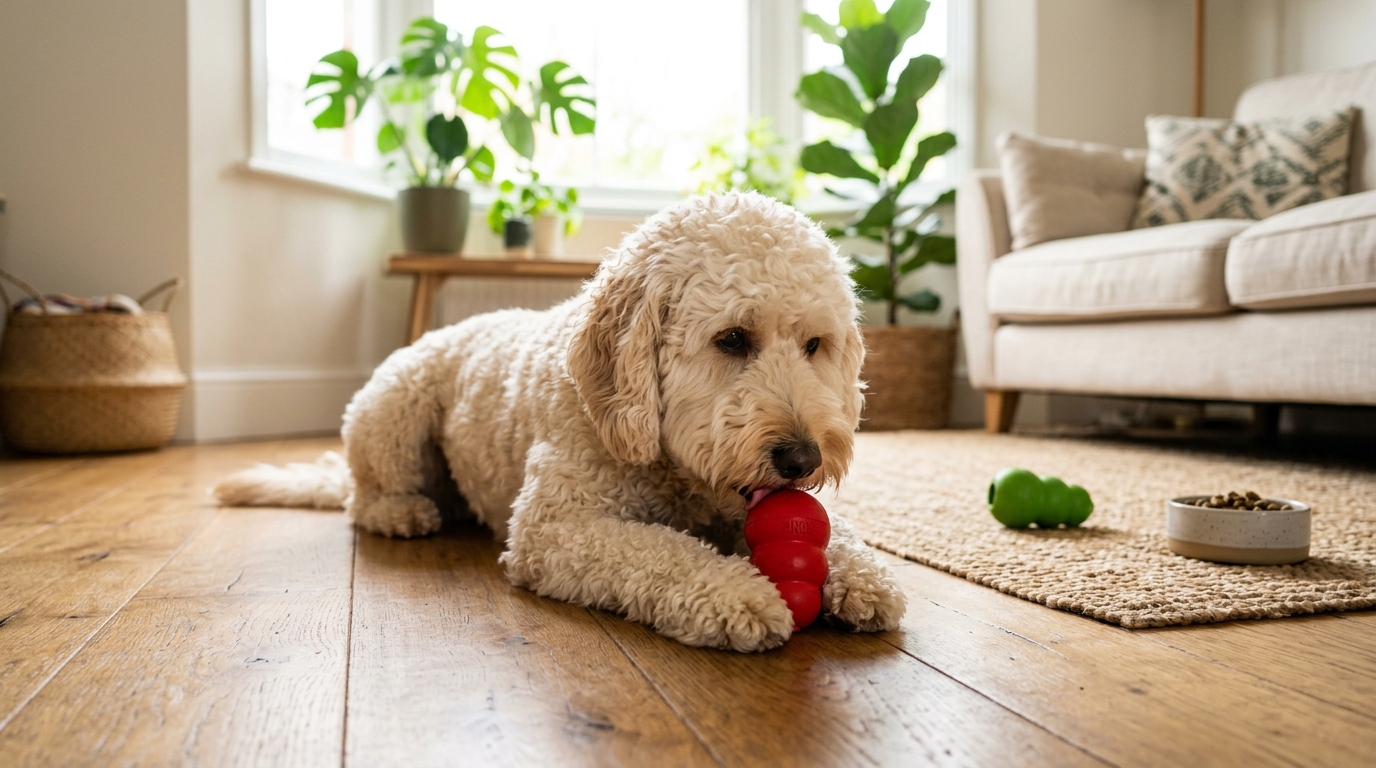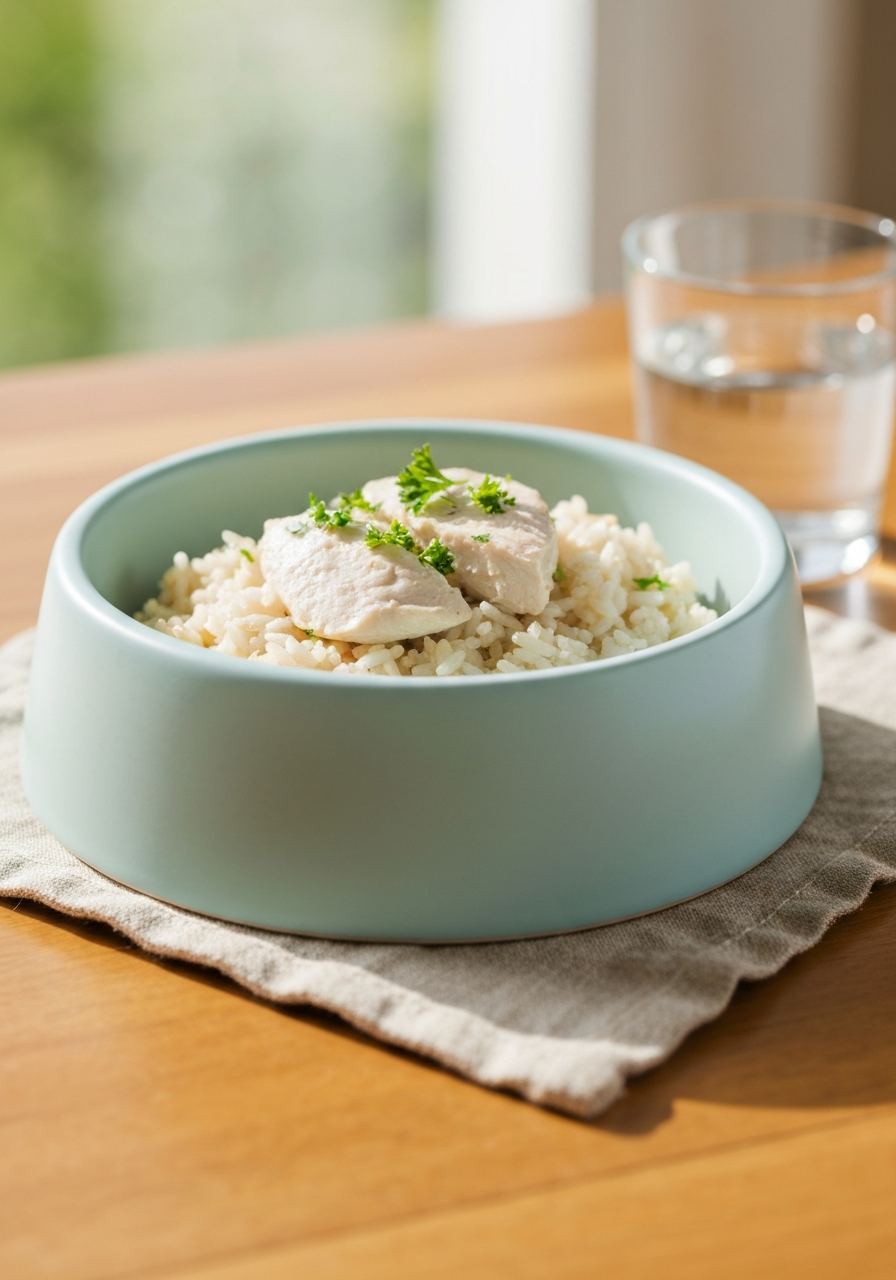
If your doodle has been cycling through loose stools, surprise vomiting sessions, or a stomach that seems to revolt every time you try a new food, you're not imagining things — and you're definitely not alone. Digestive sensitivity is one of the most common things we hear about from doodle families, and it was one of the first things we dealt with ourselves when we brought Sven home as a puppy.
The hard part isn't finding a sensitive-stomach dog food. There are dozens of them. The hard part is finding the right one for a doodle specifically — a breed mix whose gut tendencies come from both the poodle and retriever sides of the family tree, and whose needs are genuinely different from what a generic "best dog food" listicle is going to cover. This article is that doodle-specific guide. We'll explain why your dog's digestive system works the way it does, walk through what to look for (and avoid) on a label, and compare the best actual products you can buy today — kibble, limited-ingredient, and probiotic-enriched options included.
By the end, you'll know exactly what to put in your cart and how to transition to it without making things worse.
Why Doodles Are Prone to Sensitive Stomachs
Understanding the "why" makes the food decision much easier.
Poodles are famously fussy digesters. They tend to be sensitive to common proteins like chicken and beef, reactive to rich or high-fat foods, and prone to rapid digestive upset when their diet changes even slightly. When you cross a poodle with a golden retriever or Labrador — both breeds that also carry a higher-than-average rate of food sensitivities and skin reactions — you often end up with a dog whose gut is genuinely high-maintenance.
Doodles also frequently display dual-expression symptoms: digestive issues and skin issues occurring together. If your doodle has chronic loose stools and itchy paws or recurring ear infections, those problems often share the same root cause — usually a food intolerance or gut dysbiosis. The curly or wavy coat common to doodles can mask skin inflammation until it's already significant, and floppy ears trap moisture in a way that creates a perfect environment for yeast. All of that connects back to gut health and what your dog is eating. For a deeper look at the full picture, our Doodle Sensitive Stomach: Causes, Symptoms & What Actually Helps guide is a good companion read.
What to Look For in a Food for a Sensitive-Stomach Doodle
Easily Digestible Protein Sources
The protein source is the single most important variable. For doodles with digestive issues, salmon, turkey, lamb, and whitefish tend to work better than chicken or beef, which are both common allergens in poodle-line dogs. A single, named protein ("salmon," not "poultry meal") means you know exactly what your dog is eating and can pinpoint a reaction if one occurs.
Prebiotic Fiber and Probiotics
A sensitive doodle gut needs support, not just simplicity. Look for prebiotic fiber sources (beet pulp, chicory root, pumpkin) that feed beneficial gut bacteria, and ideally added probiotics (live Lactobacillus or Bifidobacterium cultures). These aren't marketing gimmicks — a healthy gut microbiome genuinely changes how well your doodle digests and absorbs food. We cover the supplement side of this in detail at our Gut Health Supplements hub.
Moderate, Appropriate Fat Content
High-fat diets are a common trigger for doodle digestive upset. Adult sensitive-stomach formulas should sit in the 10–15% fat range on a dry matter basis. Very active standard doodles may tolerate slightly more, but if your dog is already dealing with soft stools or vomiting, a lower-fat formula is almost always the right starting point.
Omega-3 Fatty Acids
Salmon oil, flaxseed, and fish meal bring omega-3s that reduce gut inflammation and support the skin barrier — directly relevant for doodles showing both digestive and skin symptoms simultaneously.
What to Avoid
- Common allergen proteins: chicken, beef, dairy, eggs (if your dog reacts)
- Artificial preservatives: BHA, BHT, ethoxyquin
- Artificial colors and flavors: no nutritional value, potential gut irritants
- Vague ingredient listings: "animal fat," "meat by-products," "poultry meal" without species named
- High-fat, rich formulas: performance foods, puppy foods fed to adults
- Rapid transitions: not an ingredient, but the most common feeding mistake we see
For the full breakdown on confirmed food allergies versus general sensitivity, visit our Food Allergies hub.
Top Picks: Best Food for Doodles with Sensitive Stomachs
When evaluating foods for sensitive-stomach doodles, we looked at three things: ingredient quality and protein source, digestive support features (prebiotic fiber, probiotics, fat content), and real-world track record from thousands of dog owners. We deliberately avoided foods with vague protein sources, artificial additives, or unnecessary fillers. Every pick below has a distinct use case so you can identify which one matches your doodle's specific situation.
| Product | Best For | Rating |
|---|---|---|
| Purina Pro Plan Sensitive Skin & Stomach (Salmon & Rice) | Best Overall | ⭐ 4.6/5 (24k+ reviews) |
| Hill's Science Diet Sensitive Stomach & Skin (Chicken) | Best Vet-Formulated Pick | ⭐ 4.7/5 (20k+ reviews) |
| Blue Buffalo Basics LID (Turkey & Potato) | Best for Confirmed Allergies | ⭐ 4.4/5 |
| Solid Gold Grain-Free Salmon with Probiotics | Best for Gut Health Support | ⭐ 4.3/5 |
One practical note on ordering. Buy the smallest bag first and run the full transition before you commit to a big one — a 30 lb bag of a food that turns out not to suit your dog is expensive and awkward to get rid of. Prices on all four of these move week to week, so it's worth checking the current prices in Amazon's pet food section before you size up to the bulk bag.
Common Feeding Mistakes That Make Sensitive Stomachs Worse
Even the best food can fail if it's introduced the wrong way. Here are the mistakes we see most often in doodle households:
Switching too fast. This is the number one culprit. Most families who tell us "the new food didn't work" actually switched in three days or fewer. A sensitive doodle needs 7–10 days minimum, and we use the full ten with Sven whenever we transition him between our travel kibble and his regular food, and even then we sometimes see a day of slightly softer stool around day five. Our 7-Day Food Transition Plan That Actually Works for Sensitive Doodles walks through the exact ratio schedule.
Feeding too much, too fast. Overfeeding by even 10–15% can cause loose stools in a sensitive-stomach dog. Weigh the portions, especially when starting a new food.
Adding too many toppers at once. Bone broth, pumpkin puree, a probiotic supplement — all great individually. Adding all of them on day one means you have no idea what's causing a reaction if something goes wrong.
Ignoring treat ingredients. A doodle on a salmon-and-rice sensitive-stomach food who gets chicken-based treats every day is getting constant exposure to a potential allergen. Treats count.
Kibble vs. Limited Ingredient Diet vs. Fresh: Which Is Best for a Sensitive Doodle?
| Format | Best Situation | Digestibility | Cost (monthly, ~50 lb dog) | Transition Ease |
|---|---|---|---|---|
| Sensitive-stomach kibble (e.g., salmon & rice) | General sensitivity, no confirmed allergen | Good | $40–$80 | Easy |
| Limited Ingredient Diet (LID) kibble | Suspected or confirmed food allergy/intolerance | Very good | $50–$90 | Moderate |
| Freeze-dried raw | Dogs who do poorly on all kibble; step toward raw | Excellent | $150–$250 | Moderate-Hard |
| Fresh cooked (commercial) | Picky dogs; post-illness recovery | Excellent | $150–$300 | Moderate |
| Raw (home-prepared) | Maximum control over ingredients; experienced feeders | Excellent | $100–$200 | Hard |
Our household context: We feed raw at home and use premium kibble and freeze-dried raw for travel. All three do best on raw, and Sven — the one whose stomach reacts to every change — actually transitioned more smoothly than we expected, likely because eliminating processed ingredients removed several hidden irritants at once. That said, raw feeding has a learning curve and genuine safety considerations; it's not the right starting point for most families dealing with acute digestive issues. If you're curious about that path, How to Transition a Doodle from Kibble to Raw is the place to start.
For most doodle owners dealing with sensitive stomachs right now, a high-quality sensitive-stomach or LID kibble is the practical best choice — reliable, consistent, easy to source, and genuinely effective when the right formula is matched to the dog.
How to Transition Your Doodle to a New Food Without the Chaos
Seven to ten days is the standard, and for a doodle who already has a reactive stomach we use the full ten — it is the same ratio schedule as our 7-Day Food Transition Plan, just stretched. Here's the version we use in our household:
- Days 1–3: 80% old food, 20% new food
- Days 4–5: 60% old food, 40% new food
- Days 6–7: 50% old food, 50% new food
- Days 8–9: 30% old food, 70% new food
- Day 10+: 100% new food
If soft stools appear at any stage, hold at that ratio for an extra two to three days before advancing. Adding a plain probiotic supplement (not the food's built-in probiotics — an additional standalone probiotic) during the transition week can meaningfully smooth the process for sensitive dogs. Sven gets a small spoonful of plain canned pumpkin alongside his meals during any transition — it's an easy fiber boost that helps firm things up without adding complexity.
For the complete ratio schedule with troubleshooting notes, our 7-Day Food Transition Plan has everything in one place. And if you're experiencing diarrhea specifically from switching foods, Doodle Diarrhea After Switching Food covers exactly what to do.
Supplements That Pair Well with a Sensitive-Stomach Food
The right food does most of the work, but a few supplements can meaningfully support a sensitive doodle's gut:
- Probiotic supplement (Lactobacillus acidophilus, Bifidobacterium): supports microbiome diversity, especially after antibiotics or illness
- Pumpkin powder or plain canned pumpkin: soluble fiber that normalizes stool consistency both ways
- Digestive enzyme supplement: useful for dogs who still show soft stools despite a good food, or for older doodles with declining pancreatic function
- Omega-3 fish oil: reduces gut inflammation, supports the skin barrier, especially valuable for doodles showing skin and digestive symptoms together
We go deep on all of these at our Gut Health Supplements hub — including specific product recommendations and dosing guidance.
FAQ
Doodles inherit their digestive tendencies from both parent lines. Poodles are well-known for having finely-tuned gut responses to diet changes, rich foods, and common allergens like chicken, beef, and dairy. Golden retrievers and Labrador retrievers bring their own history of food sensitivities and skin reactivity. When you cross those lines, you often get a dog whose digestive system is easily disrupted by low-quality ingredients, rapid food transitions, or protein sources it simply doesn't tolerate well. It's not a flaw — it's just a trait to manage thoughtfully.
The biggest offenders for doodles are common allergen proteins (chicken, beef, dairy, eggs if your dog reacts), artificial preservatives and dyes, high-fat formulas that slow digestion, and cheap fillers like corn syrup and animal by-product meal of unknown origin. Grain-free diets aren't automatically better — some doodles do well on them but others react to the legume bases used as substitutes. For dogs with confirmed food allergies, avoiding cross-contaminated manufacturing lines matters too; a true limited-ingredient diet from a dedicated facility is worth the extra cost.
The classic mistake is switching too fast. Doodles, especially those already dealing with digestive upset, need a slow ramp — typically 7 to 10 days minimum. Start with roughly 80% old food and 20% new, then shift to 60/40 around day three, 50/50 by day five, 30/70 by day seven, and full new food by day ten. If your doodle shows loose stools at any stage, hold that ratio for an extra two to three days before moving on. Adding a probiotic during the transition week can also smooth the process considerably.
There's no single right answer here, and that's actually important to say honestly. Many doodles with wheat or corn sensitivities genuinely do better on grain-free formulas. However, the FDA has been investigating a possible link between grain-free diets (particularly those high in legumes) and dilated cardiomyopathy in dogs, and larger breeds like standard goldendoodles and labradoodles fall into that size range. Our practical approach: if your doodle's issues stem from a specific grain intolerance, try a grain-free option under vet guidance; if the root cause is something else, a high-quality grain-inclusive food like salmon-and-rice is often the safer long-term bet.
Switch food if you're dealing with occasional loose stools, mild gas, or soft stool that resolves within a day or two. But call your vet when you see blood or mucus in the stool, vomiting that happens more than once or twice in a 24-hour window, any signs of lethargy or pain, significant weight loss, or diarrhea that hasn't improved after 48 hours despite dietary management. Chronic loose stools that don't resolve with a quality food change can also signal underlying issues like EPI, IBD, or parasites — all of which need a proper diagnosis before diet alone can help.
Your Next Step
If you're not sure whether your doodle's symptoms point to a food issue, a gut health problem, or something that genuinely needs a vet's attention, start with our full overview at Signs Your Doodle Has a Sensitive Stomach — it walks through the symptom patterns that matter and helps you figure out which direction to go from here. And once you've chosen a food, bookmark our 7-Day Food Transition Plan so the switch itself goes smoothly. A doodle with a settled, happy stomach is absolutely achievable — it just takes the right food and the patience to introduce it properly.