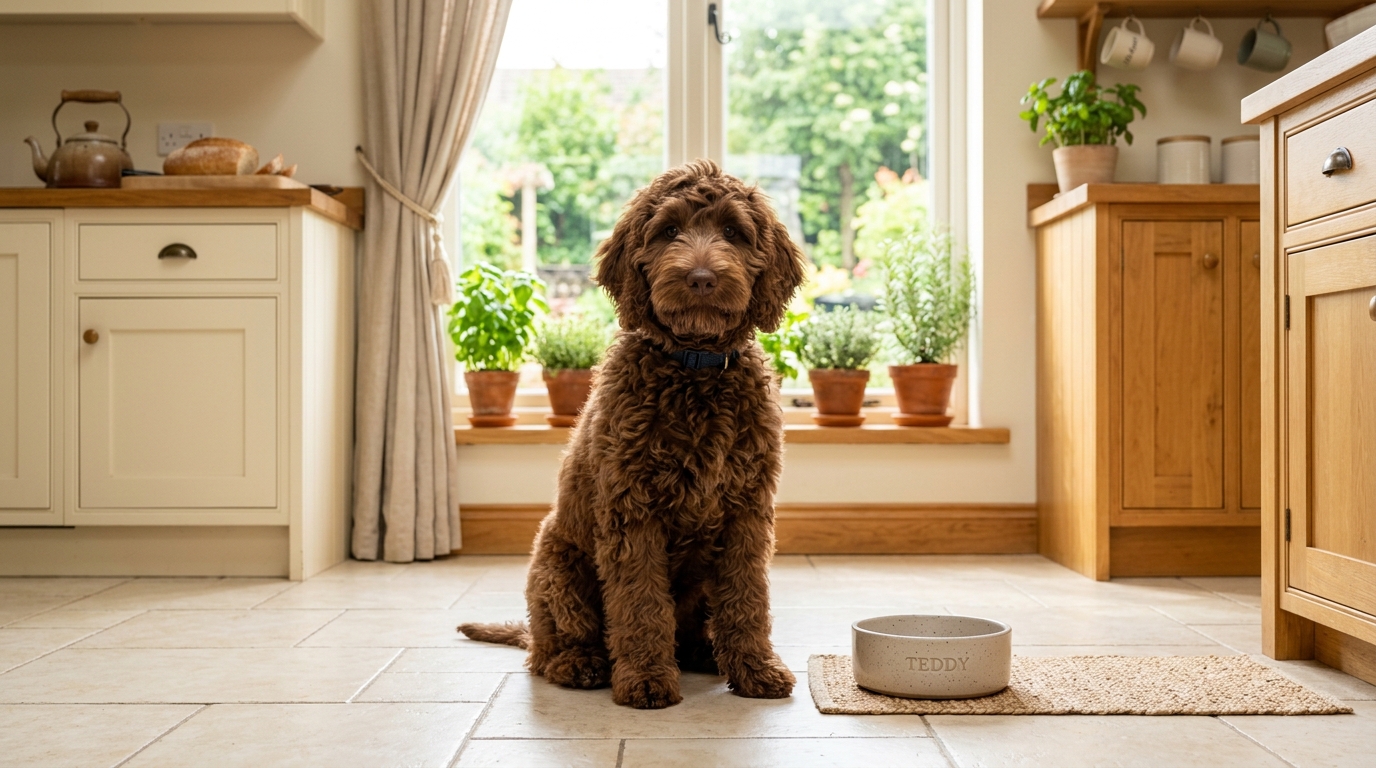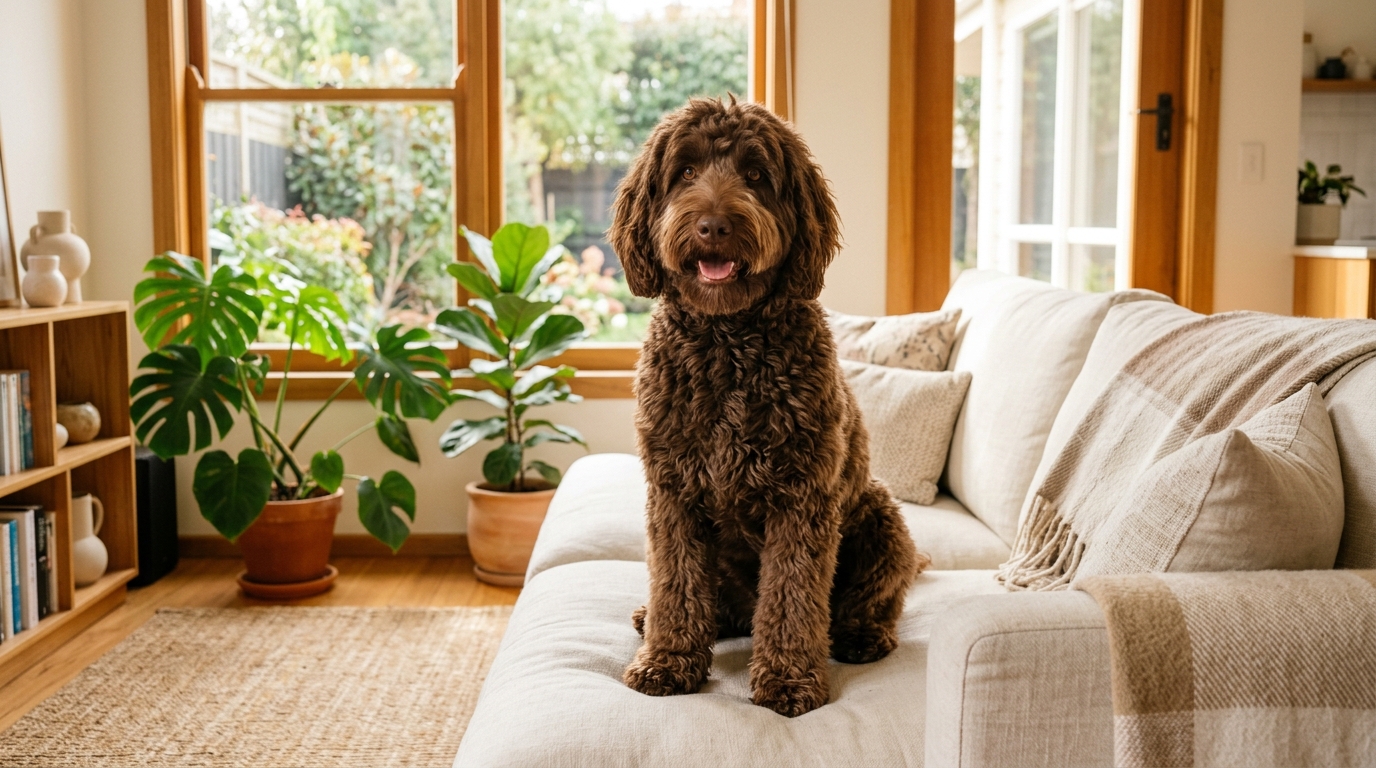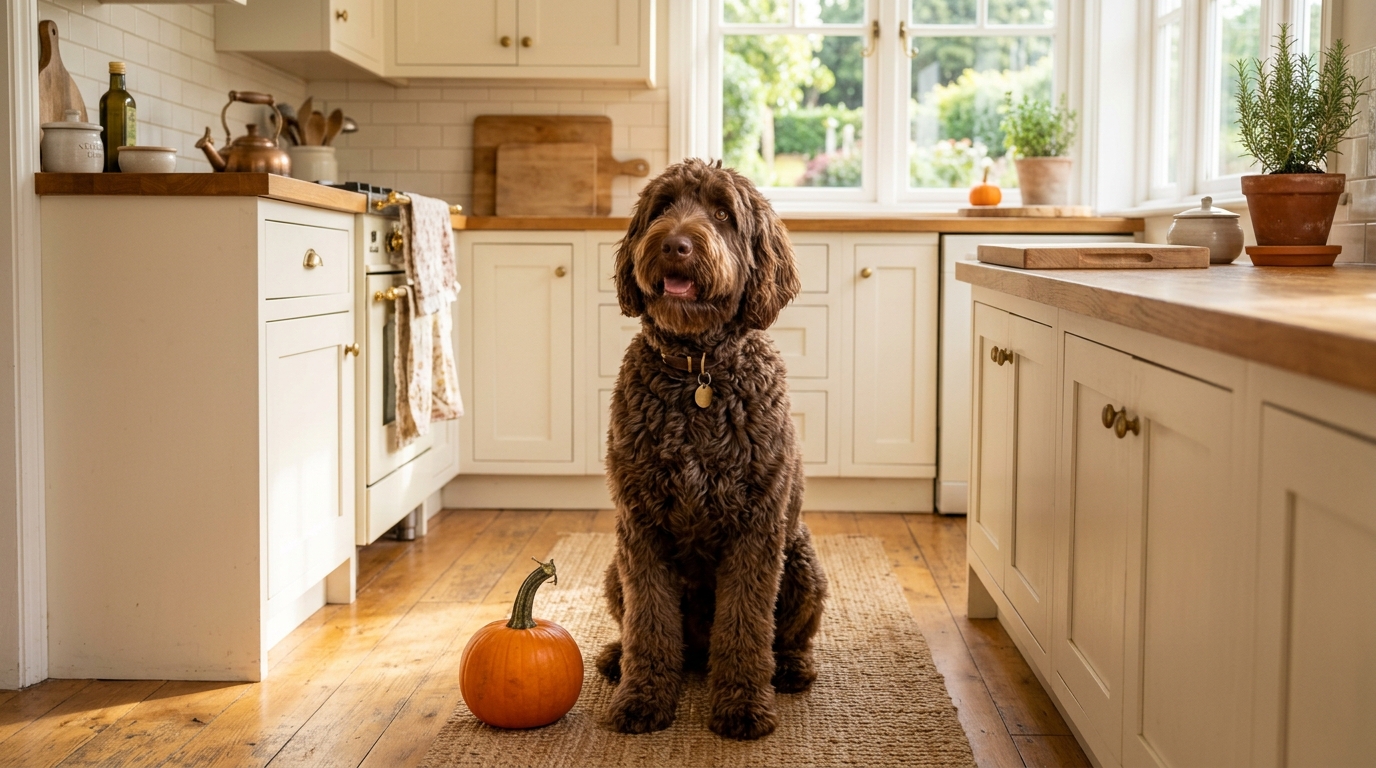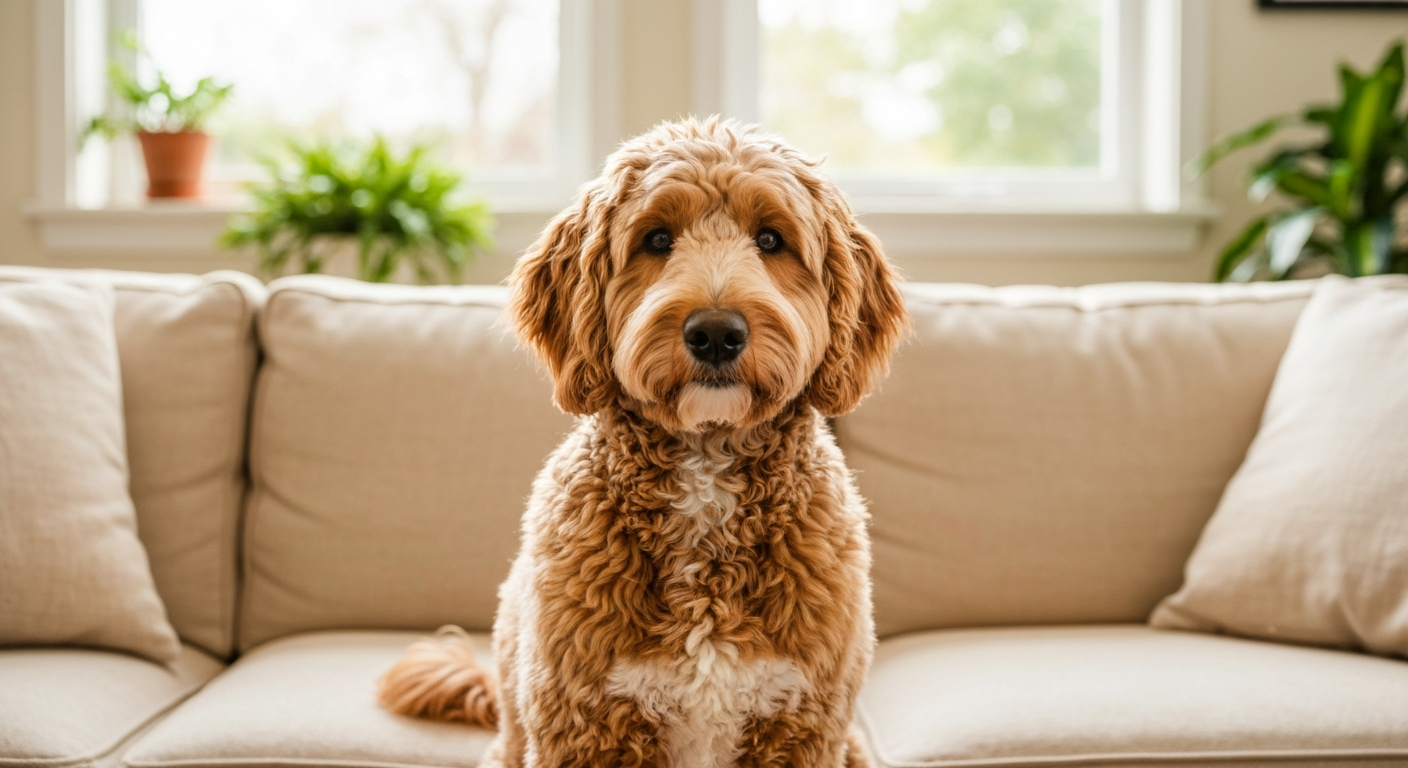
Switching your doodle's food felt like the right move — better ingredients, a formula that addresses allergies, a raw diet you've been meaning to try. Then the loose stools started. Now you're mopping up messes and wondering whether you've made a terrible mistake.
Here's the honest answer: doodle diarrhea after switching food is one of the most common digestive complaints we hear about, and in most cases it is a normal (if messy) sign that the gut is adjusting rather than a sign something is seriously wrong. The key is knowing the difference between normal transition diarrhea and a red flag, and knowing what to do in the next 24 to 72 hours to help your dog's gut settle down faster.
And if this is the second or third food that has not agreed with your doodle, the problem is more likely the food than the switch - our best food for a doodle with a sensitive stomach is where we would look next.
This guide covers the biology behind why food transitions upset doodle stomachs, gives you a clear timeline for what's normal versus what warrants a vet call, walks through a corrected slow-transition protocol, and explains the at-home tools — fasting, bland diet, probiotics — that actually move the needle.
Why Switching Food Causes Diarrhea in the First Place
It helps to understand what is actually happening inside your doodle's gut when you change the food, because "the food upset their stomach" is a bit too vague to be useful.
Microbiome Disruption
Your dog's gut is home to trillions of bacteria, fungi, and other microorganisms collectively called the gut microbiome. That community is calibrated to the food your dog has been eating. When you introduce a different protein source, fat level, fiber type, or carbohydrate profile, the bacterial populations that thrived on the old food suddenly have less to eat, while new populations that can process the new food need time to grow. During that transition window, the balance tips toward dysbiosis — an imbalance that produces gas, soft stool, and sometimes outright diarrhea.
Enzyme Lag
The digestive enzymes your doodle's pancreas and small intestine produce are partly upregulated based on diet. A dog eating primarily chicken and rice produces different enzyme ratios than one eating beef and sweet potato. Switch the food abruptly and the enzyme supply doesn't match the new substrate, leading to partially undigested food arriving in the large intestine where bacteria ferment it — producing the loose, sometimes frothy stools many owners see on day one or two of a new food.
Motility Changes
Fat content, fiber type, and overall macronutrient ratios all influence how fast food moves through the GI tract. A richer food moves faster; a food with different soluble-to-insoluble fiber ratios changes water absorption in the colon. Even if the new food is objectively better, a sudden motility shift causes the colon to push stool through before it's properly formed.
Why Doodles Are Especially Prone to Transition Diarrhea
This is not generic dog content — gut sensitivity in Australian Labradoodles, Goldendoodles, Labradoodles and Bernedoodles is a real, breed-related phenomenon worth understanding.
Poodles are well-known among veterinary nutritionists for reactive, finicky digestive systems. They tend toward lean body types with relatively fast GI transit, and food sensitivities — to proteins, grains, or both — are disproportionately common in the poodle line. Golden retrievers and Labrador retrievers (the other half of most popular doodle mixes) carry their own inflammatory tendencies; golden retrievers in particular have higher rates of environmental and food allergies than average.
When you combine those two genetic backgrounds, you often get a dog with a less resilient gut microbiome that reacts strongly to any disruption — including a well-intentioned food switch.
There's another layer: many doodles have had repeated courses of antibiotics by the time they're two or three years old, typically because of the ear infections that come with floppy, moisture-trapping ears. Antibiotics wipe out beneficial gut bacteria, and without deliberate probiotic support to rebuild, the microbiome stays fragile. A doodle with a history of ear issues and antibiotic treatment is often a dog whose gut needs extra support during any transition.
If your doodle already has a history of digestive issues, it's worth reading our deeper look at doodle sensitive stomach causes, symptoms, and what actually helps — that guide covers the full picture of chronic gut sensitivity beyond food transitions.
Normal vs. Warning Signs: The Timeline That Matters
Not all post-switch diarrhea is created equal. Here's how to read what you're seeing.
| What You're Seeing | Timing | Likely Meaning | Action |
|---|---|---|---|
| Soft, formed-ish stool, 1-2x/day, dog acting normal | Days 1–4 | Normal transition | Slow down the ratio; add probiotic |
| Loose/watery stool, 2-3x/day, dog still eating & drinking | Days 1–5 | Significant disruption | 12-hr fast, bland diet, probiotic; monitor closely |
| Watery stool, or no improvement after 48 hours | 48h+ | Not resolving on its own | Call your vet |
| Watery diarrhea multiple times/day | Any | GI tract overwhelmed | Bland diet + vet call same day if no improvement in 24 hrs |
| Blood in stool (red or black) | Any | Potential serious issue | Call your vet today |
| Diarrhea + vomiting + lethargy | Any | Could be illness, not food | Call your vet today |
| Puppy under 16 weeks with diarrhea | Any | Puppies dehydrate fast | Call your vet within 24 hours |
The honest takeaway: a straightforward switch should settle within 24 to 48 hours, and up to three to five days of mild, improving loose stool is still within range if your dog has a known sensitivity or you moved faster than planned. But stool that is watery rather than soft, or that has not started improving after 48 hours, is no longer normal transition territory — call your vet, and do so immediately with any of the red-flag symptoms above.
What to Do Right Now: The Triage Protocol
Step 1 — Stop the Transition Where You Are
If you're mid-switch, pause. Don't add any more of the new food until stools firm up. You're not abandoning the transition — you're letting the gut catch up before you ask it to do more.
Step 2 — Consider a Short Fast
For adult dogs with sudden mild-to-moderate diarrhea, a 12-to-24-hour fast (fresh water always available) gives the GI tract a chance to rest and reduce inflammation. We've used this with all three of our boys at various points — it consistently helps more than pushing food through a reactive gut.
Skip fasting for puppies under six months, dogs with health conditions affecting blood sugar, or any dog that is vomiting repeatedly or seems weak.
Step 3 — Introduce a Bland Diet
After the fast (or skipping straight here if your dog is a puppy or you prefer not to fast), offer plain boiled chicken breast and plain white rice in a ratio of about 1:3 chicken to rice, in smaller-than-normal portions. If chicken is a known trigger for your dog — it was for Gunnar — use plain boiled turkey or white fish instead; the point is a single lean protein, not chicken specifically. White rice is easy to digest and its soluble fiber helps firm stool. Offer this for one to two days before reintroducing either the old or new food.
Plain canned 100% pumpkin (not pie filling — check the label) is another useful tool. One to four tablespoons mixed into food adds soluble fiber that absorbs excess water in the colon and can meaningfully help firm up loose stool within 24 hours.
Step 4 — Add a Probiotic
This is the step most owners skip, and it's probably the most impactful. A canine-specific probiotic with multiple Lactobacillus and Bifidobacterium strains helps repopulate the beneficial bacteria being disrupted by the food change. Start it now, even if you're on bland diet, and continue it through the full transition.
For more on what to look for in gut support products, our Gut Health Supplements hub covers options in detail.
The Slow-Transition Protocol That Actually Works for Sensitive Doodles
Most "transition your dog's food" advice says 7–10 days. For a sensitive doodle, especially one with prior gut issues or food sensitivities, we recommend stretching this to 14 days minimum — and 21 days if your dog has a history of digestive trouble.
For a detailed day-by-day plan, we've put together the 7-Day Food Transition Plan That Actually Works for Sensitive Doodles — which you can easily stretch to two or three weeks by holding each ratio for longer.
The core principle: never let the new food exceed 25% of the meal until stool is solid at that ratio for at least two full days. If stool softens at any stage, hold that ratio (don't go back, don't go forward) until it firms up.
A few additional notes for doodle households:
- Feed two smaller meals rather than one large one. Smaller volumes are easier on a reactive gut.
- Keep everything else constant. Don't introduce new treats, table scraps, or supplements during a food transition, or you lose track of what's causing what.
- If you're transitioning to raw, the same principles apply but the gut shift can be more pronounced because you're changing not just the food but the entire digestive paradigm. We have a full protocol at How to Transition a Doodle from Kibble to Raw (Without the Disaster Stories).
When we transitioned Sven to a new kibble formula last year (we keep a premium kibble on hand for travel — more on that at Travel Feeding for Raw-Fed Doodles), we stretched the transition to 18 days because his stomach has always been the most reactive of the three. Holding each ratio for three to four days rather than two made all the difference — he had one or two soft days early on and then sailed through the rest of the switch with no issues.
A Note on Puppies
Puppy diarrhea after changing food deserves its own mention because puppies are genuinely a higher-risk situation. Their immune systems are still developing, their gut microbiomes are immature, and they dehydrate far more quickly than adult dogs. A puppy with frequent watery diarrhea can go from "a bit loose" to dangerously dehydrated within hours.
For puppies under four months, treat any diarrhea that lasts more than 24 hours as a vet call, full stop. For puppies four to six months old, give it no more than 48 hours of at-home management before calling if there's no improvement.
The slow-transition and bland-diet advice above applies to puppies, but skip the fasting step and keep portion sizes modest.
FAQ
Mild loose stools for three to five days are considered normal as the gut microbiome adjusts. By day seven the stool should be firming back up. If diarrhea is still watery or frequent after a full week — or if it gets worse rather than better — that timeline has moved from normal transition discomfort into a situation that warrants a call to your vet.
Not necessarily right away. If the diarrhea is mild (soft but formed, once or twice a day, dog acting normally), slow the transition down further and add a probiotic. If the diarrhea is watery, happening multiple times a day, or your doodle seems lethargic or nauseous, then yes — returning to the previous food while you reassess is a reasonable short-term step before trying again more slowly.
Doodles inherit sensitive digestive systems from both sides of their mix — poodles are known for food sensitivities and lean, reactive guts, while golden retrievers and other retriever lines can carry inflammatory tendencies. The result is a dog whose microbiome is often less resilient to sudden dietary change. Add in the fact that many doodles have a history of antibiotic use (common after ear infections) that depletes gut flora, and you have a dog that simply needs a slower, more supported transition than average.
Yes, and we genuinely recommend it. A canine-specific probiotic started a few days before you begin the transition — and continued through it — helps buffer the microbiome against disruption. Look for a product with multiple Lactobacillus and Bifidobacterium strains and a meaningful CFU count. Prebiotics (such as inulin or pumpkin fiber) alongside probiotics give the beneficial bacteria something to feed on and can meaningfully speed up stool normalization.
A short fast of 12 to 24 hours (water always available) is a well-established first step for adult dogs with sudden-onset soft stool or mild diarrhea. It gives the GI tract a rest and lets inflammation settle. Skip fasting for puppies under six months — they need calories to maintain blood sugar — and skip it for any dog that seems weak, is vomiting repeatedly, or has blood in the stool. After the fast, introduce a bland diet gradually before returning to the new food.
The Bottom Line
Doodle diarrhea after switching food is common, usually short-lived, and manageable at home when it's mild. The biology — microbiome disruption, enzyme lag, motility changes — is real, and it's made more pronounced in doodles by their genetic predisposition toward sensitive guts and the gut-depleting effect of antibiotic courses many of them have had.
Your immediate action plan: pause the transition, consider a brief fast if your dog is an adult, introduce bland food, and add a probiotic. Then restart the transition slowly — much more slowly than the bag instructions suggest — holding each ratio until stool is fully solid before moving forward.
If things aren't improving after 48 hours, or if you see blood, vomiting, or a lethargic dog at any point, that's your signal to call your vet rather than troubleshoot further at home.
For a full day-by-day roadmap, our 7-Day Food Transition Plan That Actually Works for Sensitive Doodles is the natural next read — and if you suspect your dog's gut issues go beyond this one transition, start with our Sensitive Stomach hub for the bigger picture.