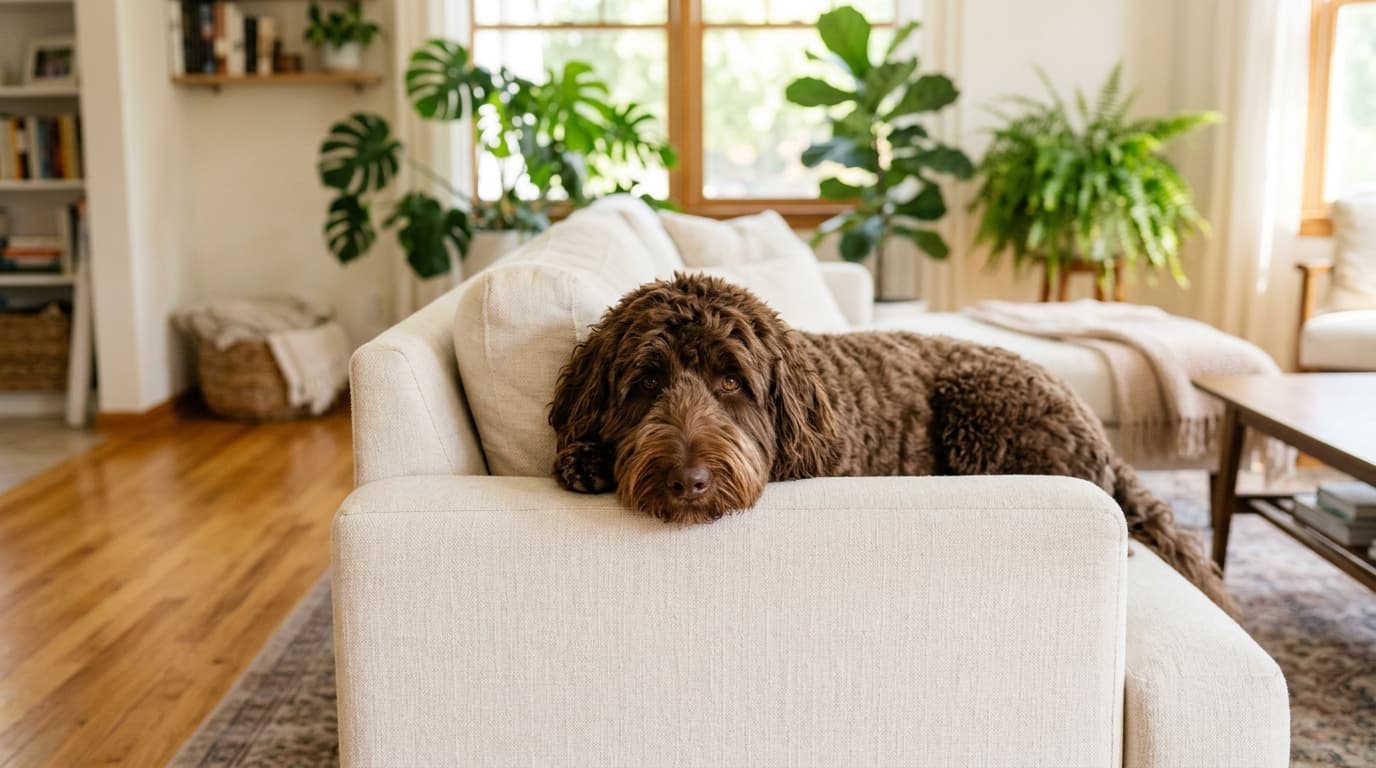
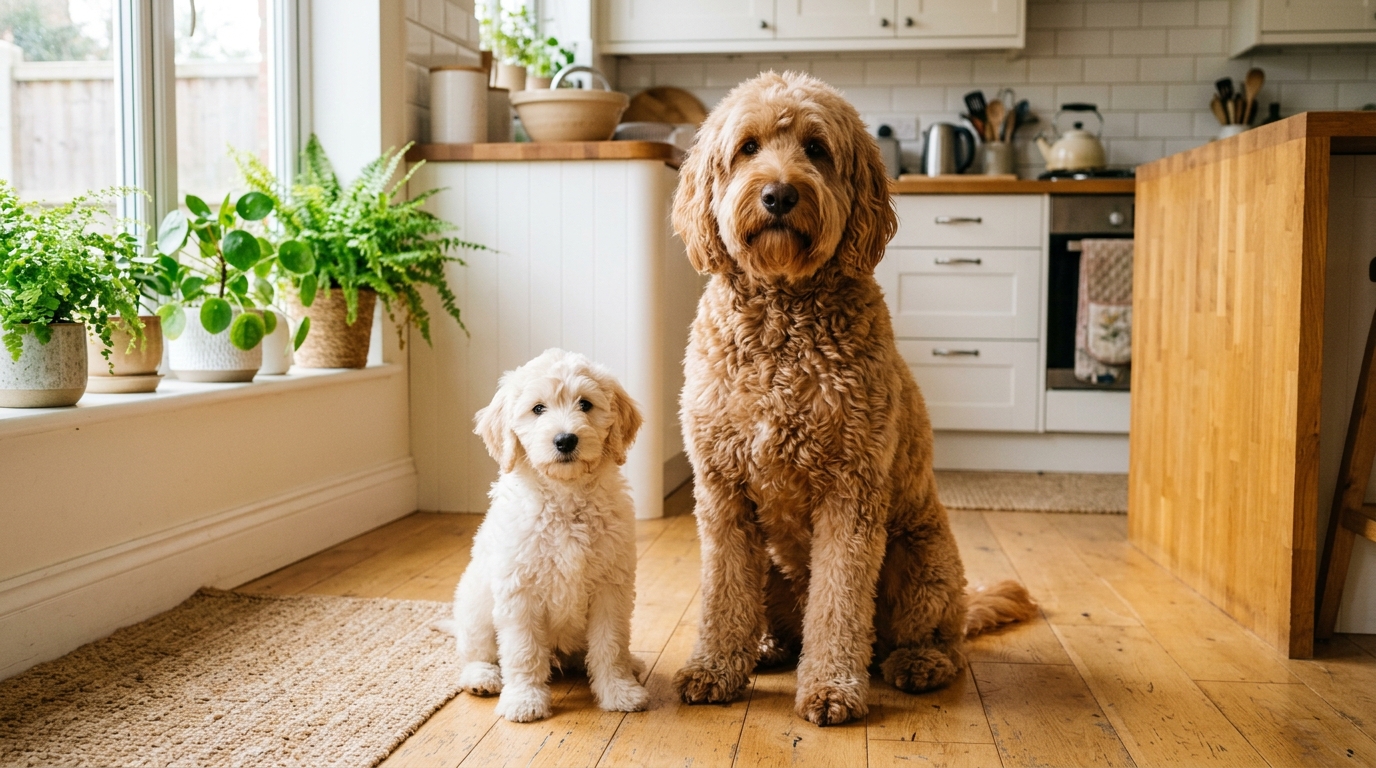
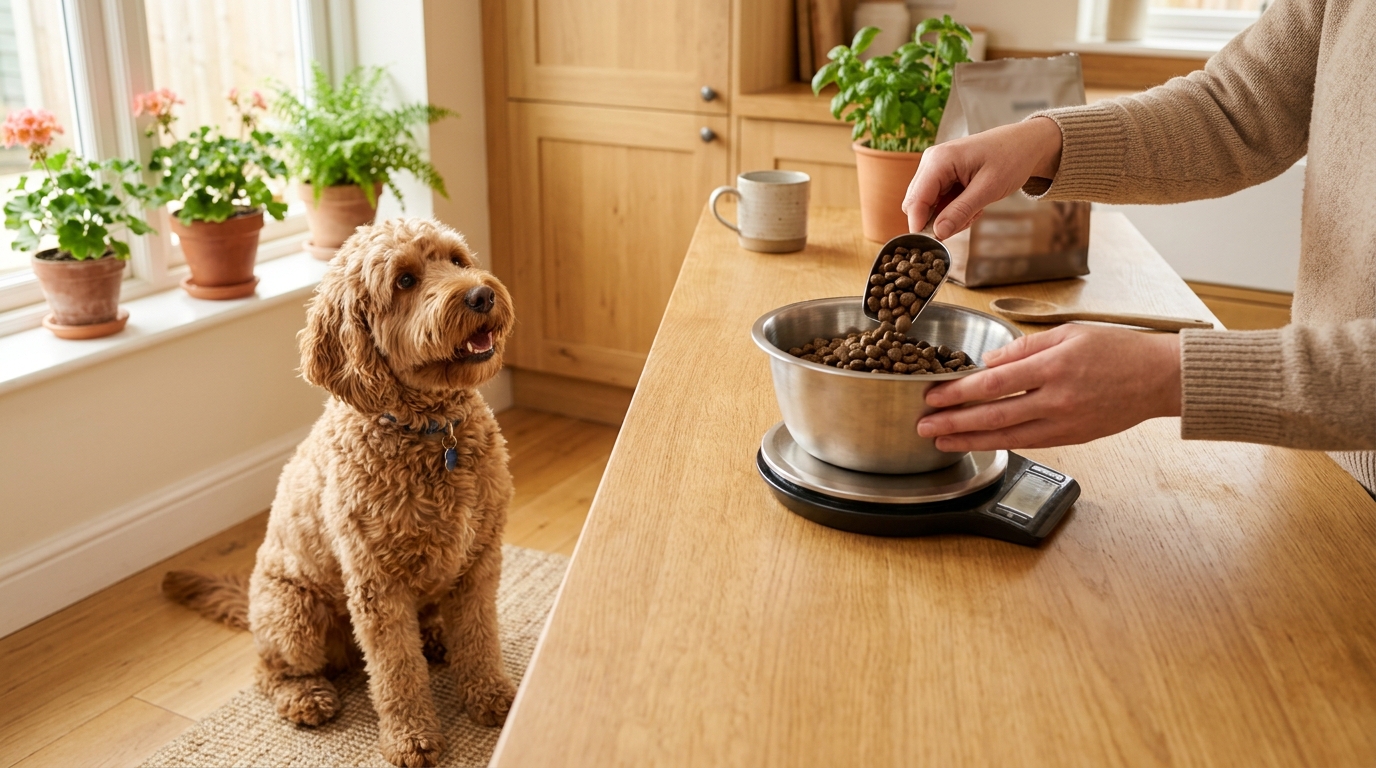
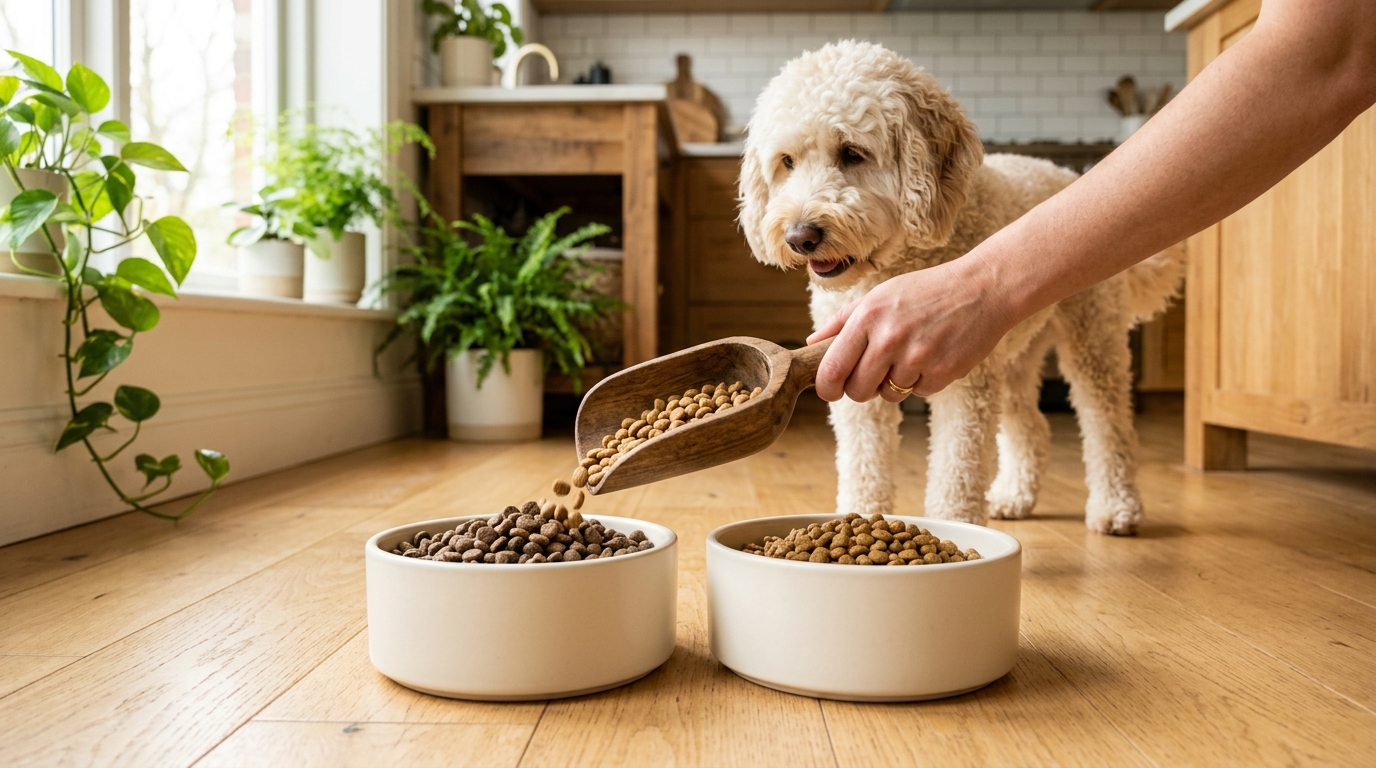
Yes, many doodles have sensitive stomachs, but it is a tendency, not a rule. Most of it traces back to the Poodle side of the cross, and most of it is a food and routine problem you can manage at home. Vomiting, soft stool and morning bile are real symptoms, but their causes vary, and a fix that settles one doodle can make another worse. Below: how the main crosses compare, how to tell a sensitive gut from something that needs a vet, and where to go next for your dog's exact symptom.
Where food fits in. For most cases we see, sensitive stomach is fundamentally a food problem. Our three doodles eat raw at home and freeze-dried or a good kibble on the road, and the strongest reset for a sensitive gut, in our experience, is a slow transition through cooked-meat-plus-vegetables onto raw. That's tier one in our feeding philosophy; freeze-dried raw is tier two; a better kibble is tier three. Whichever tier fits your life, the protocols below apply.
Do doodles have sensitive stomachs?
Many do, but not all. Doodles are not a breed with one fixed gut, they are a mix, and the Poodle side is often linked to food sensitivities and GI reactivity. Some doodles eat anything their whole life; others react to every food change, rich treat or stressful week. If yours is one of the reactive ones, it is usually a food and routine problem that can be managed, not a life sentence.
We have both kinds at home. Sven vomited yellow bile every morning for his entire first year and got loose stool after every food switch. Gösta, raised on raw from puppyhood, has never had a gut problem and eats everything. Same household, same walks, very different stomachs, which is exactly why "doodles have sensitive stomachs" is a tendency, not a rule.
Do Goldendoodles have sensitive stomachs?
Goldendoodles are one of the doodle crosses owners most often describe as having a sensitive stomach. The usual triggers are sudden food changes, rich treats, a protein the dog has eaten for years (often chicken), and stress. Most mild cases settle with a slow food transition, a simpler diet and a probiotic. The breed-specific version is in our Goldendoodle digestive issues guide.
Do Labradoodles have sensitive stomachs?
Labradoodles can, and fast eating makes it worse: gulping food and air is a common cause of vomiting and gas. The Labrador side is famously food-motivated, so scavenged food and table scraps are frequent triggers too. A slow feeder, consistent food and slow transitions fix a large share of cases. More in the Labradoodle sensitive stomach guide. Bernedoodle owners: see Bernedoodle stomach problems explained.
What are the signs of a sensitive stomach in a doodle?
Soft or inconsistent stool, vomiting yellow bile on an empty stomach, gas and gurgling, grass eating, skipped meals, and loose stool after every food change. Itchy paws and recurring ear infections can also trace back to the gut. Repeated vomiting in one day, blood, a hard belly or lethargy means call your vet. The full checklist is in signs your doodle has a sensitive stomach.
Is it the breed or the routine?
Both, and the routine usually decides. The breed side gives some doodles a gut that reacts more easily. The routine side decides whether that reactive gut ever gets pushed hard enough to show it.
The breed side is mostly the Poodle. Standard, Miniature and Toy Poodles carry a documented predisposition to food sensitivities and allergic skin disease, and that can carry into any doodle cross. "Can" is the key word: it depends on how the genetics land in each puppy, which is why two littermates raised on the same food can end up with completely different stomachs.
The routine side is where most flare-ups actually start. The same handful of triggers comes up again and again:
- Food changes made too fast. A switch over two days instead of seven to ten is the most common cause of loose stool we hear about.
- Rich extras. Fatty treats, table scraps, a stolen sandwich at the park.
- Eating too fast. Gulping swallows air along with the food, and the result is gas, vomiting or both.
- Stress. Boarding, a move, a new baby or a long car trip can loosen stool for days with no food change at all. More in stress and digestive problems in doodles.
- A protein eaten for years. A dog can tolerate chicken for a long time and then stop tolerating it.
Our own three show the whole range. Sven is our sensitive-stomach dog: yellow bile every morning for his whole first year and loose stool after every food switch. Gunnar's trigger is chicken, but it shows up in his ears and paws as yeast and itch, not in his stomach. Gösta has eaten raw since puppyhood and has never had a gut problem. Three doodles in the same house, three different answers, which is exactly why the honest answer to "do doodles have sensitive stomachs" is "some do, and you usually find out which kind you have within a few food changes."
Doodle by doodle: how the crosses differ
The Poodle tendency is shared across every doodle. What changes from cross to cross is the other parent, and that shapes how a sensitive stomach tends to show up.
Goldendoodles
Goldendoodles are the cross owners most often describe as having a sensitive stomach, and the pattern is usually food-driven: soft stool after a switch, a reaction to rich treats, or trouble that builds slowly with a protein the dog has eaten for years. Golden Retrievers are no strangers to food sensitivities themselves, so a Goldendoodle can get the tendency from both sides. Most mild cases settle with a slow transition, a simpler diet and a probiotic. If yours also itches, read the gut and skin signs together rather than treating them as two separate problems. The full breed guide is the Goldendoodle digestive issues guide.
Labradoodles
With Labradoodles the problem is often how they eat as much as what they eat. The Labrador side is famously food-motivated, so gulping, scavenging and counter-surfing drive a large share of vomiting and gas. A slow feeder bowl and a "nothing off the floor" rule fix more Labradoodle stomachs than any food change. Coat and shedding vary a lot between F1, F1b and later generations, but there is no good evidence that the generation predicts how sensitive the stomach will be, so judge your own dog, not the label. Australian Labradoodles are a separate multigenerational breed; the same gut advice applies to them. Start with the Labradoodle sensitive stomach guide and, for the eating-speed side, our slow feeder bowl picks.
Bernedoodles
When a Bernedoodle has a sensitive stomach, it usually comes from the Poodle line. A delicate gut is not an established Bernese Mountain Dog trait. What the Bernese side adds is size: large, deep-chested dogs carry the highest risk of bloat (gastric dilatation-volvulus), so calm mealtimes, sensible portions and no hard exercise right after eating matter more in a standard Bernedoodle. See Bernedoodle stomach problems explained and, for loose stool specifically, Bernedoodle diarrhea causes.
Mini doodles
Mini doodles are not inherently more sensitive than standard ones. They inherit the same Poodle-line tendency. What differs is margin: a small body shows a portion mistake or a rich treat faster, and dehydration from vomiting or diarrhea becomes serious sooner. That makes minis look more fragile. The details are in are mini doodles more sensitive?
Sensitive stomach, or something else?
A sensitive stomach has a pattern: symptoms follow a trigger (a food change, a treat, a stressful week) and settle once the trigger is gone. When the pattern does not fit, it is worth thinking past "sensitive." Use this as a rough map, not a diagnosis:
| What you see | What it often means | First step | Read next |
|---|---|---|---|
| Soft stool after a food switch, dog acting normal | Transition too fast | Slow the switch down to 7 to 10 days | 7-day transition plan |
| Yellow bile first thing in the morning | Stomach empty for too long | Small late-evening snack | Bile vomiting in doodles |
| Gas, gurgling, gulped meals | Eating too fast, or a food that isn't digesting well | Slow feeder first, then review the food | Stomach gurgling explained |
| Loose stool plus itchy paws or recurring ear trouble | Possible food sensitivity affecting gut and skin | Note the protein; ask your vet about a limited-ingredient trial | Signs of a sensitive stomach |
| Diarrhea lasting weeks, or weight loss | More than a sensitive stomach | Vet visit | Chronic diarrhea in doodles |
| Vomiting and diarrhea that keep coming back, low energy, poor appetite | Medical causes need ruling out, including Addison's disease | Vet visit; describe the pattern | When to see the vet |
| Hard, swollen belly, retching with nothing coming up, restlessness | Possible bloat (GDV) | Emergency vet now |
Two of those rows matter more in doodles because of the family tree. The Merck Veterinary Manual names Standard Poodles among the breeds in which Addison's disease may be inherited, and its signs include repeated episodes of vomiting and diarrhea, poor appetite and gradual weight loss, which can easily be mistaken for a "sensitive stomach." And bloat is an emergency in any large doodle: the American College of Veterinary Surgeons lists the early signs as an anxious look, drooling, a swelling abdomen and retching without producing anything. Neither is common, but both are good reasons not to keep switching foods for months when something doesn't add up.
What we'd do first
If your doodle has a touchy stomach and your vet has ruled out anything more serious, this is the order we'd work in:
- Stop changing things. Pick one food and give it a fair trial of several weeks. Constant switching keeps a sensitive gut permanently unsettled.
- Fix how they eat. A slow feeder, smaller and more frequent meals, and a small evening snack if mornings bring bile.
- Then fix what they eat. A simpler food with fewer ingredients and one main protein, introduced over 7 to 10 days.
- Support the gut. A probiotic is the lowest-risk addition and the one we'd try first. Our picks are in best probiotics for doodles.
The full step-by-step version, including how to find a trigger protein, is in the complete doodle sensitive stomach guide.
Start here if your doodle is vomiting:
- Bile Vomiting in Doodles
- Labradoodle Vomiting Yellow Foam: Causes & Fixes
- When to See the Vet for Doodle Vomiting
Start here if your doodle has diarrhea or loose stool:
- Doodle Diarrhea After Switching Food: What to Do
- Doodle Soft Stool but Acting Normal: Should You Worry?
- How Long Does Doodle Diarrhea Last?
- Chronic Diarrhea in Doodles
- Mucus in Doodle Stool: What It Means
- Blood in Doodle Stool: When to Worry
- Doodle Constipation: Causes & Solutions
When it might be more than a sensitive stomach:
- Inflammatory Bowel Disease in Doodles
- Doodle Losing Weight With Digestive Problems
- Low Appetite in Doodles: Picky Eater or Red Flag?
- Senior Doodle Digestive Changes
Practical solutions:
- The Complete Doodle Sensitive Stomach Guide
- The 7-Day Food Transition Plan That Actually Works
- Best Dog Food for Doodles with Sensitive Stomachs
- Best Probiotics for Doodles with Digestive Issues
- Best Wet Dog Food for Sensitive Stomachs · Best High-Fiber Dog Food · Best Food for Chronic Diarrhea
- Kibble vs Fresh Food for Sensitive Doodles · Raw Diet: Pros & Cons · Grain-Free vs Grain-Inclusive
- Best Puppy Food for Goldendoodles · for sensitive Labradoodle puppies
Sensitive stomach issues in doodles are almost always manageable, but they need the right approach, not just the most expensive food. Start with the Complete Guide, then see our gut health & supplement picks and the best products for sensitive doodles.