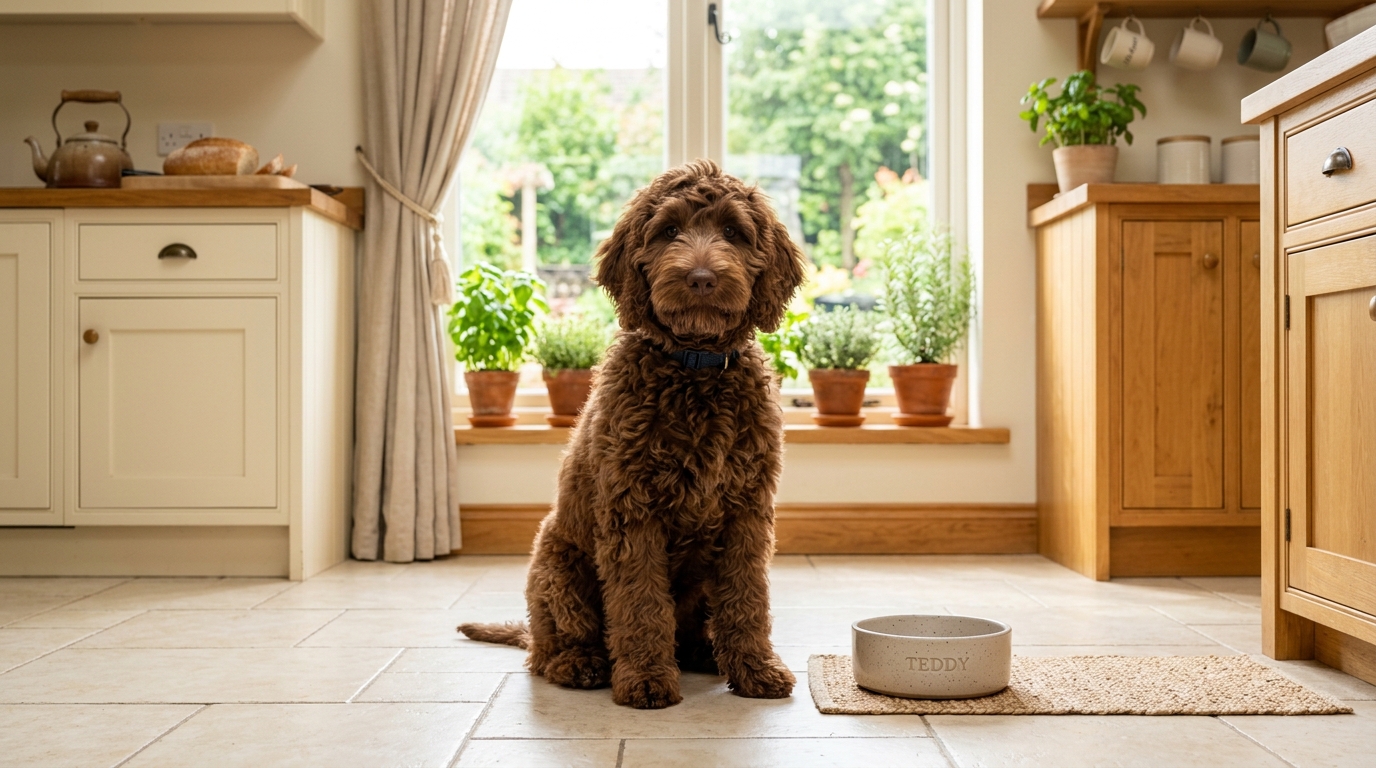
You wake up to that unmistakable sound — the low gulping, the soft retch — and you find a puddle of yellow or greenish foam on the floor next to your doodle, who is already wagging their tail and looking perfectly fine. If this happens at predictable times, usually overnight or first thing in the morning before breakfast, there is a very good chance your dog has bilious vomiting syndrome — and the good news is that it is one of the more straightforward digestive issues to actually fix.
The fix is mostly about meal timing, with the food itself playing a supporting role - our best food for a doodle with a sensitive stomach covers the diets that empty most predictably.
We have been here with our own dogs. Sven went through a phase of regular morning bile vomiting when he was around two years old, right when we shifted him from three meals a day down to two. The pattern was so consistent — always between 5 and 6 a.m., always yellow foam, always followed by him trotting over to his bowl ready for breakfast — that it was textbook BVS once we understood what we were looking at.
This guide will walk you through exactly what bilious vomiting syndrome is, why doodles are particularly prone to it, how to tell it apart from conditions that do need veterinary attention, and the specific feeding and supplement strategies that actually resolve it.
What Is Bilious Vomiting Syndrome?
Bilious vomiting syndrome (BVS) is a functional digestive condition, not a disease with an underlying pathology. Here is the mechanism in plain terms: bile is produced by the liver and stored in the gallbladder, then released into the small intestine to help digest fats. When a dog's stomach has been empty for too long, bile can reflux backward from the small intestine into the stomach. The stomach lining — which is not designed to handle bile — becomes irritated, and the dog vomits to relieve that irritation.
The vomit is characteristically yellow or greenish-yellow, sometimes frothy or foamy. There is usually no food in it because the stomach is empty. The dog is almost always completely normal before and after — alert, appetite intact, no other symptoms.
BVS is most common in dogs who:
- Go long stretches between meals (overnight being the most typical window)
- Have naturally faster gastric emptying
- Have reactive or sensitive GI tracts
- Experience stress or anxiety, which directly affects gut motility
Sound like any breed you know?
Why Doodles Are Especially Prone to Bile Vomiting
Bile vomiting in doodles is not just a coincidence. There are real breed-linked reasons why your goldendoodle, labradoodle, or bernedoodle may be more susceptible than a random mixed-breed dog at the shelter.
The poodle gut is the starting point. Poodles are well documented among breeders and veterinarians as having more reactive digestive systems than many breeds — they tend to have faster gastric motility, stronger reactions to dietary changes, and a higher prevalence of food sensitivities. For a deeper look at what that sensitivity really means day-to-day, our guide on doodle sensitive stomach causes, symptoms, and solutions covers the full picture.
Food intolerances compound the picture. A doodle who has a low-grade intolerance to a protein or grain in their food has a stomach lining that is already mildly inflamed. That already-irritated stomach is much more reactive to bile reflux than a healthy, calm GI tract. If your doodle has other signs of food sensitivity — itchy paws, recurring ear issues, loose stools — BVS may be one piece of a bigger puzzle worth exploring via the Food Allergies hub.
Anxiety and stress are underappreciated triggers. Many doodles carry a baseline anxiety level — separation anxiety, noise sensitivity, social over-arousal — that shows up directly in the gut. The gut-brain axis is real in dogs as in humans, and stress hormones affect gastric motility, acid secretion, and bile flow. A doodle who is anxious overnight may have more disruptive GI activity during those fasting hours than a calmer dog.
Meal timing habits in the US often default to two meals a day, morning and evening. For most dogs that is fine. For a doodle with a fast-emptying, sensitive stomach, a 12-to-14-hour overnight fast is simply too long.
BVS vs. Something More Serious: How to Tell the Difference
This is the part that matters most from a health perspective, because the fix for BVS is a late-night snack — but the fix for pancreatitis, a GI obstruction, or bloat is an emergency vet visit.
BVS looks like this:
- Yellow, greenish, or foamy vomit with no food in it
- Happens consistently at the same time — overnight or early morning before the first meal
- Dog is completely normal before and after: good energy, normal appetite, no other symptoms
- Resolves quickly and the dog moves on with their day
See your vet promptly if you notice any of these:
- Vomiting that happens at other times of day or repeatedly within a short window
- Vomit containing food, blood, or dark material resembling coffee grounds
- A dog who seems lethargic, painful, or hunched
- A distended, hard, or obviously uncomfortable belly — this is a same-day emergency
- Refusal to eat
- Yellow tinge to the whites of the eyes or skin (jaundice — a liver or gallbladder concern)
- A pattern that is worsening or changing rather than staying consistent
For a broader look at how to evaluate doodle vomiting and when it crosses into concern territory, see when to see the vet for doodle vomiting.
The Practical Feeding Fixes That Actually Work
Once you are reasonably confident you are dealing with BVS, the solutions are genuinely simple. The goal is to reduce the length of time the stomach sits empty.
Move to Three Meals a Day
If your doodle currently eats twice a day, splitting that same daily food amount into three meals is the most reliable fix. The math is easy — just divide their current daily portion into thirds and add a midday meal. For the morning bile vomiter, the key change is that the last meal of the day now comes later and the stomach does not empty as far before morning.
Add a Small Late-Night Snack
If three full meals does not fit your schedule, a small snack right before bed — ideally 30 to 60 minutes before you sleep — works for most dogs. It does not need to be a full meal. A tablespoon of canned food, a small piece of cooked chicken, a spoonful of plain pumpkin, or even a small raw meaty bone (for raw-fed dogs) is enough to stimulate some digestive activity and prevent bile from pooling overnight.
When Sven was having his morning bile episodes, a small bedtime snack of whatever protein we had prepped for the next day was all it took. Within a week the morning retching had stopped entirely.
Do Not Feed Right Before Exercise or Bedtime on a Full Stomach
A related nuance: do not confuse "late snack" with "large late meal." A large meal fed right before sleep can actually slow gastric emptying and cause different problems. The snack should be genuinely small — its job is to keep the stomach from going completely empty, not to add a third full feeding.
Choose a Highly Digestible, Low-Irritant Diet
The baseline diet matters. A doodle eating a food that contains ingredients their system is quietly reacting to will have a more inflamed stomach lining overall, making bile reflux more irritating. Look for:
| Dietary Factor | BVS-Friendly Choice | Worth Avoiding for Sensitive Doodles |
|---|---|---|
| Protein source | Single, novel, or easily digested (chicken, turkey, rabbit) | Multiple proteins, common allergens if sensitized |
| Fat content | Moderate — not very high fat | High-fat diets slow gastric emptying unevenly |
| Carbohydrates | Easily digestible (pumpkin, sweet potato) or none (raw) | Grains if intolerant, high-fiber fillers |
| Additives | Minimal, no artificial preservatives | Artificial colors, flavors, carrageenan |
| Meal format | Consistent — same food, same time | Frequent changes without transition |
If you are considering a dietary shift, our 7-day food transition plan walks through how to change food without triggering a new round of GI upset in a sensitive doodle.
Gut Health Supplements That Support BVS Management
Feeding schedule changes are the primary fix, but several supplements can support the digestive environment and reduce BVS frequency — especially in doodles with ongoing sensitive-stomach tendencies. You can explore the full landscape of options at our Gut Health Supplements hub, but here are the most relevant ones for BVS specifically:
Probiotics help maintain a balanced gut microbiome, which influences both motility and the integrity of the stomach lining. A stable microbiome means a more resilient gut overall.
Slippery elm bark is a traditional herbal option that forms a gel-like coating on the stomach and esophageal lining when wet. Many doodle owners — ourselves included — find it useful as a short-term buffer during BVS flare periods. It is generally very safe and gentle.
Digestive enzymes can help dogs whose digestion is inconsistent or sluggish, supporting more complete breakdown of food and reducing the likelihood of undigested material sitting and fermenting.
A Note on Raw Feeding and BVS
If you feed raw — as we do with Sven, Gunnar, and Gösta — the same principles apply, with one extra nuance. Raw meals tend to be digested more efficiently and at a different rate than kibble, which can mean the stomach empties faster. Some raw-fed doodles are actually more prone to overnight bile vomiting simply because raw food moves through efficiently and leaves the stomach cleaner. The fix is the same: a small raw snack at bedtime works well, and the high digestibility of raw food overall tends to mean the stomach lining is less inflamed to begin with — which usually means milder and less frequent episodes.
FAQ
Bilious vomiting syndrome (BVS) is a condition where bile — the digestive fluid produced by the liver and stored in the gallbladder — refluxes into an empty stomach and irritates the stomach lining, triggering a vomit reflex. It typically happens when a dog has gone too long without food, which is why most owners notice it first thing in the morning or late at night just before the next meal. The vomit is usually yellow or greenish-yellow, sometimes foamy, and the dog is otherwise acting normal. It is not a disease in the true sense — it is a functional digestive pattern — but it does need to be managed because repeated bile irritation is worth addressing rather than living with, and your vet is the right person to judge whether anything more is going on.
The honest answer is narrower than most articles give. The Poodle line carries a documented predisposition to food sensitivities, and that is the part with evidence behind it. Claims that Poodles empty their stomachs faster, or that retriever lines bring their own digestive weakness, get repeated online without anything established underneath them — and Goldendoodles, Labradoodles and Bernedoodles are three different crosses rather than one shared gut. What actually drives bile vomiting is the same in any breed: the stomach sits empty long enough for bile to irritate the lining. A doodle with a food sensitivity may well be more bothered by that irritation, but the mechanism is meal timing, not pedigree. On top of that, many doodles carry a baseline level of anxiety that directly affects gut motility, which can make bile reflux more likely.
The hallmark of straightforward BVS is a predictable pattern: the vomit is yellow or green bile or foam, it happens on an empty stomach at consistent times (overnight or first thing in the morning), and your doodle is completely normal in every other way — eating well, energetic, no other symptoms. Red flags that suggest something more serious include vomiting at other times of day, vomit that contains food, blood, or looks like coffee grounds, a dog that is lethargic or in obvious discomfort, a bloated or tense belly, repeated vomiting within a short window, or a dog that is refusing food. Any of those signs warrant a prompt vet call rather than a feeding schedule tweak.
The single most effective change is reducing the gap between the stomach being empty and the next meal. For most dogs with BVS, moving from two meals a day to three meals, or adding a small late-night snack right before bed, is enough to stop the morning vomit entirely. The snack does not need to be large — even a small piece of protein or a spoonful of food is enough to stimulate digestive movement and prevent bile from pooling. Alongside meal timing, feeding a highly digestible diet without common irritants like grains, artificial additives, or fatty proteins can lower the baseline level of GI inflammation that makes bile reflux more likely.
Yes, certain supplements can support the digestive environment in ways that reduce BVS frequency. A good probiotic helps maintain a balanced gut microbiome, which influences motility and the integrity of the stomach lining. Slippery elm bark is a traditional herbal remedy that coats and soothes the stomach and esophageal lining, and many doodle owners (us included) find it genuinely helpful as a short-term buffer. Digestive enzymes can also help dogs who tend to have sluggish or inconsistent digestion. These are supportive tools, not cures — the feeding schedule fix should come first — but they can meaningfully reduce the frequency and severity of episodes, especially in doodles with ongoing sensitive-stomach tendencies.
The Bottom Line and Your Next Step
Bile vomiting in doodles is genuinely common, genuinely manageable, and — once you understand the mechanism — genuinely fixable for most dogs with a simple adjustment to meal timing. The key takeaways: keep the fasting window short, add a small bedtime snack if needed, feed a clean and digestible diet, and support the gut with a probiotic or slippery elm if episodes persist.
If you have ruled out anything more serious and BVS is your working explanation, start with the late-night snack tonight and give it a week. For most doodles, that single change makes a noticeable difference within a few days.
For a broader look at everything that can go on with a sensitive doodle stomach — from soft stools to food reactions to longer-term gut health — our Sensitive Stomach hub is the best place to keep reading.