
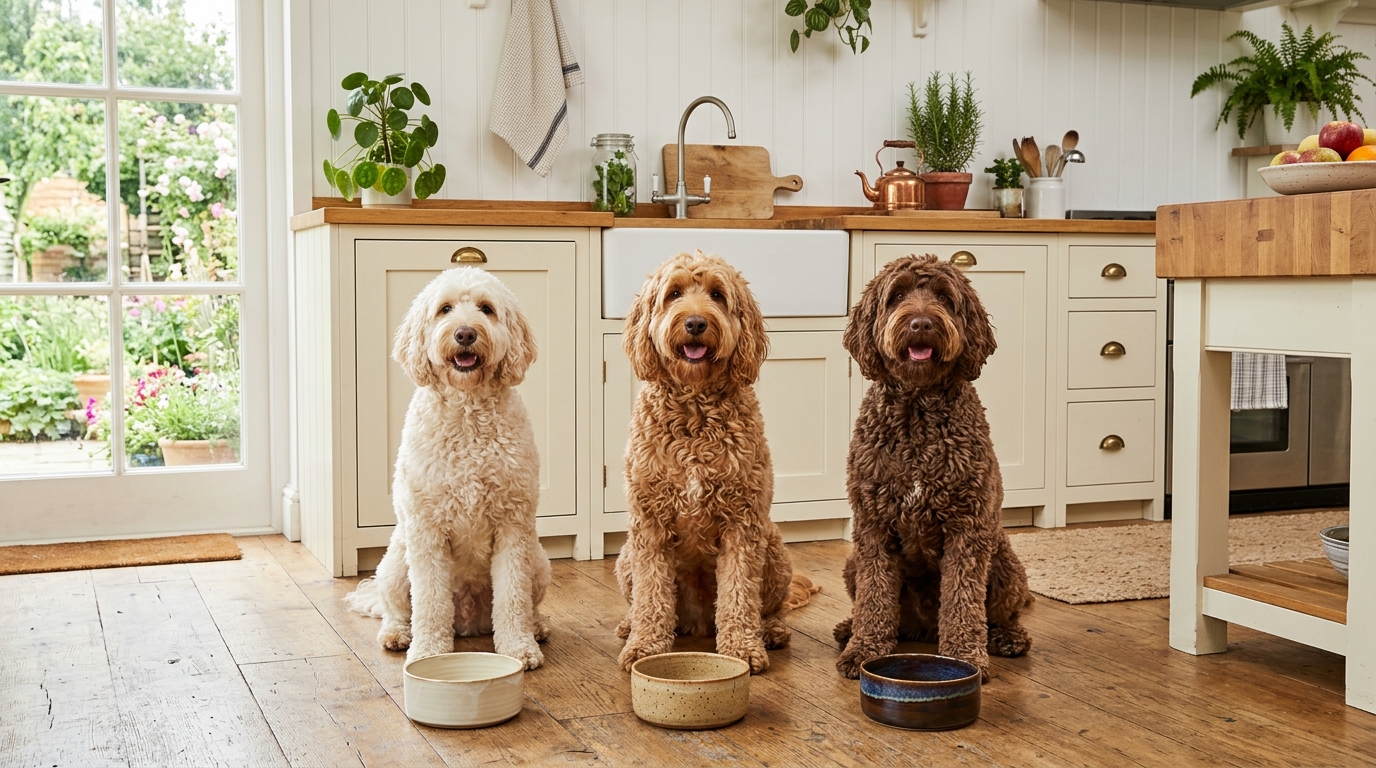
We rank dog food in three tiers — raw → freeze-dried raw → better kibble — and we think the tier matters less than picking the best version of the tier that fits your life. Our three Australian Labradoodles eat raw at home and freeze-dried or a good kibble on the road, on purpose. A gut that only ever sees one food is not a robust gut.
That is the whole position. Everything else on this site follows from it, so it is worth setting out properly rather than leaving it buried in an about page.
Why we rank them at all
Most sites either dodge the question of what to actually feed, or they pick a side and defend it. Neither helps a person standing in front of a shelf.
Ranking is more honest. Raw has given us the strongest results across gut, skin and immune function in three dogs — but it also has real logistics, real cost and real food-safety handling that not every household can take on. Saying "raw is best, good luck" to someone who works twelve-hour shifts and has no freezer space is not advice, it is a way of avoiding the question.
So we rank, and then we say plainly: the best version of tier three beats a badly-run tier one. A doodle on a clean, well-chosen kibble fed consistently will do better than a doodle on a raw diet the household cannot sustain and abandons in six weeks.
The three tiers
Tier 1 — Raw
Our default at home. Fresh or commercial BARF and premade raw, fed as the main diet.
Who it suits: households with freezer space, a workable routine, and the willingness to handle raw meat with the same care you would use cooking chicken for people.
The honest cost: it is the most expensive tier per meal, it needs cold-chain discipline, and there is a genuine hygiene protocol to follow — particularly with young children in the house. We cover that in raw food safety, sourcing raw meat and freezing and thawing.
Start here: kibble to raw transition.
Tier 2 — Freeze-dried raw
Nutritionally close to fresh raw, shelf-stable, and it removes the handling friction almost entirely. This is our travel default and the right second choice when fresh raw is not workable.
Who it suits: anyone who wants raw nutrition without the freezer logistics, and anyone who travels with their dog. It is also the least disruptive way to test whether a raw-style diet suits your doodle before committing to the full version.
The honest cost: price per calorie is high, and rehydration is a step people skip when they are in a hurry.
Start here: freeze-dried transition plan.
Tier 3 — Better kibble
Not all kibble is equal, and treating it as one category is where most advice goes wrong. The bar we use: a named single protein first, a short recognisable ingredient list, moderate fat, and no chicken by-product, corn or synthetic preservatives.
Who it suits: most households, honestly. It is the tier that is easiest to run consistently, and consistency is worth more than a marginal nutritional upgrade you cannot maintain.
The honest cost: it is the most processed of the three, and the gap between the best and worst products in this tier is enormous — which is why we name specific ones rather than saying "pick a good kibble".
Start here: best food for a doodle with a sensitive stomach and best limited ingredient dog food.
Flexibility is itself gut health
This is the part that separates us from most raw advocates, and it is deliberate.
We do not believe a gut that only ever sees one single food is a healthy gut. A dog who has eaten one recipe for six years and then reacts badly to any change has not been protected — they have been made fragile. Life with a doodle is not a controlled lab: there will be a holiday, a kennel stay, a bag that is out of stock, a friend who feeds them something.
So the goal is to pick the best version of your tier and rotate where you can — proteins, and where practical, formats. A dog who has eaten three proteins and both raw and kibble handles a disruption far better than one who has not.
That does not mean switching constantly. It means building tolerance deliberately and slowly, using the 7-day food transition plan, rather than avoiding change until change becomes an emergency.
What three dogs actually taught us
This position is not ideology. It is what we watched happen.
Gunnar ate kibble for two years before the ear infections started. Three courses of treatment, six weeks of peace, then the head shaking again. The cycle only broke when we stopped treating the ears and changed the food. He has not had an ear infection since. His story →
Sven ate a food that did not agree with him for a year before the morning bile began, along with loose stool after every switch. He is the reason we built our own transition protocol rather than trusting the seven days on the bag. His story →
Gösta has eaten raw at home from puppyhood, with premium kibble and freeze-dried raw when we travel. He is the only one of the three who has never had a gut-driven problem — not once. His story →
Two recovery arcs and one done right from the start. The timeline is not a coincidence, and it is why this site is food-first rather than supplement-first.
Moving between tiers
The single most common mistake is switching too fast, and the second is switching to raw directly off long-term kibble.
If you are coming off a food your dog has eaten for years, go through a cooked stage first — cooked meat and gentle vegetables — before going fully raw. Both Gunnar and Sven needed close to a year on raw plus cooked plus vegetables before they were ready for full raw. The patience is what made it stick. Sudden raw switches on a previously kibble-fed gut tend to fail, and the failure gets blamed on raw rather than on the pace.
Whatever the direction, transition over at least seven days and hold at any ratio where the stool softens.
What we will not claim
Worth stating plainly, because a philosophy page that only lists benefits is marketing.
- We are not vets. Nothing here replaces a diagnosis. Recurring symptoms, blood in stool, repeated vomiting or a dog who seems unwell need a veterinary opinion, not a food change.
- Food does not fix everything. Environmental allergies, parasites and structural problems exist, and no bowl solves them. We say so in can diet fix doodle skin problems.
- Raw is not risk-free. There is a real bacterial-handling question, and it deserves an honest answer rather than dismissal — see salmonella and E. coli in raw dog food.
- We do not promise breed-wide outcomes. Doodles are different crosses, and sensitivity varies between individual dogs at least as much as between them.
Where to start
Pick the tier that fits your life honestly rather than aspirationally, choose the best product within it, transition slowly, and rotate proteins when you can.
If your doodle currently has a problem, start with the symptom instead: sensitive stomach, food allergies, itchy skin and paws or gut health and supplements. If you already know what you are buying, our tested picks are in best products for sensitive doodles.