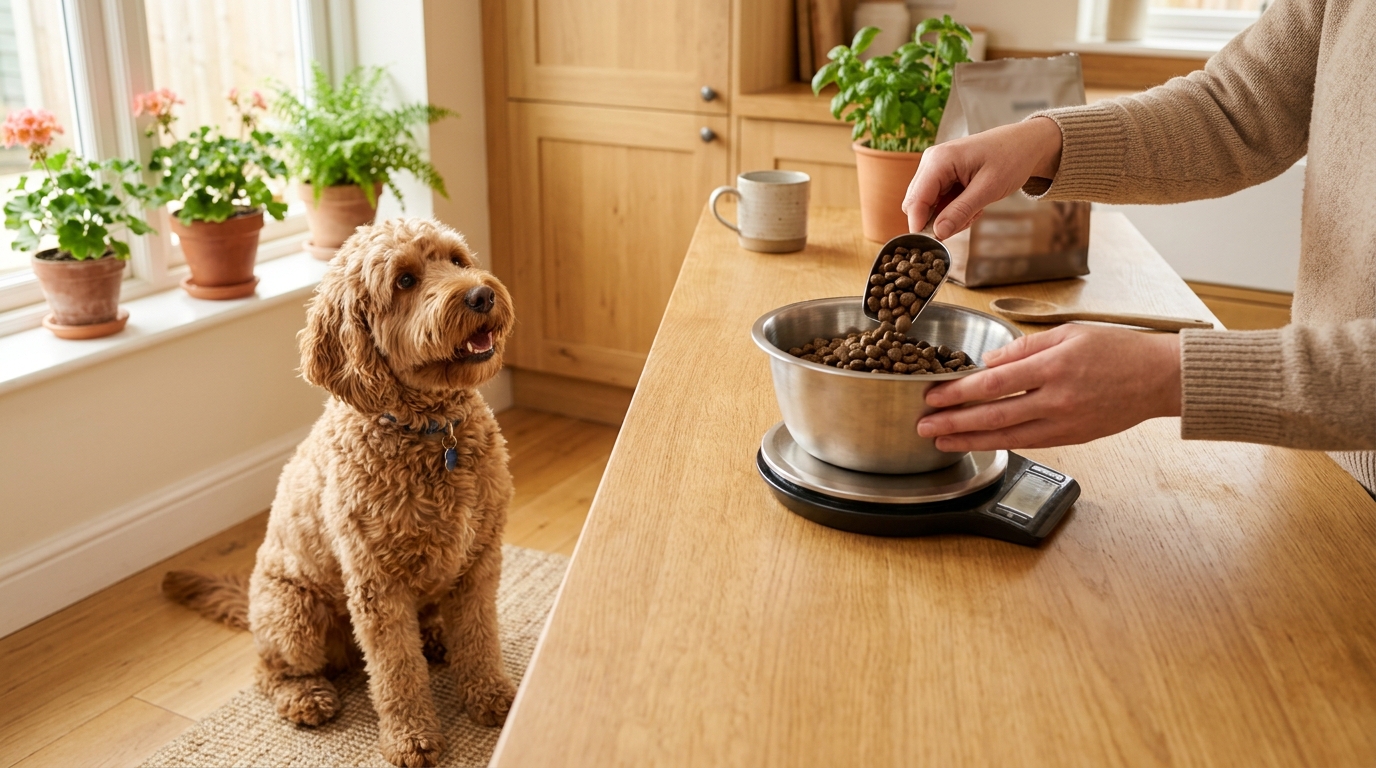
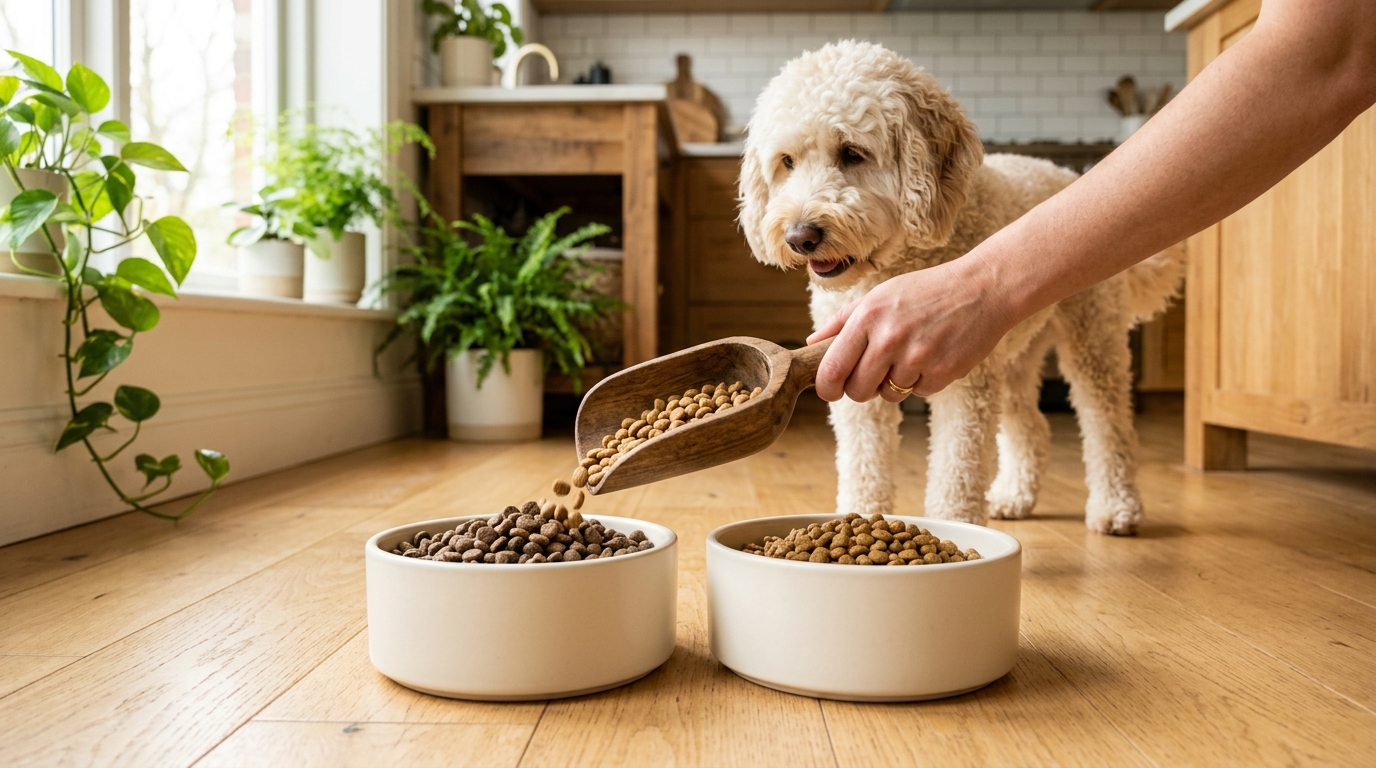
We think every doodle does better with a few everyday maintenance supplements, and omega-3 comes first. All three of ours get them, including Gösta, who has never had a health problem. Targeted supplements are a separate job: a probiotic for recurring soft stool, enzymes for rich meals, slippery elm for a short flare-up. Below: which supplement fits which problem, how to add one without upsetting a sensitive gut, and how to tell a well-made product from marketing.
Supplements work alongside food, not instead of it. Our three doodles eat raw at home and freeze-dried or a good kibble on the road, and their supplement needs look very different on raw than on kibble. The picks below assume a solid food base, see our feeding philosophy for how we rank tiers, and address what raw doesn't always cover (omega-3 balance, targeted probiotic strains, digestive enzymes during transitions).
Maintenance or a specific problem?
We split supplements into two jobs, and it helps to keep them apart.
Everyday maintenance. This is the base every doodle in our house gets, every day, whether or not anything is wrong. Omega-3 is the core of it: it supports skin, coat and a calm baseline of inflammation, and it is the one we would never drop. Gösta gets the same maintenance routine as the other two, even though he has never had a gut, skin or ear problem. For him it isn't treatment; it is part of staying well.
Targeted support. These are for a specific problem: loose stool that keeps coming back, a food transition, a course of antibiotics, a short flare-up. Here the useful question is not "which supplement is best" but "which problem am I trying to fix." Here is how the common ones line up:
| Supplement | What it does | When it helps most | When to skip it | Read next |
|---|---|---|---|---|
| Probiotic | Adds beneficial bacteria | Recurring soft stool, after antibiotics, during food changes | Dog is healthy and stable | Probiotics for doodles |
| Prebiotic fiber | Feeds the bacteria already there | Long-term gut stability, often paired with a probiotic | Very gassy dogs; start tiny | Prebiotics vs probiotics |
| Pumpkin or fiber | Firms up or loosens stool | Mild, short-term soft stool or constipation | Ongoing diarrhea (see a vet) | Pumpkin for upset stomach |
| Digestive enzymes | Help break down food | Rich meals, undigested food in stool, diagnosed EPI | Most healthy dogs | Digestive enzymes for doodles |
| Slippery elm | Coats and soothes the gut lining | Short flare-ups, nausea, mild colitis | Long-term daily use; it can slow absorption of medication | Slippery elm for doodles |
| Omega-3 (fish oil) | Lowers inflammation | Itchy skin, dull coat, allergy-prone dogs | Dogs on blood thinners; ask your vet | Best omega-3 for doodles |
For a gut problem, a probiotic is the lowest-risk first step and the one with the broadest use. If the problem shows up on the skin rather than in the stool, look at the omega-3 dose first: it is already part of the maintenance base, and for Gunnar it was part of what kept his skin settled once the food change had cleared the worst of his yeast and ear trouble.
How to add a supplement without upsetting the gut
A sensitive doodle can react to a new supplement the same way it reacts to a new food. A few rules keep that from happening:
- One at a time. Start one product, wait one to two weeks, then judge it. Add two at once and you won't know which one helped, or which one caused the gas.
- Start low. Begin at a quarter to half of the label dose and build up over a week. This matters most with fiber and prebiotics.
- Give it a fair trial. Probiotics usually need a few weeks; omega-3 needs one to two months before you can judge the coat.
- Food first. No supplement fixes a food that doesn't suit your dog. If the stool is still poor after a month on a sensible food, the food is the next thing to look at, not a second supplement. Start with best dog food for a sensitive stomach.
How to judge a supplement label
Dog supplements are not tested and approved the way medications are, so the label is doing a lot of the work. What we look for:
- A quality seal. The National Animal Supplement Council (NASC) seal means the company passed an independent audit of its manufacturing, labeling and complaint handling, and that products are randomly tested by independent labs. It tells you the product is made carefully and contains what it says. It does not prove that the product works.
- Specific strains and amounts. A probiotic should name its strains and give a CFU count. "Proprietary blend" without numbers tells you nothing.
- A dose by weight. A doodle can be 7 kg or 40 kg. One scoop for every dog is a red flag.
- No unnecessary extras. Chicken flavoring in a supplement for an allergic dog defeats the purpose.
Start here if your doodle has loose stool or gas:
- Best Probiotics for Doodles with Digestive Issues: Full Comparison
- Doodle Soft Stool but Acting Normal: Should You Worry?
- Best Fiber Supplements for Doodles
- The Complete Doodle Sensitive Stomach Guide
Start here if the problem shows up in the skin and coat:
- Best Omega-3 for Doodle Skin Health
- Best Allergy Supplements for Doodles: An Honest Guide
- Can Diet Fix Doodle Skin Problems? An Honest Guide
Start here if you are changing food:
Get the food base right first:
Supplements cannot rescue a diet that does not suit your dog. If you are still troubleshooting the bowl, start with best dog food for a doodle with a sensitive stomach or the limited ingredient guide, then layer supplements on top.
Related hubs: Sensitive Stomach · Food Allergies · Itchy Skin & Paws. For our tested supplement and food picks, see best products for sensitive doodles.
Sign up below to be notified when new guides are published.