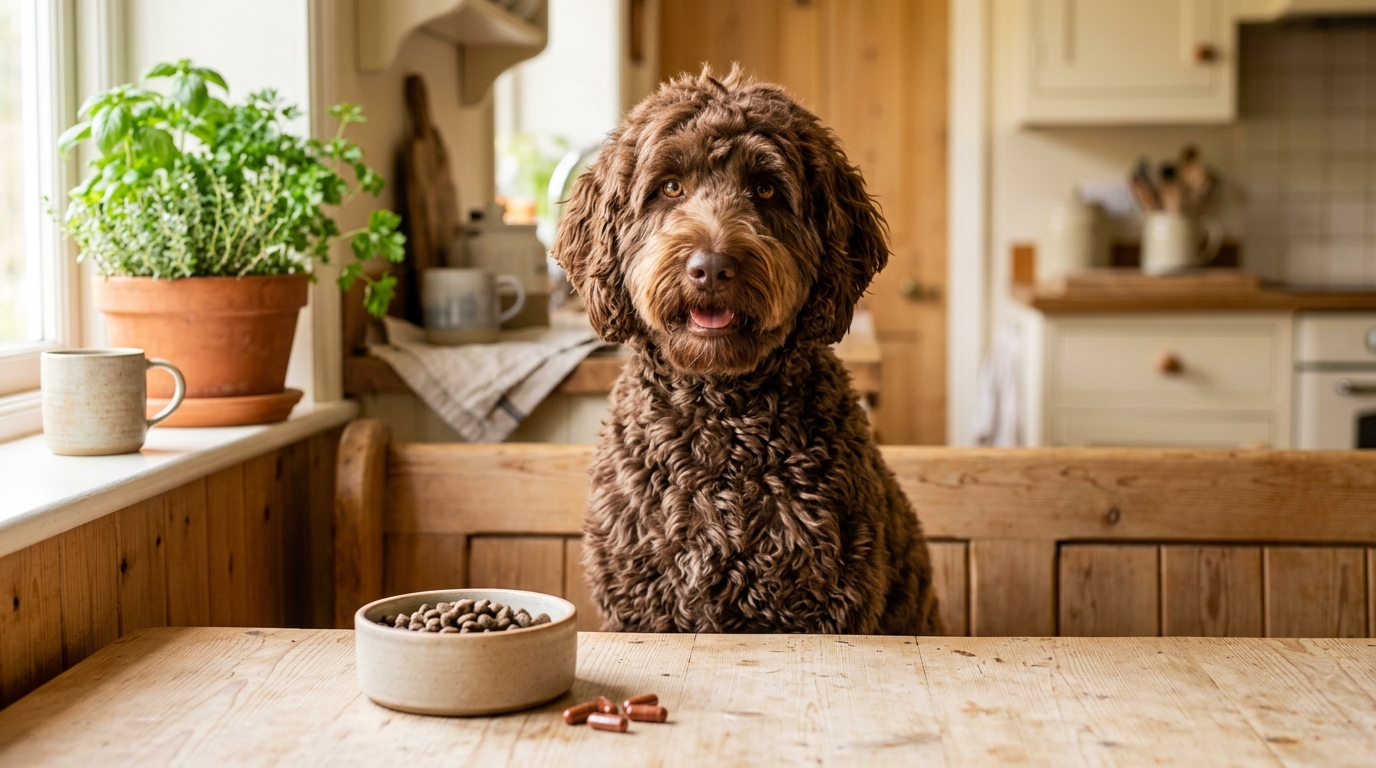
The best chews for doodles are single-ingredient, animal-based chews (beef trachea, fish skin or rabbit ears are easy US options) rather than pressed rawhide, cooked bones, hard antlers or hooves, all of which carry choking, blockage or tooth-fracture risks. For a raw-fed or allergy-prone doodle, pick one clean, low-fat chew that suits your dog, avoid chicken and high-fat pork, size it correctly, and always supervise.
We feed raw at home, and our simple rule is that the chews should match the diet: if the meal is raw and animal-based, the chew should be too. That thinking rules out a whole aisle of processed sticks and hides, and it narrows things down in a way that actually makes shopping easier.
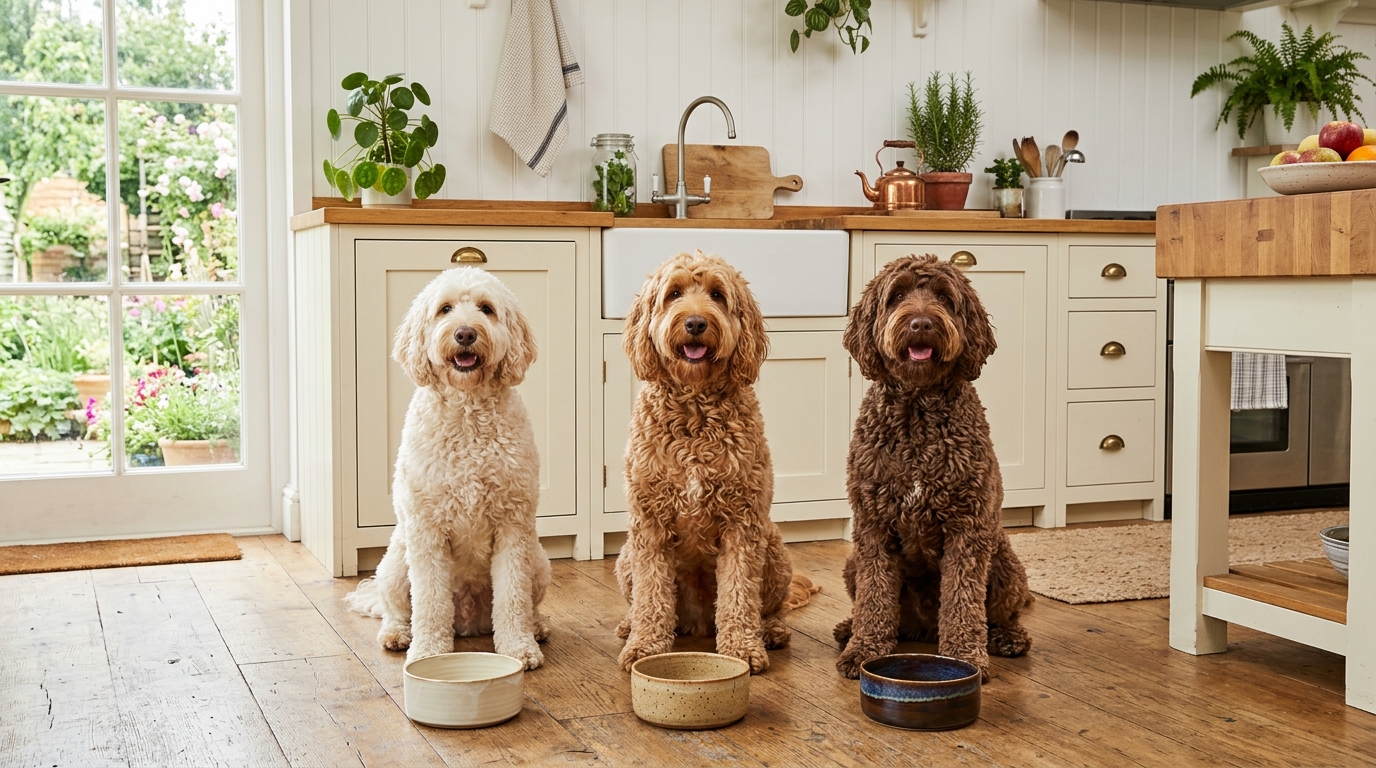
This is a money page, so let's be honest up front about what we do and don't know. The single-ingredient chews we personally use, things like dried horse scalp, are European products we buy locally, so we won't pretend we've tested a US brand we haven't bought. What follows are researched picks for the US market, chosen against the same standards we use for our own three Australian Labradoodles. Our overall pick is the Natural Farm Beef Trachea (6", 6 Pack).
If you already know you want a clean single-ingredient chew and just want the shortlist, jump straight to our best-products hub, or read on for why rawhide is off the table and what we look for instead.
Are rawhide chews safe for doodles?
No, we don't recommend rawhide for doodles, and it's the first thing we steer people away from.
Pressed rawhide is a heavily processed hide product. It doesn't break down the way food does; instead it softens and swells as the dog works it, and a chunk that gets swallowed can lodge in the throat or gut. Blockage is a genuine emergency, and it's exactly the kind of thing we'd rather avoid than treat.
There's a second reason it matters for our readers specifically. Many rawhide and "dental chew" products carry flavorings, coatings and additives, and some of those include chicken in some form. Chicken is Gunnar's trigger (he's our ears-and-yeast dog, and chicken kept him in a yeast cycle for his first two years), so we read every label. A processed chew with a long ingredient list is exactly where a hidden trigger sneaks in.
For vet-reviewed background on dog behavior and anxiety, the ASPCA is a reliable place to start.
What chews are best for a raw-fed dog?
For a raw-fed dog, the best chews are raw or animal-based and single-ingredient, cartilage, trachea and similar bone-and-connective-tissue chews. Here's why they fit so well.
A balanced raw diet isn't just muscle meat; it needs bone material and connective tissue too. Chews like beef trachea are essentially that same material in a form the dog can gnaw on, which means they slot into the diet instead of fighting it. And the chewing itself matters for the teeth, the scraping action helps keep them clean, which is a real bonus when you're not brushing every day.
Our other rule for a sensitive or allergy-prone doodle is counter-intuitive: pick one chew and stick with it. It's tempting to rotate through ten exciting flavors, but if you're managing food sensitivities, every new protein is a new variable. Find one clean, low-fat, single-ingredient chew your dog does well on and let that be the boring, reliable choice. If you're building a whole feeding routine around sensitivities, our Labradoodle sensitive stomach guide covers how we keep variables low.
Top Picks: single-ingredient chews, not just beef
Every pick below is a single ingredient: beef trachea, wild cod skin or rabbit ears, with no chicken, no rawhide and no long ingredient list. We deliberately went beyond beef. At home our own go-to is dried horse scalp, a European chew that is hard to find in the US, and the right protein is whichever one your dog does well on. Fish skin and rabbit ears are the easiest non-beef options to buy here. Deer is trickier: most "deer" chews sold in the US are hard antlers (see the warning above), so we haven't listed them.
| Product | Best For | Rating |
|---|---|---|
| Natural Farm Beef Trachea (6", 6 Pack) | Best Overall | 4.4 |
| K9 Connoisseur Trachea (3" x 20 ct) | Best for Sensitive Households (Made in USA) | 4.6 |
| Jack&Pup 12" Beef Trachea (6 Pack) | Best for Big Chewers | 4.6 |
| Icelandic+ Cod Skin Rolls (3 oz) | Best Non-Beef (Fish) | 4.7 |
| Benji & Louie Rabbit Ears with Fur | Best Novel Protein (Rabbit) | 4.1 |
One practical buying note before the picks: size and pack count matter more than they look. A 3-inch chew disappears in minutes for a big Bernedoodle, while a 12-inch chew is too rich in one sitting for a lightweight Mini, you can always break longer chews into shorter pieces. Trachea keeps well in a sealed container in a cool, dry spot, so a multi-pack is fine to stock. If you want to browse the wider range and compare live prices, the natural dog chew section on Amazon is a good starting point.
What we look for in a good doodle chew
- One ingredient, one named animal part such as "beef trachea", "cod skin" or "rabbit ears", with no flavorings, no coatings and no chicken fat
- Low in fat (this rules out most pork chews and pig ears)
- The right hardness, some give, so it won't crack teeth
- The right size for your dog, so it can't be swallowed whole
- Sourced and made somewhere you trust, US-made or clearly labeled
How to introduce a new chew to a sensitive doodle
Even a clean single-ingredient chew is a new food, and our most sensitive-stomach dog, Sven, taught us to go slow. In his first year, loose stool followed every single food change, so with him we always introduce anything new in a small amount and watch the next day's stool before making it a habit.
- Start small. Offer a short piece, not a whole 12-inch chew, on the first go.
- One new thing at a time. Don't introduce a new chew the same week you switch food.
- Watch the stool. Loose stool the next day means back off; it may just be too rich for now.
- Keep it low-fat. Fat is the usual culprit behind chew-related tummy trouble, one more reason we steer clear of pig ears and fatty pork.
What a good chew will not fix
A chew is enrichment and dental support, not a treatment. If your doodle is genuinely itchy, licking paws, or dealing with recurring ear or yeast issues, the answer isn't a different chew; it's finding the trigger. Chicken was ours, and cutting it changed everything for Gunnar. Start with common ingredient triggers for doodles if that sounds familiar.
Chews also aren't the only way to keep a bright doodle busy. For calm, slow enrichment we lean hard on lick mats, you can smear raw or a topper across them and buy fifteen quiet minutes. Our best lick mats for doodles roundup covers the raw-friendly options we actually use.
And if you're new to feeding this way, two guides do the heavy lifting: our kibble-to-raw transition plan and our guide to sourcing raw meat for dogs, which also applies when you're buying animal-based chews.
FAQ
We do not recommend rawhide for doodles. Pressed rawhide is a heavily processed hide product that swells and can lodge in the throat or gut, and it is a common cause of blockage-related emergencies. For a raw-fed or sensitive doodle, a single-ingredient animal-based chew such as beef trachea is a far cleaner, more digestible choice.
For a raw-fed dog the chews should match the diet: raw or animal-based, not pressed rawhide or starchy dental sticks. Cartilage, trachea and similar bone-and-connective-tissue chews fit a balanced raw diet, which needs bone material as well as meat, and chewing that material helps keep teeth clean. Pick one single-ingredient chew that suits your dog rather than rotating through many.
Pig ears and many pork chews are very high in fat, so they are not necessarily a good choice, especially for a doodle prone to pancreatitis, loose stool or weight gain. We prefer leaner options like beef trachea. If your doodle has a sensitive stomach, keep chews low in fat and single-ingredient.
We are cautious with both. Hard antlers and hooves can fracture teeth, and a cracked tooth is a painful, expensive vet problem. A chew should have a little give to it; the rule of thumb is that if you cannot make a dent with your thumbnail, it is too hard. Softer animal-based chews like trachea are gentler on doodle teeth.
Match the chew to your dog's size and chewing style: it should be big enough that your doodle cannot swallow it whole or bolt it in a few bites. A Mini Australian Labradoodle needs a smaller chew than a Standard Goldendoodle or a Bernedoodle. Always supervise, and take the chew away once it is small enough to swallow.
Where to go next
If you've landed here because your doodle's tummy or skin is the real issue, a chew is a side note, sort the diet first. Start with our Labradoodle sensitive stomach guide to build a low-variable routine, then use these single-ingredient chews as the safe, boring, reliable extra that fits right into it.