Most articles you'll read about salmonella and E. coli in raw dog food are written from one of two starting positions. Either they dismiss the risks ("dogs handle this stuff, it's fine") or they weaponise them ("raw is dangerous, you're putting your family at risk"). Neither serves an Australian Labradoodle, Goldendoodle or Bernedoodle owner trying to make a clear-eyed decision.
This guide is the middle position — the actual data, the actual risk levels, where the fearmongering is overstated, and where the careful attention does need to land.
Most of that careful attention lands on where the meat came from in the first place, which is why our guide to sourcing raw meat for doodles is the practical companion to this one. The conclusion isn't "raw feeding is risk-free" or "raw feeding is dangerous." It's that raw feeding involves the same general bacterial-handling considerations as cooking raw chicken for your family, and that the protocol that addresses those considerations is straightforward once you understand what you're actually managing.
What this guide covers. This is one of the guides in our Raw Food Safety series, focused specifically on the bacterial-risk question. For the broader playbook, see the main Raw Food Safety guide. For the kitchen-hygiene specifics, see the daily kitchen routine.
What's Actually in Raw Pet Food
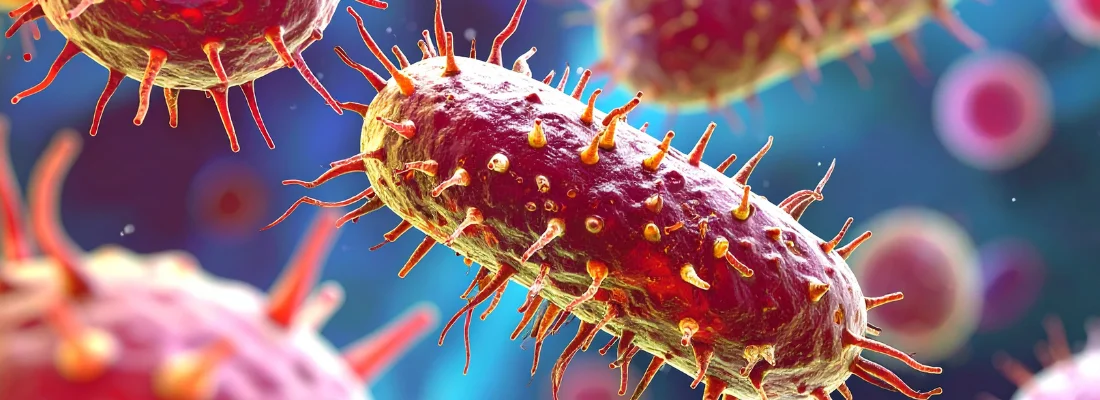
Three pathogens dominate the raw-feeding bacterial conversation. All three deserve specific attention. None are unique to raw pet food — they're the same pathogens you handle every time you cook chicken, beef, or pork for your family.
Salmonella. A genus of bacteria with hundreds of strains. Common strains in raw poultry products include Salmonella Typhimurium and Salmonella Enteritidis. Detection in commercial raw pet food samples varies widely between surveys, brands and proteins, and lands broadly in the same range as retail raw chicken sold for human consumption (which the human cooking step then sterilises).
E. coli (Escherichia coli). Most strains are harmless commensals. The pathogenic strain that gets attention is E. coli O157:H7, primarily associated with raw beef and ground beef. Detection rates in raw pet food run lower than Salmonella, though published figures vary widely between surveys.
Listeria monocytogenes. Survives at refrigeration temperatures (most bacteria slow down in the cold; Listeria keeps multiplying slowly). Detection rates in raw pet food are lower than for Salmonella and vary by protein and by survey. Listeria is the more concerning pathogen for pregnant household members specifically.
The honest summary: raw pet food has measurable bacterial loads. So does the chicken at your grocery store. The bacterial load on raw pet food is not categorically different from raw meat sold for human consumption — it's the same source meat in many cases, sometimes with different processing and handling.
What the Data Actually Says About Clinical Illness
This is where the fearmongering articles tend to drop off. Detection of bacteria in raw pet food samples is real — but it's not the same as clinical illness in dogs or humans. The translation from "salmonella was detected in this brand's product" to "dogs and people are getting sick from raw food" is much smaller than the headlines suggest.
In raw-fed dogs:
- Studies of healthy adult dogs eating raw diets consistently show low rates of clinical illness from Salmonella, E. coli, or Listeria, despite measurable fecal shedding of these bacteria.
- The pattern reported across the veterinary literature is consistent: most healthy raw-fed dogs that test positive for Salmonella in stool are asymptomatic carriers. The bacteria pass through without causing disease. We are describing the general picture here rather than any single study, and your vet is the right person to ask about your own dog.
- Reasons: dogs have a shorter digestive tract than humans, and a resting stomach pH that is typically lower. The acidity destroys most pathogenic bacteria before they can colonise. The shorter transit time means fewer hours for any survivors to multiply.
- Where dogs do get clinically ill: dogs with compromised immune systems, very young puppies, very old dogs, dogs already weakened by other illness. The risk is real but concentrated.
In humans in raw-feeding households:
- The CDC has investigated outbreaks linked to raw pet food. The documented cases are rare — handfuls per year nationally — and almost always involve specific failures in hygiene (a child eating raw pet food directly, an immunocompromised adult handling raw meat without hand-washing, a recall-affected product fed before the recall was issued).
- Studies that have looked for asymptomatic household transmission (raw-fed dog → non-symptomatic human exposure) find detectable bacterial transfer but very low rates of clinical illness.
- The largest single risk vector is cross-contact in the kitchen, not the dog itself. A surface contaminated by raw meat that then contacts ready-to-eat food is the typical path. The dog isn't the bridge; the kitchen is.
The honest summary: clinical illness from raw pet food is real but uncommon, concentrated in specific risk groups (immunocompromised, very young, very old), and almost always traceable to a specific hygiene failure rather than the act of raw feeding itself.
Why Fearmongering Articles Overstate the Risk
A specific genre of article makes raw feeding sound categorically dangerous. Three patterns to watch for.
Pattern 1: Treating bacterial detection as equivalent to illness. Headlines like "Salmonella found in [Brand X] raw food" describe a real test result but don't include the next step — what fraction of dogs eating that food actually got sick. The detection rate and the illness rate are different numbers, often by an order of magnitude or more.
Pattern 2: Citing veterinary association statements without context. The American Veterinary Medical Association (AVMA) has a position statement discouraging raw feeding. The statement is widely cited as if it ends the debate. What's less often quoted: the AVMA's own document specifies that the position is precautionary, focused on documented bacterial detection rather than documented clinical outcome data, and that the organisation acknowledges raw feeding can be done with reduced (not eliminated) risk through proper handling. Several large national veterinary associations (Canada, UK, parts of Europe) have less restrictive positions.
Pattern 3: Conflating raw pet food with raw human food. Articles often note that the FDA has issued warnings against feeding raw food to pets. They less often note that the FDA's authority and reasoning here is around bacterial detection in samples — not documented clinical outcomes — and that the same agency permits sale of raw chicken for human cooking despite similar bacterial detection rates. The internal logic isn't "raw food is intrinsically dangerous." It's "we recommend cooking, full stop, because cooking is the simplest universal control." That recommendation makes sense for human food (because cooking eliminates the risk) and lands oddly for pet food (where cooking changes the food's nutritional profile in ways that matter for some dogs).
Pattern 4: Survivorship bias from veterinary practice. A veterinarian who sees a sick raw-fed dog remembers it. The thousands of healthy raw-fed dogs that never come in for an illness related to their food are invisible. This produces a real clinical impression — "I see lots of sick raw-fed dogs" — that isn't necessarily a population-level finding, just a clinical-encounter finding.
This isn't a defense of careless raw feeding. It's a calibration of how much weight to put on the headline-grade fearmongering versus how much to put on the protocol-grade hygiene rules.
Where the Real Care Actually Matters
The clinical illness rate isn't zero. The protocol exists for reasons. Three places where the careful attention has to land.
Cross-contact in the kitchen. This is the single biggest preventable risk in raw-feeding households. Raw meat contaminates a surface (cutting board, counter, knife, fridge shelf, sink edge). Hours later, a ready-to-eat food crosses the same surface. Bacteria transfer, multiply, and find their way into a human meal. The dog isn't the bridge; the kitchen is. The full hygiene protocol in the main Raw Food Safety guide addresses this directly.
Vulnerable household members. Infants under 1 year, elderly individuals, immunocompromised adults (active chemotherapy, organ transplant recipients, autoimmune conditions on immunosuppressants), pregnant women. These households face elevated consequences from any bacterial exposure. The protocol scales up — sometimes to switching to freeze-dried for the duration of the vulnerable window. See our raw feeding with kids guide for the specifics.
Sourcing. Cheap raw meat from a supplier without testing protocols, cold-chain standards, or batch tracking is a real risk. A bad batch from a careless supplier can have Salmonella detection rates many times higher — high enough that even good kitchen hygiene can't reliably manage it. Sourcing carefully eliminates the upstream end of the risk; see our sourcing guide for what to look for.
The protocol isn't theatre. It's a layered control where each layer reduces the cumulative risk. Skipping a layer doesn't guarantee illness — most raw feeders skip layers and don't get sick — but it leaves the household more dependent on luck.
Where the risk actually sits
| Risk area | Real level | What manages it |
|---|---|---|
| Healthy adult dog eating raw | Low — most positives are asymptomatic carriers | Nothing extra; short, acidic canine GI tract handles it |
| Kitchen cross-contact | Highest preventable risk | Separate boards and surfaces, clean as you go |
| Vulnerable household members | Elevated consequences | Scale the protocol up, or freeze-dried for the vulnerable window |
| Untested cheap supplier | Detection rates run far higher | Source from a supplier with testing and batch tracking |
| Puppies and seniors | Elevated | Vet conversation before starting raw |
What the AVMA, FDA, and CDC Actually Say (Read with Care)
The official-sounding statements from major agencies get cited a lot. The honest reading.
AVMA (American Veterinary Medical Association): Discourages raw feeding. Position is precautionary, based on documented bacterial detection in raw products. The position statement also acknowledges that risk can be reduced through handling protocols and that pet owners who choose to feed raw should understand and follow those protocols. The AVMA does not call raw feeding categorically unsafe or claim documented clinical outcomes prove a population-level risk above that of conventional pet food.
FDA: Has issued warnings about raw pet food, primarily focused on Salmonella detection. The FDA permits sale of raw pet food (it's not banned), regulates labelling and ingredient standards, and tests for pathogens. FDA recall actions have occurred for specific brands and batches; reputable suppliers comply with batch-tracking and respond to recall events promptly.
CDC: Documents human illness clusters linked to raw pet food. The annual numbers are small — typically single digits to low double digits nationally. CDC recommendations focus on hygiene practices in households with raw-fed pets, not on banning raw feeding.
The international picture: Veterinary associations in Canada, UK, Australia, and several European countries have more nuanced positions, generally emphasising hygiene protocols over discouraging the diet. The European Pet Food Industry Federation (FEDIAF) regulates raw pet food production with EU food-safety standards. Raw feeding is broadly more accepted in Northern Europe than in the US.
The collective signal: raw feeding has documented bacterial-detection issues that warrant serious hygiene protocols. Major agencies disagree on whether the right response is "discourage it" or "regulate the protocols." Pet owners who choose to feed raw and follow the protocols described in this series are not doing something the data supports as broadly dangerous; they are doing something that requires more deliberate hygiene than feeding cooked or kibble food.
The Honest Risk Comparison
A useful frame. The risk of foodborne illness from raw pet food, in a household with reasonable hygiene, is comparable to the risk of foodborne illness from cooking raw chicken at home. Both involve handling pathogen-containing meat; both rely on hygiene to keep cross-contact low; both can result in illness when hygiene fails.
The differences:
- Raw pet food doesn't get a cooking step. With chicken, cooking sterilises whatever was in the meat. With raw pet food, the meat goes to the dog uncooked. The dog's GI tract handles most of what gets through, but the human-handling part of the protocol has to be tighter.
- Raw pet food is in your home longer. A pound of raw chicken is in your kitchen for an hour from package to pan. A pound of raw pet food might be in the freezer for weeks, in the fridge for a day, and in the bowl for ten minutes. More handling stages, more chances for cross-contact, more reasons to standardise the protocol.
- The dog is part of the household after eating. Raw chicken doesn't lick your face an hour later. The dog does. The post-meal hygiene window (60 minutes for face contact, immediate hand-washing after dog contact during that window) accounts for this.
These differences are exactly what the protocol addresses. They're not arguments against raw feeding; they're arguments for taking the kitchen-hygiene part seriously.
What Vets Tell You vs. What the Protocol Actually Looks Like
Many vets — particularly in the US — express concern about raw feeding to clients who mention they're considering it. Two things to understand about that conversation.
The concern is real and worth listening to. Vets see preventable illness, including raw-feeding-related illness. Their position isn't ideological; it's protective.
The concern often presumes you won't follow the protocol. A vet's "I don't recommend raw" is implicitly "I don't recommend raw to a household that won't manage the hygiene." A household that does manage the hygiene — that sources carefully, freezes properly, thaws in the fridge, follows the kitchen rules, and applies the post-meal hygiene window with dogs and kids — is in a different risk profile than the worst-case the vet is implicitly warning against.
A productive conversation with a vet about raw feeding: tell them what you're feeding, what your hygiene protocol is, and what your household composition looks like. Ask what specific clinical signs they want you to watch for, and whether they want stool cultures or bloodwork at routine checkups given the diet. A vet who can engage with the protocol level (rather than the diet-category level) is the right partner for raw-fed dogs.
Frequently Asked Questions
Clinical Salmonella illness in healthy adult raw-fed dogs is uncommon. Most dogs that test positive for Salmonella in stool are asymptomatic carriers — the bacteria pass through without causing disease, due to dogs' shorter and more acidic GI tracts. Where clinical illness does occur, it's concentrated in dogs with compromised immune systems, very young puppies, very old dogs, or dogs already weakened by other illness.
Possible but uncommon. Documented cases are rare and almost always involve specific hygiene failures — cross-contact in the kitchen (a surface contaminated by raw meat that contacts ready-to-eat food), an immunocompromised adult handling raw meat without hand-washing, or a child kissing the dog within an hour of a raw meal. The dog itself isn't usually the bridge; the kitchen is. Reasonable hygiene practices manage the risk to roughly the level of cooking raw chicken at home.
Most major veterinary associations recommend against raw feeding on a precautionary basis grounded in documented bacterial detection in raw pet food samples. The recommendations are typically not based on documented population-level clinical outcomes proving raw feeding causes more illness than conventional diets — they're based on the simpler universal recommendation "cooking is a reliable bacterial control, raw isn't, so we recommend cooking." Pet owners who choose raw and follow rigorous hygiene protocols operate in a different risk profile than the worst-case scenario the recommendations implicitly warn against.
On average, yes. Commercial premade brands have testing protocols, batch tracking, and standardised processing that most butchers don't. A reputable raw-feeding butcher with strong protocols can be just as safe — sometimes safer — but the variance is wider in the local-supplier channel than in the commercial-premade channel. New raw feeders should usually start with commercial premade for that reason. See the sourcing guide for what to look for in either channel.
Freeze-dried raw has substantially lower bacterial loads than fresh raw — the freeze-drying process reduces pathogen counts. For households with infants, immunocompromised adults, or pregnant members, freeze-dried is a reasonable choice for the duration of the vulnerable window. For an average household with healthy adults and walking-age-or-older children, fresh raw with proper hygiene is comparable in real-world risk and offers slightly better nutritional intensity. Both tiers are defensible; the choice comes down to household composition and household tolerance for the kitchen logistics. See our feeding philosophy for how we rank the tiers.
The Bottom Line
Salmonella, E. coli, and Listeria are detectable in raw pet food. They're also detectable in raw meat sold for human consumption. The clinical-illness rate in raw-fed dogs is low and concentrated in specific risk groups; the clinical-illness rate in humans in raw-feeding households is low and almost always traceable to a specific hygiene failure rather than the practice of raw feeding itself.
The protocol that manages the risk isn't theatre — it's a real layered control that addresses real bacterial-handling considerations. Sourcing carefully, freezing properly, thawing in the fridge, following kitchen-hygiene rules, applying the post-meal hygiene window with dogs and kids. Each layer reduces the cumulative risk; skipping layers leaves the household more dependent on luck.
The fearmongering articles overstate the risk; the dismissive articles understate it. The honest middle position: raw feeding involves the same general bacterial-handling considerations as cooking raw chicken at home, and the protocol that addresses those considerations is straightforward once you understand what you're actually managing.
For the protocol itself, see the main Raw Food Safety guide. For the household-with-kids variant, see raw feeding with kids. For the cold-chain detail, see freezing and thawing. For the upstream sourcing question, see sourcing raw meat.