
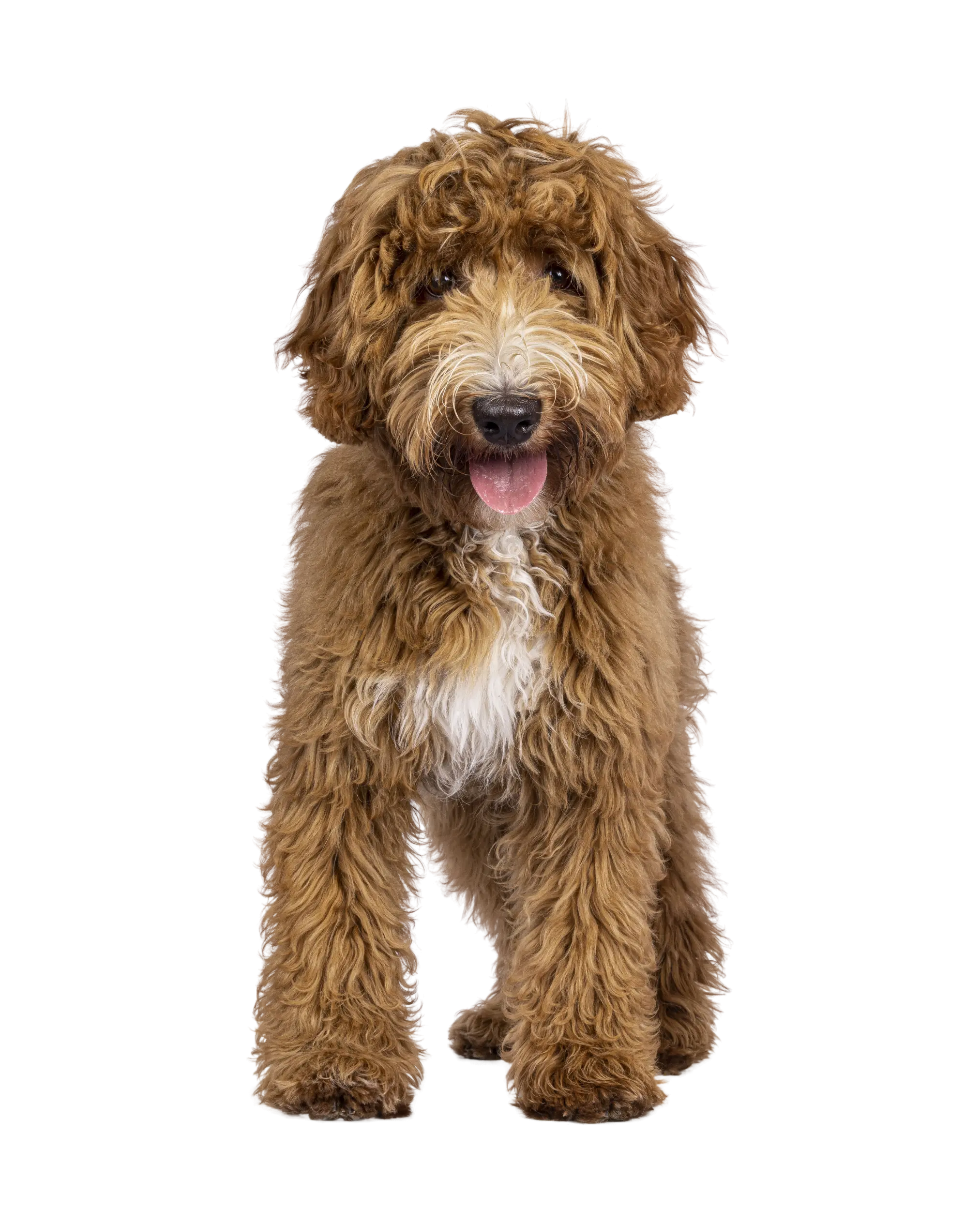
I'm Emma, and I didn’t plan to build a doodle health website. My son and I are both allergic to dogs, and for years I assumed a dog just wasn’t possible for us. Then we found the Australian Labradoodle, and Gunnar came home.
Gunnar was our first dog and is still our most sensitive one: allergies, ear infections, itchy paws and behaviour challenges. Trying to help him sent me down a rabbit hole of books, courses, trainers and trial and error that never really ended, and taught me more about doodle health than I ever expected to know.
A year later Sven arrived with a stomach of his own: yellow bile every morning and loose stool after every food switch. Then came Gösta, and this time we did everything differently from day one: raw at home from puppyhood, premium kibble and freeze-dried raw on the road. He's never had a single gut-driven problem.
Three dogs. Two different recovery arcs and one done right from the start. That’s what this site is built on.
What this site is
HappiestDoodles is a research-backed resource for Goldendoodle, Labradoodle, and Bernedoodle owners. It started with digestive issues, food allergies and itchy skin, and has grown to cover the everyday care of a doodle too: the coat, behaviour, size and the senior years.
The health guides are organized around the areas where doodle owners struggle most:
- Sensitive Stomach — vomiting, soft stool, bile reflux, food transitions. The most common doodle health issue, and the most misunderstood. We cover every symptom, cause, and practical solution.
- Food Allergies — how to tell a true allergy from a food intolerance, how to run an elimination diet that actually works, and how to find a formula your doodle can genuinely thrive on.
- Itchy Skin & Paws — chronic scratching, paw licking, ear infections, and the yeast cycle. What looks like a skin problem is almost always a gut problem. We explain the connection and how to break it.
- Gut Health & Supplements — probiotics, digestive enzymes, omega-3s, prebiotics. What the research actually says, what’s overhyped, and how to build a supplement routine that makes a real difference for a sensitive doodle.
- Raw Food Safety — sourcing, freezing and thawing, the daily kitchen routine, and raw feeding safely with kids in the house.
And the everyday care that every doodle needs:
- Coat & Grooming — brushing, bathing, trimming at home, and preventing the mats that a doodle coat is famous for.
- Calm & Behavior — hyperactivity, separation anxiety and being home alone, and the calm, relationship-based approach we use.
- Size, Breeds & Generations — how big doodles get, F1 vs F1b vs multigen, coat types, and an honest answer on whether doodles are hypoallergenic.
- Eyes, Joints & Senior Care — tear stains and eye discharge, healthy weight, joint health, and comfort in the senior years.
Plus Best Products: dog food, probiotics, supplements, ear cleaners, and shampoos honestly reviewed for sensitive doodles. No brand deals. No fluff. Just what works.
We also have free tools for the questions that need a number: how big your puppy will get, how much to feed, and how to plan a food transition.
The three dogs
Every recommendation on this site has been informed by real experience with three dogs who each taught us something different.
- Gunnar broke the yeast and ear infection cycle after we stopped treating the ears and started looking at the diet. His case is behind every guide on itchy skin, paws, and ears — start with doodle allergy vs yeast infection and yeast infection on doodle paws.
- Sven had the classic sensitive stomach — yellow bile every morning, loose stool after every food switch. He’s the reason we built our own food transition protocol and why we write about gut health the way we do — see bile vomiting in doodles and the 7-day food transition plan.
- Gösta is our control case. He started on raw from puppyhood with premium kibble and freeze-dried raw for travel, and has never had a gut-driven problem. He's the proof that the feeding philosophy isn't just about fixing damage — done from day one, it prevents the damage from ever happening. His routine is written up in kibble to raw transition for dogs and raw food safety for doodles.
How we feed
We feed our three doodles raw at home and a good kibble or freeze-dried raw on the road — on purpose. We rank food in three tiers: raw → freeze-dried raw → better kibble, and the tier matters less than picking the best version of the one that fits your life.
That position is not ideology; it is what played out across three dogs, and it is set out in full with the reasoning, the honest costs of each tier and what we refuse to claim on our feeding philosophy page.
A note on product recommendations
Some links on this site are affiliate links — I earn a small commission if you purchase through them, at no extra cost to you. This is how the site stays free and updated.
I only recommend products I would actually use for Gunnar, Sven, and Gösta. If something doesn’t work or isn’t worth the price, I say so.
A note on vet advice
Everything here is for educational purposes. I’m not a veterinarian, and nothing on this site replaces professional veterinary care. When something is serious, the answer is always: call your vet.
What I offer is what your vet often doesn’t have time for — the detailed, practical breakdown of *why* things happen and *what to do between appointments*.
Our articles are drafted with AI assistance, and every one is reviewed here before it goes live — the routines, the mistakes and the hands-on product experience in them are ours.
Get in touch
Questions, feedback, or want to share your doodle’s story?
And if you’re just getting started, grab the free Sensitive Doodle Starter Guide — it’s the one resource I wish I’d had on day one.