Yes, plain canned pumpkin (not pie filling) can genuinely help a doodle's mild upset stomach. Its soluble fiber absorbs excess water in the gut to firm up diarrhea, and it adds bulk and moisture to ease constipation. Feed roughly 1 teaspoon of plain canned pumpkin per 10 lbs (4.5 kg) of body weight, once or twice daily, for just a few days.
That's the short answer. But if you've got a doodle with soft stool, the runs, or a dog who hasn't pooped normally in a day, you probably want the details: why pumpkin works for opposite problems, exactly how much to give a Mini versus a Standard, how long to keep it up, and, honestly, when it isn't going to fix anything. If you already know you want pumpkin and just want to know which one to buy, skip ahead to our roundup of the best pumpkin supplement for dogs. And if the soft stool keeps coming back after the pumpkin wears off, the real fix is usually gut support: if you already know that's the road you're on and just want the shortlist, see our best probiotics for doodle digestive issues.
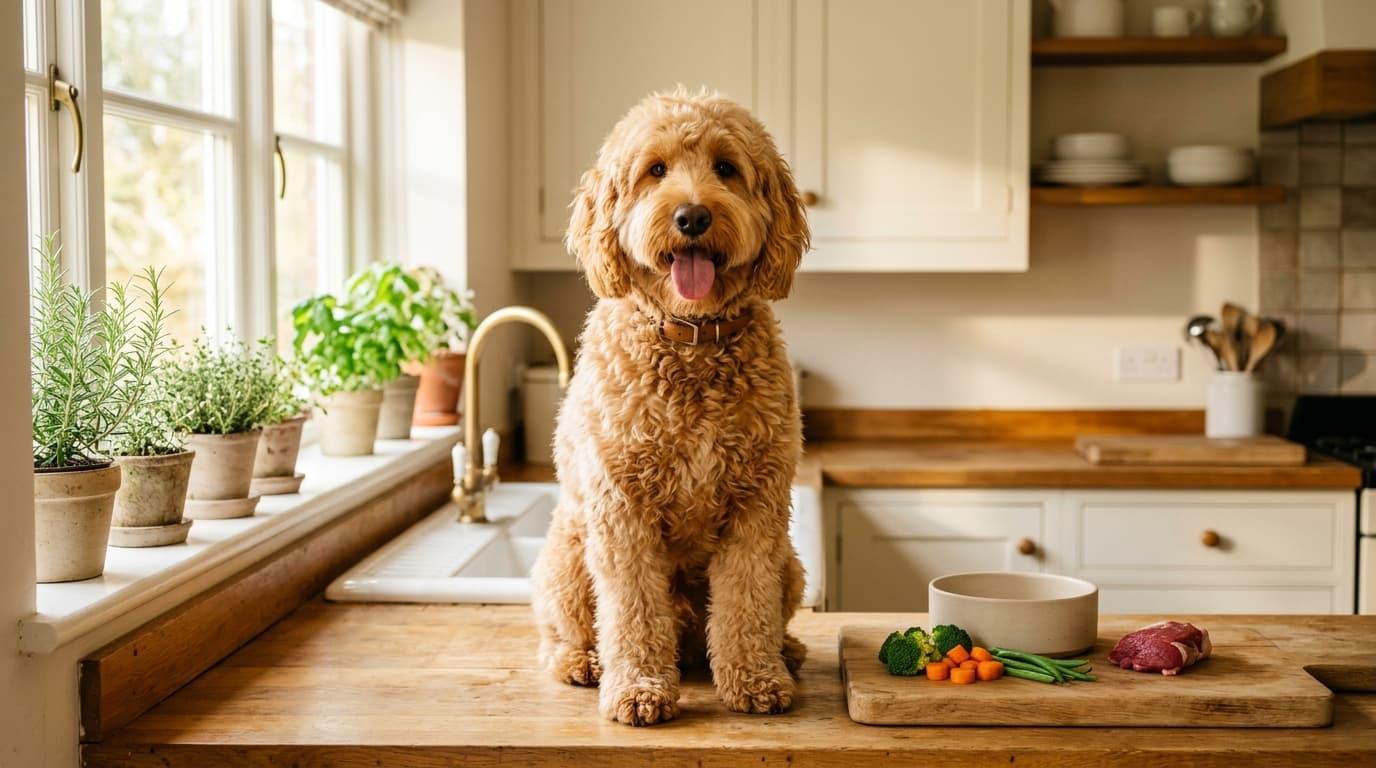
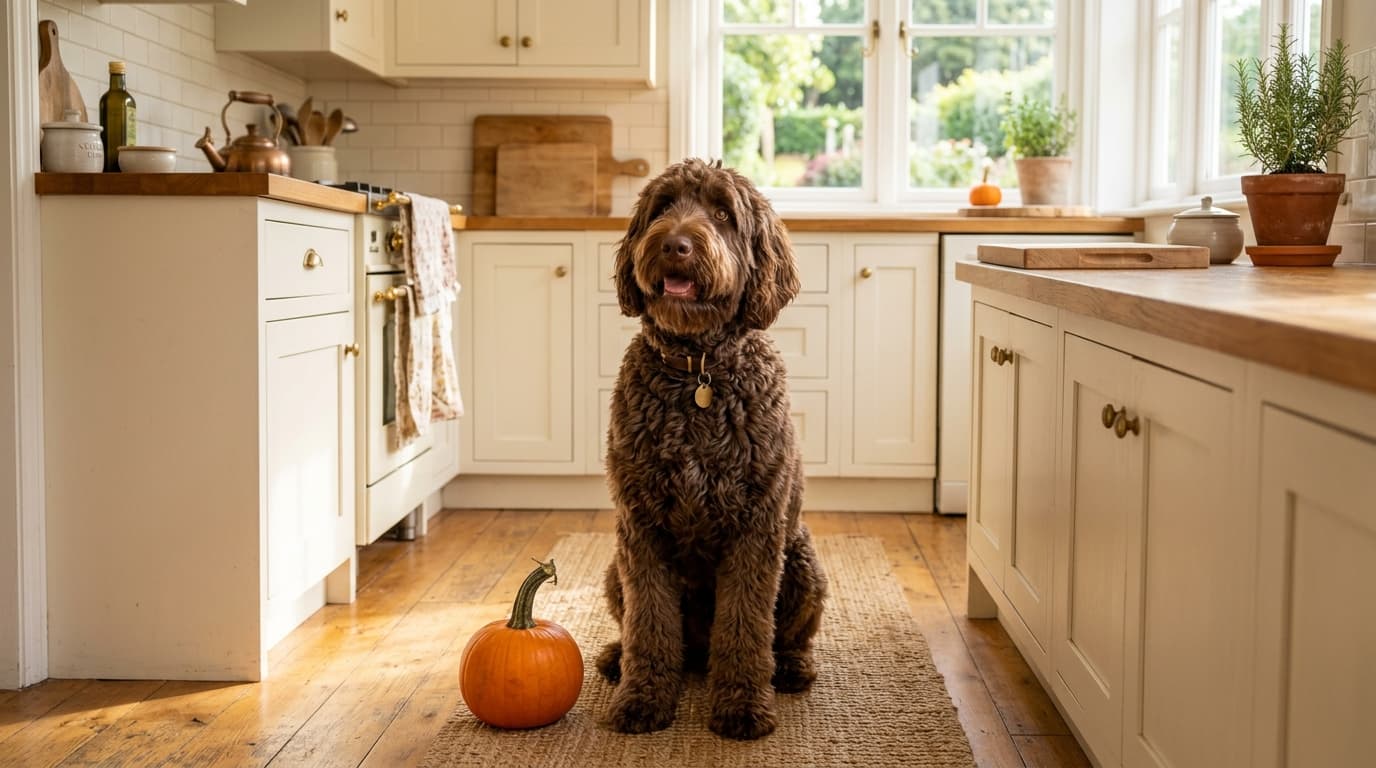
We feed our three doodles (Sven, Gunnar, and Gösta) raw at home, and pumpkin has earned a permanent spot in our fridge. Here's how we actually use it, and where it falls short.
Is pumpkin good for a dog's stomach? Here's why it works
Pumpkin is one of those rare foods that helps with both diarrhea and constipation, and that confuses a lot of owners. The secret is soluble fiber.
Soluble fiber does two things at once inside the gut:
- When stool is too loose, it absorbs the excess water, adding form and slowing things down.
- When stool is too hard or slow, it holds onto moisture and adds gentle bulk, helping things move.
It's a regulator, not a laxative and not a "plug." That two-way action is why the same tablespoon of pumpkin can settle a doodle with diarrhea and help a constipated one.
Pumpkin also feeds beneficial gut bacteria (it acts as a mild prebiotic), and it's easy on the stomach, low in fat, mostly water, gentle to digest. For a breed mix that's genuinely prone to sensitive stomachs, that's a nice combination. The Merck Veterinary Manual covers dietary fiber's role in managing canine gastrointestinal upset in more detail. If you're not sure whether your dog has a sensitive gut in the first place, our guide to the signs your doodle has a sensitive stomach is a good starting point.
Canned pumpkin vs. pie filling vs. fresh: pick the right one
This is where people go wrong, so let's be crystal clear.
| Type | Safe for doodles? | Notes |
|---|---|---|
| Plain canned 100% pumpkin | ✅ Best choice | Already cooked, smooth, consistent fiber. Read the label, the only ingredient should be pumpkin. |
| Fresh cooked pumpkin | ✅ Fine | Must be plain, cooked soft, and pureed. No salt, butter, sugar, or oil. |
| Canned pumpkin pie filling | ❌ Never | Contains sugar, and spices like nutmeg and cloves, nutmeg is toxic to dogs in quantity. |
| Raw pumpkin | ⚠️ Avoid | Hard to digest and not helpful for an already-upset gut. |
For canned pumpkin for dogs, we grab a plain can and check that "pumpkin" is the whole ingredient list. That's it. Fancy versions marketed at dogs aren't necessary, though shelf-stable pumpkin powders and pods exist if you want portioned convenience, we compare a few in our roundup of the best pumpkin supplements for dogs.
How much pumpkin for doodle diarrhea? Dosing by size
Here's the part most generic articles skip: doodles range from 15-lb (6.8 kg) Minis to 70-lb (32 kg) Standards, so "give some pumpkin" isn't useful advice.
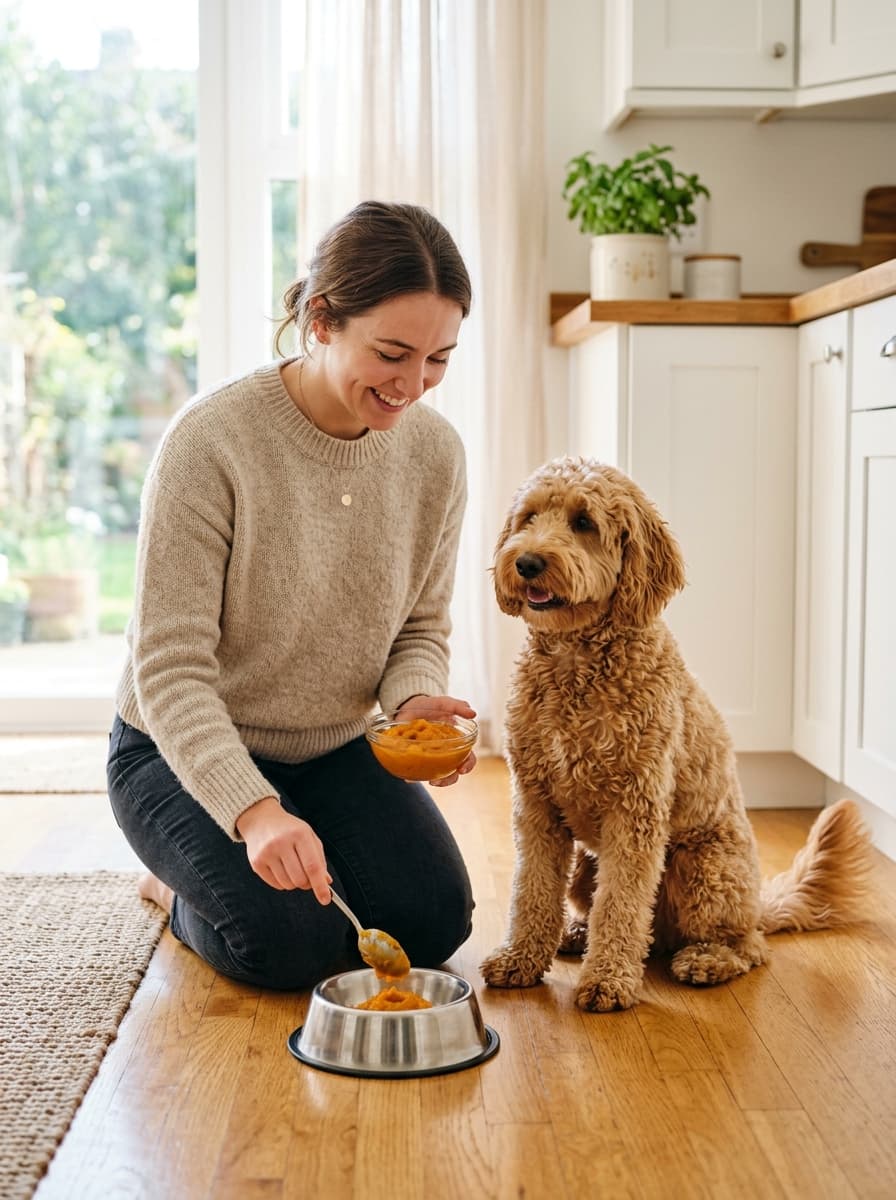
The rule we use is 1 teaspoon of plain canned pumpkin per 10 lbs (4.5 kg) of body weight, given once or twice a day. Start on the low end, you can always add more, but too much fiber too fast can loosen things further.
| Doodle size | Approx. weight | Per serving (start low) | Frequency |
|---|---|---|---|
| Mini | 15-30 lbs (6.8-14 kg) | 1-2 tsp | 1-2× daily |
| Medium | 30-45 lbs (14-20 kg) | 1-2 tbsp | 1-2× daily |
| Standard | 45-70 lbs (20-32 kg) | 2-4 tbsp | 1-2× daily |
Mix it right into your dog's food. Most doodles love the taste, so it's rarely a fight. For pumpkin for dog constipation, use the same amounts plus make sure your doodle is drinking plenty of water, fiber needs moisture to do its job.
How long should you feed pumpkin?
Pumpkin is a short-term tool, not a daily forever-supplement for an upset gut. Use it for 3 to 5 days at most.
Here's our rough timeline:
- Day 1-2: Add pumpkin, keep meals simple, watch stool.
- By 48-72 hours: You should see clear improvement. If you do, taper the pumpkin back off as stool normalizes.
- If nothing's better by day 3, or it's getting worse, stop guessing and call your vet.
The reason for the time limit is simple: pumpkin manages symptoms, it doesn't diagnose or cure. If a doodle keeps having loose stool once you stop the pumpkin, the pumpkin was masking a problem you still need to solve. For a realistic sense of how long normal tummy upset should take to resolve, see how long doodle diarrhea lasts.
What pumpkin fixes: and what it only masks
Being honest here beats the generic sites. Pumpkin is great, but it has real limits.
Pumpkin genuinely helps with:
- A one-off dietary indiscretion (ate something weird on a walk)
- Mild diarrhea or soft stool with no other symptoms
- Occasional constipation
- Smoothing out a food transition, though pumpkin is a supporting player, not the plan. The plan is our 7-day food transition guide.
Pumpkin does NOT fix:
- Food allergies or intolerances. If your doodle reacts to an ingredient, fiber won't help, you'll want to identify the trigger. Start with food allergy vs. intolerance.
- Parasites, infections, or serious GI disease. These need a vet.
- Chronic soft stool. Recurring issues point to diet or gut health, not a pumpkin shortage.
If your doodle has ongoing tummy trouble, pumpkin is a band-aid. The real work is diet and gut health, which we cover in the full doodle sensitive stomach guide.
How pumpkin fits with probiotics and a sensitive-stomach diet
Pumpkin plays well with others. In a doodle household, we think of it as one leg of a three-legged stool:
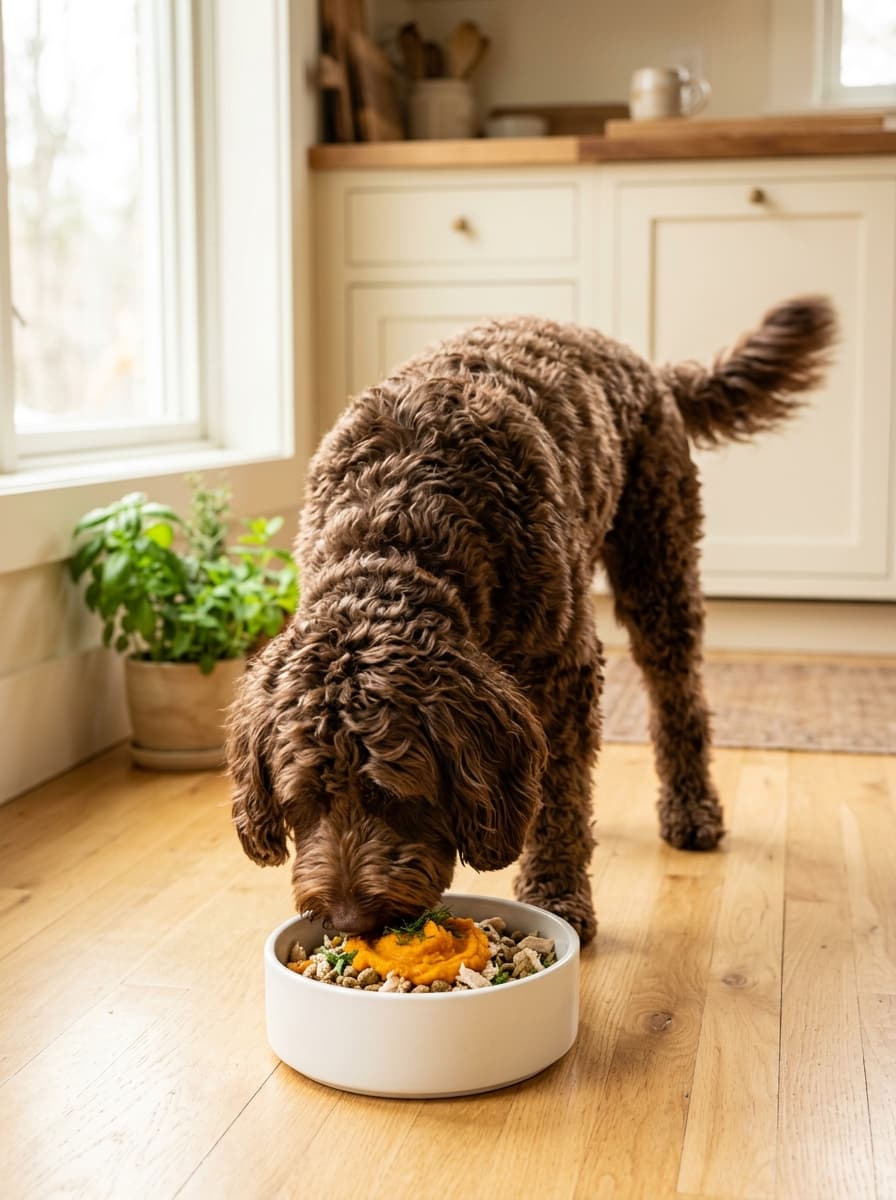
- Pumpkin, short-term fiber to regulate stool during a flare-up. If you'd rather keep a portioned powder or pod on the shelf than open a whole can, our best pumpkin supplement for dogs roundup walks through the choices.
- Probiotics, to rebuild healthy gut bacteria, especially after diarrhea or a course of antibiotics. See the best probiotics for doodles with digestive issues.
- A calm, appropriate diet, a simple, low-fat, easily digestible food while the gut settles, then a steady sensitive-stomach diet long-term. Our picks live in best food for a doodle with a sensitive stomach.
Some owners also reach for slippery elm, which is soothing and complementary to pumpkin, more on that in our slippery elm for doodle digestive issues guide.
One thing we've learned with our own crew: overfeeding causes as many soft-stool days as any exotic cause. Before you blame the food, check the portion size, overfeeding and stomach issues in doodles surprised us more than once.
A quick note from our kitchen
When we transitioned Gösta onto a new protein, he had a couple of soft-stool mornings, totally normal for a food change. We didn't panic. We added a tablespoon of pumpkin to each meal, slowed the transition down, and by the third day his stool was back to normal and we tapered the pumpkin off. That's exactly the job pumpkin is good at: smoothing the bumps, not doing the heavy lifting.
What we didn't do was keep feeding pumpkin indefinitely to paper over the problem. When soft stool keeps coming back, that's your signal to look at the diet itself, not the fiber.
FAQ
A good starting point is 1 teaspoon of plain canned pumpkin per 10 lbs (4.5 kg) of body weight, once or twice a day. That means roughly 1-2 teaspoons for a Mini, 1-2 tablespoons for a Medium, and 2-4 tablespoons for a Standard doodle. Start on the low end and adjust, too much fiber can loosen stool further.
Plain canned 100% pumpkin puree is easiest and most consistent, it's already cooked, smooth, and has a reliable fiber content. Fresh pumpkin works too but must be plain, cooked soft, and pureed with no salt, sugar, or spices. Never use canned pumpkin pie filling, which contains sugar and spices like nutmeg that can upset or harm your dog.
Use pumpkin as a short-term tool for a few days, typically 3 to 5 days at most. If your doodle's diarrhea, soft stool, or constipation hasn't clearly improved within 48 to 72 hours, or gets worse, stop guessing and call your vet. Pumpkin manages symptoms; it doesn't fix an underlying cause.
Yes. Pumpkin's soluble fiber is a two-way regulator: it absorbs excess water in the gut to firm up loose stool, and it adds bulk and holds moisture to help move things along when your doodle is constipated. This is why the same spoonful of pumpkin can help opposite problems.
Skip the pumpkin and call your vet if you see blood in the stool, repeated vomiting, a bloated or painful belly, lethargy, refusal to eat or drink, signs of dehydration, or diarrhea lasting more than a couple of days. Puppies, seniors, and very small doodles dehydrate fast and warrant an earlier call.
The bottom line: and your next step
Pumpkin is a legitimately useful, gentle tool for a doodle's mild upset stomach: 1 teaspoon per 10 lbs (4.5 kg), plain canned only, for a few days, and it works for both diarrhea and constipation. Just remember it manages symptoms, it doesn't solve the why.
If your doodle's tummy troubles keep coming back, the real fix is building a solid gut foundation. Start with our best probiotics for doodles with digestive issues, and if a food change is on the horizon, follow the 7-day food transition plan to avoid the soft-stool days in the first place.