If you have just spotted blood in your doodle's stool, here is the short version: bright red streaks (hematochezia) usually come from the lower gut and are often minor, such as a food change or mild colitis, while black, tarry stool (melena) is digested blood from higher up and always needs a vet. Call your vet now if there is a large amount of blood, repeated bloody diarrhea, vomiting, lethargy, or a painful belly. A single small streak in an otherwise bright, eating dog can usually be monitored at home for 24 to 48 hours.
Seeing blood is frightening, and it is completely normal to feel a jolt of panic. We have been there with our own three. The good news is that most cases are not the worst-case scenario, and there is a clear, calm way to tell the difference between "watch and wait" and "phone the vet right now."
This guide walks you through the two types of blood, the causes that turn up most often in doodles specifically, and a simple triage framework so you are not left guessing.
If you already know you need a vet and just want to be sure you are reading the signs right, skip to the red-flag list below. And if the blood came with ongoing loose stool, our guide to chronic diarrhea in doodles is a useful companion read.
The two kinds of blood: bright red vs. black tarry
Vets split blood in stool into two categories, and the distinction tells you roughly where the bleeding is coming from. This is the single most useful thing you can observe before you call. The Merck Veterinary Manual (merckvetmanual.com) describes both patterns in its sections on gastrointestinal disease, and the location of the bleeding is exactly what the color helps you narrow down.
Bright red blood (hematochezia)
This is fresh, red blood. It usually sits on the surface of the stool, streaks through it, or appears as a few drops at the end. Because it has not been digested, it comes from the lower digestive tract: the colon, rectum, or anus.
In doodles, bright red blood most often points to irritation in the large intestine, which brings us to colitis (more on that below). It can look alarming even when the amount is small, because red stands out against a normal brown stool.
Black, tarry stool (melena)
Black, sticky, tar-like stool is the one to take more seriously. This is digested blood, which means it has traveled the full length of the gut from somewhere higher up, the stomach or small intestine. The digestion process turns it dark.
Melena is harder to spot because it does not look like obvious blood. If your doodle's stool is unusually black, shiny, and sticky, treat it as a reason to call your vet rather than a "monitor at home" situation.
Common causes of blood in doodle stool
Doodles are not a single breed with a single gut, so causes vary. But a few turn up again and again, and some connect directly to traits doodle owners already know well: sensitive stomachs, food sensitivities, and a tendency toward stress.
Dietary indiscretion
The classic. Your doodle eats something they should not: a stolen scrap, something off the ground on a walk, a rich table food, or too much of a new treat. The gut reacts, and you can see loose stool with streaks of blood. Many of these cases settle on their own within a day or two with a bland approach, provided the dog stays bright.
A food change
A fast or unsuitable food switch is one of the most reliable ways to upset a sensitive doodle's gut. Our Sven, the most sensitive stomach of our three, had loose stool after every single food change in his first year, and a rushed transition can tip into colitis with visible mucus and blood. This is exactly why we transition slowly. If your blood episode followed a new bag of food, read our doodle diarrhea after switching food guide and our 7-day food transition plan.
Colitis (including stress colitis)
Colitis is inflammation of the colon, and it is the single most common reason doodle owners see mucus and blood in dog poop. We explain the mucus side in mucus in doodle stool. The hallmark picture is loose stool, often with a jelly-like mucus coating, plus streaks of bright red blood and frequent straining.
Stress is a genuine trigger here. Doodles can be sensitive, emotionally tuned-in dogs, and a stressful event (boarding, travel, a house move, a new baby, fireworks) can set off a bout of colitis. Sensitive, emotional dogs really do carry stress in their gut. We have written a full guide on stress diarrhea in doodles because it comes up so often.
Parasites
Intestinal parasites (worms like hookworms and whipworms, and protozoa like giardia) irritate the gut lining and can cause bloody or mucus-laden stool, especially in puppies. A fresh stool sample lets your vet check for these quickly, which is one reason collecting one is so helpful.
Food allergies and sensitivities
The poodle line carries a real, documented predisposition to food sensitivities and allergic skin disease, and that trait passes into Australian Labradoodles, Goldendoodles, and Bernedoodles alike (as a predisposition, not a guarantee). A food the dog cannot tolerate can cause chronic gut inflammation that shows up as intermittent soft stool, mucus, and sometimes blood. Chicken is a common culprit, and it is our Gunnar's trigger. If you suspect food is behind recurring episodes, our food allergies in doodles guide and the elimination diet for doodles walk you through it properly.
AHDS (formerly HGE)
Acute hemorrhagic diarrhea syndrome is the serious one. It is a sudden onset of profuse bloody diarrhea, often described as looking like raspberry jam, frequently with vomiting. It can cause dangerous fluid loss fast. This is not a "watch at home" situation: it is a same-day emergency. The American Animal Hospital Association (aaha.org) and your own vet are the right places to turn when digestive symptoms cross from mild to urgent.
When to worry: a calm triage framework
Here is the part you came for. The goal is not to panic over every red fleck, and it is not to ignore a real emergency. It is to match what you are seeing to the right action.
| What you see | Likely urgency | What to do |
|---|---|---|
| One small bright red streak, firm stool, dog bright and eating | Low | Monitor 24-48 hrs, bland support, watch for repeats |
| Mucus + streaks of red, loose stool, dog otherwise well | Low to moderate | Monitor closely, call vet if it repeats or dog dips |
| Repeated bloody diarrhea over a day | Moderate to high | Call your vet, likely same-day |
| Large volume of blood / "raspberry jam" diarrhea | High / emergency | Call vet now, do not wait |
| Black, tarry, sticky stool (melena) | High | Call vet promptly even if dog seems fine |
| Any blood + vomiting, lethargy, pale gums, painful belly | Emergency | Seek veterinary care immediately |
Call the vet now if you see any of these
Reasonable to monitor at home for 24 to 48 hours
A single small streak of bright red blood, on a stool that is otherwise mostly formed, in a doodle who is bright, eating, drinking, and acting completely normal, is the kind of thing you can reasonably watch. Keep an eye on the next few bowel movements. If the blood clears and does not come back, it was most likely minor irritation. If it repeats, worsens, or your dog's energy or appetite dips, that moves you into "call the vet" territory.
What to gather before the vet visit
A little prep makes the appointment faster and more useful.
- A fresh stool sample. If you can safely collect one (ideally under a few hours old), bag it, seal it, and bring it. This lets your vet check for parasites without a separate return trip.
- The color and amount of blood. Bright red vs. black. A streak vs. a pool. A photo on your phone is genuinely helpful.
- Stool consistency. Formed, soft, or liquid? Mucus present?
- A timeline. When did it start, how many episodes, is it getting better or worse?
- Recent changes. New food, new treats, a stressful event, possible access to something they should not have eaten, missed or recent deworming, current medications.
- Other symptoms. Appetite, energy, vomiting, drinking more or less, straining.
That short summary is the difference between a vet guessing and a vet knowing where to look.
Supporting a sensitive doodle gut (once the serious stuff is ruled out)
For a mild, bright-red, self-limiting episode in a dog who is otherwise well, the usual gentle support applies: a short period of a bland, easily digested approach, plenty of water, and a calm, low-stress environment. Some owners find pumpkin and slippery elm helpful for soothing the gut, and a good probiotic can support recovery. None of these replace a vet when red flags are present.
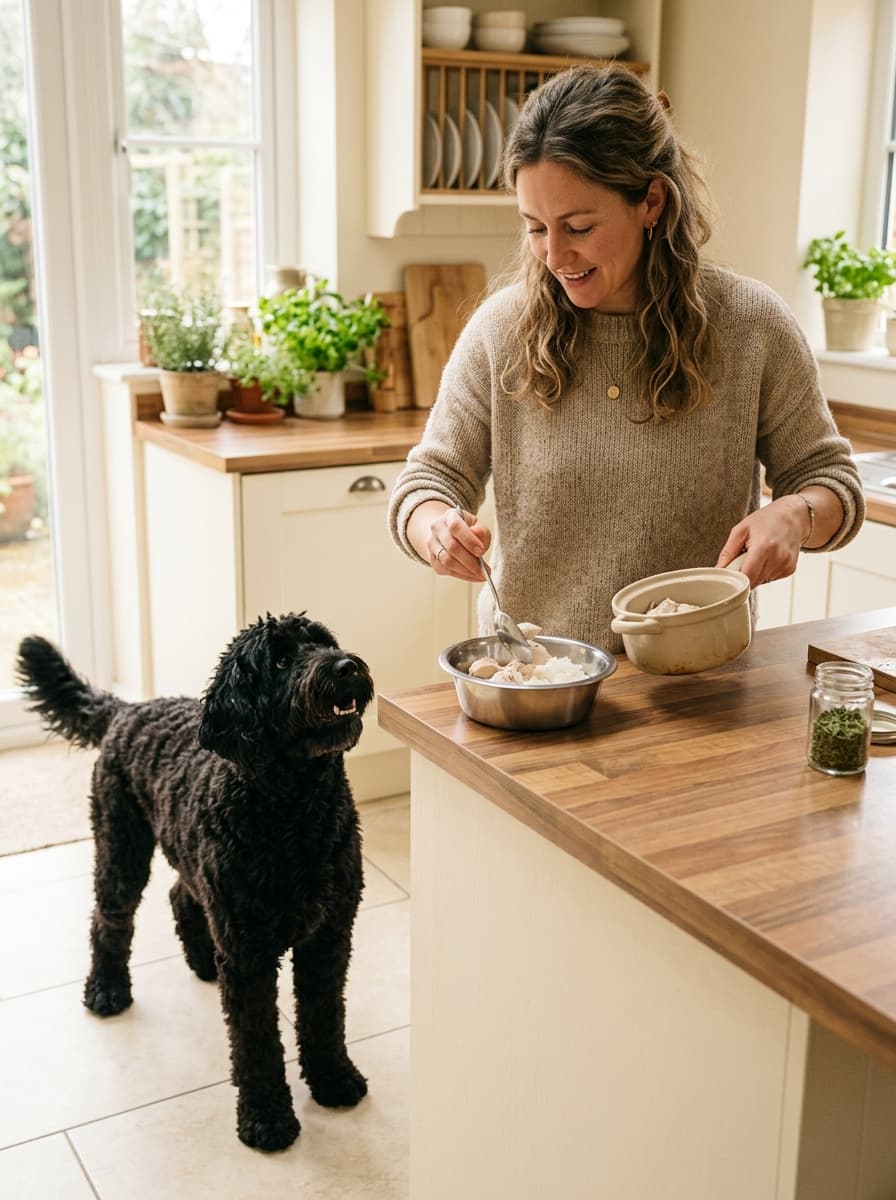
The bigger picture, if your doodle has recurring episodes, is prevention. In our house, going raw ended Sven's morning bile and settled his gut once we stopped rushing food changes, and identifying Gunnar's chicken trigger stopped his ear and skin flare-ups. The underlying food and routine matter far more than any single fix. Our doodle sensitive stomach guide and our gut health routine for sensitive doodles pull this together.
One real-house note: whenever we have changed anything about feeding, the dog who tells us first is always Sven, never Gösta. Gösta has eaten raw at home, premium kibble, and freeze-dried raw when we travel, and he has never once had a gut problem. Same household, same bowls, completely different guts. That is the whole point: your doodle is an individual, and what counts is reading your dog.
FAQ
A single small streak of bright red blood on an otherwise firm stool, in a doodle who is bright, eating, and acting normal, is usually not an emergency and can be watched at home for 24 to 48 hours. What changes that is volume, repetition, or any other symptom: large amounts of blood, repeated bloody diarrhea, black tarry stool, vomiting, lethargy, or a painful belly all mean call your vet promptly.
Bright red blood (hematochezia) is fresh and comes from the lower digestive tract, the colon or rectum, and is often linked to colitis, straining, a food change, or minor irritation. Black, tarry, sticky stool (melena) is digested blood from higher up, the stomach or small intestine, and it is more concerning because it points to bleeding that has traveled the full length of the gut. Melena always warrants a vet visit.
Yes. A fast or unsuitable food change is one of the most common triggers for colitis in sensitive doodles, and colitis frequently shows up as loose stool with mucus and streaks of bright red blood. Our Sven reacted to every food change in his first year. Transitioning slowly over 7 to 10 days and supporting the gut makes this far less likely, but any blood that keeps appearing still deserves a vet's eyes.
AHDS (acute hemorrhagic diarrhea syndrome), formerly called HGE, is a sudden onset of profuse bloody diarrhea, often described as looking like raspberry jam, frequently with vomiting. It can cause rapid fluid loss and is a genuine emergency. If your doodle produces large volumes of bloody diarrhea and seems unwell, do not wait and watch: this needs same-day veterinary care.
Yes, if you safely can. A fresh sample (ideally under a few hours old, bagged and sealed) lets your vet check for parasites and other causes without delay. Also note the color of the blood, how much there is, whether the stool is formed or liquid, and any other changes like appetite, energy, or vomiting. That short summary genuinely speeds up the visit.
Your next step
If the blood came with ongoing loose stool, the most useful follow-up read is our chronic diarrhea in doodles guide, which helps you work out whether you are dealing with a one-off upset or a pattern that needs a plan. And if a food change seems to be behind it, start with the 7-day food transition plan so the next switch is gentler on your dog's gut.
Blood in the stool is one of those symptoms that feels scary and often turns out to be minor, but it is never something to simply ignore. Read the color, read your dog, and when in doubt, make the call.