A doodle eating a little less for a day or two, who is otherwise bright, playful and drinking normally, is usually fine. Heat, boredom with the same food, too many treats, or a quiet growth phase can all dip appetite without anything being wrong. Call your vet if your doodle refuses food for more than 24 to 48 hours, or eats less alongside vomiting, diarrhea, lethargy, or signs of mouth pain.
If you have noticed your doodle eating less than usual, the hard part is not the empty bowl: it is deciding whether to wait or to worry. We have lived through both sides of that with our three Australian Labradoodles, and the honest answer is that the cause almost always shows itself in how your dog behaves around the bowl, not just whether they empty it.
If you already suspect the food itself is behind the reluctance and just want the shortcut, our best dog food for a sensitive-stomach doodle picks are the shortlist we would reach for. Otherwise, this guide walks through the benign causes you can wait out, the red flags that mean a vet call, the doodle-specific angles (sensitive stomachs, allergy flares, dental pain), and the practical things we do at home to tempt a reluctant eater.
Is low appetite in my doodle serious or just pickiness?
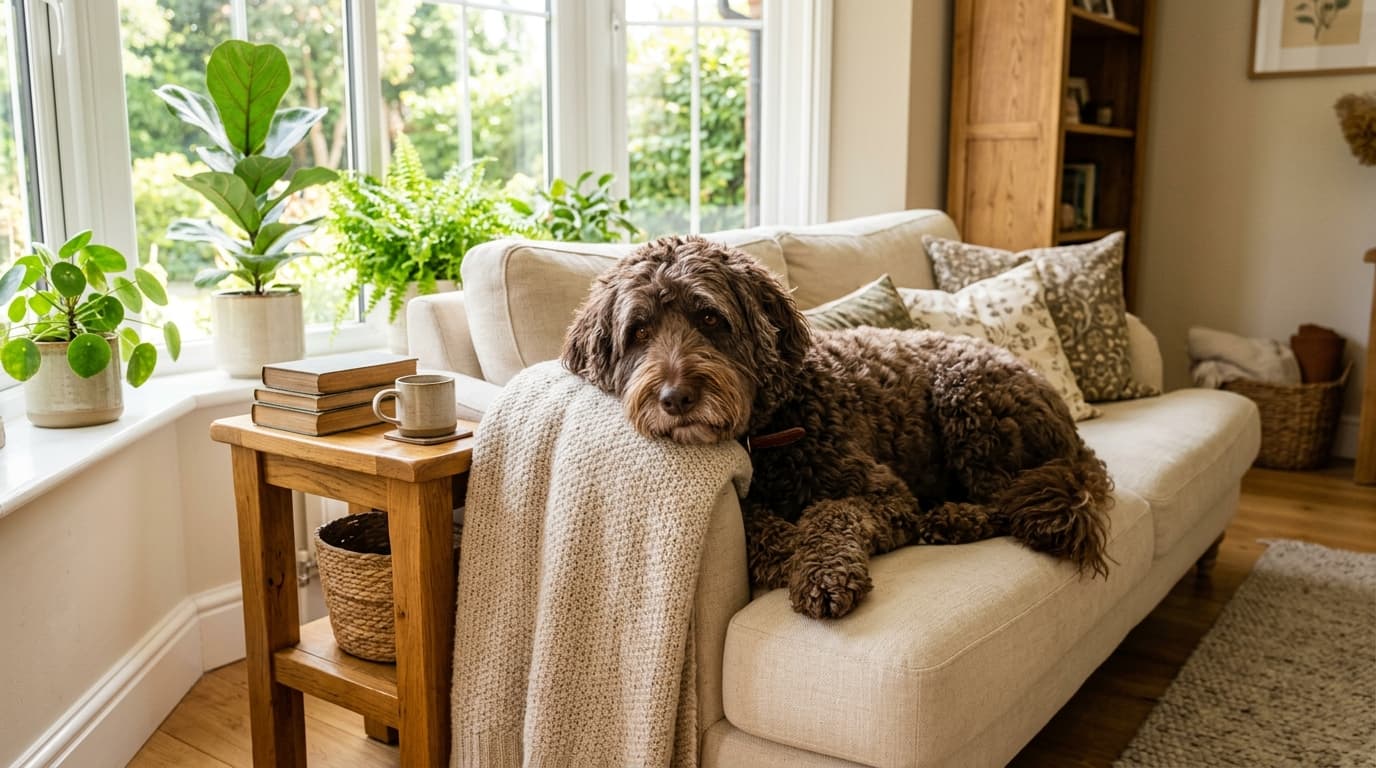
Start with one question: is your doodle acting normal otherwise? A dog who is playing, following you around, drinking water and wagging but turning up their nose at dinner is a very different situation from a dog who is quiet, withdrawn and ignoring food they normally love.
If your doodle is bright and otherwise themselves, you are most likely dealing with something benign. We cover the "eating less but acting completely normal" scenario in depth in our guide on a doodle not eating but acting normal, so if that is your exact situation, that is your shortcut. If you already suspect food or gut trouble and just want the practical fixes, keep reading here.
The Merck Veterinary Manual lists reduced appetite as one of the most common and least specific signs in dogs: it can mean almost nothing, or it can be an early flag. That is exactly why context matters more than the symptom itself.
Benign causes: when eating less is not a problem
These are the everyday reasons a doodle eats less that resolve on their own.
- Heat. On warm days, appetite drops. All three of ours eat less in summer, and it is completely normal. They make up for it when it cools down.
- Too many treats. This is the big one. A few training treats, a chew, a bit of dropped food, and a doodle who is a convenient size (not large) simply is not hungry at dinner. Count what goes in across the whole day, not just the bowl.
- Boredom with the food. Doodles are smart, and some get tired of the exact same kibble every day. This is not an allergy: it is a preference.
- A growth phase shift. Puppies eat in bursts and lulls. As a doodle matures and growth slows, their intake naturally dips. If you are near the age where you switch a doodle from puppy to adult food, some appetite change is expected.
- A quiet day. Less exercise, a lazy weekend, a slightly off day. Dogs have those too.
Sven, our most laid-back dog, is the slow, graze-at-his-own-pace type. He takes his time, sniffs the flowers on walks, and he is just as unhurried at the bowl. For years we mistook his calm pace for a problem. It was not: he is simply not a gulper. Knowing your individual dog's normal is half the battle.
Red-flag causes: when low appetite means call your vet
Some causes of reduced appetite are not benign, and doodles have a few they are more prone to. Here is where the behavior around the bowl matters.
Nausea and GI upset
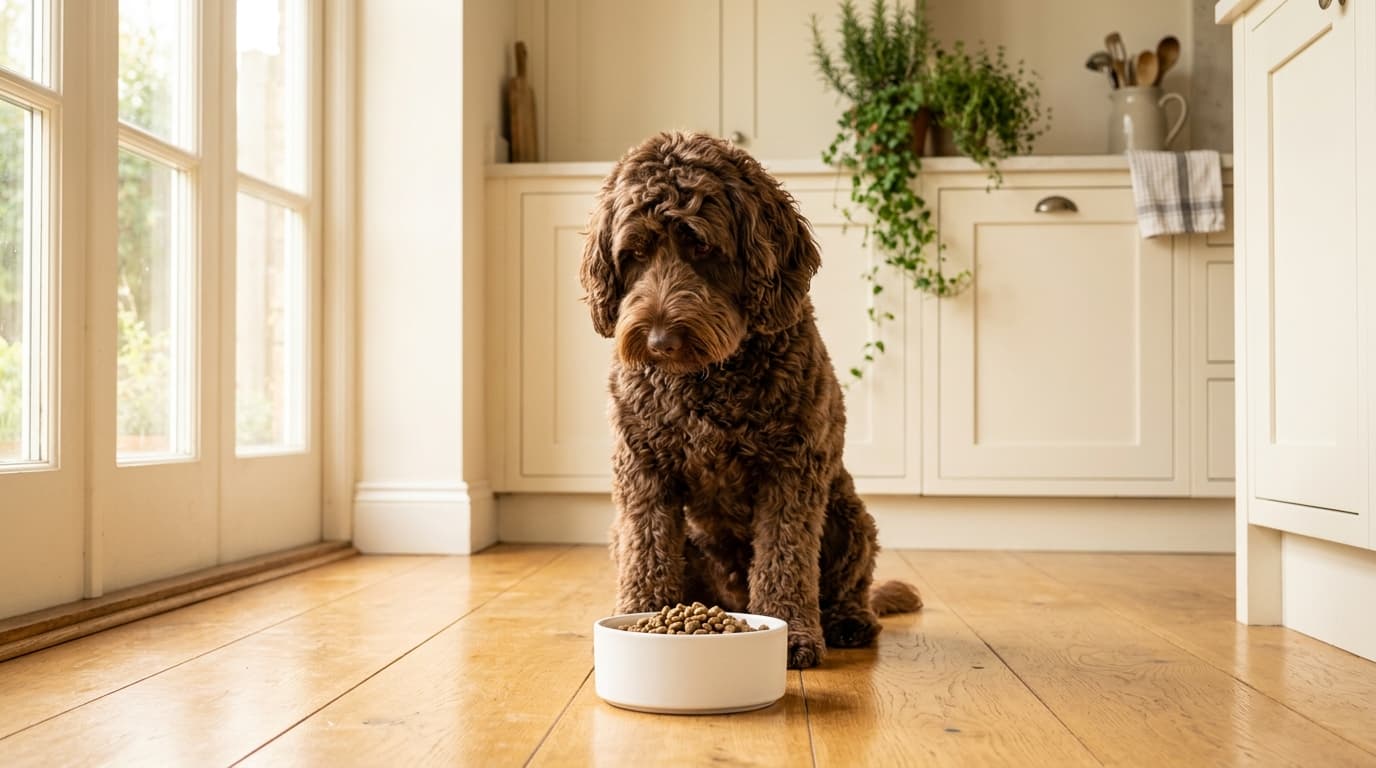
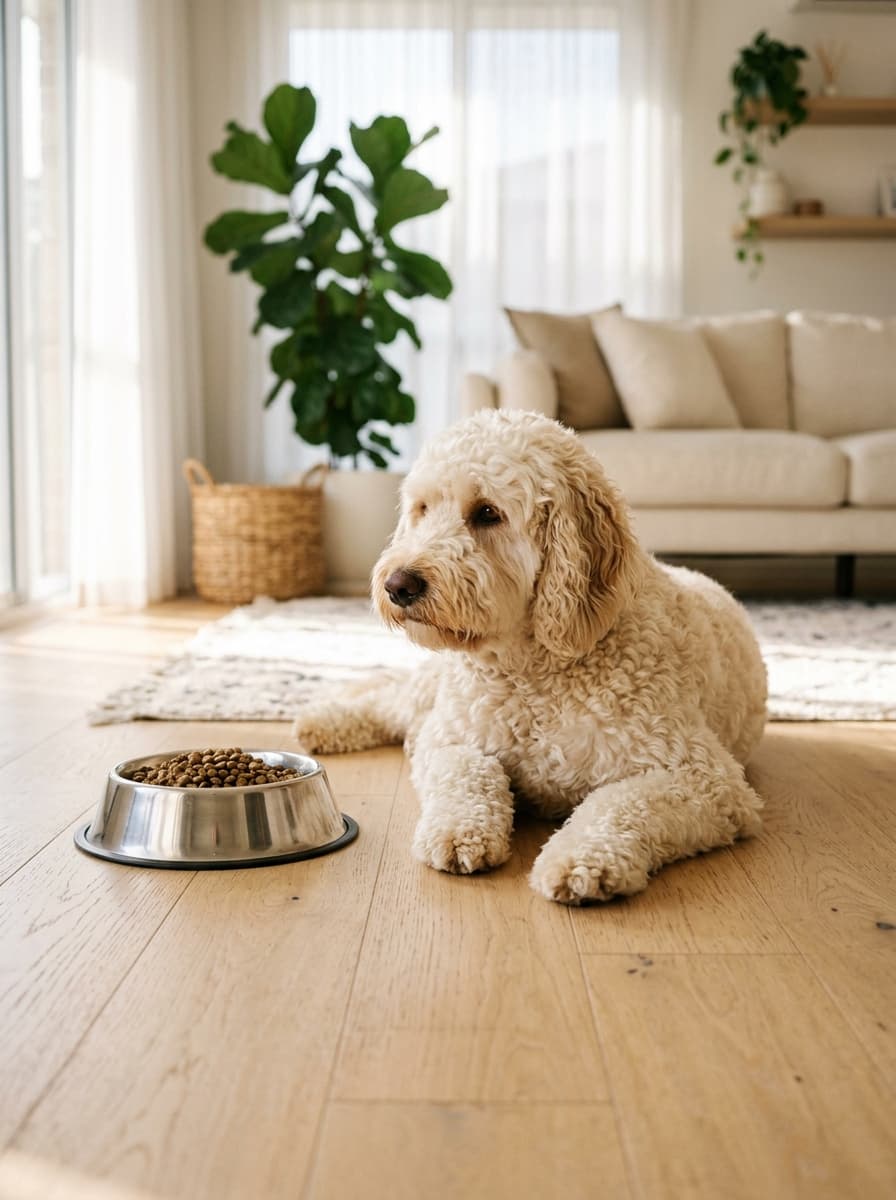
A doodle who feels queasy will often approach the bowl, sniff, maybe lick, then walk away. Nausea can come from a sudden food change, something scavenged, or an unsettled gut. If appetite loss comes with vomiting yellow foam, lip-licking, drooling or stomach gurgling, the gut is the likely culprit.
Sensitive stomachs and the poodle line
The poodle side of a doodle's heritage carries a genuine, documented predisposition to food sensitivities. That does not mean every doodle has a delicate gut, but it does mean a reluctant eater with a history of soft stool deserves a closer look. Our Sven is the sensitive-stomach one of our three: loose stool followed every single food change in his first year, and loose stool often went hand in hand with him not wanting to eat. If this sounds familiar, our doodle sensitive stomach guide is the deeper read.
Food aversion after an allergic flare
This is a doodle-specific angle most articles miss. A dog who felt unwell or itchy after eating a particular food can learn to avoid it, even once the flare passes. Gunnar, our ears-and-yeast dog, taught us how closely discomfort and appetite are linked: chicken is his trigger, and when his skin and ears were flaring on the wrong food, he was a far less enthusiastic eater. Change the protein, settle the flare, and interest in food comes back. If your doodle's low appetite tracks with itching, ear trouble or paw licking, the food may be the problem, not the appetite.
Dental and mouth pain
Doodles are not immune to dental disease, and mouth pain is a classic silent appetite killer. A dog with a sore tooth may drop kibble, chew on one side, prefer soft food, or paw at their face. The AVMA stresses that dental problems are common in dogs and frequently go unnoticed until they affect eating. If your doodle suddenly favors soft food or drools, have the mouth checked.
Illness
Reduced appetite is one of the earliest, vaguest signs of being unwell. Paired with lethargy, fever-like dullness, or any change in drinking, it moves from "wait and see" to "call the vet."
A quick decision guide
Use this to decide whether to wait or call. It is a guide, not a diagnosis: when in doubt, your vet always wins.
| What you are seeing | Likely situation | What to do |
|---|---|---|
| Eats less, bright, playful, drinking normally | Benign (heat, treats, boredom) | Tighten routine, cut treats, wait 24 hrs |
| Picks at food but eats a tastier topper happily | Picky eater | Rotate food, warm it, stop free-feeding |
| Approaches bowl, sniffs, walks away, some lip-licking | Nausea / GI upset | Monitor closely, vet if over 24-48 hrs |
| Low appetite with itching, ears, paw licking | Possible food trigger | Review diet, speak to vet about elimination |
| Drops food, chews one side, drools, prefers soft | Dental / mouth pain | Vet dental check |
| Refuses food plus vomiting, diarrhea or lethargy | Red flag | Call the vet |
| Puppy or senior refusing food over 12-24 hrs | Red flag (less reserve) | Call the vet sooner |
Practical ways to tempt a reluctant doodle to eat
Once you have ruled out the red flags and you are dealing with a picky or bored eater, here is what actually works in our house.
Lock down the meal routine
Dogs settle into predictable feeding. Offer the meal, give 15 to 20 minutes, then lift the bowl whether it is finished or not. No grazing, no refilling, no begging treats in between. A doodle who learns food appears at set times and disappears again becomes a more reliable eater. We practiced this consistency alongside our wider calm-and-routine approach, and it carries straight over to the bowl.
Warm it to wake up the aroma
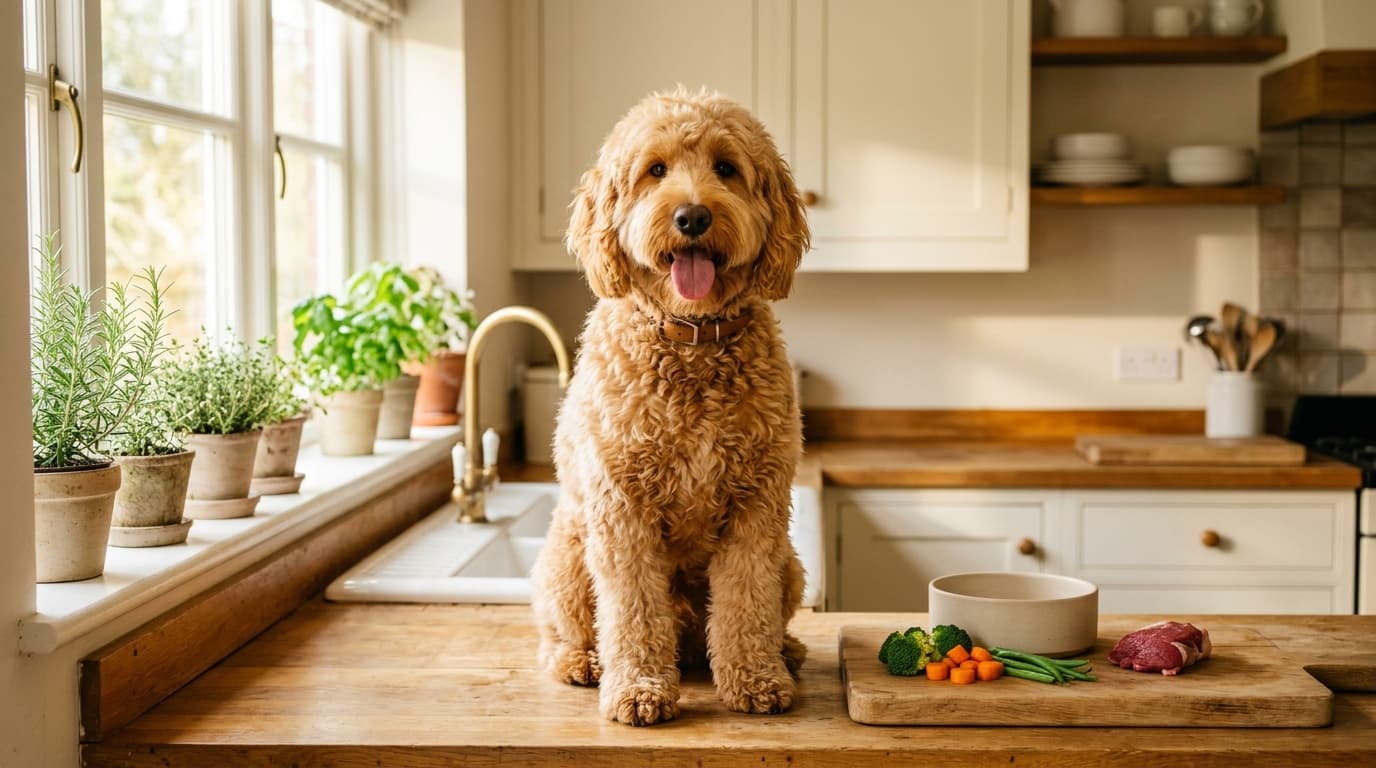
Gently warming food to just above room temperature releases aroma, and aroma drives appetite. A splash of warm water or a little low-sodium, onion-free broth does it. Never serve food hot: stir and test it first. This is the single easiest trick and often the only one you need, especially with a dog used to the rich smell of raw or fresh food.
Add a topper (no chicken)
A small, appropriate topper can restart interest without turning your dog into a permanent topper addict. Think a spoonful of plain canned pumpkin, a little fish, or a sardine. Keep it small so it flavors the meal rather than replacing it. For a sensitive doodle, stick to single, familiar ingredients.
Make mealtime engaging
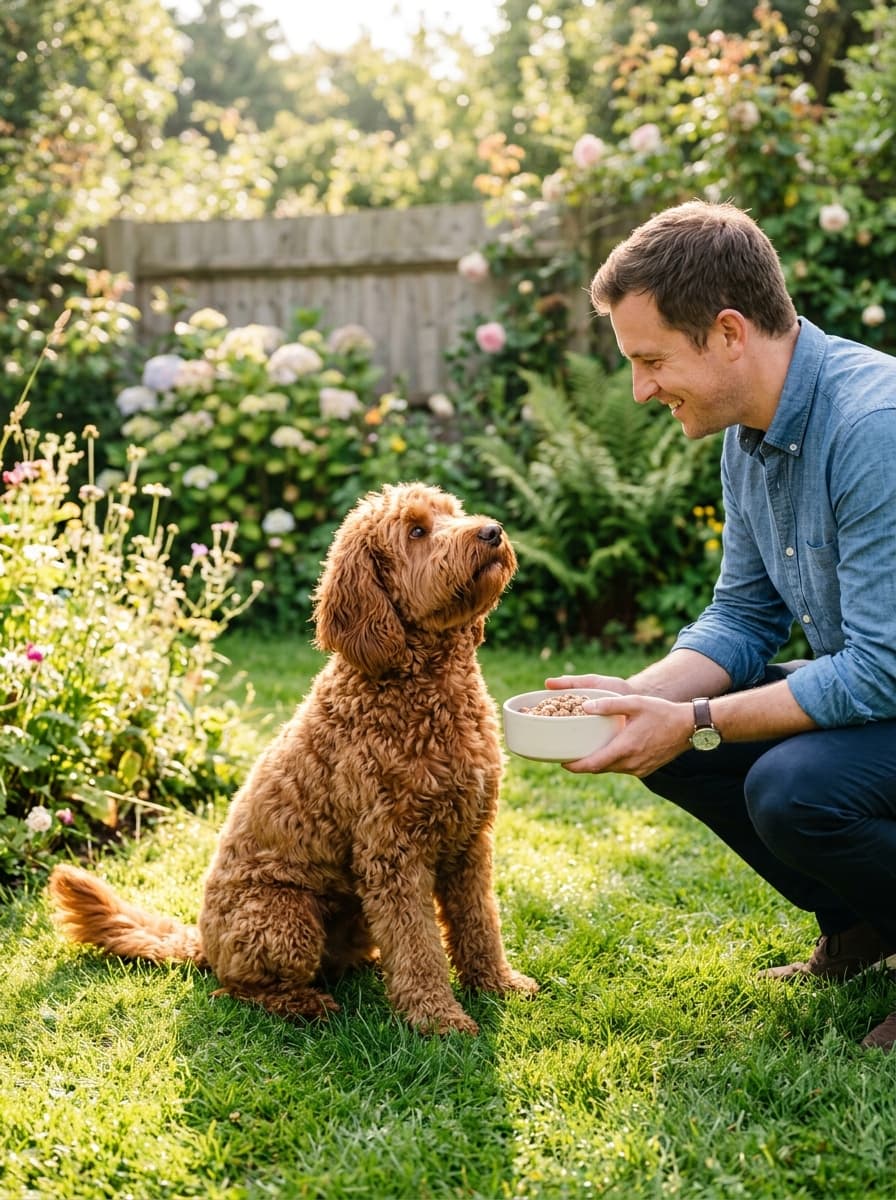
For a food-motivated doodle, serving a meal in a slow feeder or a lick mat can make it more interesting. Gösta, our easy eater and our food lover, will happily work for every bite this way. (Keep puzzle games for supervised brain work, not for feeding a full meal.)
Change the food, slowly, if needed
If genuine boredom or a suspected trigger is the issue, rotating to a different protein can help. The key word is slowly. A rushed switch is a fast route to a loose-stool setback, especially in a sensitive doodle. Our 7-day food transition plan is the method we use, and our best dog food for a sensitive-stomach doodle picks are a good place to start if you want the shortlist.
The doodle-specific takeaway
Low appetite in a doodle is rarely random. More often than you would think, it connects back to the two things the breed is genuinely prone to: a sensitive stomach and food sensitivities from the poodle line. A doodle who feels queasy, bloated or itchy after the wrong food eats less, and sometimes learns to avoid that food altogether.
So before you reach for appetite tricks, ask whether the food itself is the story. For us, sorting out Gunnar's protein and settling Sven's gut did more for their eating than any topper ever did. Generic "tempt them with gravy" advice misses that your doodle's reluctance to eat may be telling you something about what is in the bowl.
FAQ
A doodle who skips a meal or picks at food but is bright, playful and drinking normally is usually dealing with something benign: warm weather, too many treats, boredom with the current food, or a quiet growth phase. Give it 24 hours, keep meals on a tight routine, and skip the extras. If the reduced appetite lasts beyond a day or two, or any other symptom appears, it is time to check in with your vet.
For an otherwise healthy adult doodle, a 24 hour dip with no other symptoms is usually not an emergency. Refusing all food for more than 24 to 48 hours, or any food refusal paired with vomiting, diarrhea, lethargy or mouth pain, warrants a vet call. Puppies, seniors and very small minis have less reserve and should be seen sooner, within 12 to 24 hours.
Yes. Doodles with a poodle-line tendency to food sensitivity can develop nausea or mild gut discomfort that puts them off food, and some learn to avoid a food that made them feel unwell. If low appetite tracks with itching, ear trouble, soft stool or paw licking, the food itself may be the issue, and an elimination approach with your vet is the honest next step.
Warming food gently to just above room temperature releases more aroma, which often tempts a reluctant eater, especially a doodle used to the smell of raw or fresh food. Add a splash of warm water or low-sodium broth, never serve food hot, and always stir and test the temperature first. It is a simple, no-risk trick worth trying before anything fancier.
Not usually. A genuinely picky eater holds out for better food, then eats happily when offered something tastier, and stays bright and active throughout. A sick doodle loses interest in food it normally loves and often shows other signs: lethargy, drooling, vomiting or hiding. The behavior around the bowl, not just the empty bowl, tells you which one you are dealing with.
Your next step
If your doodle is eating less but is otherwise bright and playful, read our focused guide on a doodle not eating but acting normal to confirm you can safely wait. If you suspect the food itself is behind it, start with our doodle sensitive stomach guide and the sensitive stomach hub, where we cover transitions, toppers and gut routines in detail. And whenever a red flag appears, the vet call is never the wrong move.