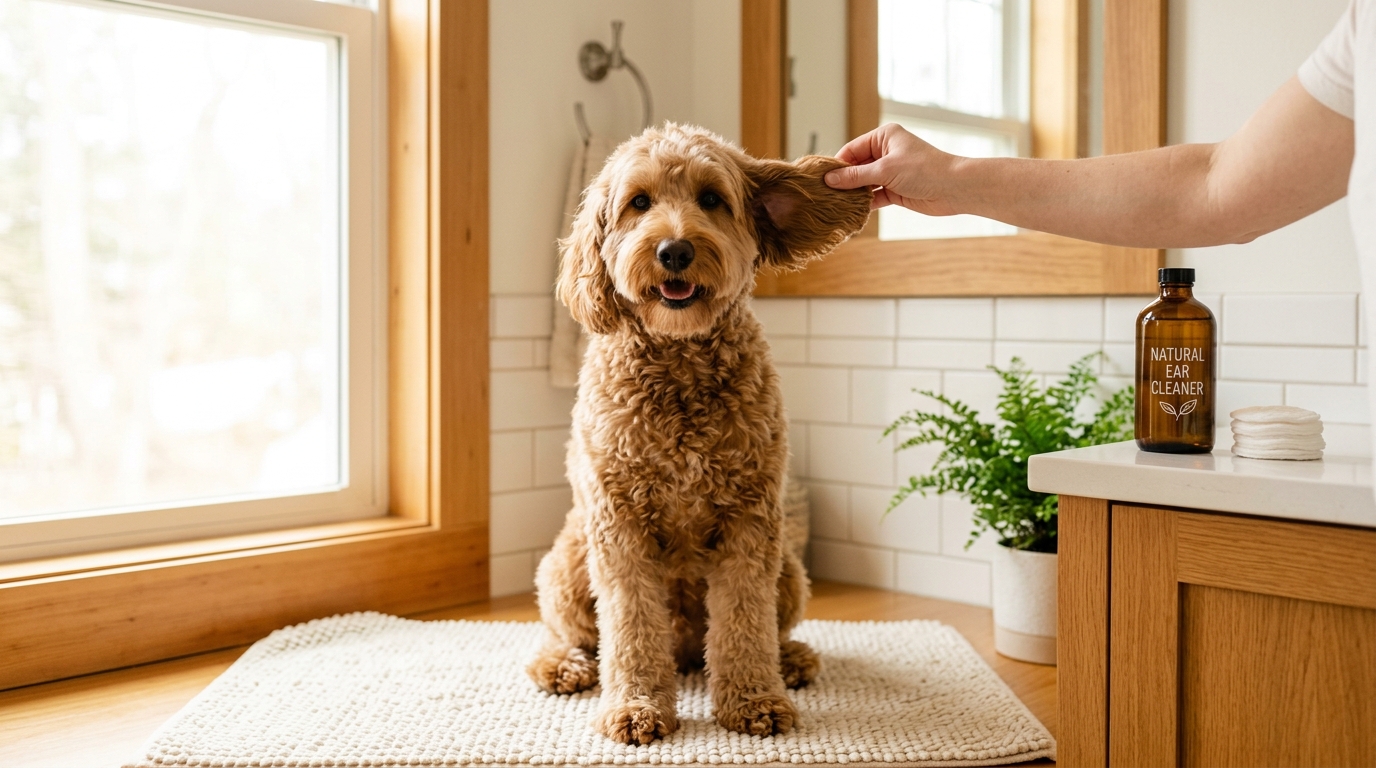
If your doodle scratches, licks, and chews around the clock, the most likely culprits are environmental or food allergies, yeast overgrowth in the ears and skin folds, or dry skin from over-grooming. The pattern is your biggest clue: itching that flares seasonally usually points to environmental allergens, while year-round itching, especially on the paws, ears, and belly, points toward food or yeast. If the skin is broken, smelly, or your dog can't rest, that's a call-your-vet situation.
If you want the supplement side of this before the full diagnostic walk-through, our best allergy supplements for doodles is the shortlist we would start from.
We live with three doodles, Sven, Gunnar, and Gösta, and if there's one thing we've learned, it's that "why is my doodle so itchy" almost never has a single tidy answer. Doodles bring together poodle-line sensitivities and dense, moisture-trapping coats, which makes them a bit of a special case. This guide walks you through the full range of causes, a symptom-to-cause framework to narrow it down, and the first steps to take at home before you spend a dime on products.
The Big Picture: Why Doodles Itch More Than You'd Expect
Doodles aren't magically hypoallergenic, and they aren't immune to skin trouble, if anything, their coat and their genetics can both work against them. There are a few reasons doodle itchy skin causes show up so often:
- Poodle-line food sensitivities. The poodle side of the family tends toward food allergies and intolerances, so doodles inherit a higher-than-average chance of reacting to common proteins.
- Dense, curly coats that hide problems. A doodle's coat is beautiful, but it traps moisture, dander, and debris against the skin, and it hides redness, scabs, and hot spots until they're advanced.
- Floppy ears and hairy ear canals. Warm, dark, poorly ventilated ears are a perfect home for yeast.
- Furry paws and feet. Hair between the pads holds moisture, and constant paw-licking creates the damp environment yeast loves.
So when we ask "why does my doodle scratch so much," we're usually looking at one of a handful of causes, or, honestly, a combination of two or three at once.
The Full Range of Causes
1. Environmental / seasonal allergies (atopy)
This is the single most common cause of itch in doodles. Pollen, grass, weeds, mold, and dust mites trigger an allergic response that shows up in the skin rather than the nose. The tell-tale sign is seasonality, worse in spring, summer, or fall, and itching focused on the paws, face, ears, armpits, and belly. Many doodles chew their feet raw during allergy season while looking perfectly fine in winter. The Merck Veterinary Manual describes the same skin-focused pattern for canine atopic dermatitis.
2. Food allergies and intolerances
Food-driven itching tends to be year-round and often pairs with digestive signs like gas or soft stool. Doodles commonly react to specific proteins, with chicken and beef being frequent offenders. If you suspect food, we've got dedicated deep-dives so we won't rehash them here, start with Food Allergies in Doodles: The Complete Owner's Guide and, if the paws are the main target, Doodle Licking Paws After Eating: What It Really Means. It also helps to understand the difference between a true food allergy and a food intolerance, since they're managed differently.
3. Yeast overgrowth
Yeast is a normal resident on your dog's skin that overgrows when conditions favor it, warmth, moisture, and often an underlying allergy. In doodles it loves the ears, paws, armpits, and skin folds. The giveaway is a musty, "corn chip" smell and greasy or discolored skin. Because it's so common (and so doodle-specific), we cover it thoroughly in Yeast Infection on Doodle Paws and in Allergy vs Yeast Infection in Doodles.
4. Fleas, mites, and other parasites
Even one flea bite can set off intense itching in a sensitive dog, and fleas hide easily in a thick doodle coat. Mites (mange) cause severe itching, hair loss, and crusting. If you've searched "doodle itching all the time no fleas," don't fully rule parasites out until you've done a careful flea comb and, if the itch is severe, had your vet do a skin scrape.
5. Dry skin and coat-related irritation
Over-bathing, harsh shampoos, cold dry indoor air, or a low-fat diet can all leave skin flaky and itchy without any allergy at all. Doodles are also prone to matting, and mats pull on the skin and trap moisture. Itching that starts right after a grooming appointment has its own set of causes, see Doodle Scratching After Grooming.
A Symptom-to-Cause Framework
Use the pattern of your dog's itching, when, where, and what else is going on, to narrow the field. This is a starting point, not a diagnosis.
| What you're seeing | Most likely direction | Sensible first move |
|---|---|---|
| Itching flares spring/summer/fall, calms in winter | Environmental allergies | Wipe paws after walks, note the season, ask vet about allergy options |
| Year-round itch + gas or soft stool | Food allergy / intolerance | Explore an elimination diet with your vet |
| Musty smell, greasy skin, dark ears | Yeast overgrowth | Check ears & paws, see yeast guide |
| Sudden intense itch, scabs at tail base | Fleas | Flea comb, treat all pets in the home |
| Flaky skin, dandruff, dull coat, no smell | Dry skin / diet | Add omega-3s, review bathing routine |
| Itch worse right after grooming | Clipper irritation / product reaction | See scratching after grooming |
| Chewing/licking feet mainly at night | Allergy or yeast | See itchy paws at night |
| Red, angry patch of belly skin | Contact irritation or rash | See red belly rash guide |
The two questions that separate the biggest categories: Is it seasonal or year-round? and Is there a smell? Seasonal, odorless itching leans environmental. Year-round itching with digestive signs leans food. A distinct musty odor leans yeast.
When Itching Signals Something Serious
Most itching is manageable, but some situations mean you stop troubleshooting at home and call your vet.
Hot spots deserve a special mention because doodle coats hide them so well; a small itchy spot can be a raw, infected patch by the time you find it under the fur. If you've spotted one, read Doodle Hot Spots: Causes & Treatment. And if the itching has dragged on for weeks or months, our overview of Chronic Itching in Doodles walks through the longer-term picture.
First Steps to Take at Home
Before you buy a cart full of products, do the detective work. These are the low-risk, high-information steps we'd start with.
1. Do a proper coat and skin check
Part the coat down to the skin in the itchy areas. You're looking for redness, scabs, greasiness, dark waxy debris, mats, and, crucially, fleas or flea dirt. With a dense doodle coat you have to be deliberate; the surface can look fine while the skin underneath is angry.
2. Check the ears and paws specifically
Lift those floppy ears and smell them. Look between the paw pads and at the nail beds for rusty-brown staining from licking. These are the two spots where doodle yeast hides, and they're easy to overlook.
3. Track the pattern for a week or two
Jot down when the itching is worst, what your dog ate, where you walked, and whether there's a smell. This single habit tells you more than any product review, it's how you distinguish seasonal from year-round, and food from environment.
4. Support the skin barrier
A quality omega-3 supplement helps calm inflammation and improve the skin barrier over several weeks; see Best Omega 3 for Doodle Skin Health. Gentle, appropriate bathing and thorough drying (especially of ears and feet) also helps, a damp doodle coat is a yeast invitation. If you're choosing a wash, Best Shampoo for Itchy Doodles covers what to look for.
5. Consider whether diet is the lever
If the pattern points to food, resist the urge to grab a random "sensitive skin" bag. Diet changes only work when they're done systematically. Our honest take on how much diet can actually accomplish lives in Can Diet Fix Doodle Skin Problems?, and if you're ready to test food properly, the step-by-step elimination diet plan is the reliable route.
Are Doodles Just Prone to This?
To a degree, yes, and it's worth understanding the breed-level picture so you can set realistic expectations rather than chasing a cure that isn't coming. We break down the genetics and what's actually within your control in Are Doodles Prone to Allergies? A Breed-Specific Guide. The honest summary: many doodles will always be a little more reactive than the average dog, but with the right food, coat care, and a good working relationship with your vet, the vast majority live comfortably and itch-free most of the year.
FAQ
The most common reasons for a flea-free itchy doodle are environmental allergies (pollen, grass, dust mites), food allergies or intolerances, and yeast overgrowth in the ears, paws, and skin folds. Doodles also get dry, flaky skin from over-bathing or harsh shampoos, and their dense curly coats can trap moisture and debris that irritate the skin underneath. Watch the pattern, seasonal vs. year-round, and which body parts are affected, to narrow it down, and see your vet if the skin is broken or infected.
Occasional scratching is normal for any dog, but constant scratching, licking, or chewing is not, it's a signal that something is irritating your goldendoodle. Because doodles combine poodle-line food sensitivities with dense coats that hide skin problems, they scratch for a reason more often than many breeds. Persistent itching that disrupts sleep, causes hair loss, or leads to raw or smelly skin always deserves investigation.
Yes. Food allergies and intolerances are a real cause of full-body itching in doodles, and they typically show up year-round rather than seasonally. Common triggers include chicken and beef proteins. Food-related itching often focuses on the paws, ears, face, and belly, and may come with digestive signs like soft stool or gas. An elimination diet supervised by your vet is the only reliable way to confirm a food trigger.
Yeast infections usually produce a distinctive musty or "corn chip" smell, greasy or discolored skin, and often affect the ears, paws, and folds specifically. Allergies tend to cause more generalized itching without the strong odor, though allergies frequently lead to secondary yeast infections. The two often overlap, which is why smelly, greasy, or persistently itchy skin should be checked by your vet.
Call your vet if your doodle has broken, bleeding, or oozing skin, a strong odor, hair loss, swelling, or itching so intense it disrupts sleep and daily life. Also book a visit if home care over one to two weeks brings no improvement, or if you see signs of ear infection like head shaking and dark discharge. Sudden severe itching with facial swelling is an emergency.
Your Next Step
Start by identifying the pattern, seasonal or year-round, smell or no smell, which body parts, then follow that thread. If your gut says the smell and greasy paws point to yeast, head to Allergy vs Yeast Infection in Doodles to confirm which one you're dealing with. If the itching is year-round with digestive signs, the Food Allergies hub is where to dig in next. And if you just want everything skin-and-paw in one place, our Itchy Skin & Paws hub collects the whole cluster. Take it one clue at a time, you'll get there.