In the first month, raw feeding can feel like a lot to keep track of — the cutting boards, the hand-washing, the bowl checks, the freezer rotation. That's completely normal, and it's temporary. Almost everyone feels it early on, and almost everyone stops noticing it once a simple rhythm is in place.
That's what this guide gives you: the routine that turns raw feeding into a five-minute-a-meal habit. Once it clicks — usually around month two — you stop thinking about it, and it's no more daily effort than scooping kibble. The whole trick is just setting up the rhythm early.
What this guide covers. This is one of the guides in our Raw Food Safety series, focused on the day-to-day kitchen routine. For the detailed protocols on freezing, thawing, kitchen hygiene, and feeding hygiene, see the main Raw Food Safety guide and the dedicated freezing and thawing guide. This is the practical schedule that ties them together.
The Three Time Buckets
Raw-feeding logistics break into three time scales. Once you set each one up, the daily routine almost runs itself.
Daily (5 min, twice a day). Get tomorrow's portions thawing. Feed. Clean up after the meal. That's it. Done in five minutes per meal once it's habit.
Weekly (15-20 min, once). Pick one day for the weekly check: fridge inventory, freezer rotation, vacuum the feeding area, deep-clean the dog bowls. We do this Sunday morning while making coffee.
Monthly (10 min, once). Sanity-check supply level vs. how many feeding days are left in the freezer. Place a re-order if needed. Wipe down the freezer seals.
The daily routine is what's usually missing from raw-feeding articles. Below is exactly how it runs in our household.
The Morning Routine (5 Minutes)
Most mornings, the cold-chain work is already done from the night before — yesterday's evening prep moved tomorrow's portions into the fridge. The morning is just the meal.
Around 07:00:
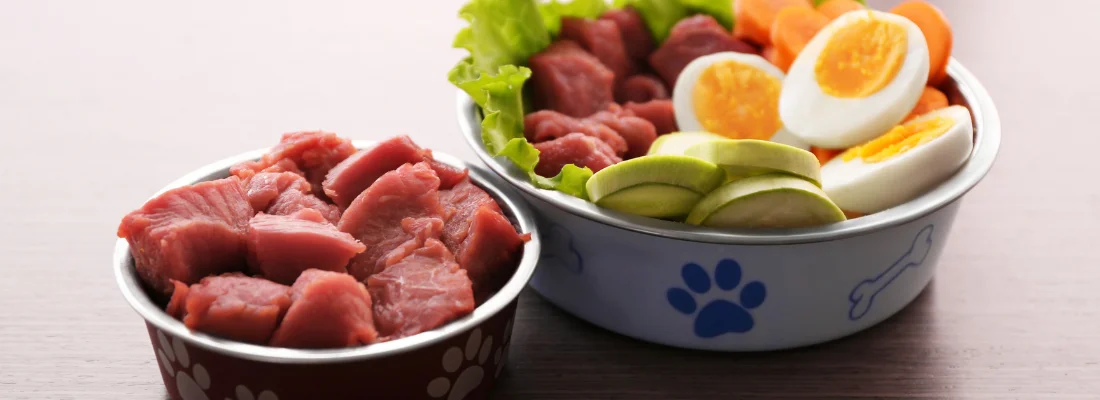
- Open the fridge. Pull breakfast portions for each dog (already thawed, in their packaging). Place each in the dog's individual bowl.
- Wash hands.
- Bowls go down in their feeding area. Dogs eat. Most raw-fed doodles are tidy eaters and finish in under 10 minutes.
- When each dog is done, pick up the bowl immediately. Don't let raw food sit in the bowl.
- Wash bowls in hot soapy water with a dedicated sponge. Put bowls upside down to dry. Wash hands again.
That's the morning meal. If everything was set up the night before, total time is 4-5 minutes.
What's not part of the morning: Thawing, portioning, weighing, prepping vegetables. All of that lives in the evening prep and weekly setup. The morning is a feeding window, nothing else.
The Evening Prep (3-4 Minutes)
The single most important habit for sustainable raw feeding. Three to four minutes after dinner, before the kitchen winds down.
Around 19:00 (or whatever time matches your evening dishes):
- Open the freezer. Pull tomorrow's portions for each dog.
- Place them on the bottom shelf of the fridge in a sealed container or on a small plate (to catch any thaw juice).
- Move yesterday's empty packaging to the trash if any.
- Quick visual check: is anything in the fridge approaching the 24-48-hour thaw window? Use those first tomorrow.
Three minutes. Done.
This is the work that makes the morning routine effortless. Skip it once and you're either microwave-thawing in the morning (don't) or scrambling with cold-water thawing (annoying). Make it part of the evening dish-cycle and it disappears.
The Cleanup: Surfaces, Hands, Tools
Cleanup happens in two phases — immediate (after the meal) and surface-touch (anything that contacted raw meat during prep).
Immediate cleanup, every meal:
- Bowls into hot soapy water. We have a dedicated bowl sponge that doesn't touch human dishes.
- Hands washed thoroughly.
- Floor under the bowl: only if there's visible spillage. Tidy raw eaters don't leave anything; we don't reflexively wipe.
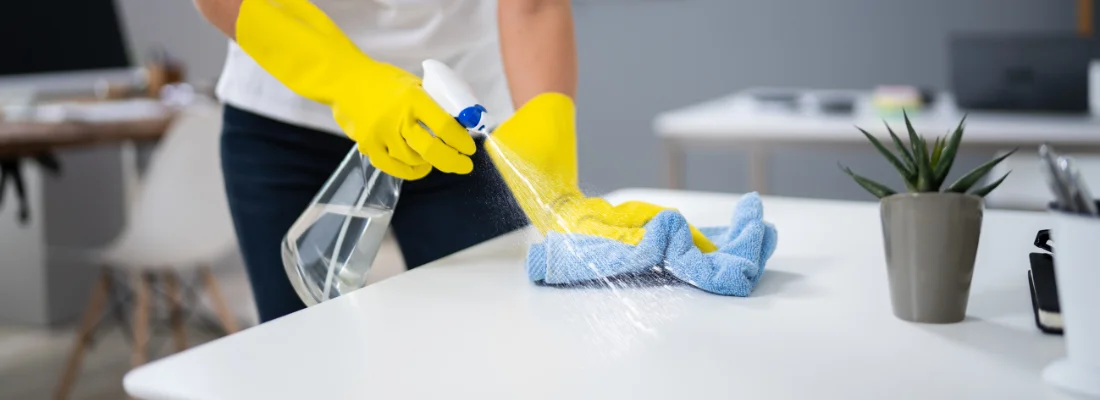
- Any meat juice on the counter from portioning: hot soapy water, immediately.
Surface-touch cleanup, every prep:
If we've portioned, cut, or otherwise handled raw meat on the counter:
- Cutting board (we use a dedicated red one for raw pet food) into hot soapy water or the dishwasher's hot cycle.
- Counter wiped with hot soapy water. Once a week, we use a dilute bleach solution (1 tablespoon bleach per gallon of water) for deeper sanitation.
- Knives, scissors, tongs: hot soapy water or dishwasher.
- Hands washed before touching anything else.
The hand-washing rule that matters: Don't touch your face, phone, or anything you don't want bacterial transfer on between handling raw meat and washing hands. Most cross-contact in raw-feeding households happens not from the meat itself but from a hand that touched the meat and then opened a fridge door, picked up a phone, or pet a child.
The Bowls: A Boring But Important Note
Raw-feeding bowls take more abuse than kibble bowls because raw meat juice has more protein and fat residue. Two practical points.
Materials. Stainless steel and ceramic both work. Plastic doesn't — it scratches over time, and bacteria settle into the scratches in a way that's hard to clean. We use stainless steel for daily feeding and ceramic for water (doesn't scratch, easier to wash).
Cleaning frequency. Hot soapy water after every meal, full stop. Once a week, run the bowls through the dishwasher on the hot cycle for deeper sanitation. The dishwasher is the single best tool for raw-feeding bowl hygiene because the water gets hot enough to kill anything the soap missed.
One sponge. A dedicated bowl sponge that lives separate from the human dishes sponge. Replace monthly. Never use the bowl sponge for cleaning surfaces or anything else.
The Feeding Area
Where the dog eats matters more than most owners realise. Three rules.
Easy-to-clean flooring. Tile, sealed concrete, vinyl. Not carpet, not rugs, not upholstered surfaces. Raw food drops happen occasionally; you want them wipeable.
The same spot every time. The dogs know where to eat. The floor in that spot gets cleaned proactively. Visitors aren't standing on it. Children aren't crawling through it during a meal.
Out of high-traffic family routes. A mudroom, a corner of the kitchen away from food prep, a corner of a dining area not adjacent to the table. Not the central kitchen island. Not a high-traffic doorway.
We feed in a defined corner of our kitchen with tile flooring. Bowls go down, dogs eat, bowls come up, area cleared. The dogs know the spot; the cleanup defaults to the same square meter every time.
The Weekly Check (15-20 Minutes)
Once a week, ideally at the start of a slower morning. Sunday for us.
Freezer audit (5 minutes):
- Scan the front of the freezer for anything approaching the 6-month muscle-meat or 3-month organ-meat window.
- Move older bags to the front, newer ones to the back.
- Note how many days of feed are in the freezer. If it's under two weeks, a re-order is due.
Fridge audit (3 minutes):
- Check thawed portions in the fridge — anything past the 48-hour fridge-thaw window?
- Wipe down the bottom shelf where raw meat lives. Spills happen.
- Make sure the dedicated raw-meat container is sealed.
Bowl deep-clean (3 minutes):
- All bowls (food and water) into the dishwasher on the hot cycle.
- Replace the dedicated bowl sponge if it's more than four weeks old.
Feeding area clean (5 minutes):
- Vacuum the feeding area. Mop with hot soapy water.
- Wipe the wall behind the bowls if there are any splatter marks.
- Reset.
Weekly hand-wash sanity check:
- Look at where soap, hand towels, and the bowl sponge live. Are they accessible? Have any of them migrated to inconvenient spots? A single trip across the kitchen for soap is the small friction that erodes hand-washing compliance over time. Move them back to their dedicated spots.
That's the weekly. It takes 15-20 minutes once and resets everything for another seven days.
The Monthly Audit (10 Minutes)
Once a month, usually at the start of the month.
Supply check. How much meat is in the freezer? How many feeding days does that cover? Do we need to order? For our three Australian Labradoodles, we do a major bulk order every two months and a smaller fill-in order monthly.
Freezer maintenance. Check the freezer thermometer's recorded minimum temperature for the past month. Has it stayed below -18 °C consistently? Wipe down the seals; check for any frost buildup.
Inventory of everything else. Probiotic supply. Salmon oil. Eggshell powder. Whatever supplements are in the rotation. A monthly check catches running low before you actually run out at 21:00 on a Sunday.
Where the time actually goes
| Task | Frequency | Time |
|---|---|---|
| Meal: serve, supervise, collect bowl | Per meal (2×/day) | 5 min |
| Evening prep: move tomorrow's portions to the fridge | Daily | 3–4 min |
| Weekly reset: deep-clean bowls, wipe feeding area, check freezer | Weekly | 15–20 min |
| Monthly audit: stock rotation, expiry check, supplier order | Monthly | 10 min |
Total once the rhythm is set: about 10–12 minutes a day. The first month runs closer to 20–30 because you are still building the habit.
Common Time-Wasters and How to Eliminate Them
Three patterns that absorb time without adding safety.
Pattern 1: "I'll thaw in the morning." Counter thawing is unsafe; cold-water thawing in the morning is annoying. Move tomorrow's portions to the fridge the night before. Eliminate this pattern entirely.
Pattern 2: "I need to weigh every portion." Weighing isn't necessary if you've set up portion sizes once at the start. A 1.5 lb portion looks the same every day. After a week, you eyeball it. Weighing is for first-time portion calibration, not daily feeding.
Pattern 3: "I'll do prep on the weekend." Most owners overload weekend prep with multi-day vegetable cooking, advance bowl portioning, etc. The amount of advance prep that actually saves time is small — vegetables cooked weekly, supplements pre-counted. Anything beyond that gets stale or rotated out before it's used.
Pattern 4: "Let me just check the freezer." Resist the urge to open the freezer to "see what's in there." Every door opening warms the freezer; over time, it stresses the compressor and shortens its lifespan. The weekly audit is enough.
What If You Travel or Skip the Routine?
The protocol bends but doesn't break.
Single overnight trip (you're back the next day): Have someone in the household do the evening prep before you leave so the morning routine works for them.
Multi-day trips: Switch the dogs to freeze-dried or premium kibble for the duration. See our travel feeding guide for the specific protocol.
Day off the routine: It happens. A particularly chaotic Tuesday where evening prep didn't happen → cold-water thaw a portion in the morning, lose 20 minutes, get back on track in the evening. One day's drift doesn't break the protocol. Multiple days drifting does.
The goal isn't perfection. It's a routine that runs without willpower most of the time, with a recoverable plan for the days the routine slips.
Frequently Asked Questions
Once the rhythm is set up, about 10-12 minutes per day total. Five minutes per meal × two meals + 1-2 minutes of evening prep. The first month feels like more — closer to 20-30 minutes per day — because you're still figuring out portion sizes, supplier ordering, and where things live. Month two onwards, it's invisible.
A separate fridge isn't strictly necessary if you have a dedicated bottom shelf and a sealed container for thawing portions. A separate freezer is optional but practical if you're feeding multiple dogs or buying in bulk. Most single-dog households manage with a shelf in the existing freezer; multi-dog or bulk-buying households benefit from a small chest freezer.
Pick a feeding spot that allows the dog to eat in place — solid flooring, calm space, not contested by other pets. Most dogs will eat where the bowl is set if there's no reason to move. Carrying happens when there's competition from another dog, anxiety about being interrupted, or a habit of being followed. We feed our three doodles in the same spots every meal; none of them carry food away.
Hand-washing between handling raw meat and touching something else. Almost every cross-contamination incident in raw-feeding households comes from a hand that touched raw meat and then opened a fridge, picked up a phone, or pet a family member without washing in between. The fix is mechanical: keep soap and a clean towel within arm's reach of the prep area. Eliminate the friction.
Yes — the hot cycle on a modern dishwasher reaches temperatures (60-75 °C / 140-170 °F) that are bacterial-kill range. Run the bowls separately from human dishes if it makes you feel better, but a normal hot cycle handles raw-meat bowl sanitation without issue. We run our dog bowls weekly on a hot cycle and have never had a hygiene problem.
The Bottom Line
The kitchen routine for raw feeding takes five minutes per meal once it's habit. The evening prep is what makes that possible — three to four minutes the night before to put tomorrow's portions in the fridge. Add a 15-20 minute weekly reset and a 10-minute monthly audit, and the protocol runs almost invisibly.
The first month feels like more work because you're still building the rhythm. Month two onward, it disappears into the rest of the kitchen routine. The biggest favor you can do yourself is to set up the supplies, the feeding area, and the evening-prep habit in the first two weeks — once those are in place, the rest builds itself.
For the underlying safety protocols (sourcing, freezing, thawing, hygiene rules), see the main Raw Food Safety guide. For the cold-chain detail, see the freezing and thawing guide. For households with kids, the raw feeding with kids guide covers the specific adjustments that scale the protocol up.