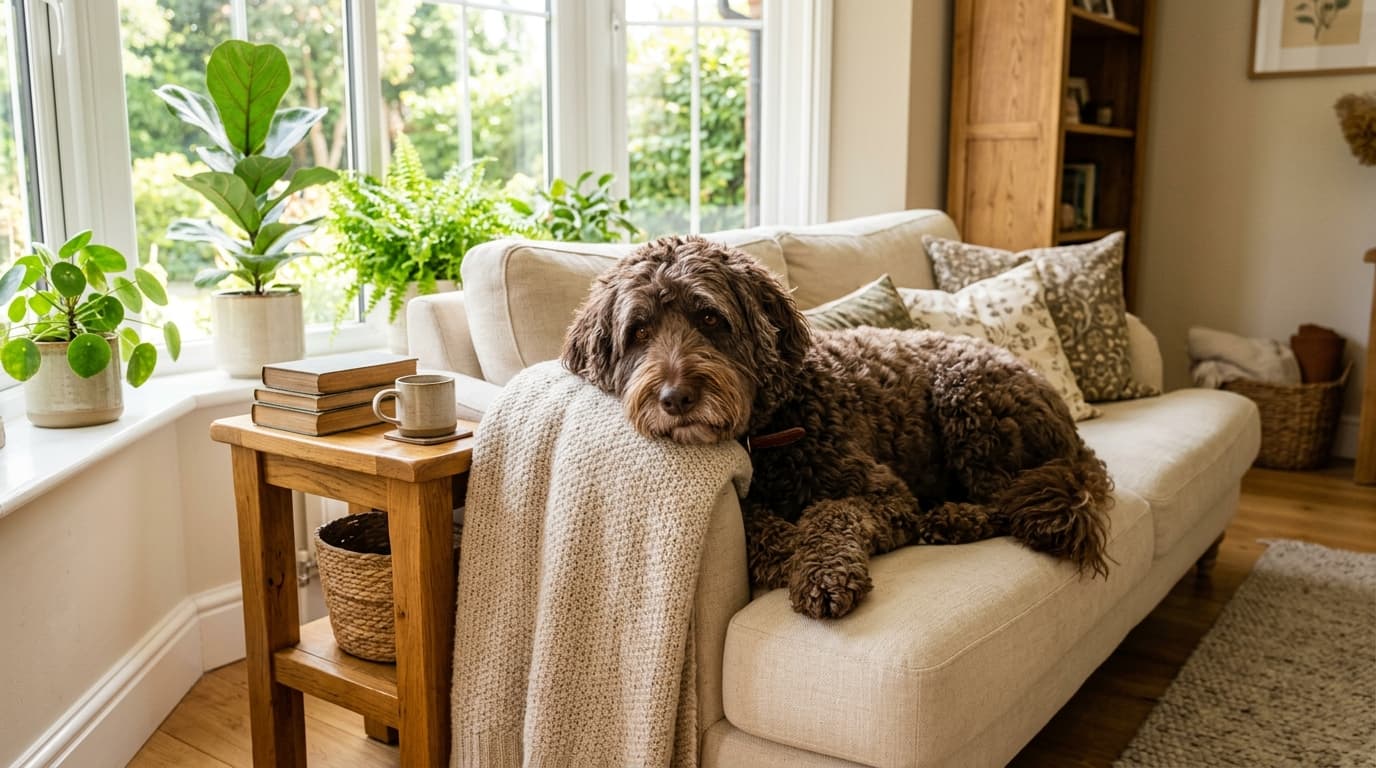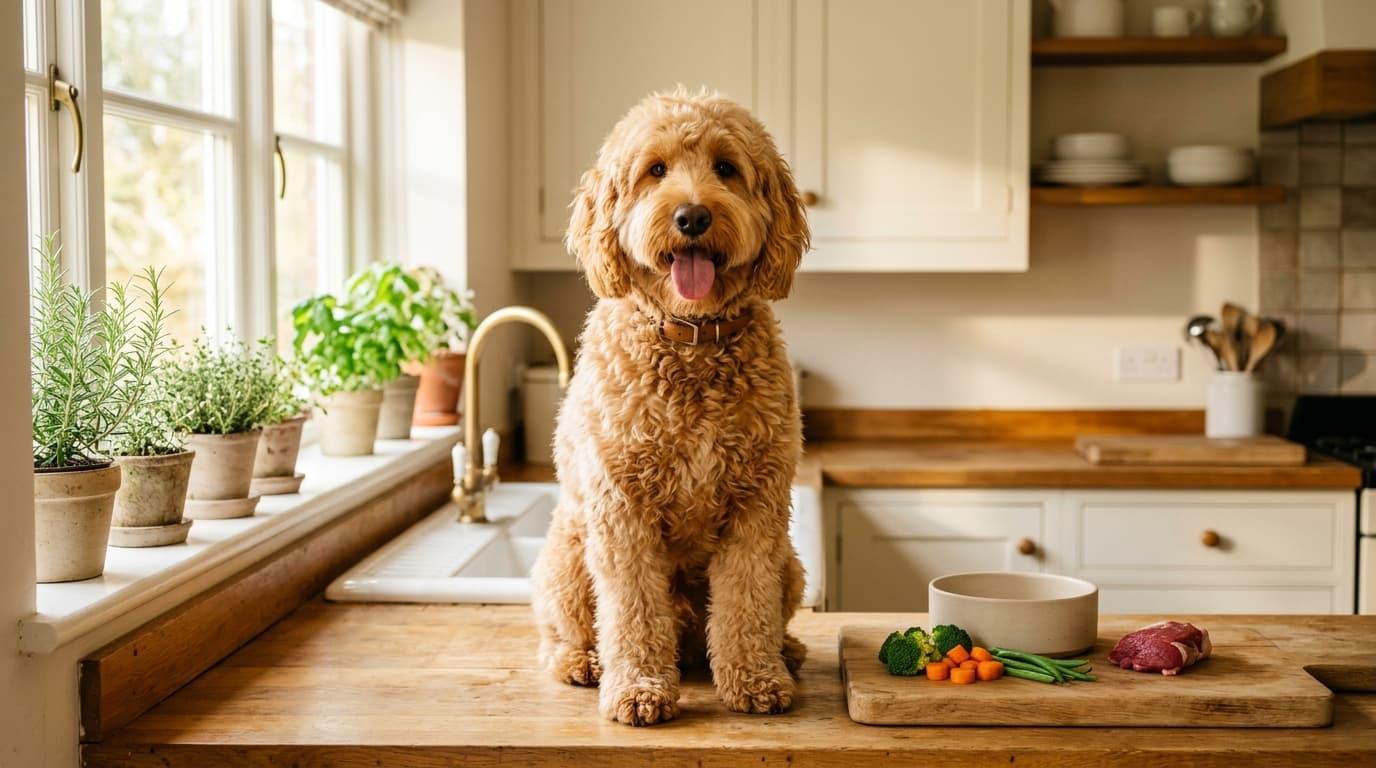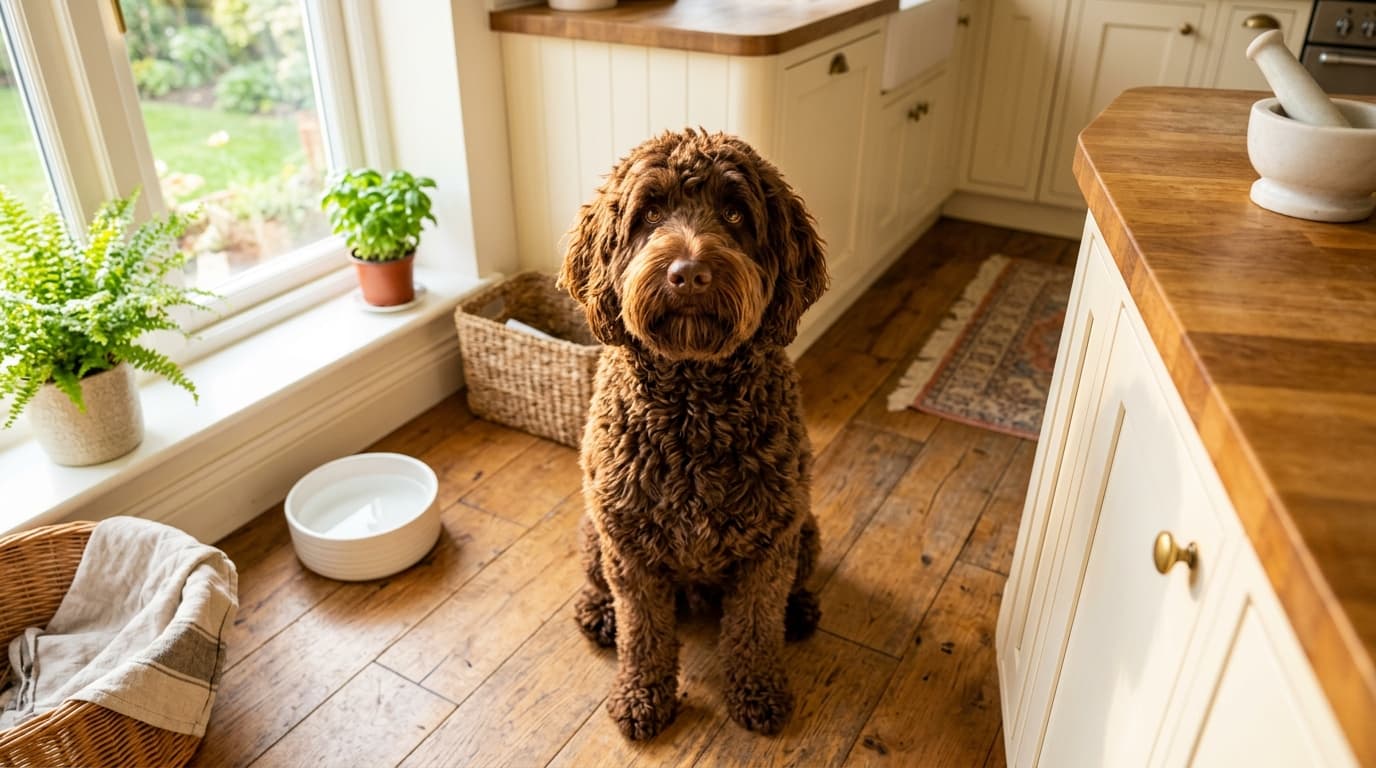
If your Labradoodle has a sensitive stomach, the cause is usually diet, a too-fast food change, or stress, not a scary underlying disease. Labradoodles inherit food sensitivities from their Poodle and Labrador lines and, thanks to the Lab side, tend to eat fast and eat everything, which irritates the gut. Most cases settle with a consistent limited-ingredient diet, slow food transitions, probiotics, and a steady routine. Persistent vomiting, bloody stool, or a flat, lethargic dog means it's time to call your vet.
We live with three doodles, Sven, Gunnar and Gösta, and feed raw at home with premium kibble and freeze-dried raw for travel. Between the three of them we've seen just about every version of a rumbly stomach, and the good news is that the vast majority of "labradoodle stomach problems" follow predictable patterns you can actually manage.
If you already know the fix is a cleaner, simpler bowl and you just want the shortlist, jump to our best food for a doodle with a sensitive stomach picks, otherwise, read on for the full roadmap.
This is the cornerstone guide: what's going on, why Labradoodles specifically, how to read the symptoms, and a real step-by-step plan. Where a subtopic deserves its own deep-dive, I'll point you to it rather than repeat myself.
Why Labradoodles are prone to a sensitive stomach
A Labradoodle is a Poodle crossed with a Labrador Retriever (and Australian Labradoodles add a few other lines in their history). Both parent breeds bring digestive quirks to the table:
- The Poodle line is associated with food sensitivities and skin/gut reactions. Poodle-heritage dogs often react to common proteins and to frequent diet changes.
- The Labrador line brings the "eats first, thinks later" appetite. Labs and Lab-crosses gulp food, swallow air, and counter-surf, all of which stress a digestive system.
Put those together and you get a dog that is both more likely to react to ingredients and more likely to overeat or eat something it shouldn't. That combination is exactly why "why does my Labradoodle have digestive issues" is such a common search.
It's worth saying this isn't unique to Labradoodles, Goldendoodles, Bernedoodles and Sheepadoodles share the Poodle line and much of the same sensitivity. Size plays a role too; if you have a smaller variety, mini doodles can run more sensitive in both stomach and skin.
The symptoms: what a sensitive stomach actually looks like
Digestive upset shows up in more places than the backyard. Here are the signs we watch for across our three:
- Soft or inconsistent stool, the classic. One day formed, next day pudding.
- Vomiting, food, foam, or yellow bile (especially on an empty stomach).
- Gas, genuinely eye-watering gas is often a diet or gut-flora signal.
- Rumbling / gurgling belly, audible from across the room.
- Picky eating or food refusal, a sensitive gut can make even a food-motivated Lab-cross hesitate.
- Grass eating, many dogs graze when their stomach is unsettled.
- Licking lips, swallowing, restlessness, nausea signs before anything comes up.
Not every symptom is stomach-related, though. Labradoodles under that curly coat can hide skin issues, and food reactions sometimes show up as itch and paw-licking rather than loose stool. If your dog is licking paws or scratching too, read our piece on signs of a sensitive stomach beyond the poop and, if the itch is the bigger story, what paw-licking after eating really means.
Is soft stool alone something to worry about?
Occasional soft stool in a Labradoodle who is bright, playful, and eating normally is usually nothing dramatic. It's the pattern that matters. We break down exactly when soft stool but acting normal is fine versus worth chasing, but as a rule, one soft poop from a happy dog is a "watch," not an "act."
Root causes: what's actually upsetting your Labradoodle's gut
Almost every sensitive-stomach case we've dealt with comes back to one of these five root causes.
1. Food intolerances and sensitivities
This is the big one for the Poodle line. A food intolerance is a digestive reaction (gas, loose stool, vomiting) to an ingredient, distinct from a true immune food allergy, which more often drives itch and skin trouble. The difference matters for how you fix it, and we untangle it fully in food allergy vs. food intolerance in doodles.
The usual suspects are the proteins dogs eat most: chicken and beef. Chicken is the single most common trigger we hear about, see chicken allergy in doodles, and beef is right behind it. Dairy, some grains, and cheap fillers round out the list in our common ingredient triggers guide.
2. Rapid diet changes
If I had to name the number-one avoidable cause, it's switching food too fast. A sensitive Labradoodle gut needs time to adjust its bacteria and enzymes. Swap overnight and you often get days of loose stool, the exact scenario in diarrhea after switching food. The fix is a slow transition, covered below.
3. Overeating and fast eating
Thank the Labrador side. Bolting food, oversized portions, and too many rich treats overwhelm the digestive system. We cover the mechanics in overfeeding and stomach issues in doodles, but the short version is that portion discipline and a slow-feeder bowl solve a surprising number of "mystery" upsets.
4. Stress and routine changes
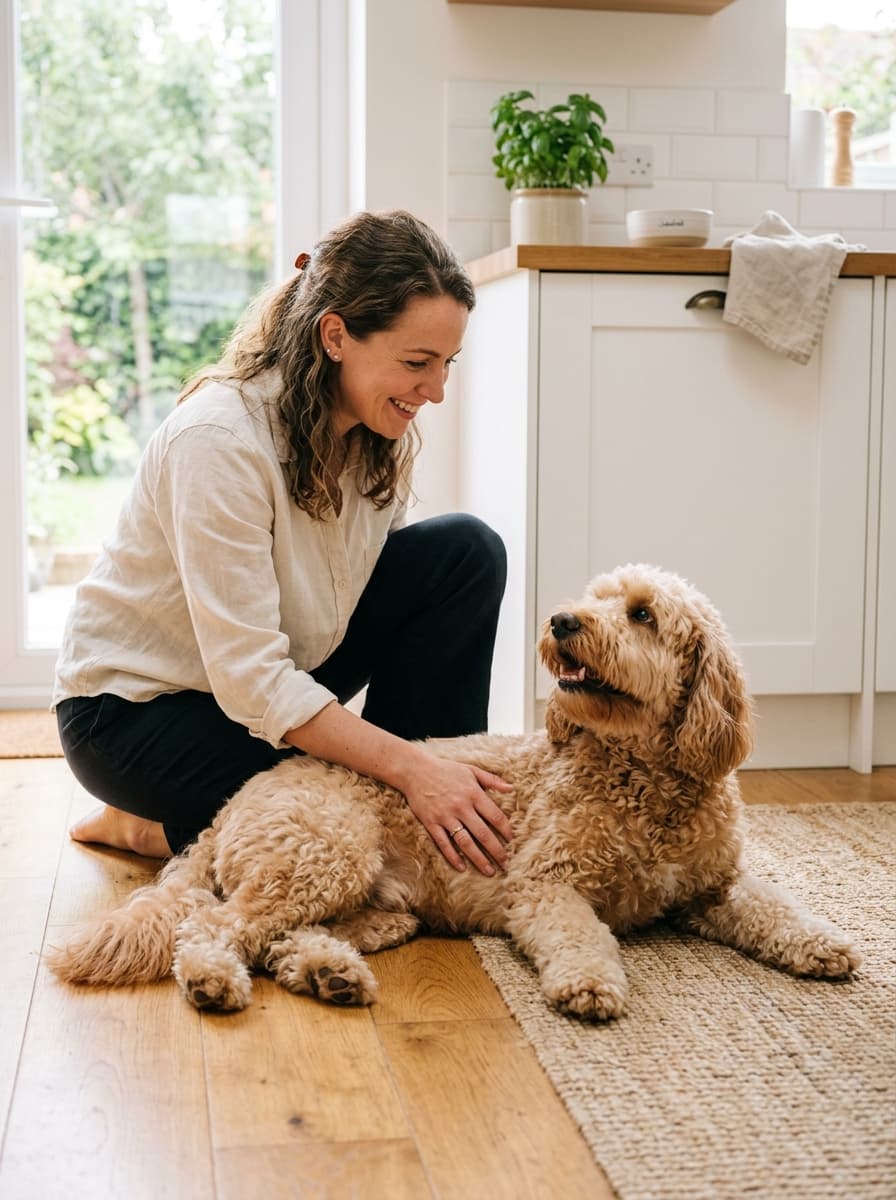
Doodles are sensitive, people-bonded dogs, and the gut-brain connection is real. Travel, boarding, new family members, or a change in schedule can loosen stool overnight. Sven's stomach is the first thing to react to a big change. If your dog's upsets track with life events, our guide to stress and digestive problems in doodles is the one to read.
5. Underlying conditions
Most sensitive stomachs are benign, but some are symptoms of something more, parasites, pancreatitis, IBD, or bile-related issues. Repeated bile vomiting deserves attention; we cover it in labradoodle vomiting yellow foam and the broader bile vomiting in doodles. The vet section below tells you when to stop guessing.
Symptom-to-solution roadmap
Here's how the common signs map to first steps and the focused guide for each. Use it as a triage table, not a replacement for veterinary judgment.
| Symptom | Likely first cause to check | First step at home | Go deeper |
|---|---|---|---|
| Soft stool, dog acting normal | Diet or minor stress | Hold the diet steady 3-5 days | Soft stool but acting normal |
| Diarrhea after a food switch | Too-fast transition | Slow the transition; add probiotics | Diarrhea after switching food |
| Vomiting yellow bile (empty stomach) | Long gap between meals | Small bedtime snack | Labradoodle vomiting yellow foam |
| Gas + loose stool over weeks | Food intolerance | Elimination diet | Elimination diet for doodles |
| Upset that tracks with events | Stress | Routine + calming plan | Stress & digestive problems |
| Vomiting/diarrhea >48h, blood, lethargy | Possible medical issue | Call your vet | When to see the vet for vomiting |
How long should you wait before acting?
For a mild upset in an adult dog who's still bright and drinking, it's reasonable to give a gentle home approach 24-48 hours. Most simple upsets resolve in that window, our how long does doodle diarrhea last timeline walks through what "normal" recovery looks like. Beyond 48 hours, or the moment anything on the red-flag list appears, you're in vet territory.
Labradoodle upset stomach remedies that actually help
When Gunnar has a rumbly night, this is roughly our order of operations for a mild, otherwise-healthy adult. None of this replaces a vet's advice, and none of it applies to a dog who's genuinely unwell.
A short rest, then bland
For a mild upset in an adult dog, a brief break from food (a few hours, not days, and never for puppies) gives the gut a rest. Follow with a small, bland meal rather than diving back into the regular diet.
Ground flaxseed (what we reach for first)
The option we actually reach for first for loose stool is a single spoonful of ground flaxseed stirred into the meal. It supplies both soluble and insoluble fiber plus omega-3s, and in our experience it firms up loose stool nicely while being easy to keep in the pantry. Start small, a teaspoon for a smaller Labradoodle, up to a tablespoon for a big one, and make sure it's ground, not whole, so your dog can actually use it.
Plain canned pumpkin
The more familiar alternative is a spoonful of plain canned pumpkin (not pie filling), which adds gentle fiber that can firm up loose stool. It's a long-standing labradoodle upset stomach remedy, and if flaxseed isn't on hand it does the job well. We cover doses and the how-and-why in can pumpkin help a doodle's stomach.
Slippery elm
Slippery elm coats and soothes an irritated gut lining and is well tolerated by most sensitive doodles. Details and how to use it live in slippery elm for doodle digestive issues.
Probiotics
A good probiotic helps rebuild gut flora after an upset or a diet change, often the single most useful long-term addition for a sensitive Labradoodle. We compare our favorites in best probiotics for doodle digestive issues and explain the whole category in the probiotics for doodles complete guide.
Diagnosing the trigger: the elimination diet
If your Labradoodle's stomach problems are chronic rather than a one-off, guesswork won't cut it, you'll want to systematically find the trigger. That means an elimination diet: strip the diet back to a single protein and carb your dog hasn't reacted to, feed only that for several weeks, then reintroduce foods one at a time to see what flares symptoms. The American Veterinary Medical Association makes the same point about diet trials being the most reliable way to pin down a food reaction.
It takes patience and discipline (no cheating with random treats), but it's the most reliable way to identify a food intolerance. We've laid out the whole process in the elimination diet for doodles step-by-step guide, and the broader picture in food allergies in doodles: the complete guide.
For severe or stubborn cases, your vet may suggest a hydrolyzed diet, where proteins are broken down small enough that the immune system doesn't recognize them. Whether it's worth it is a real question, see hydrolyzed dog food for doodles.
Best food for a Labradoodle with a sensitive stomach
The best food for a Labradoodle sensitive stomach is a limited-ingredient diet built on a single, well-tolerated protein, with no unnecessary fillers, dyes, or constantly-changing recipes. Consistency beats novelty, a sensitive gut wants the same clean meal every day.
That principle holds whether you feed kibble, raw, or freeze-dried. Here's how we think about each:
Limited-ingredient kibble
The simplest route for most owners. Fewer ingredients means fewer potential triggers, and a good limited-ingredient formula lets you avoid chicken and beef easily. Our picks and how to read a label are in best limited-ingredient dog food for doodles and the broader limited-ingredient dog food explained. For sensitive-stomach specifics, best food for a doodle with a sensitive stomach is the focused list.
Raw feeding
This is what we do at home, and for our three it's meant clean, consistent ingredients we control completely. It's not a magic cure and it's not for everyone, it requires safe handling and a proper transition. If you're curious, start with our kibble-to-raw transition plan and raw food safety playbook, and read our honest take on salmonella and E. coli risk before deciding.
Freeze-dried
A middle path, much of the ingredient simplicity of raw with easier handling. There's a right way to switch; see the freeze-dried transition plan.
Whatever you choose, the golden rule for a sensitive Labradoodle is: pick a clean diet and stop changing it. Every switch is a fresh chance to upset the gut.
The transition: how to change food without the fallout
When you do need to change foods, go slow. A sensitive Labradoodle gut needs a gradual handover so its bacteria and enzymes can keep up.
Here's the pace we use:
- Days 1-2: 75% old food, 25% new
- Days 3-4: 50/50
- Days 5-6: 25% old, 75% new
- Day 7: 100% new
For a genuinely sensitive dog, stretch that over 10-14 days and add a probiotic throughout. Our full 7-day food transition plan for sensitive doodles has the detail, and it's the plan that saved Sven's stomach when we last changed his kibble line for travel. We nudged him over 10 days instead of 7 and skipped the loose-stool phase entirely.
Feeding routine and gut health for the long haul
Managing a sensitive stomach isn't just what you feed, it's how.
Consistent meal times
Feeding at the same times each day steadies the whole system. It also prevents the empty-stomach bile vomiting Labradoodles are prone to when meals are too far apart, that early-morning yellow foam often just means the gap between dinner and breakfast is too long. A small bedtime snack frequently fixes it.
Slow the eating down
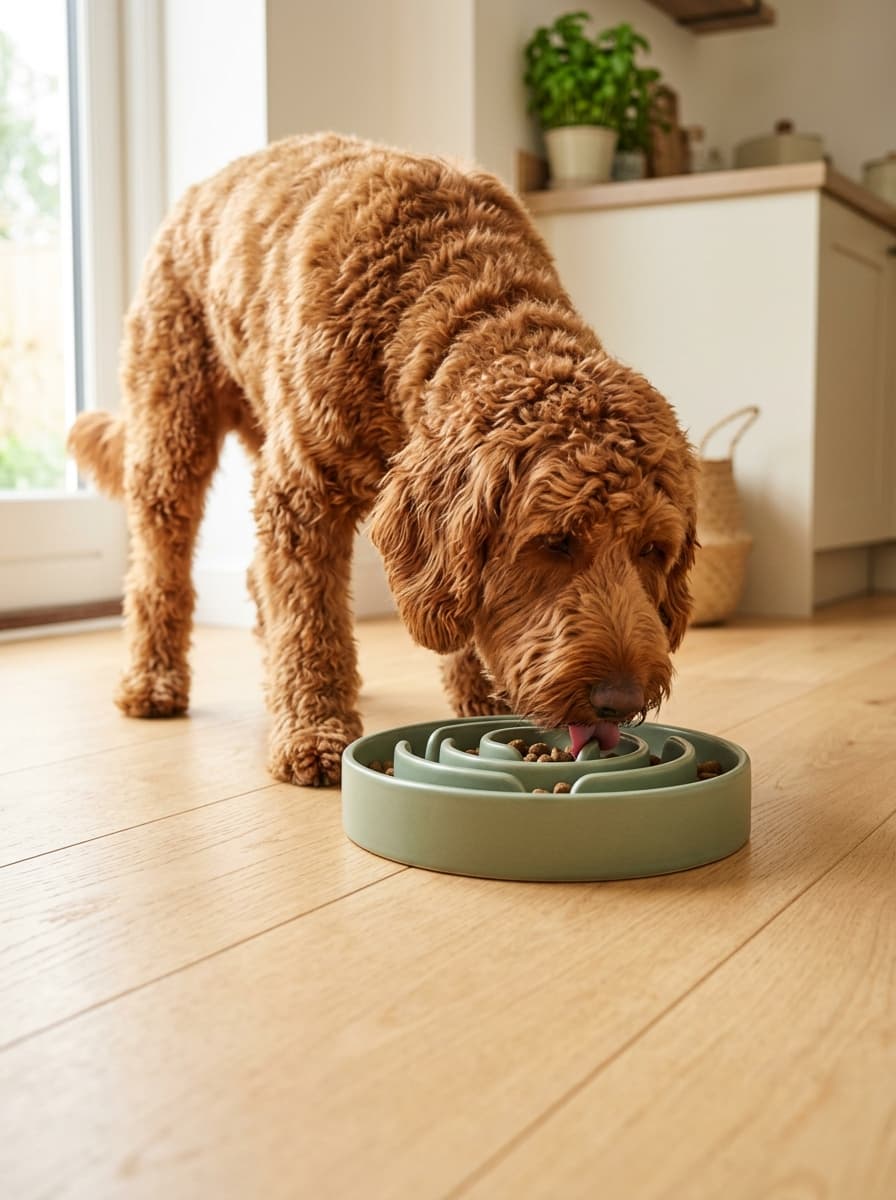
For a fast-eating Lab-cross, a slow-feeder bowl or a snuffle mat reduces gulped air and the "too much, too fast" upsets. Simple, cheap, effective.
Portion control
Overfeeding is a stealth cause of chronic soft stool. Measure meals, count treats as part of the daily total, and resist those pleading Labradoodle eyes.
Ongoing gut support
For a dog with a truly sensitive system, a maintenance routine pays off: a daily probiotic, and for some dogs digestive enzymes to help break food down. We've put together a full gut health routine for sensitive doodles, and if you want the whole supplement picture, the gut health supplements hub is your starting point.
When to see the vet
Home management handles the everyday sensitive stomach. It does not handle these. Call your vet, same day, or emergency, if you see:
- Vomiting or diarrhea lasting more than 24-48 hours
- Blood in vomit or stool (fresh red or dark/tarry)
- Lethargy, weakness, or a dog who won't get up
- Refusing water or signs of dehydration
- A hard, painful, or bloated belly (this can be an emergency)
- Repeated retching that produces nothing, possible bloat, treat as urgent
- Any symptoms in a young puppy or a senior
- Sudden weight loss or a change in symptoms that's getting worse, not better
Our dedicated guide on when to take your doodle to the vet for vomiting walks through each red flag in more detail. With digestive symptoms, a quick phone call is always cheaper than waiting too long.
Your Labradoodle sensitive stomach action plan
Pulling it all together, here's the roadmap:
- Read the symptoms honestly, pattern and trajectory matter more than a single episode.
- Rule out the easy causes, too-fast food change, overfeeding, treats, stress, a long overnight gap.
- Settle a mild upset gently, bland food, ground flaxseed or pumpkin, slippery elm, probiotics, one change at a time.
- For chronic problems, find the trigger, a proper elimination diet beats guessing.
- Pick one clean, limited-ingredient diet and stay consistent, kibble, raw, or freeze-dried.
- Transition slowly whenever you must switch, 7-14 days for a sensitive dog.
- Build a steady routine, consistent times, slow feeding, portion control, daily gut support.
- Know the red flags and call your vet when you see them.
FAQ
Most Labradoodle stomach issues trace back to diet, a too-fast food change, or stress rather than a serious disease. The breed inherits food sensitivities from its Poodle and Labrador lines, and Labs are famously fast eaters, which adds gulped air and gastric irritation. Identify the trigger, feed a consistent limited-ingredient diet, transition foods slowly, and support the gut with probiotics before assuming the worst.
The best food is a limited-ingredient diet built around a single, novel or well-tolerated protein and no unnecessary fillers, dyes, or frequent recipe changes. Whether that's a quality kibble, a raw diet, or a freeze-dried option matters less than consistency and clean ingredients. Many sensitive Labradoodles do well once chicken and beef are removed and the diet stays the same day to day.
For a mild upset in a dog who is otherwise bright and drinking, a short rest from food (never for puppies), then a bland meal helps. A spoonful of ground flaxseed is what we reach for first to firm up loose stool, with plain canned pumpkin as the more familiar alternative. Probiotics and slippery elm can calm the gut lining. If vomiting or diarrhea lasts more than 24-48 hours, or your dog seems unwell, skip the home remedies and call your vet.
Occasional soft stool in a Labradoodle who is acting completely normal is common and usually diet- or stress-related. What isn't normal is chronic soft stool, mucus, blood, or soft stool paired with vomiting, weight loss, or low energy. Track how long it lasts and whether it improves with a consistent diet before treating it as a real problem.
Call your vet if vomiting or diarrhea lasts more than 24-48 hours, if you see blood, if your Labradoodle is lethargic, refusing water, or has a hard, painful belly, or if a puppy or senior is affected at all. Repeated bile vomiting, sudden weight loss, and any collapse are urgent. When in doubt, a quick call is always the safer choice with digestive symptoms.
Next step
If your Labradoodle's upsets are more than the occasional off day, the highest-value next move is finding the actual trigger. Start with our elimination diet for doodles step-by-step plan, it's the most reliable way to turn "why does my Labradoodle have digestive issues" into a clear answer. And if you want the wider view across all doodle tummies, the sensitive stomach hub gathers every guide in one place.
You can beat a sensitive stomach with patience, consistency, and a little detective work, we've done it with the two of ours who needed it, and your Labradoodle can get there too.