If your Labradoodle is vomiting yellow foam, the yellow is almost always bile, and the most common reason, especially first thing in the morning, is simply an empty stomach. Overnight, bile collects in the stomach, and with no food to act on, it irritates the lining until your dog brings up a small amount of yellow, foamy liquid. A bedtime snack, smaller more frequent meals, and a short bland-diet reset usually fix it. Repeated vomiting, blood, or a lethargic, off-food dog means it's time to call the vet.
That's the quick answer, and you will find it on any page about bile vomiting. What follows is the part that is specific to this cross, the reason a Labradoodle owner in particular often ends up causing the problem while trying to solve a different one.
If you already suspect the vomiting is tied to a twitchy, sensitive gut and just want the shortlist, jump to our best food for a doodle with a sensitive stomach, otherwise, read on for how to tell what's actually going on.
Why Is My Labradoodle Vomiting Yellow Foam?
Yellow foam is bile mixed with stomach fluid and a bit of air. Bile is a digestive juice made by the liver and released into the small intestine to help break down fats. When the stomach sits empty for a long stretch, bile can flow backward into it. Bile is irritating, and an empty stomach has no food to buffer it, so your Labradoodle's body does the sensible thing and empties out the irritant.
The tell-tale signs of the harmless version:
- It happens on an empty stomach, often early morning or late at night before the next meal.
- The vomit is small in volume, a puddle of yellow or foamy liquid, not chunks of food.
- Your dog is otherwise normal: bright, hungry right after, playful, and keeps food down once fed.
This pattern has a name, bile reflux, sometimes called bile vomiting syndrome. The Merck Veterinary Manual describes this same reflux mechanism in its coverage of the digestive system. We cover the fix in depth in our guide to bile vomiting in doodles and the one-snack fix, and there's a companion piece on why doodles vomit bile if you want the mechanism spelled out.
The Most Common Cause: An Empty Stomach
For most Labradoodles, empty-stomach bile vomiting comes down to the gap between the last meal of the day and the first meal of the morning. If your dog eats dinner at 6 p.m. and doesn't eat again until 8 a.m., that's a 14-hour fast, plenty of time for bile to pool and start nagging at the stomach lining.
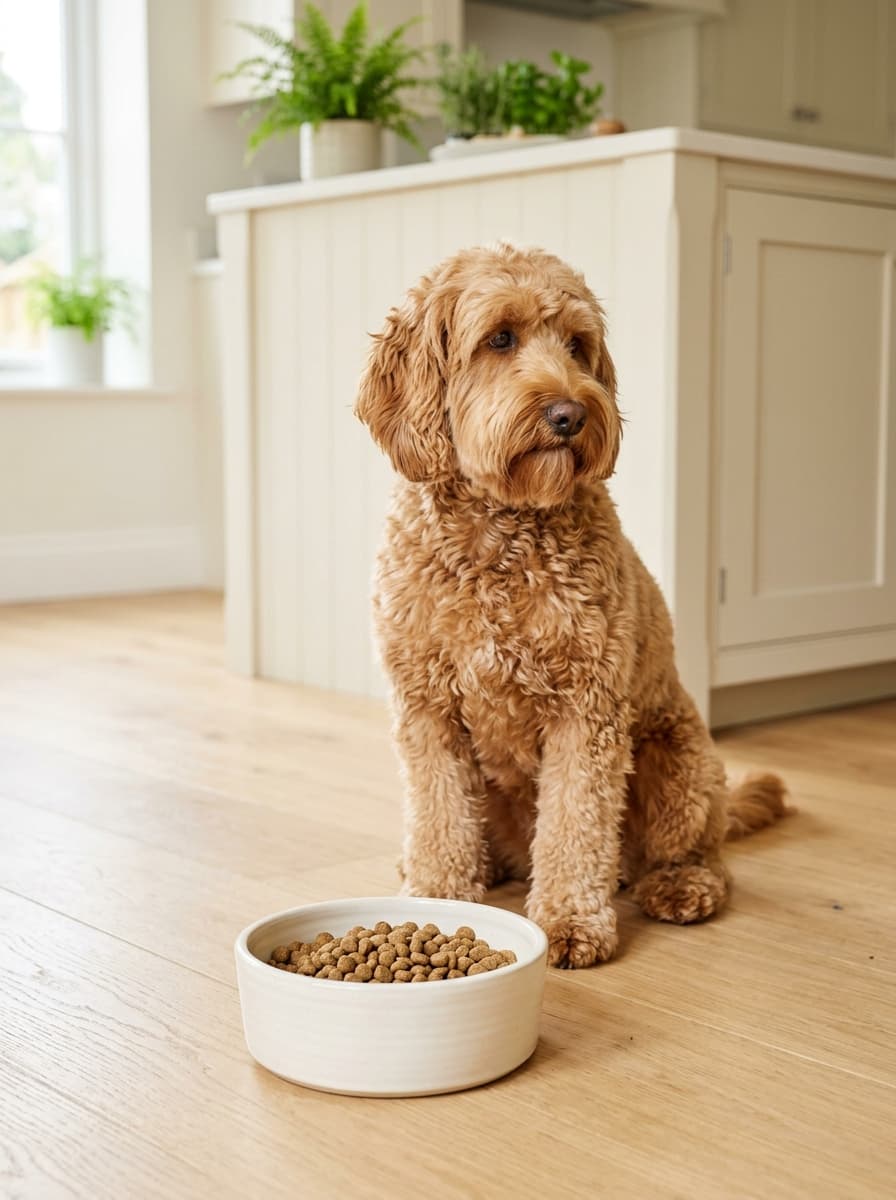
Sven is our early-morning bile dog, it was his defining problem for the whole of his first year. When we let dinner drift too late in the afternoon and breakfast too late the next day, he'd bring up a little yellow foam around 6 a.m., then look at us like we owed him breakfast. Nothing wrong with him at all; he'd just gone too long empty. A small snack before bed and an earlier breakfast sorted it within days.
Other Triggers Worth Knowing
Empty stomach is the headline, but a few other things can produce yellow foam or make it worse:
- Sensitive stomach. Labradoodles are genuinely prone to this, see the signs of a doodle sensitive stomach beyond the poop. A twitchy gut brings up bile more readily.
- Dietary indiscretion. The classic doodle move, snatching something off the trail or the counter. This usually causes a one-off upset rather than a daily pattern.
- Eating too fast or too much. Overfeeding and gulping both stress digestion; our overfeeding and stomach issues guide explains why portion size matters more than people think.
- Stress. Kennel stays, new routines, or a busy household can upset a sensitive gut, more in stress and digestive problems in doodles.
- Pancreatitis, blockages, and other illness. Less common but more serious. These don't look like the tidy little morning puddle, they come with other symptoms (below).
The weight-management trap
Here is the loop we see over and over in Labradoodle households, and it is the reason this page exists separately from the general bile vomiting guide.
The Labrador line carries a documented tendency toward food motivation and weight gain. It is a tendency, not a certainty, and how strongly any individual Labradoodle inherits it varies, but if your dog acts permanently starving and puts on weight easily, you are probably seeing it.
So the vet says lose a few pounds, and the owner does the obvious thing: cuts the daily amount, and often drops from two meals to one to make the reduction feel manageable. Both moves are reasonable. Together they do something nobody warns about:
| What the owner changes | What the dog's day looks like | Result |
|---|---|---|
| Two meals → one evening meal | ~22 hours between meals | Long empty stretch overnight and all morning |
| Two meals → one morning meal | ~22 hours, gap falls overnight | Bile builds through the night |
| Smaller portions, same two meals | Gap unchanged, stomach empties sooner | Slightly longer empty stretch |
Bile vomiting is driven by how long the stomach sits empty, not by how much the dog eats in total. Cutting to one meal a day is the single most effective way to lengthen that gap, which is why a diet started to fix one problem so often creates this one.
Symptom Triage: Harmless or Vet Call?
Use this to place what you're seeing. When in doubt, the safer call is always the vet, this is your dog's health, and it's fine to be cautious.
| What you're seeing | Likely meaning | What to do |
|---|---|---|
| Small yellow foam, empty stomach, dog bright & hungry | Bile reflux | Feed a small meal, adjust schedule |
| One-off vomit after scavenging, then normal | Dietary indiscretion | Watch; bland meal if needed |
| Yellow foam 2+ mornings in a row | Empty-stomach pattern | Bedtime snack, split meals |
| Repeated vomiting in a day, or can't keep water down | Not just bile | Call your vet |
| Blood (red or coffee-ground), lethargy, no appetite | Possible serious cause | Vet now |
| Hard/bloated belly, retching with nothing coming up | Possible bloat, emergency | Emergency vet immediately |
At-Home Steps for a One-Off Episode
If your Labradoodle is bright and hungry and this is a single, small episode, here's the calm approach we use at home:
- Don't panic and don't withhold food for hours. For simple bile vomiting, an empty stomach is the problem, not the cure, a long fast can make bile vomiting worse.
- Offer a small, bland meal. Plain boiled chicken and white rice, or a spoonful of plain canned pumpkin (no spices). Small portion. See can pumpkin help a doodle's stomach for how and how much.
- Return to normal food over a day or two, mixing back in gradually rather than switching abruptly.
- Make sure water is available but don't let your dog gulp a huge bowl right after vomiting, small amounts are gentler.
Skip human medications unless your vet has specifically told you a product and dose. The ASPCA makes the same point about not giving human medicines without professional guidance. Doodles' sensitive systems don't need extra variables.
The Morning-Vomit Prevention Routine
This is the part generic articles skip. If the yellow foam shows up on a schedule, you can usually engineer it away by never letting the stomach get properly empty. Here's the routine that works across our three-dog household:
- Split the day's food into more meals. Two meals become three, or add a small third portion. Same total food, fewer long gaps.
- Add a bedtime snack. A small protein-and-carb snack right before lights-out is the single highest-impact change. A little kibble, a spoon of their normal food, or a plain biscuit, enough to keep bile busy overnight.
- Feed breakfast as early as you realistically can. Shortening the overnight fast at both ends compounds the benefit.
- Feed dinner a touch later if your evenings run early, so the gap to breakfast shrinks.
- Slow down fast eaters. A slow-feeder bowl or a snuffle mat helps gulpers and reduces air swallowing.
With Sven we shifted his dinner from 4:30 to 6 p.m. and added a small biscuit at bedtime. The early-morning foam stopped and hasn't been an issue since. It really is that simple for most empty-stomach cases.
When Diet, Probiotics, and Enzymes Help Long-Term
If your Labradoodle's stomach is generally twitchy, soft stools, gurgling, occasional bile, picky appetite, the schedule fix treats the symptom, but the underlying sensitivity is worth addressing too.
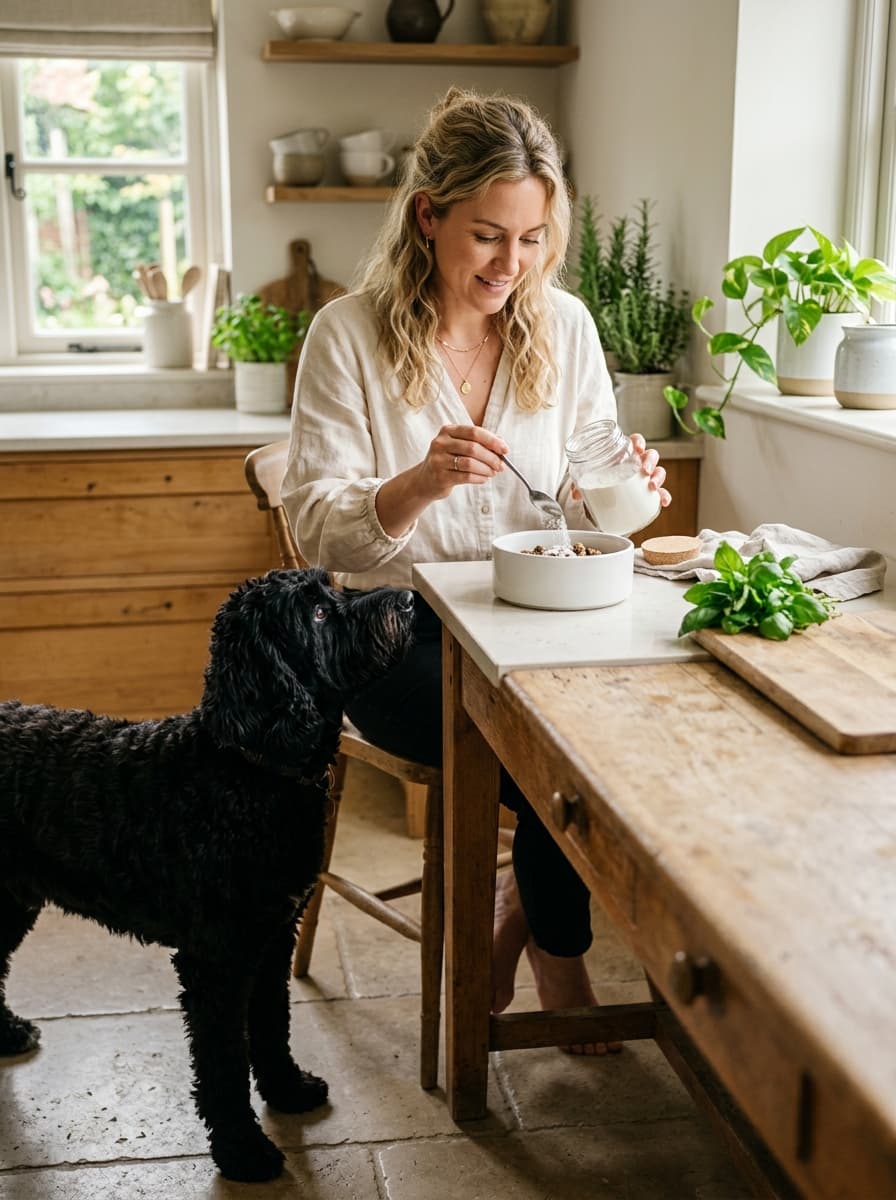
- A gentle, consistent diet matters most. Our best food for a doodle with a sensitive stomach and the broader Labradoodle sensitive stomach guide lay out what to look for and what to avoid.
- Probiotics can help a sensitive gut settle and become more resilient over weeks, see best probiotics for doodle digestive issues.
- Digestive enzymes may help dogs who struggle to break down fats; our digestive enzymes for doodles guide covers when they're worth trying.
- A food sensitivity occasionally sits underneath chronic upset. If vomiting travels with itchy skin, paw licking, or persistent soft stool, a vet-guided elimination diet can reveal a trigger. Labradoodles from Labrador and Poodle lines are genuinely prone to allergies and sensitivities.
We feed raw at home, and one thing we've noticed is that meal timing matters just as much as what's in the bowl, a well-formulated diet still causes bile vomiting if the overnight gap is too long. Fix the schedule first, then optimize the diet.
FAQ
Morning yellow foam is classic bile reflux from an empty stomach. Overnight, bile builds up and, with no food to work on, it irritates the empty stomach lining until your Labradoodle brings up a small amount of yellow or foamy liquid. A bedtime snack and an earlier or split breakfast usually stop it.
A single episode in an otherwise bright, hungry, playful dog is usually not an emergency and often responds to feeding-schedule tweaks. It becomes urgent if vomiting repeats, contains blood, or comes with lethargy, a hard or bloated belly, retching without producing anything, refusing food or water, or diarrhea. Those signs mean call your vet.
For a one-off, offer a small bland meal of plain boiled chicken and white rice or a little plain pumpkin once your dog is settled, then return to normal food over a day or two. Do not give human medications unless your vet directs. If it keeps happening, ask your vet about long-term feeding changes rather than repeat treatments.
Food sensitivities can contribute to an easily upset stomach that's more prone to bile vomiting, and Labradoodles from poodle and Labrador lines are prone to sensitive stomachs. Allergies usually show alongside other signs like itchy skin, soft stools, or paw licking. If vomiting comes with those, a diet review or elimination trial with your vet is worth exploring.
Split the daily food into more frequent smaller meals, add a small protein-and-carb snack right before bed, and feed breakfast as early as you can. Keeping something in the stomach across the long overnight gap is the single most effective prevention for empty-stomach bile vomiting.
The Bottom Line & Your Next Step
For most Labradoodles, yellow foam is bile from an empty stomach, annoying, but very fixable with a bedtime snack, smaller frequent meals, and an earlier breakfast. Watch for the red flags, trust your gut, and don't hesitate to call your vet when symptoms stack up or change.
If the vomiting keeps coming back, the real fix is usually the diet underneath it. Start with our best food for a doodle with a sensitive stomach, and if you're not sure whether your dog even has a sensitive stomach, read the signs beyond the poop next.