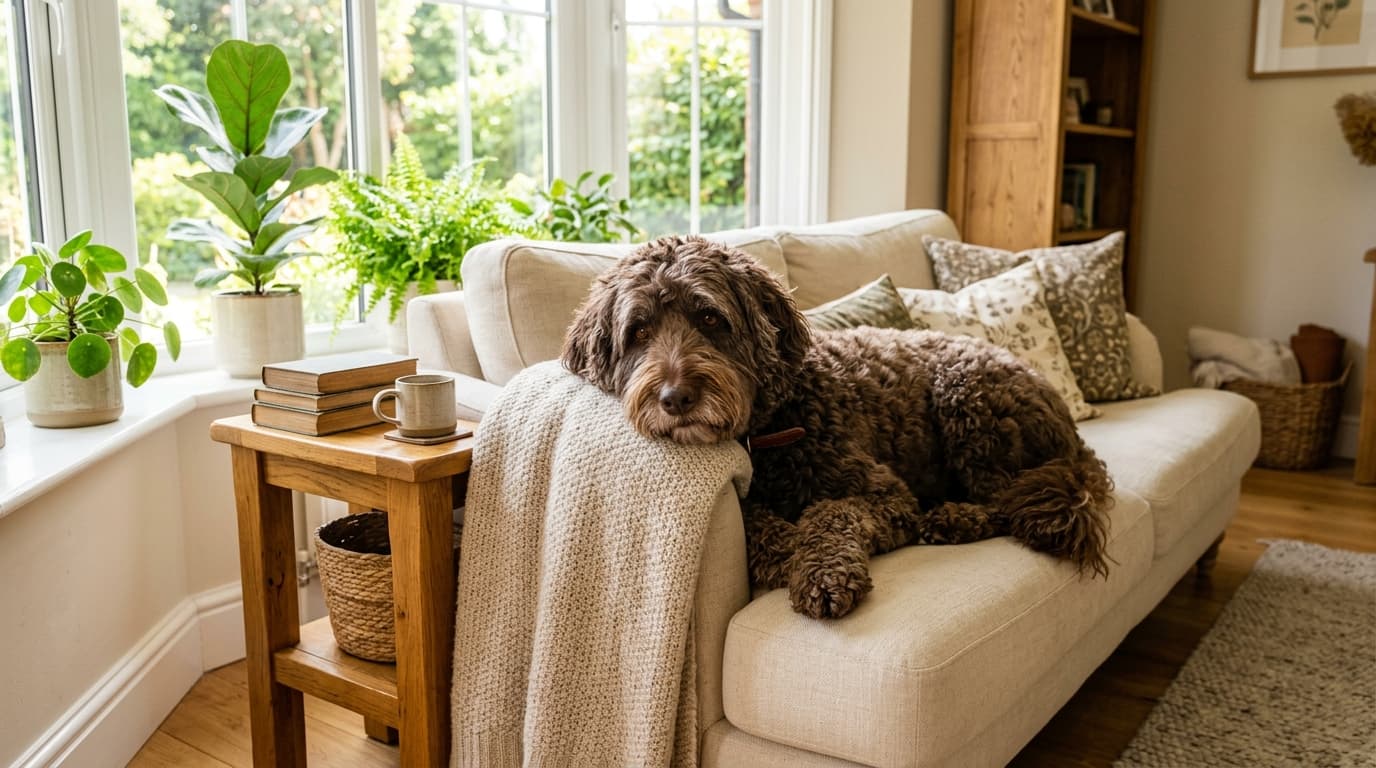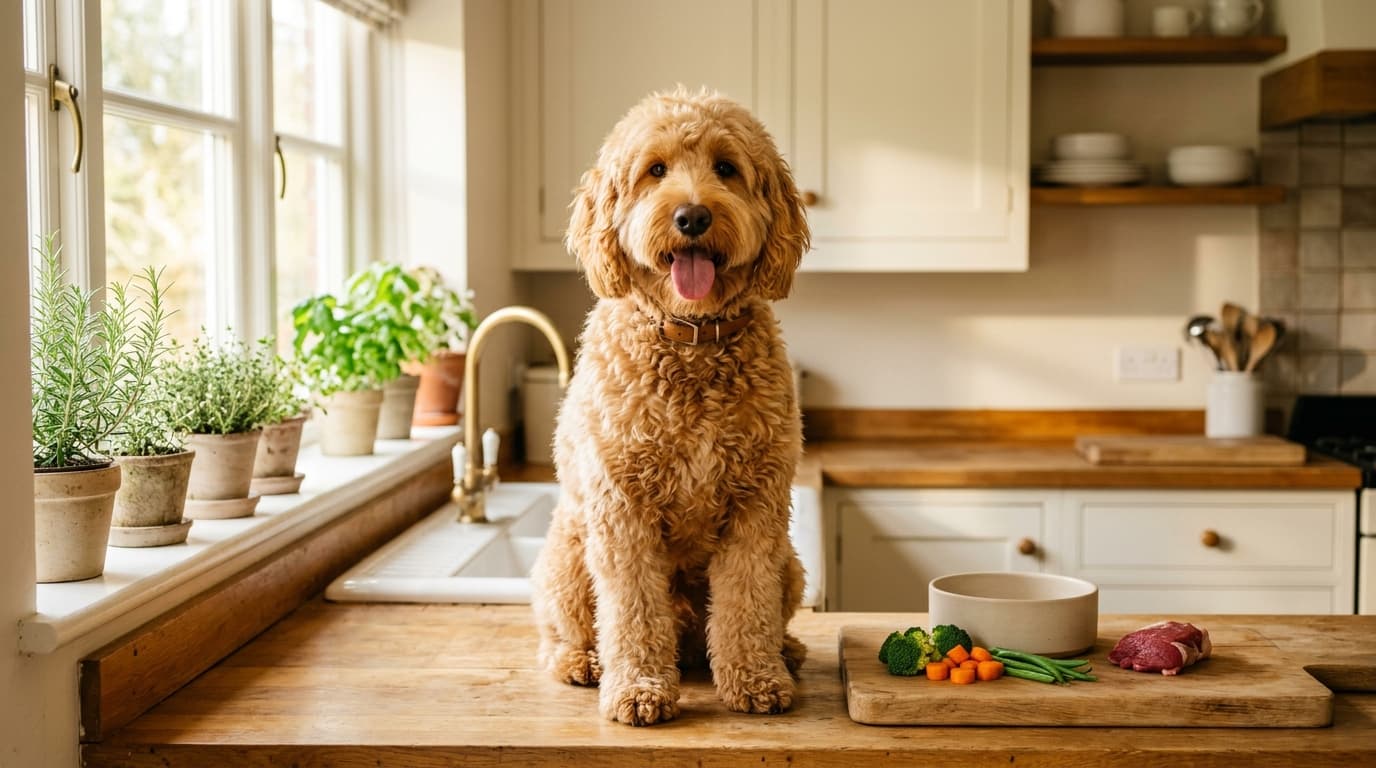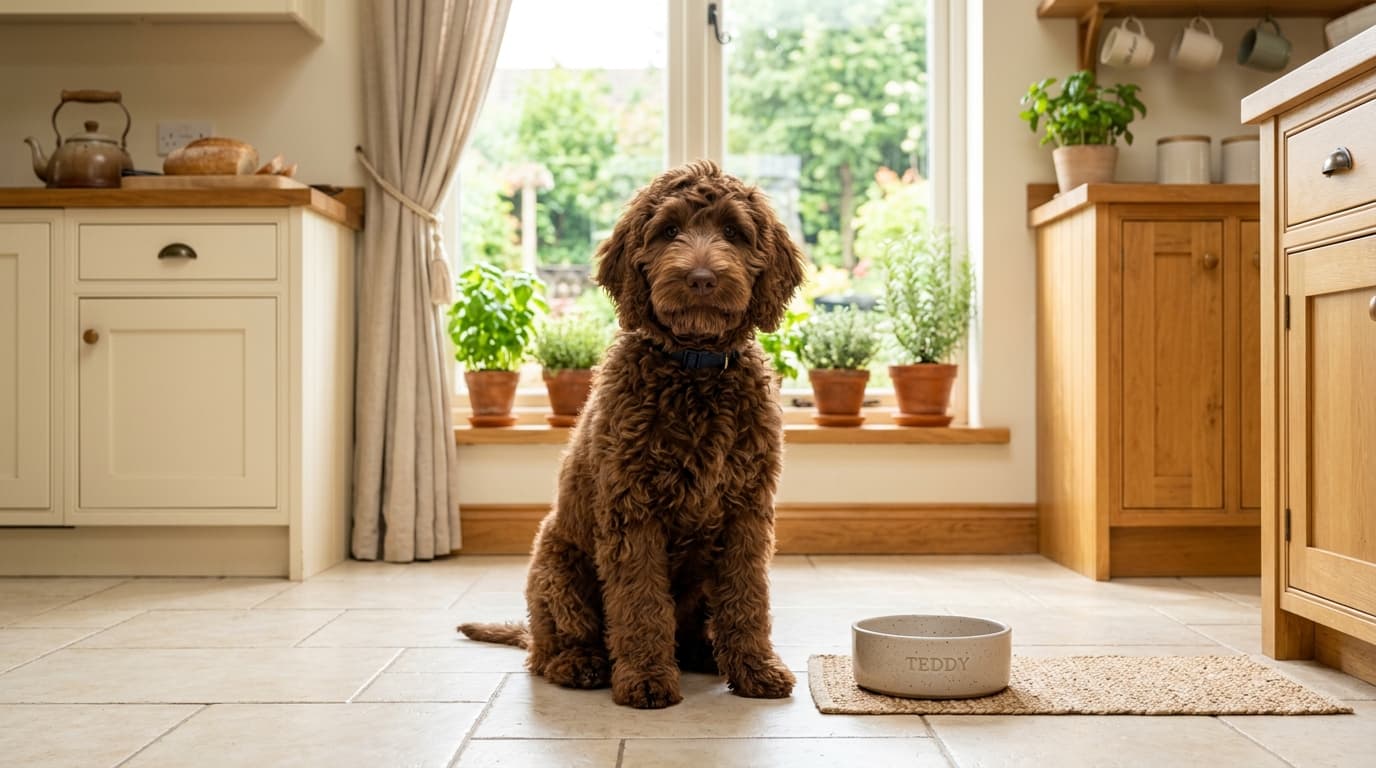
The right time to switch a doodle puppy to adult food depends on the size variety, not a single birthday: Mini Australian Labradoodles and Mini Goldendoodles are usually ready around 12 months, Medium doodles around 12-14 months, and Standard Goldendoodles, Bernedoodles, and Sheepadoodles closer to 15-18 months, once they've reached adult height and growth has slowed. Whatever the size, the switch itself should always be gradual over 7-10 days to protect a doodle's famously sensitive stomach.
That last part is where most owners get burned. Doodles inherit poodle-line food sensitivities, and a food change done too fast is one of the most reliable ways to trigger loose stools, gas, or vomiting. If you already know your doodle has a touchy gut and you just want the shortlist of gentle adult formulas to switch to, jump to our best food for a doodle with a sensitive stomach. The good news: with the right timing and a slow ratio plan, the vast majority of doodles cross over to adult food with no drama at all.
In our house we've done this transition three times, Sven, Gunnar, and Gösta, and the biggest lesson was that patience beats everything. Below is the size-by-size timing plus the exact sensitive-stomach-safe method we use.
When to switch a doodle puppy to adult food
Puppy food is formulated with more calories, protein, fat, and specific calcium-to-phosphorus ratios to fuel growth. Once a doodle is done growing, those extra calories just become weight gain, which is hard on joints and, for sensitive dogs, on the gut too. The goal is to switch when growth is finishing, not before and not long after.
The catch with doodles is that "finishing growth" happens at wildly different ages depending on the size variety. A Mini Australian Labradoodle and a Standard Bernedoodle are practically different projects.
Timing by doodle size
| Doodle size | Typical adult weight | Usually ready for adult food | Notes |
|---|---|---|---|
| Mini (Australian Labradoodle, Goldendoodle) | 15-30 lb (6.8-14 kg) | ~12 months | Small frames mature fastest |
| Medium (Australian Labradoodle, Labradoodle) | 30-45 lb (14-20 kg) | 12-14 months | Watch height, not just weight |
| Standard (Goldendoodle, Bernedoodle, Sheepadoodle) | 45-90+ lb | 15-18 months | Large frames grow longer; don't rush |
These are ranges, not rules. A Standard Goldendoodle who's clearly reached full height at 14 months may be ready early, while a slow-maturing Bernedoodle might still be filling out at 16 months. The size variety is your starting point; your individual dog is the tiebreaker. If you are not sure which bracket your puppy lands in, our adult size predictor estimates it from their current age and weight.
Signs your doodle puppy is ready for adult food
Age is your first clue, but these physical signs confirm it:
- Height has plateaued. Your doodle isn't getting noticeably taller anymore, they're filling out, not growing up.
- Growth has slowed to a crawl. The weekly weigh-in barely moves.
- They're leaving food or gaining a little too easily. A common sign the calorie-dense puppy food is now more than they need.
- They're at or near the age range for their size (see the table above).
If your doodle hits the age window but you're not sure whether growth is truly done, especially with a Standard, a quick check-in with your vet at a routine visit settles it fast.
How to transition puppy to adult dog food (the 7-10 day plan)
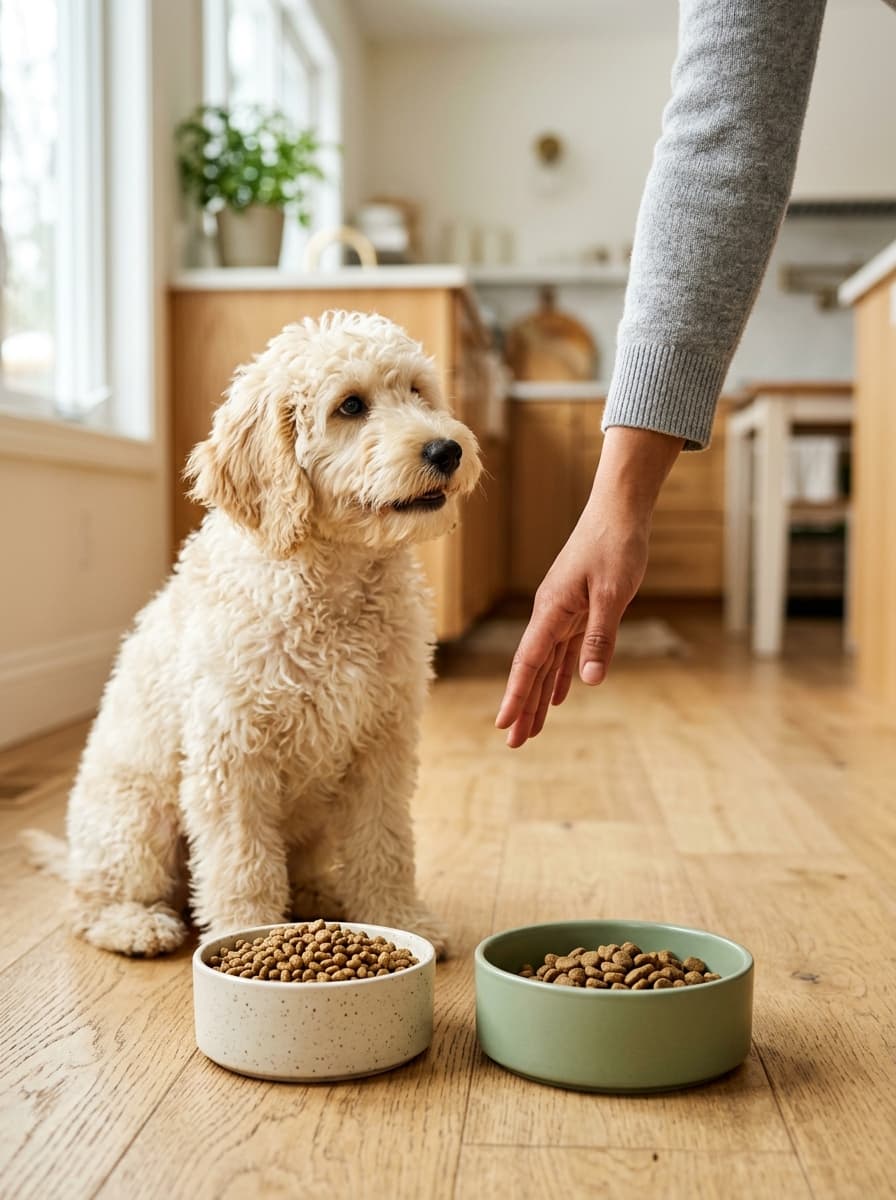
Here's the part that actually prevents the mess. The transition is a slow ratio shift, mixing increasing amounts of the new adult food into the old puppy food. For a typical doodle, spread it over 7-10 days. For a doodle with a known sensitive stomach, stretch it to 12-14 days, there's no prize for finishing fast.
The step-by-step schedule
| Days | Puppy food | Adult food |
|---|---|---|
| 1-2 | 75% | 25% |
| 3-4 | 50% | 50% |
| 5-6 | 25% | 75% |
| 7-10 | 0% | 100% |
Watch the stool at each stage. If poop gets soft, don't advance, hold at the current ratio for an extra day or two until it firms up, then continue. This "pause, don't push" habit is the single most useful thing we've learned feeding three doodles. The Merck Veterinary Manual recommends making dietary changes gradually to avoid gastrointestinal upset.
If you want the full sensitive-stomach version with troubleshooting built in, we've got a dedicated 7-day food transition plan for sensitive doodles that walks through it in more detail.
How we did it with Sven
Sven, our most sensitive stomach of the three, needed the slow version. We stretched his puppy-to-adult switch out over almost two full weeks, held at the 50/50 stage for three days because his stool got a touch soft, and added his probiotic to every meal. No blowouts, no yellow-bile mornings, just a calm, boring transition, which is exactly what you want.
Protecting a sensitive doodle stomach during the switch
Doodles are more prone to GI upset during food changes than the average dog, so it's worth stacking a few gentle supports.
- Probiotics. A daily probiotic through the transition helps the gut bacteria adjust to the new food's fiber and fat profile. This is the one we consider non-negotiable for sensitive dogs, see our picks in best probiotics for doodle digestive issues.
- Digestive enzymes. For doodles who struggle to break food down efficiently, digestive enzymes can smooth the change.
- A little pumpkin on standby. Plain canned pumpkin (not pie filling) is a handy fiber source if stool loosens. Here's how pumpkin helps a doodle's stomach.
- Don't overfeed during the switch. Bigger meals mean bigger digestive workloads. Measure carefully, overfeeding is a sneaky cause of stomach issues in doodles.
If your doodle already has a well-documented touchy gut, it's worth reading our doodle sensitive stomach guide before you start, so you know your dog's baseline.
Choosing the best adult food for doodles
There's no single "best adult food for doodles", the right pick depends on your dog's protein tolerances and how sensitive their stomach is. But quality adult formulas for doodles share the same fundamentals:
- A single, named animal protein as the first ingredient (e.g., "deboned turkey," not "meat meal"). Doodles with poodle-line sensitivities do better with clarity.
- Moderate fat. Very high-fat foods can loosen stool and, in some dogs, contribute to bile-vomiting mornings.
- A limited, recognizable ingredient list. Fewer ingredients means fewer possible triggers. Our overview of limited ingredient dog food for doodles explains when this matters.
- Added omega-3s. Good for the coat and skin under all that doodle curl, omega-3 for doodle skin health covers why.
- Life stage: adult or all-life-stages. Confirm the AAFCO statement matches your dog's stage. You can learn more about what these labels mean from the AAFCO.
If your doodle has shown food reactions, itchy paws after eating, chronic soft stool, or recurring gas, the adult transition is a good moment to move toward a limited-ingredient or novel-protein formula. Start with our best food for a doodle with a sensitive stomach, and if allergies are on the table, the food allergies in doodles complete guide.
Breed-specific notes
- Goldendoodles: the Golden Retriever line means a lot of Goldendoodles do well on fish or turkey-based adult foods; some carry chicken sensitivities. If you're planning the Goldendoodle puppy to adult food schedule, factor known triggers in early.
- Bernedoodles: larger frames, later maturity, and their own quirks, our Bernedoodle stomach problems guide is worth a read before you switch a Standard.
- Australian Labradoodles & Labradoodles: the Lab line tends to be food-motivated and prone to weight gain on rich food, measure adult portions carefully once puppy calories drop.
Troubleshooting digestive upset during the switch
Even with a perfect plan, some doodles hit a bump. Here's how to read it.
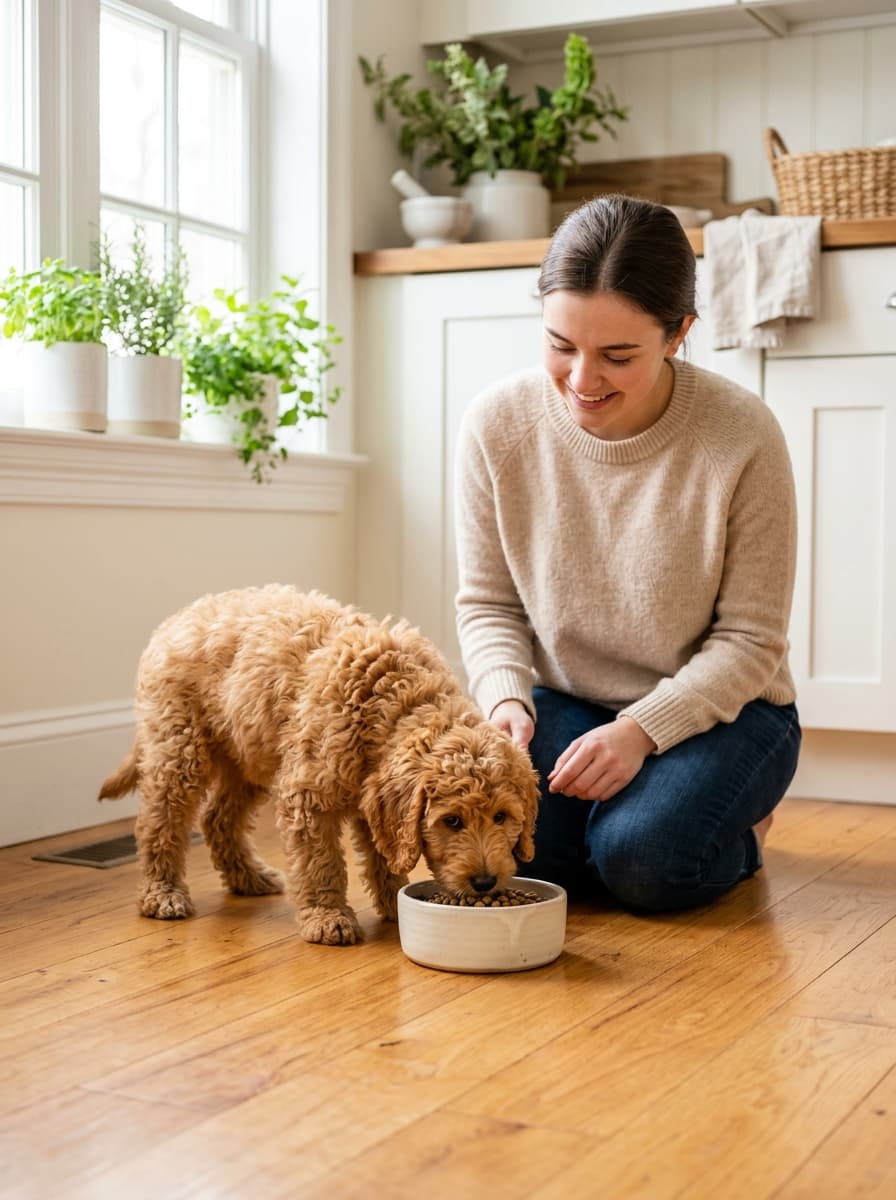
Mild, short-lived signs (usually fine):
- Slightly softer stool for a day
- A little extra gas
- A slightly lower appetite for a meal or two
The move here is simple: pause the ratio at its current stage, hold steady until things settle, then continue. If soft stool lingers, our timeline on how long doodle diarrhea lasts helps you judge what's normal. And a doodle with soft stool who's acting completely normal is usually just mid-adjustment.
If you've already pushed too fast and things went sideways, what to do about doodle diarrhea after switching food is your recovery plan.
A quick recap
- Timing is by size: ~12 months for Minis, 12-14 for Mediums, 15-18 for Standard Goldendoodles, Bernedoodles, and Sheepadoodles.
- Confirm with the dog, not the calendar, height plateau + slowed growth.
- Transition over 7-10 days (12-14 for sensitive stomachs), shifting ~25% every 2-3 days.
- Pause, don't push if stool softens.
- Support the gut with a probiotic and careful portions.
- Pick a clean adult formula matched to your doodle's protein tolerances.
Get the timing right for your doodle's size, go slow, and the switch to adult food should be one of the least eventful things you do all year, which, for doodle stomachs, is exactly the goal.
FAQ
It depends on adult size. Mini Australian Labradoodles and Mini Goldendoodles usually reach maturity around 12 months, Medium doodles around 12-14 months, and Standard Goldendoodles, Bernedoodles, and Sheepadoodles closer to 15-18 months. The right trigger is reaching adult height and slowing growth, not a fixed date on the calendar.
Plan on 7-10 days for most doodles, and stretch it to 12-14 days if your doodle has a known sensitive stomach. Doodles carry poodle-line food sensitivities, so a slow ratio change, roughly 25% new food every 2-3 days, gives the gut bacteria time to adjust and reduces the risk of loose stools and gas.
A sudden change in protein source, fat level, or fiber shifts the balance of gut bacteria faster than they can adapt, which causes loose stool, gas, or vomiting. Doodles are especially prone to this. Slowing the transition, keeping the same protein where possible, and adding a probiotic usually prevents it.
Most Standard Goldendoodles are still finishing their growth at 12 months, so it's usually better to wait until 15-18 months. Large-frame doodles benefit from staying on a properly balanced large-breed puppy or all-life-stages formula until their growth plates close. When in doubt, ask your vet.
Look for a single, named animal protein, a limited ingredient list, moderate fat, and an added source of omega-3s. Many sensitive doodles do best on limited-ingredient or novel-protein adult formulas. There's no one winner for every dog, match the food to your doodle's known triggers and introduce it slowly.
Next step
If your doodle's stomach tends to react to any change, don't wing the transition, follow our 7-day food transition plan for sensitive doodles step by step, and keep a probiotic on hand. And if you're still deciding what to feed after the switch, start with our best food for a doodle with a sensitive stomach.