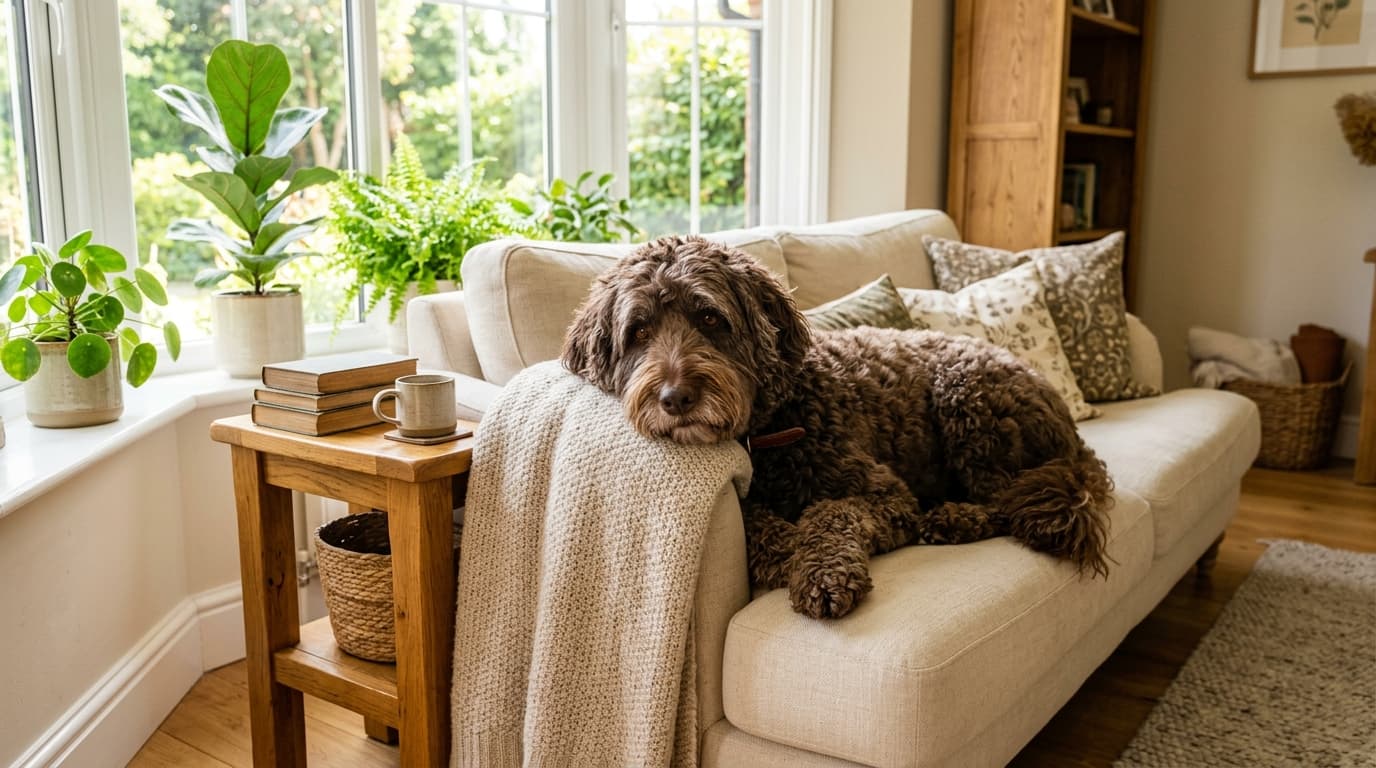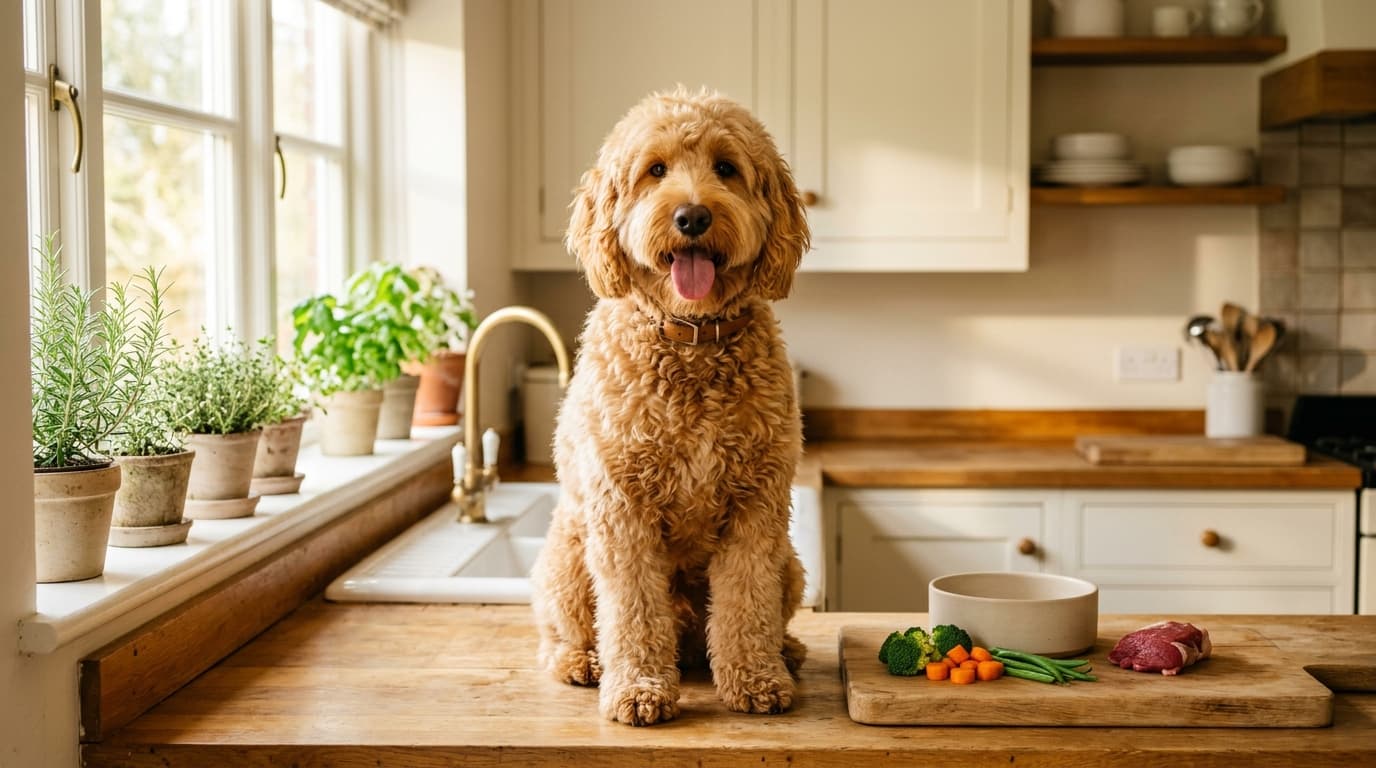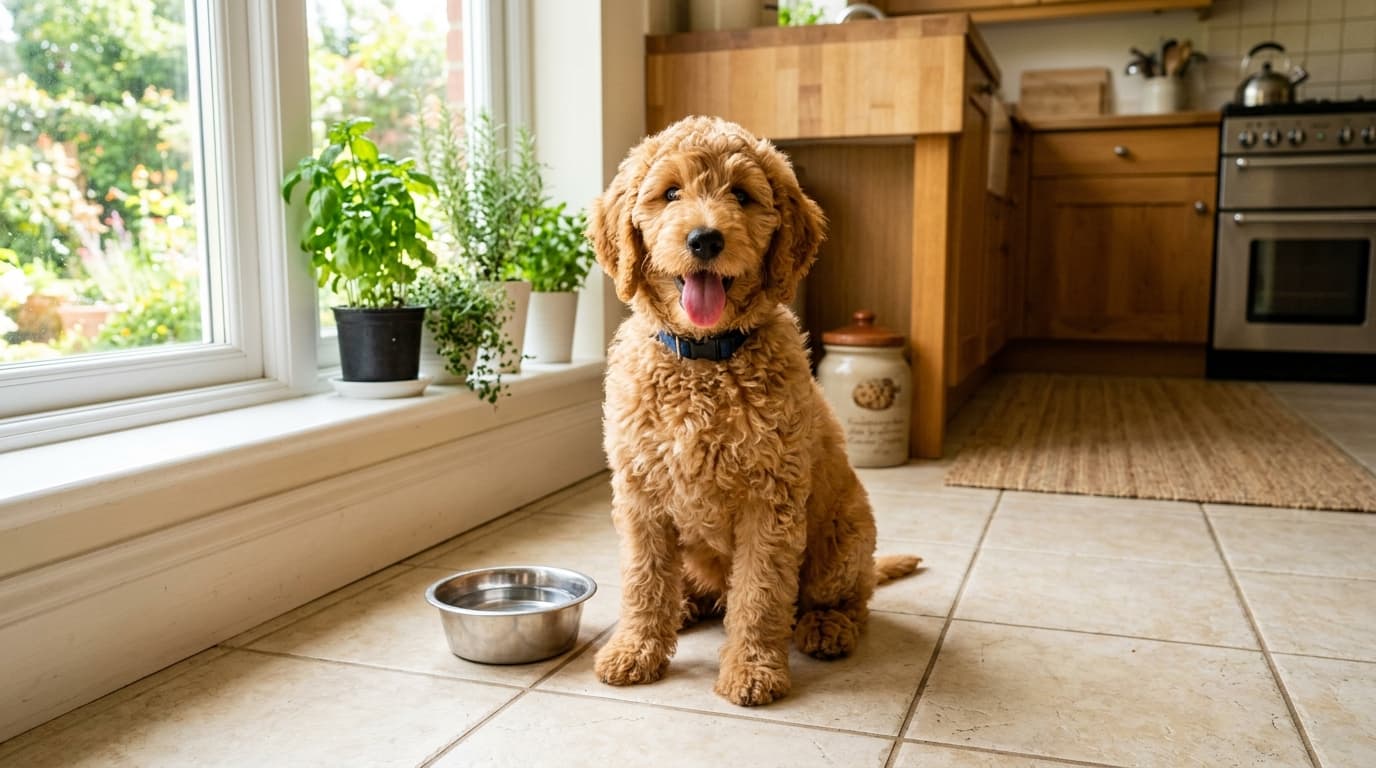
If your doodle puppy has frequent loose stools, gas, and an appetite that swings from ravenous to picky, take a breath: doodle puppy digestion problems are extremely common, and they're usually a sign of a gut that's still under construction rather than something wrong. A fast-growing puppy's digestive tract, enzyme output, and gut bacteria are all maturing at once, which makes soft stool and gas normal during the first several months. Feed 3-4 small meals a day, transition foods slowly over 7-10 days, and add a puppy-safe probiotic, and call your vet if diarrhea lasts more than 48 hours, has blood in it, or comes with lethargy or vomiting.
We've raised three doodles through the wobbly puppy-tummy phase, and the pattern is always the same: the digestion settles as the puppy grows, provided you keep the food consistent and don't panic-switch every time you see a soft poop. These crosses aren't one animal, an Australian Labradoodle, a Labradoodle, a Goldendoodle, and a Bernedoodle each pair the Poodle with a different other-parent breed, and sensitivity varies between individual puppies at least as much as it does between crosses. What's consistent is that the Poodle line carries a documented predisposition to food sensitivities, so getting the growth phase right sets many doodles up for an easier adult life.
If you already know a puppy-safe probiotic is your next move and just want a vetted shortlist, see our Best Probiotics for Doodle Digestive Issues, otherwise, let me walk you through how a doodle puppy's gut actually develops, what's normal versus concerning, and the exact schedule and transition approach that works.
Why doodle puppies get digestion problems in the first place
A puppy isn't just a small dog. During the growth phase, several systems are still coming online at the same time:
- The gut lining is thin and permeable. A young puppy's intestinal wall lets things through more easily, which means minor food changes or stress show up faster as loose stool.
- Digestive enzymes are still ramping up. The pancreas and gut are learning to produce the enzymes that break down fats, proteins, and starches efficiently.
- The gut microbiome is immature. The population of good bacteria that helps digest food and train the immune system takes months to stabilize.
- The immune system is calibrating. Roughly 70% of the immune system lives in the gut, and in a puppy it's still figuring out what's a threat and what's dinner.
Add rapid growth on top of all that. A puppy eating and processing large amounts of food relative to its body size puts real demand on a system that isn't finished yet. That's the everyday recipe for gas and soft stool.
Why Australian Labradoodles and Goldendoodles lean sensitive
The Poodle line in these crosses carries a documented predisposition to food sensitivities, not a guarantee, but a real tendency some puppies inherit and some don't. In an Australian Labradoodle, Labradoodle, or Goldendoodle, that predisposition means a puppy that may be a little more reactive to diet changes than a random-bred dog. A goldendoodle puppy sensitive stomach is one of the most common things owners write to us about, and it's usually manageable, not a lifelong crisis. Remember that these are different crosses: how sensitive any one puppy turns out to be varies between individual dogs at least as much as between crosses. Larger crosses like the Bernedoodle and Sheepadoodle grow more slowly over a longer window, which can make the digestion phase drag out a bit longer.
If you want the bigger picture on breed tendencies, we cover it in Are Doodles Prone to Allergies? and the Doodle Sensitive Stomach guide.
Normal vs. concerning: reading your doodle puppy's symptoms
The hardest part of the puppy phase is knowing when a soft poop is just a soft poop. Here's the honest line we use in our house.
| Symptom | Usually normal | Call your vet |
|---|---|---|
| Stool consistency | Occasional soft or loose stool that firms up in a day | Watery diarrhea lasting 48+ hours |
| Blood/mucus | None | Any fresh blood or heavy mucus |
| Appetite | Mildly variable day to day | Total refusal to eat, or refusing water |
| Gas | Frequent but not paired with pain | Gas with a hard, bloated, painful belly |
| Energy | Bounces back quickly after a bad poop | Lethargy, weakness, hiding |
| Vomiting | The odd single episode | Repeated vomiting, or vomit + diarrhea together |
For a realistic sense of how long a normal bout should last, we put together How Long Does Doodle Diarrhea Last. And if your puppy has soft stool but is otherwise bouncy and happy, Doodle Soft Stool But Acting Normal will help you decide whether to worry.
A doodle puppy feeding schedule for gut health
Meal frequency is one of the biggest levers you have. Big single meals overwhelm a developing gut and cause both loose stool and energy crashes. Small, frequent meals are gentler and keep blood sugar steady, which matters a lot for smaller doodles.
Here's the doodle puppy feeding schedule for gut health we recommend as a starting point (your vet may adjust for your puppy's size and breed):
- 8 weeks to ~4 months: 4 meals a day, evenly spaced
- ~4 to 6 months: 3 meals a day
- ~6 to 12 months: 2 meals a day
- Adult (timing varies by breed): 2 meals a day
Larger crosses, Bernedoodles and Sheepadoodles, grow over a longer period, so don't rush them to fewer, bigger meals. A deep-chested build in a large Bernedoodle (from the Bernese Mountain Dog and Standard Poodle side) also carries genuine bloat/GDV risk, which is another reason not to feed one enormous meal a day. Mini and toy-sized doodles need frequent small meals a little longer too, because tiny puppies are prone to blood-sugar dips. We dig into size differences in Are Mini Doodles More Sensitive?
Keep the routine boringly consistent
The single most gut-friendly thing you can do is feed the same food, at the same times, in the same amount every day. When we brought Gösta home, the temptation was to keep "improving" his diet every week. What actually kept things easy was picking one good food and leaving it alone, feeding him on a clock, in a calm spot away from the other two dogs. Predictability lets the gut find its rhythm.
Best food for doodle puppy digestion
There's no single magic brand. The best food for doodle puppy digestion is a complete, growth-appropriate diet with a short, recognizable ingredient list and a single gentle protein. What matters most:
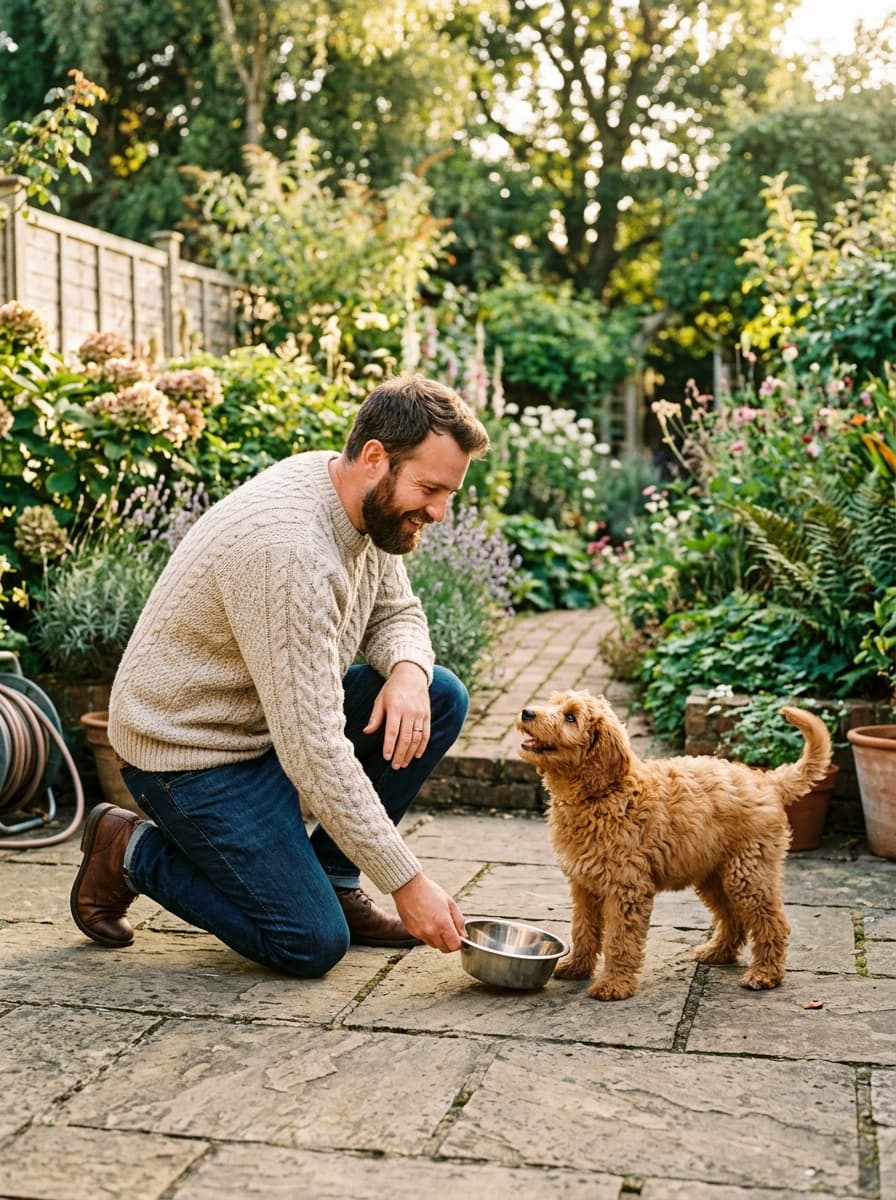
- It's labeled for growth or all life stages. Puppies need specific calcium-to-phosphorus ratios for healthy bone development, a critical point for larger doodles. The nutritional adequacy standards behind those labels come from AAFCO.
- A limited, simple ingredient list. Fewer ingredients means fewer things to react to and an easier job identifying a culprit if problems come up. See Limited Ingredient Dog Food for Doodles Explained.
- One protein source you can stick with. Novelty isn't a virtue here. Rotating proteins constantly in a young puppy invites upset.
- Consistency over brand hype. A "perfect" food fed inconsistently will do worse than a good food fed reliably.
Want named products that meet all four? For Goldendoodles we compared four in best puppy food for Goldendoodles; for Labradoodles, see best puppy food for sensitive Labradoodles.
Kibble vs. raw for a growing doodle
We feed raw at home and use premium kibble and freeze-dried raw for travel, and both can absolutely support a healthy puppy, if balanced correctly. Raw for a growing puppy has to be properly formulated for growth (calcium and phosphorus especially), which is not a place to freehand. If you're considering it, start with our feeding philosophy and the Kibble to Raw Transition plan, and read up on raw food safety first, puppies and safety go hand in hand.
Whatever you choose, choose it deliberately and commit. The worst thing for a sensitive doodle puppy is a parade of half-finished bags.
Transitioning foods without triggering diarrhea
Sooner or later you'll want to switch foods, a new bag, a supply issue, or the move from puppy to adult formula. Do it too fast and you'll trigger exactly the loose stool you're trying to avoid. A doodle puppy's immature gut needs a slow 7-10 day transition:
- Days 1-3: 25% new food, 75% old
- Days 4-6: 50/50
- Days 7-9: 75% new, 25% old
- Day 10+: 100% new
If the stool goes soft at any stage, don't push forward, hold at the current ratio for a few extra days, or step back one level, until things firm up. Sensitive doodles sometimes need a 14-day version of this.
When Sven was a puppy we tried to rush a new food over a long weekend and paid for it with three days of pudding poop. Slower would have been faster. We've since written the whole thing up in the 7-Day Food Transition Plan, and if a switch has already gone sideways, Doodle Diarrhea After Switching Food has the recovery steps. For the specific puppy-to-adult move, see Transitioning a Doodle Puppy to Adult Food.
Probiotics, enzymes, and gentle gut support
A developing microbiome benefits from a little help, especially around stressful moments, coming home, vaccinations, deworming, a course of antibiotics, or a food change.
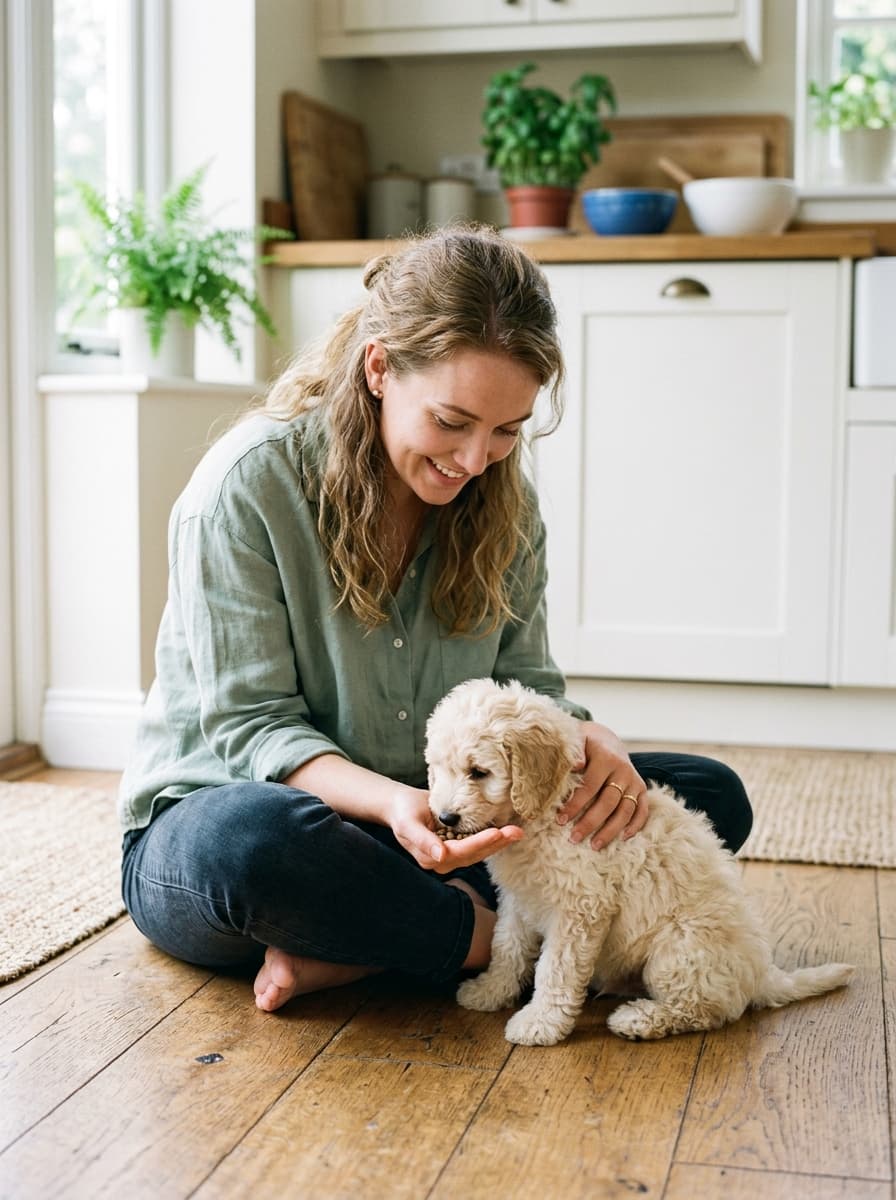
- Probiotics add beneficial bacteria and can meaningfully help doodle puppy loose stool during transitions. Choose a product formulated for dogs and puppies. Start with our Best Probiotics for Doodle Digestive Issues and the fuller Probiotics for Doodles Complete Guide.
- Digestive enzymes can help puppies who struggle to break down fats, more in Best Digestive Enzymes for Doodles.
- Plain canned pumpkin (not pie filling) is a gentle, fiber-rich helper for a mildly loose stool; a small spoonful is usually enough. See Can Pumpkin Help a Doodle's Stomach?
- Slippery elm is another gentle soother some owners use, details in Slippery Elm for Doodle Digestive Issues.
Stress, teething, and other everyday triggers
Not every soft poop is about food. Puppies go through a lot: leaving the litter, new homes, teething, house-training pressure, and a busy world. The gut and the nervous system are tightly linked, so a stressed puppy often has a stressed tummy. With three dogs, we've noticed our youngest often had looser stool during big changes, a new schedule, a house guest, that kind of thing. Keeping the routine steady is genuinely therapeutic. More on that connection in Stress & Digestive Problems in Doodles.
Teething puppies also swallow more saliva and chew everything, so a little extra gas and the odd mystery upset comes with the territory around 3-6 months.
An actionable timeline: what to expect month by month
- 8-12 weeks: Most variable phase. Expect some soft stool and gas as the microbiome establishes. Feed 4x/day, keep food identical, add a puppy probiotic if switching foods.
- 3-4 months: Teething can add mild upset. Move toward 3 meals a day around four months.
- 4-6 months: Digestion usually starts to stabilize. Loose stools should become the exception, not the rule.
- 6-12 months: Two meals a day; a good week should mean firm, consistent poops. Ongoing problems past this point deserve a closer look, possibly a food allergy vs. intolerance conversation.
- 12+ months (breed-dependent): Larger doodles mature later; transition to adult food on your vet's timeline.
If your doodle is well past the puppy phase and still having trouble, it may be more than growth. Our Signs Your Doodle Has a Sensitive Stomach guide helps you spot the difference.
FAQ
Yes, mild and occasional digestive upset is very common in doodle puppies because their gut lining, enzyme production, and gut bacteria are all still maturing while they grow rapidly. Soft stool, gas, and a variable appetite that resolve within a day or two are usually nothing to worry about. Persistent diarrhea, blood, vomiting, or lethargy are different and warrant a vet call.
Most doodle puppies do best on three to four small meals a day until around four to six months, then three meals until roughly six months, then two meals into adulthood. Smaller, more frequent meals put less strain on a developing digestive system and help prevent the loose stool and blood-sugar dips that big single meals can cause.
The best food for doodle puppy digestion is a complete, growth-appropriate diet with a limited, recognizable ingredient list and a single, gentle protein source. Whether you feed premium kibble or a properly balanced raw diet, consistency matters more than brand hype. Avoid frequent food switching, and introduce any new food slowly over 7-10 days.
Call your vet if diarrhea lasts more than 48 hours, contains blood or mucus, or comes with vomiting, lethargy, a bloated belly, refusal to eat, or signs of dehydration. Puppies dehydrate quickly, so err on the side of calling sooner rather than later, especially for very young or very small puppies.
Yes, a puppy-safe probiotic can support a doodle puppy's developing gut, especially during food transitions, after antibiotics, or during stressful events like coming home or vaccinations. Choose a product formulated for dogs and puppies, follow the dosing on the label, and check with your vet if your puppy is very young or on medication.
Your next step
If your puppy is in the thick of the wobbly-tummy phase, start with the two things that fix the most cases: a consistent 3-4 meal schedule and a slow food transition. Nail those before you change brands or add supplements.
For the details on doing a switch right, keep the 7-Day Food Transition Plan for Sensitive Doodles handy, it's the single most useful page to bookmark for the whole puppy year. And if the digestion doesn't settle as your doodle grows, our Sensitive Stomach hub has everything you'll want to dig deeper.