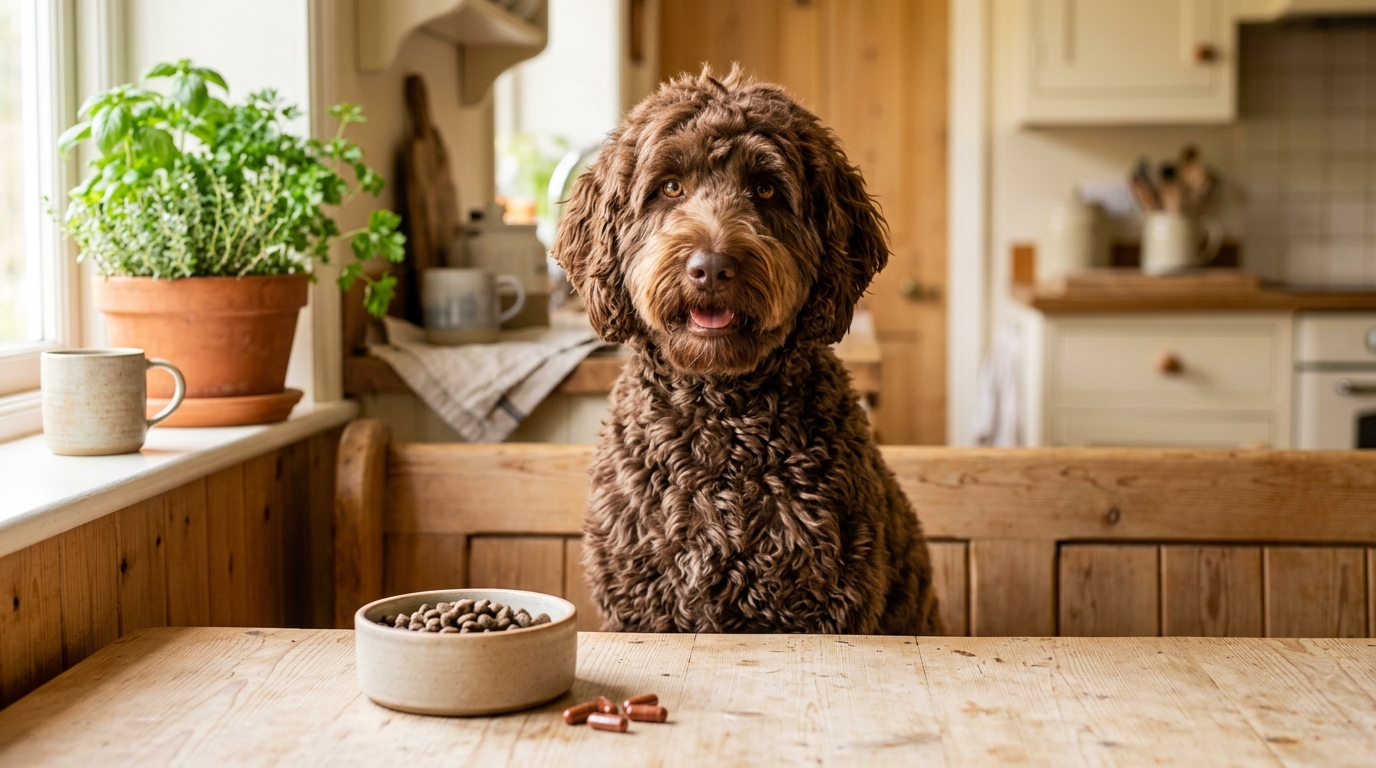
Hydrolyzed dog food breaks proteins into fragments too small for your doodle's immune system to recognize, which is exactly why veterinarians prescribe it for confirmed food allergies and diagnostic elimination trials. For most doodles, it's genuinely worth it only when a limited-ingredient or novel-protein diet has already failed to control symptoms. The vet-diet versions are the most expensive foods you can buy for a dog, and expect to need a prescription.
If your doodle has been scratching non-stop, dealing with chronic soft stool, or your vet has floated the word "hydrolyzed," you're probably somewhere between "whatever it takes" and "is this just expensive marketing?" Both instincts are reasonable. This is an honest, doodle-specific comparison, not a sales pitch for the priciest bag on the shelf.
We feed our three doodles (Sven, Gunnar, and Gösta) raw at home, with premium kibble and freeze-dried raw when we travel, so we're not naturally in the prescription-diet camp. But we've done the research, and there are absolutely situations where hydrolyzed food is the right call. Let's walk through when it is, and when it isn't.
If you already know your vet has you headed toward hydrolyzed and just want the shortlist, our overall pick is Hill's Prescription Diet z/d. The rest of this guide explains how to tell whether hydrolyzed is even the right category for your dog.
What Hydrolyzed Protein Actually Means (In Plain English)
Food allergies happen when the immune system mistakes a specific protein (often chicken, beef, or dairy) as a threat and mounts a reaction. In doodles that reaction usually shows up as itchy skin, licking paws, recurring ear issues, or GI upset.
There is a real, documented reason doodles come up so often here: the Poodle line carries a genuine predisposition to allergic skin disease (atopy) and food sensitivities, and that line sits behind every Australian Labradoodle, Labradoodle, Goldendoodle, Bernedoodle, and Sheepadoodle. It is a predisposition, not a guarantee, and it is inherited from the Poodle side specifically. That is as far as the breed science goes: a Goldendoodle and a Bernedoodle are different crosses with different second parent breeds, so there is no single "doodle gut" they all share. Our own Gunnar is a living example of the Poodle-line pattern: chicken is his trigger, and it drove recurring ear infections and a yeast cycle until we changed his protein.
Hydrolysis is a process that uses water and enzymes to chop those proteins into tiny fragments called peptides. The key idea: if the fragments are small enough, the immune system can no longer "see" them as the offending protein, so it doesn't react.
So a hydrolyzed chicken diet still starts with chicken, but the chicken has been broken down so thoroughly that a chicken-allergic doodle theoretically won't respond to it. That's the science, and it's genuinely clever. It's also why hydrolyzed diets are the gold standard for elimination food trials, where the whole point is feeding something the immune system can't react to so you can prove whether food is the problem. The Merck Veterinary Manual makes the same point about hydrolyzed diets being used to diagnose and manage food allergies.
Hydrolyzed vs. Limited-Ingredient vs. Novel Protein for Doodles
Here's the comparison most owners actually want. These three approaches solve related problems, but they are not interchangeable.
| Diet type | How it works | Best for | Prescription? | Typical cost |
|---|---|---|---|---|
| Limited-ingredient (LID) | Fewer, simpler ingredients to dodge known triggers | Mild sensitivities, unknown but suspected triggers | No | $, $$ |
| Novel protein | Uses a protein never eaten before | First-line food trials, single suspected trigger | Sometimes | $$ |
| Hydrolyzed | Breaks proteins too small to react to | Confirmed allergies, strict diagnostic trials | Usually yes | $$$ |
For a doodle with occasional soft stool who's otherwise thriving, a limited-ingredient diet is almost always the right first experiment: it's cheaper, more palatable, and often enough. We cover that path in depth in our best limited-ingredient dog food for doodles guide, and it's worth reading before you spend on hydrolyzed.
For a doodle with persistent, whole-body allergy signs (chronic itching, repeat ear infections, licking, and GI trouble together), hydrolyzed is where vets go when they need a diagnostic answer they can trust.
Top Picks
A good hydrolyzed pick comes down to three things: a truly hydrolyzed protein (not just "sensitive skin" marketing), clinical validation behind the formula, and whether you need a prescription option or an accessible over-the-counter one. Below are the four we'd actually consider for a doodle, but the right one always starts with a conversation with your vet, since three of these require a prescription anyway.
| Product | Best For | Protein source | Prescription? |
|---|---|---|---|
| Hill's Prescription Diet z/d | Best Overall / Confirmed Allergies | Hydrolyzed chicken liver | Yes |
| Royal Canin Hydrolyzed Protein | Best Vet-Formulated Trial Diet | Hydrolyzed soy (fat: chicken fat) | Yes |
| SquarePet Hydrolyzed Protein | Best Chicken-Free / No Prescription | Hydrolyzed pork | No |
| Purina Pro Plan HA | Best for Dermatology-Guided Cases | Hydrolyzed soy + hydrolyzed chicken liver | Yes |
On cost. Hydrolyzed diets are the most expensive food discussed anywhere on this site, and the price varies more than you would expect between bag sizes and sellers. Once your vet has signed off on a formula, it pays to compare what it costs right now instead of re-ordering on autopilot.
Chicken-free alternatives for milder cases
Not every doodle with a food reaction needs a hydrolyzed diet. For a first food trial, or when you already suspect chicken, a novel-protein or limited-ingredient food is often enough, and these are chicken-free, including the fat source:
- Zignature Duck Limited Ingredient: duck is the only animal protein.
- Natural Balance L.I.D. Reserve Duck & Potato: duck and duck meal, no chicken, grain or soy.
- ACANA Singles Duck & Pear: duck, duck liver and duck fat.
- Canidae Pure Salmon & Sweet Potato: salmon, salmon meal and sardine meal.
We compare them side by side in the best limited-ingredient dog food for doodles. A novel protein is not the same as a hydrolyzed one: if your doodle reacts to several proteins, or your vet wants a strict diagnostic trial, hydrolyzed is still the tool.
When Hydrolyzed Food Is Genuinely Worth It
Be honest with yourself about which of these describes your doodle:
- Your vet has specifically recommended a hydrolyzed elimination trial to diagnose a suspected food allergy.
- You've already run a careful limited-ingredient or novel-protein trial and symptoms persisted.
- Your doodle has chronic skin AND gut symptoms together that keep cycling back.
- You need a diagnostic tool, not just a maintenance food: you want to prove whether food is the culprit.
If two or more of these fit, hydrolyzed food is likely worth the cost and the hassle. This is the "trust your vet" pathway, and it's a valid one. A proper trial can save you months of guessing and repeat vet visits for the same itchy, uncomfortable dog.
If you're not sure whether your doodle's symptoms even point to food, our guides on allergy vs. food intolerance in doodles and signs of a sensitive stomach will help you figure out which road you're actually on.
When Hydrolyzed Food Is Overkill
Just as honestly: hydrolyzed is often more than a doodle needs.
- Mild or occasional stomach upset. A doodle with the odd soft stool who's acting completely normal rarely needs a prescription diet.
- A single, obvious trigger. If beef clearly wrecks your dog, simply avoiding beef with a limited-ingredient diet may be all it takes.
- You haven't tried anything simpler yet. Jumping straight to hydrolyzed skips cheaper diagnostic steps that often work.
- Diarrhea right after a food switch. That's usually transition upset, not allergy, see diarrhea after switching food.
The Real-World Costs and Palatability Challenges
Nobody warns you enough about these two things.
Cost adds up fast
The vet-diet hydrolyzed formulas are the most expensive foods on this site, and a big Standard Goldendoodle can go through a 25 lb (11 kg) bag in three to four weeks, and trials run 8 to 12 weeks minimum, so budget for the full trial before you start. Over-the-counter hydrolyzed options are cheaper, but they aren't always suitable for a strict diagnostic trial, so ask your vet first.
Palatability is a genuine hurdle
Here's the honest catch: hydrolyzed proteins can taste slightly bitter, and doodles are opinionated eaters. Because we feed raw at home, our three are frankly spoiled. When we tested prescription kibble as a travel backup, Gunnar gave us the full dramatic sniff-and-walk-away routine before he decided it was acceptable. A doodle used to rich raw or fresh food may need a few days to accept the change.
The frustrating part: during a food trial you can't just add a tasty topper to fix pickiness, because that defeats the whole point. Warming the food slightly or asking your vet about a different hydrolyzed formula are your legitimate options.
What to Watch For During a Hydrolyzed Food Trial
If you commit, commit properly: a half-run trial gives you a useless answer.
- Go 100% exclusive. No treats, no table scraps, no flavored chews, no flavored supplements, no flavored heartworm meds without checking. One "harmless" biscuit can invalidate weeks of work.
- Give it 8-12 weeks. GI symptoms often improve first; skin and ear improvement lags behind. Don't judge at week two.
- Track symptoms weekly. Photos of skin and a simple stool/scratch log make it obvious whether things are actually improving.
- Expect a transition wobble. Some temporary loose stool during the switch is normal; follow a gradual changeover.
- Plan the reintroduction with your vet. The diagnostic value comes from carefully adding foods back to see what triggers a flare, and that's the part that names your doodle's actual allergen.
If you decide hydrolyzed isn't your path, a solid probiotic can help a genuinely sensitive gut, see our best probiotics for doodles roundup. For a broader, doodle-tested rundown of food, supplements, and tools for dogs dealing with digestive, allergy, and skin issues, our Best Products for Sensitive Doodles: Food, Supplements & Tools guide pulls all of those recommendations together in one place.
FAQ
It's genuinely worth it when your vet is diagnosing or managing a confirmed food allergy, or when a well-run limited-ingredient or novel-protein diet has already failed to control symptoms. For a doodle with mild, occasional stomach upset it's usually overkill and more expensive than you need. The honest answer is that hydrolyzed food is a targeted tool, not a routine upgrade.
Limited-ingredient food simply reduces the number of ingredients so you can avoid known triggers, but the proteins are still intact and recognizable to the immune system. Hydrolyzed food chemically breaks those proteins into fragments too small for the immune system to react to, which is why it's used for diagnostic elimination trials. Limited-ingredient is a good first step; hydrolyzed is the stricter option when that isn't enough.
Most true veterinary hydrolyzed diets like Hill's z/d, Royal Canin Hydrolyzed Protein, and Purina HA require a prescription from your vet. There are over-the-counter hydrolyzed options such as SquarePet that don't, but for an actual diagnostic food trial you'll want your vet involved anyway so the results mean something.
A proper elimination food trial usually runs 8 to 12 weeks, feeding the hydrolyzed diet exclusively with zero treats, table scraps, or flavored supplements. Skin symptoms often improve more slowly than GI symptoms. If you break the trial with even small extras, you may have to restart, so consistency matters more than anything.
Hydrolyzed proteins can taste slightly bitter, and some doodles are genuinely picky about the texture and smell. Try warming it slightly, mixing in a splash of the approved liquid from the same brand, or asking your vet about a different hydrolyzed formula. Never add unapproved toppers during a trial, as that defeats the whole purpose.
The Bottom Line
Hydrolyzed dog food isn't a scam and it isn't a magic bullet: it's a precise diagnostic and management tool that's absolutely worth it for confirmed allergies and vet-guided trials, and usually overkill for everything milder. Trust the vet pathway when the symptoms are whole-body and persistent; trust your skepticism when they're mild and occasional.
If you're not yet sure your doodle's symptoms even point to food, start one step back with our complete guide to food allergies in doodles: it'll help you decide whether hydrolyzed food is the right next move or a step you can skip.