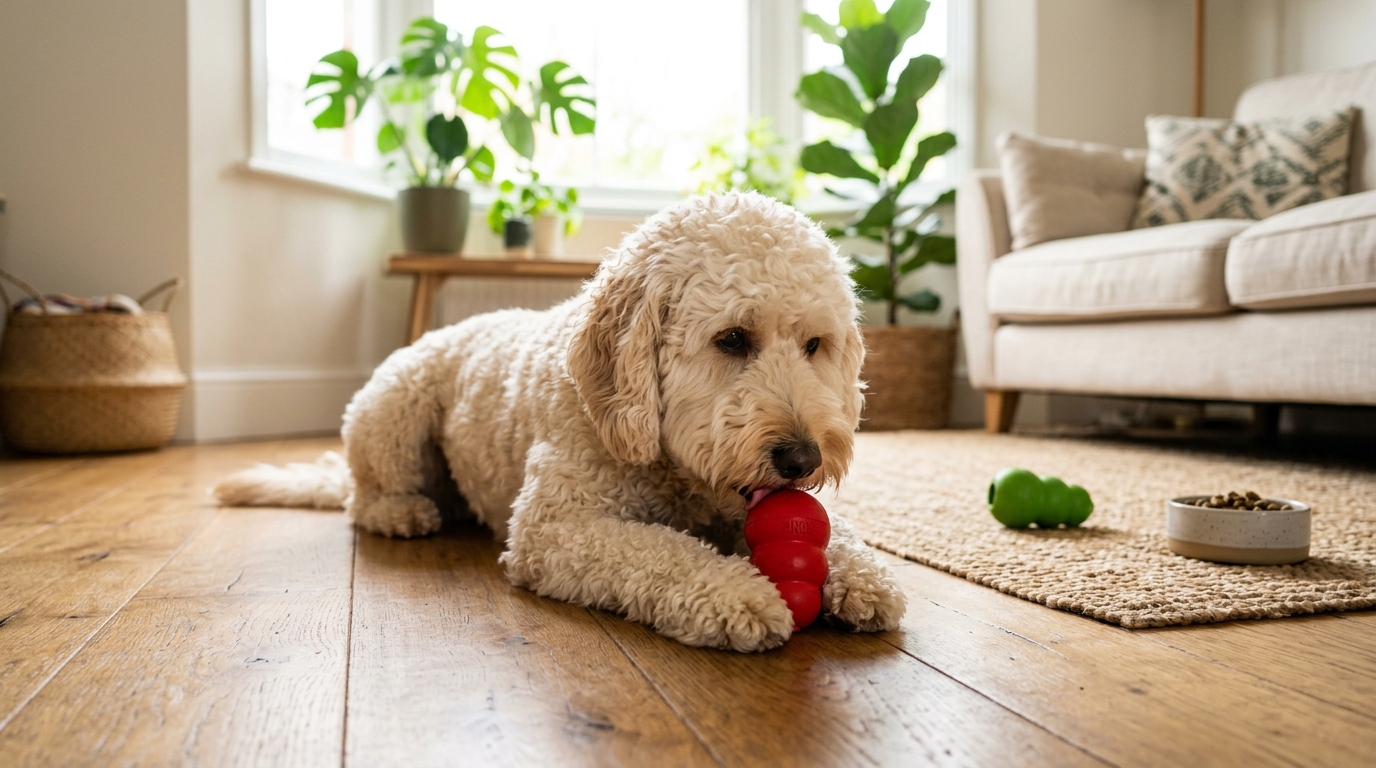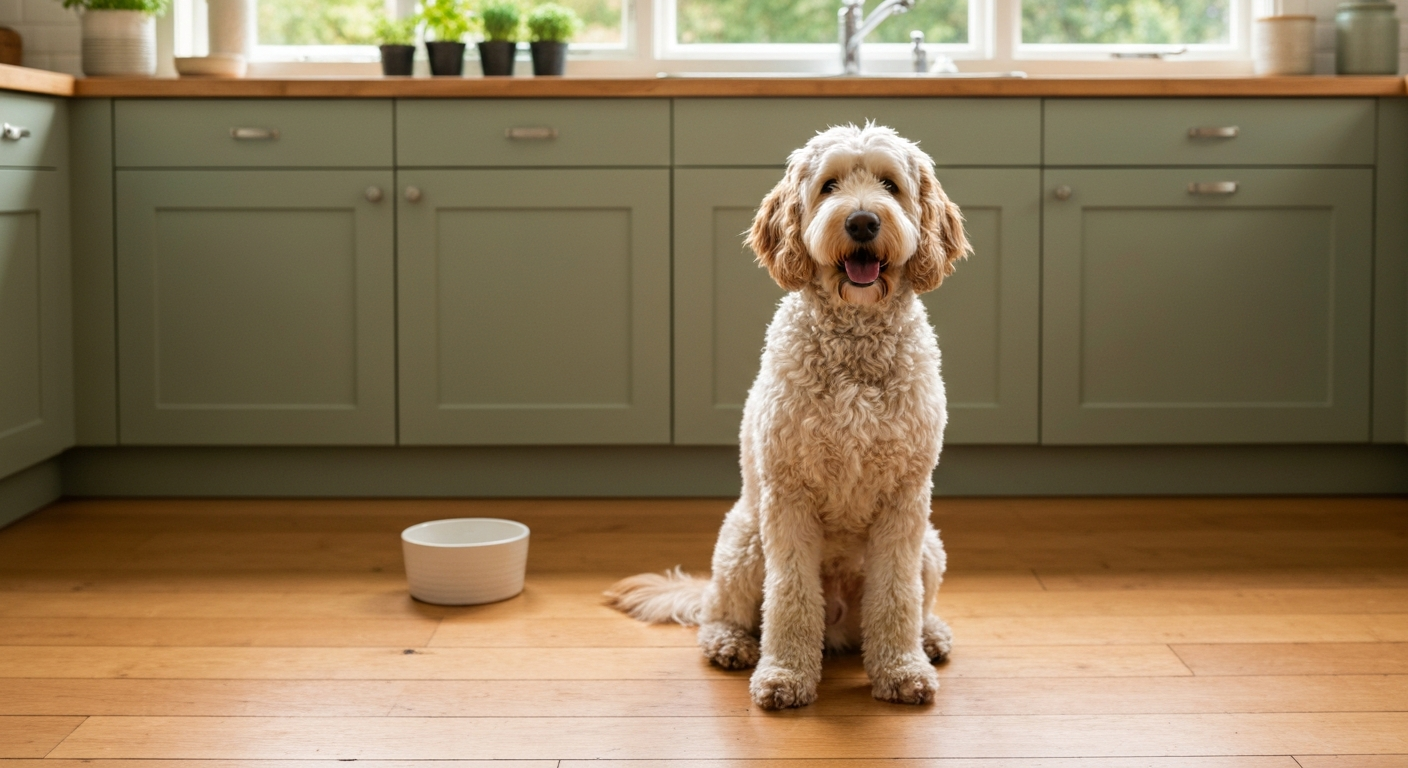
If you share your home with a doodle, you've probably met The Look — that guilty, gassy expression right before your dog retreats to a corner, or the moment you discover yet another soft pile on the morning walk. Recurring digestive issues are one of the most common reasons doodle owners go searching for help, and probiotics come up in almost every conversation.
The good news: a well-chosen probiotic can make a real, noticeable difference for a sensitive doodle gut. The frustrating part? The market is flooded with products that range from genuinely effective to overpriced filler jars. Picking the wrong one — especially if it contains an allergen your doodle reacts to — can make things worse, not better.
This guide cuts through the noise. We'll explain why doodles tend to be more GI-sensitive than average, which strains and formats actually matter for their specific issues, and compare four products we'd feel comfortable recommending to another doodle family. No fluff, no scare tactics — just enough to find the best probiotics for doodles with digestive issues and get your dog's gut back on track.
If you already know what you're dealing with and just want the shortlist, our overall pick is Purina Pro Plan Veterinary Supplements FortiFlora — the rest of this guide explains how to tell whether it's the right one for your dog.
Why Doodles Have More Sensitive GI Tracts Than Average Dogs
Australian Labradoodles, Goldendoodles, Labradoodles, Bernedoodles — doodles aren't one breed — they're a cross, usually involving a Poodle — and that Poodle lineage carries a well-documented tendency toward food sensitivities and reactive gut responses. Add in the Golden Retriever or Labrador side (both known for vacuum-eating anything within reach), and you have a dog that combines a sensitive poodle digestive system with an enthusiastic appetite that doesn't always self-regulate.
A few specific traits worth knowing:
- Poodle-line food sensitivities mean even minor ingredient changes can trigger loose stools or gassiness, especially common proteins like chicken or certain grains.
- Floppy, moisture-trapping ears are a hallmark of most doodles, and chronic ear yeast often has a gut component — an imbalanced microbiome contributes to systemic yeast overgrowth that shows up in multiple places at once.
- Curly coats hiding skin changes mean a gut-driven skin flare (hot spots, itching, flaky patches) can go unnoticed until it's significant.
- High anxiety in some lines directly affects gut motility — stress diarrhea is a real thing and something many doodle owners know intimately.
For a deeper look at the full picture of what's driving your dog's symptoms, our sensitive stomach causes and solutions guide is the best starting point.
What to Actually Look for in a Probiotic for Your Doodle
Not all probiotics are created equal, and the label buzzwords don't always translate to real-world results. Here's what genuinely matters for doodles specifically:
Strain Type and Diversity
Strain is more important than CFU count. A product with billions of CFUs of a poorly matched strain will underperform a lower-CFU product with strains matched to canine gut biology.
For doodles, prioritize:
- Enterococcus faecium SF68 — the most-studied strain for canine digestive support; especially effective for acute diarrhea and loose stools
- Lactobacillus acidophilus — broad gut support, well-documented competitive exclusion of harmful bacteria
- Lactobacillus rhamnosus — particularly useful when yeast overgrowth is part of the picture (frequent in doodles with ear issues)
- Bifidobacterium animalis — supports colon health and stool consistency
- Saccharomyces boulardii — a yeast-based probiotic (yes, a beneficial yeast) especially valuable during and after antibiotic courses
Multi-strain formulas generally outperform single-strain products for chronic or recurrent gut issues. For acute, sudden diarrhea, a single high-potency strain like SF68 can be the faster solution.
CFU Count
For maintenance in a healthy doodle: 1–5 billion CFUs/day is reasonable. For active digestive issues or post-antibiotic recovery: 5–30 billion CFUs/day is more appropriate.
The caveat: CFU counts are meaningless if the organisms are dead by the time your dog eats them. Check that the product guarantees CFUs at time of use, not just at manufacture.
Format: Powder vs. Chew vs. Capsule
| Format | Pros | Cons | Best Doodle Scenario |
|---|---|---|---|
| Powder | Easy to mix into food; no added flavors needed; suits picky eaters | Can clump; some dogs nose it out | Sensitive doodles with flavor reactions; raw-fed or fresh-food households |
| Chew/Soft treat | Easy to give; dogs accept readily | Often contain chicken, peanut butter, or fillers that trigger allergies | Dogs without known food sensitivities; doodles who are difficult to medicate |
| Capsule | Precise dose; can open and mix into food | Least convenient; easy to crush wrongly | Doodles where chew allergens are a problem but powder doesn't work |
Allergen Awareness for Sensitive Doodles
This is where many products backfire. Chew-format probiotics often contain common doodle allergens: chicken, beef liver, peanut butter, or wheat. If your doodle has confirmed or suspected food allergies, always read the inactive ingredients list as carefully as the active ones. A probiotic delivered inside an allergen is counterproductive.
Top Picks
Choosing a probiotic for a sensitive doodle comes down to three things: strains matched to canine gut biology, an ingredient list that won't trigger your dog's known sensitivities, and a format your dog will actually consume. Every product below meets those baseline criteria — we've differentiated them by scenario so you can self-identify which fits your doodle.
| Product | Best For | Rating |
|---|---|---|
| Purina Pro Plan FortiFlora | Best Overall / Acute Diarrhea | ⭐ 4.7 |
| Native Pet Probiotics Powder | Best Clean-Label Powder | ⭐ 4.6 |
| Fera Pets Organic Probiotics | Best for Allergy-Prone Doodles | ⭐ 4.4 |
| Nutramax Proviable | Best Multi-Strain + Prebiotic | ⭐ 4.6 |
Check the date, not just the price. Live cultures decline over time, so a discounted tub close to its expiry is worth less than it looks. Buy a size you will finish within a few months, and compare current prices each time you restock.
Probiotic Strategy by Doodle GI Scenario
Chronic Loose Stools or Unpredictable Gut
This is the most common complaint we hear from doodle families (and the one that prompted us to start adding daily probiotics for Gunnar and Sven several years ago). Go for a multi-strain formula with at least 5 billion CFUs and run it consistently for at least 4–6 weeks before judging effectiveness. Pair it with a review of diet — our best food for doodle with sensitive stomach guide covers the dietary side.
Post-Antibiotic Recovery
Antibiotics wipe out gut flora indiscriminately. Start the probiotic at least 2 hours after each antibiotic dose, continue through the antibiotic course, and keep going for 2–4 weeks after the last dose. Strains with clinical evidence for post-antibiotic recovery include SF68 and Lactobacillus rhamnosus. For more on how long GI disruption lasts after a course of antibiotics, see how long doodle diarrhea lasts.
Yeast Overgrowth (Ears, Skin, Paws)
Yeast in the gut often manifests externally in doodles — itchy ears, paw licking, that distinctive musty smell. Multi-strain probiotics with Lactobacillus rhamnosus and/or Saccharomyces boulardii alongside a low-starch diet are the gut-health angle of a full yeast protocol. For the skin side, our itchy skin and paws hub connects all the pieces.
Food Transition Diarrhea
Switching foods too fast is one of the leading causes of doodle digestive upset. If you're mid-transition, a probiotic can help smooth the microbiome shift. Our 7-day food transition plan maps out how to layer in a probiotic alongside a slow food switch.
How to Introduce a Probiotic Without Upsetting an Already-Sensitive Gut
Even a beneficial supplement can cause a day or two of increased gas or mild loose stools when you first introduce it — the microbiome is adjusting. To minimize this:
- Start with half the recommended dose for the first week, then move to full dose in week two.
- Mix into food rather than giving separately — this slows the introduction and reduces the chance of a GI response to the novel ingredient.
- Be consistent — once daily, same time each day is more effective than sporadic use.
- Give it at least three full weeks before judging whether it's working.
With Gunnar, who has always been our most reactive eater, we started every new supplement at half-dose for a week. It meant slower results but zero setbacks — something worth considering if your doodle has a history of reacting to even minor changes.
If your doodle's loose stools started when you recently changed their food, the doodle diarrhea after switching food guide is worth reading alongside this one — the probiotic strategy is different when food transition is the root cause.
FAQ
Most doodle owners notice firmer stools and less gas within 5–10 days of consistent daily use, though some sensitive dogs take a full two to three weeks to show obvious improvement. The key word is consistent — skipping doses resets the process. If you haven't seen any change after three weeks of daily use, that's a signal to loop in your vet and consider whether something else is driving the gut trouble.
Yes, daily long-term use is generally considered safe for healthy dogs, and many doodle owners — us included — add probiotics to every meal year-round as a maintenance strategy. The caveats are: choose a product formulated for dogs (not humans), rotate strains periodically if you're doing this long-term, and check in with your vet if your dog is immunocompromised, on ongoing medication, or has a diagnosed GI condition. For everyday sensitive-stomach doodles, daily probiotics are a reasonable, low-risk addition to a good diet.
For doodles prone to yeast issues — you'll often see this show up as itchy ears, paw licking, or a musty smell — multi-strain formulas that include Lactobacillus acidophilus and Lactobacillus rhamnosus are the most studied for competitive exclusion of yeast. Some integrative vets also like Saccharomyces boulardii for yeast-related gut imbalance, though it isn't in every commercial dog probiotic. A probiotic won't fix yeast on its own; diet (reducing starchy fillers) and sometimes antifungal support are part of the full picture.
Both, with a little strategy. During antibiotics, space the probiotic dose at least two hours away from the antibiotic dose so the antibiotic doesn't kill the probiotic bacteria before they can colonize. Continue the probiotic for at least two to four weeks after the antibiotic course ends — the gut microbiome takes time to rebuild, and stopping the day the antibiotics finish leaves your doodle vulnerable to loose stools and opportunistic overgrowths. FortiFlora and Proviable are the two products most commonly recommended by vets in exactly this scenario.
They're not toxic, but they're not ideal. Human probiotics are formulated with strains and colony counts tuned for the human gut environment, which has a different pH and microbiome composition than a dog's. Dog-specific strains like Enterococcus faecium SF68 simply don't appear in human products. The risk isn't serious harm — it's just that you're spending money on something that may not move the needle for your doodle's specific digestive issues. Stick with a product formulated for dogs; it's a better investment.
Your Next Step
A good probiotic is one piece of the gut health puzzle. If your doodle has ongoing digestive issues, the most impactful thing alongside supplementation is getting the diet right — read our best food for doodle with sensitive stomach guide to make sure what's going into the bowl isn't working against the supplement in it. And if you're seeing soft stools but your dog seems otherwise totally fine, doodle soft stool but acting normal will help you decide whether to worry or simply optimize.