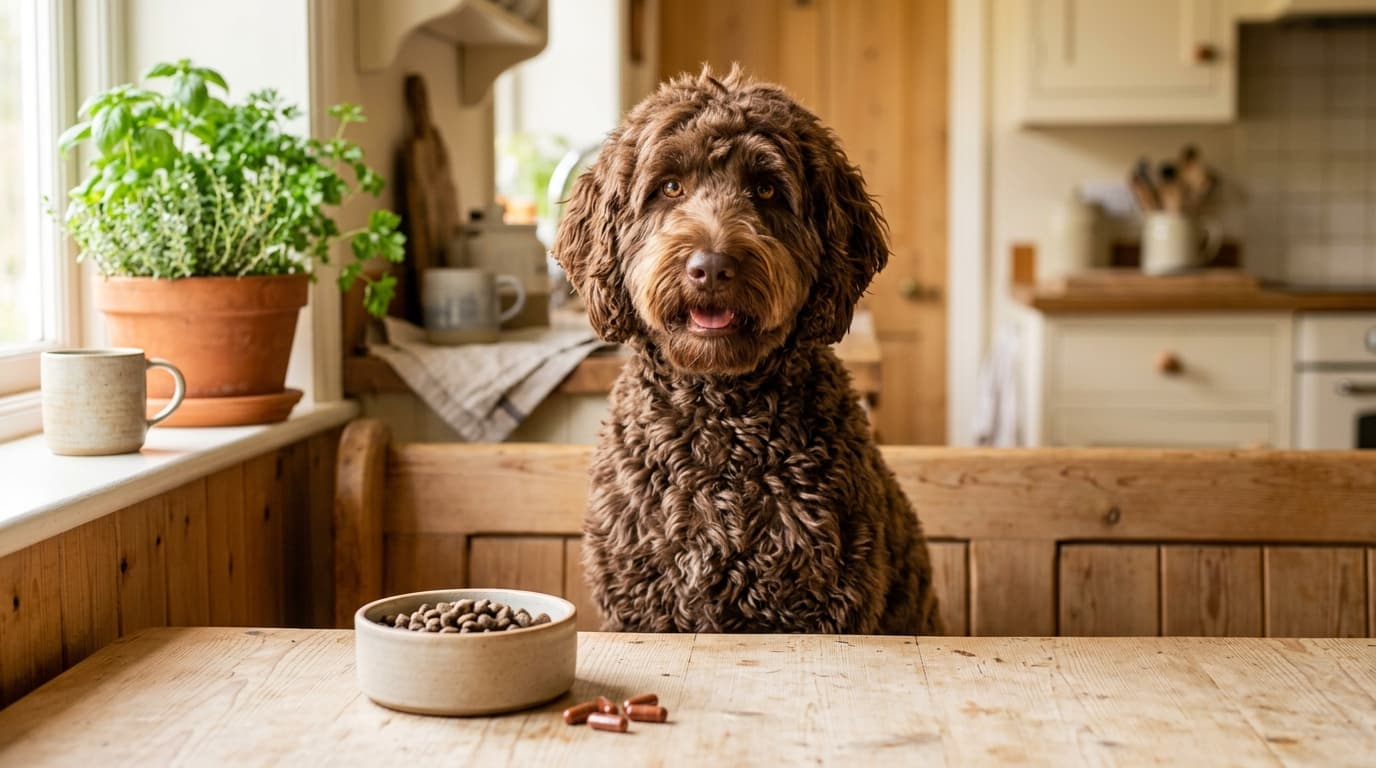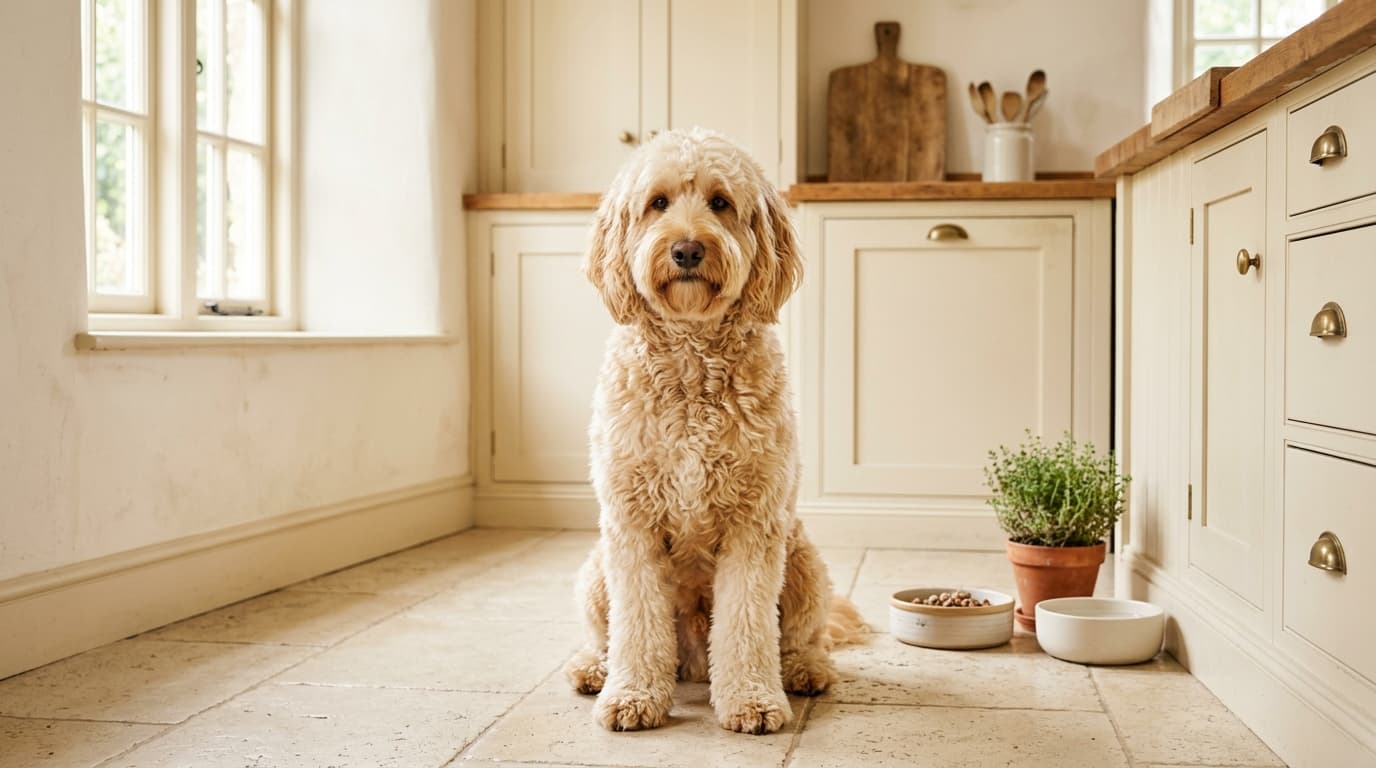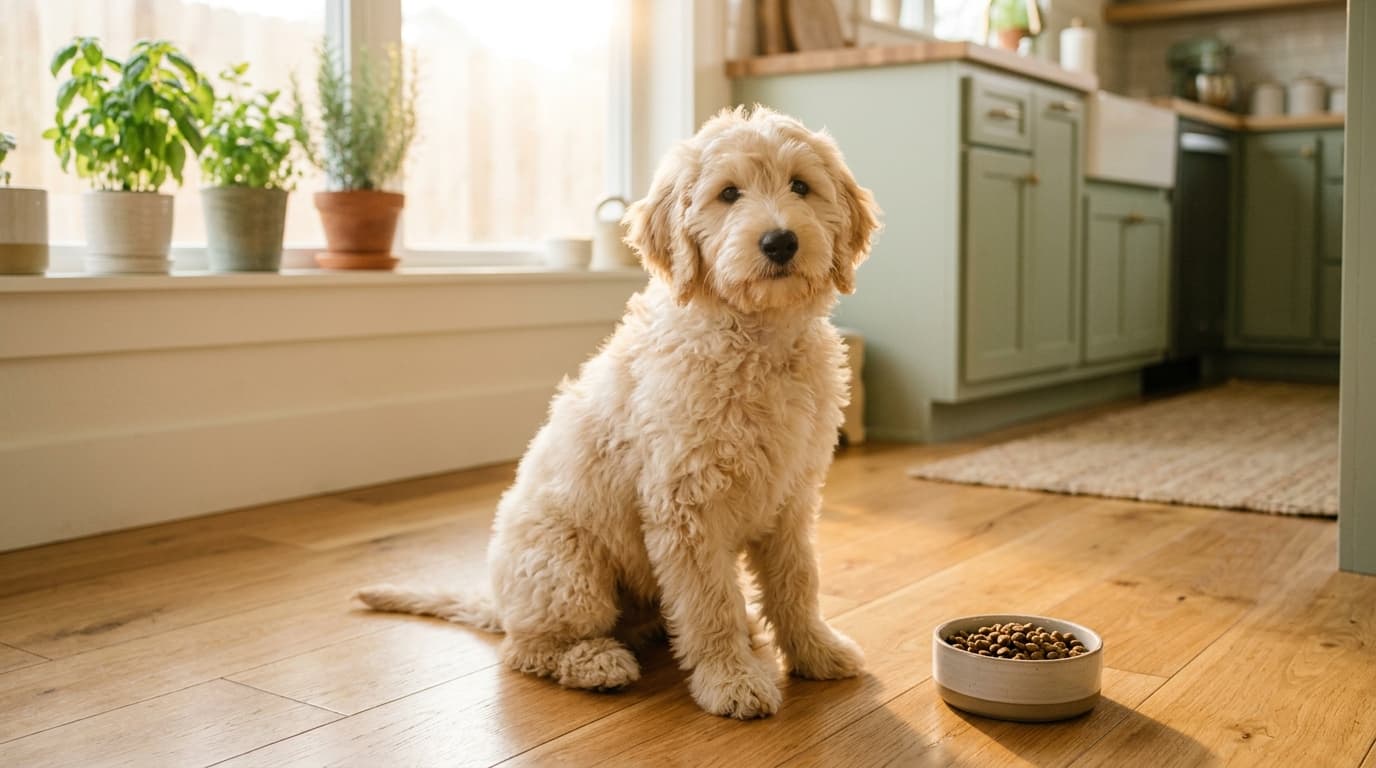
The best puppy food for a sensitive Labradoodle is a gentle, single-protein formula built around one digestible protein (salmon, lamb, or turkey), with prebiotic fiber, DHA, and calcium and phosphorus levels controlled for large-breed growth. Our overall pick is Open Farm Ancient Grains Puppy (Wild-Caught Salmon), with Blue Buffalo Basics Turkey as the true limited-ingredient choice for allergy-prone pups. Whatever you choose, transition over about 7 days so you don't trade one upset tummy for another.
If you're reading this, your Labradoodle puppy is probably showing you the classic signs: soft or loose stool, gas that clears a room, the odd vomit, or paws and ears that never stop bothering them. That's frustrating, but it's also common in this breed mix, and usually very fixable with the right food and a slow, calm approach. If you already know you're after a limited-ingredient formula and just want the shortlist, jump to our best limited-ingredient dog food for doodles guide.
Below we'll compare three solid puppy foods against the criteria that actually matter for a growing doodle, flag the ingredients we see trip doodles up most, and walk you through the transition. This is buyer's guidance from a household that lives with three doodles, Sven, Gunnar, and Gösta, not recycled adult-dog advice.
If you already know what you're dealing with and just want the shortlist, our overall pick is Open Farm Ancient Grains Puppy, Wild-Caught Salmon. The rest of this guide explains how to tell whether it's the right one for your dog.
Why Labradoodle puppies get sensitive stomachs
A Labradoodle inherits its gut from two lines: the Labrador Retriever and the Poodle. The Poodle line carries a real, documented predisposition to allergic skin disease and food sensitivities, and Poodles appear in breed-association lists for adverse food reactions. That is a predisposition, not a guarantee: some Labradoodle puppies inherit it and some never show a sign of it. It is also worth saying plainly that a Labradoodle, a Goldendoodle, a Bernedoodle, and a Sheepadoodle are different crosses, not one animal with one stomach, so there is no blanket rule that every doodle will have a touchy gut. Add a fast-growing puppy digestive system that's still maturing, and you get a stomach that can react to changes far more easily than a settled adult dog's.
On top of that, many doodles are a large- to medium-large breed. That matters more than people realize: puppy foods for big breeds need controlled calcium and phosphorus so bones and joints grow at a steady, safe pace. Too much calcium during rapid growth is genuinely risky for large-breed pups, which is why "any puppy food" is not the answer for a Labradoodle. The Merck Veterinary Manual makes the same point about controlled calcium during large-breed growth.
If you want the deeper picture on how doodle puppies grow and digest, we cover it in our growth and digestion guide for doodle puppies.
What makes a puppy food "sensitive-friendly"
When we assess a formula for a sensitive Labradoodle puppy, we're looking at six things:
- One clear protein source. Fewer proteins mean fewer things to react to. A named single protein (salmon, lamb, turkey) as the first ingredient is ideal.
- Limited or gentle ingredient list. Short lists with recognizable ingredients are easier to troubleshoot if a problem shows up.
- Digestibility. Gentle carbs like rice, brown rice, and oats sit well with most doodles. Prebiotic fiber and probiotics help the gut settle.
- Correct large-breed calcium/phosphorus ratio. Look for a formula that's either labeled for large-breed puppies or that meets AAFCO growth standards including large-size dogs.
- Omega-3s (EPA and DHA). DHA supports brain and eye development; EPA and fish oil help that curly coat and itchy skin doodles are prone to.
- No unnecessary fillers or novelty. You don't need rainbow ingredient panels. You need consistency.
Ingredients that commonly trigger doodles
The two proteins we see flagged most often across the doodle world are chicken and beef. If your pup is itchy and gassy on a chicken-first food, swapping to salmon, lamb, or turkey is a logical first move. Dairy, eggs, and cheap fillers like wheat and corn round out the usual suspects.
We go deep on this in our common ingredient triggers guide, and if chicken is your suspect, the chicken allergy in doodles article covers alternatives specifically.
The best puppy food for a sensitive Labradoodle: our picks
We chose these three because they're built with sensitive puppies in mind, use gentle digestible carbs, avoid chicken, and are widely available so you can actually keep buying the same bag. Consistency matters enormously for a reactive gut.
Buy small while you are still testing. With a sensitive puppy you may go through two or three formulas before one sticks, and a half-used large bag is hard to pass on. Stay on trial sizes until the stools settle, then look at what the larger bags cost.
Raising a Goldendoodle instead? The size range and triggers differ enough that we wrote a separate guide: best puppy food for Goldendoodles.
How the three foods compare
We'll never quote a price here (Amazon prices change and only their live link is accurate), so we describe value in relative terms instead.
Here's a quick-pick view of our three picks against the criteria that matter for a sensitive Labradoodle puppy. All three are puppy formulas; the differences are in protein choice and how limited the ingredient list is.
| Food | Main protein | Limited ingredient? | Best for |
|---|---|---|---|
| Open Farm Ancient Grains Puppy (Salmon) | Salmon | No (gentle everyday recipe) | Best overall |
| Blue Buffalo Basics Turkey Puppy | Turkey | Yes (true LID) | Confirmed/suspected allergies |
| Purina Pro Plan Sensitive Puppy (Lamb & Oat) | Lamb | No (sensitive formula) | Salmon/fish-sensitive pups |
A quick honest note on the numbers: none of these are the whole answer for a confirmed food allergy. If your pup has repeatedly reacted to multiple foods, you're in elimination diet or hydrolyzed food territory, which is a vet-guided process. These three are excellent starting points for the far more common sensitive stomach and mild skin sensitivity picture.
How to transition your Labradoodle puppy safely
The single biggest cause of "new food made it worse" is switching too fast. A sensitive doodle gut needs a gradual handover:
- Days 1-2: 25% new food, 75% old.
- Days 3-4: 50/50.
- Days 5-6: 75% new, 25% old.
- Day 7: 100% new food.
If stool loosens at any stage, hold at that ratio an extra day or two instead of pushing on. When we brought a new bag in for Gunnar, we stretched his changeover closer to ten days because he's the gassiest of our three. Slower is always safer than quicker.
For a fuller walkthrough, our 7-day food transition plan for sensitive doodles breaks it down day by day, and if a switch has already gone sideways, doodle diarrhea after switching food tells you what to do next.
Food vs. skin: don't assume it's all diet
Here's a caveat worth stating plainly: not every itchy Labradoodle puppy has a food problem. Environmental allergies, yeast in those floppy ears, and moisture trapped in a curly coat all cause itching too, and food changes won't touch those. Before you assume the bag is the villain, read our honest take on whether diet can fix doodle skin problems and how to tell allergy from yeast infection. For coat-driven itch, an omega-3 supplement often does more than a food swap.
FAQ
A gentle, single-protein formula with prebiotic fiber, DHA, and appropriate large-breed calcium is best. We rate Open Farm Ancient Grains Puppy (Wild-Caught Salmon) as the strongest overall pick, with Blue Buffalo Basics Turkey as the true limited-ingredient option for allergy-prone pups. The right one for your dog depends on which proteins their tummy tolerates, so introduce any new food slowly.
Chicken and beef are the two proteins we see flagged most often in doodles, followed by dairy, eggs, and sometimes wheat or corn as fillers. The Poodle line carries a real predisposition to food sensitivities and allergic skin disease, which some Labradoodle puppies inherit and some do not. Rapid changes in food are also a common culprit. If your pup reacts to chicken, a salmon, lamb, or turkey formula is a sensible next step.
Go slowly over about 7 days, mixing an increasing ratio of new food into the old. Start at roughly 25% new food for two to three days, move to 50%, then 75%, then all new. If stool goes loose, hold at the current ratio an extra day or two rather than pushing forward.
Not automatically. The FDA has flagged a possible link between some grain-free diets and heart issues, and most doodle sensitivities are to a protein, not grain. Gentle grains like rice, oats, and brown rice are well tolerated by most Labradoodle puppies, so grain-free is only worth it if your dog has a confirmed grain problem. You can read the FDA's own update on this investigation.
Call your vet if diarrhea lasts more than 24 to 48 hours, if there is repeated vomiting, blood in stool or vomit, lethargy, a bloated belly, or refuses to eat. Puppies dehydrate fast, so err on the side of calling early rather than waiting it out.
Your next step
Pick the formula that matches your pup's picture: salmon for an overall gentle start, turkey if you suspect an allergy, lamb if fish is out, then transition slowly over a week and watch the stool and skin. Give any new food two to three weeks of consistency before judging it.
If sensitivity keeps cropping up no matter what you feed, the next move is a structured approach: read our Labradoodle sensitive stomach guide for the bigger plan, and browse the sensitive stomach hub for everything from probiotics to when to loop in your vet. You can also read more about how our family feeds our three doodles on our feeding philosophy page. For a wider, doodle-tested roundup of food, supplements, and tools beyond puppy formulas, see our best products for sensitive doodles guide.