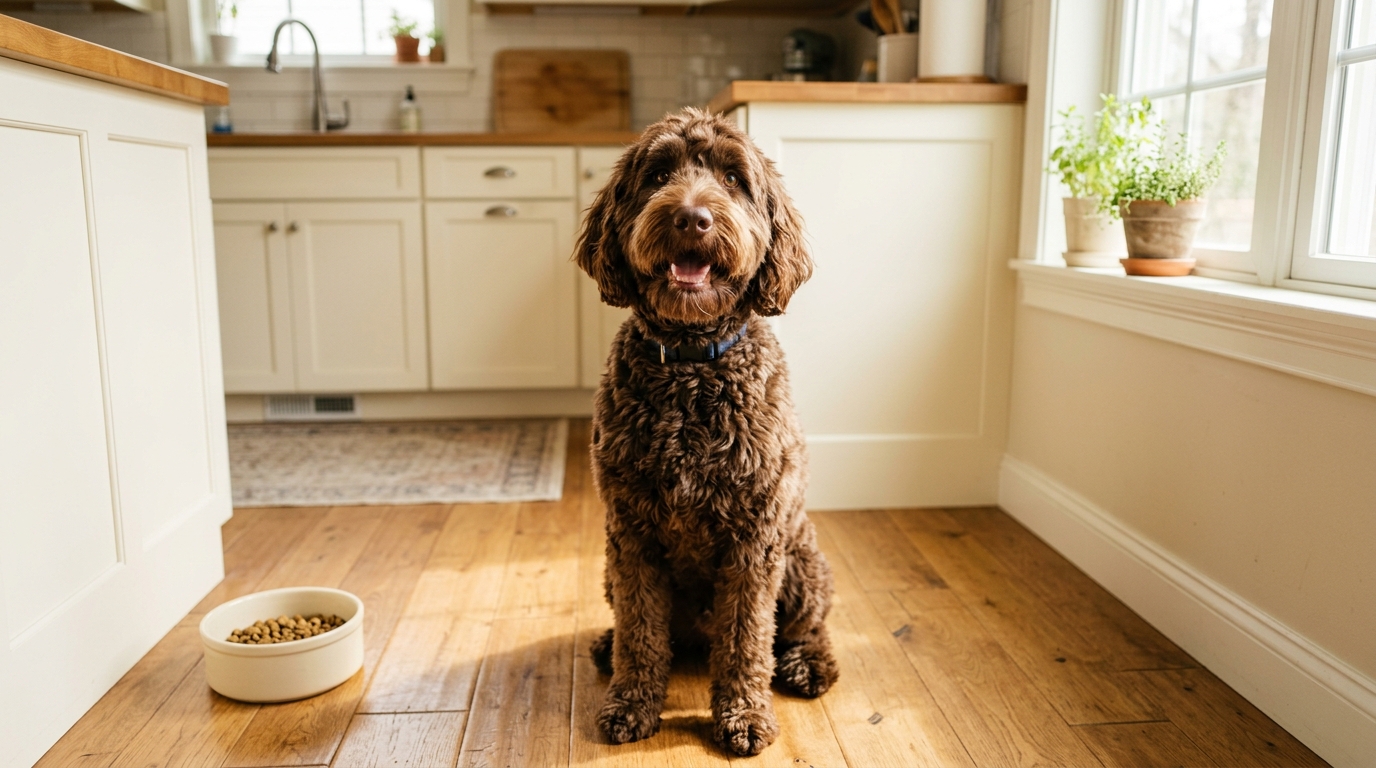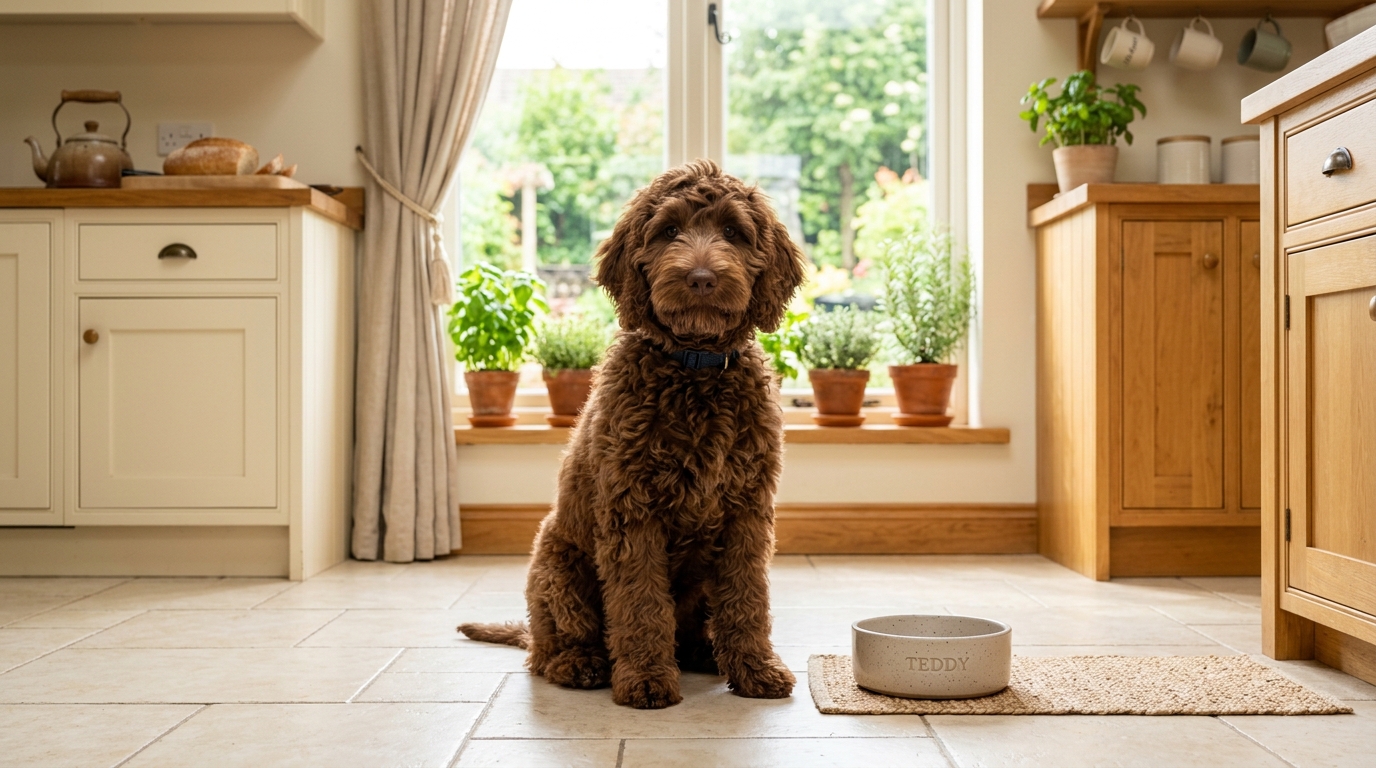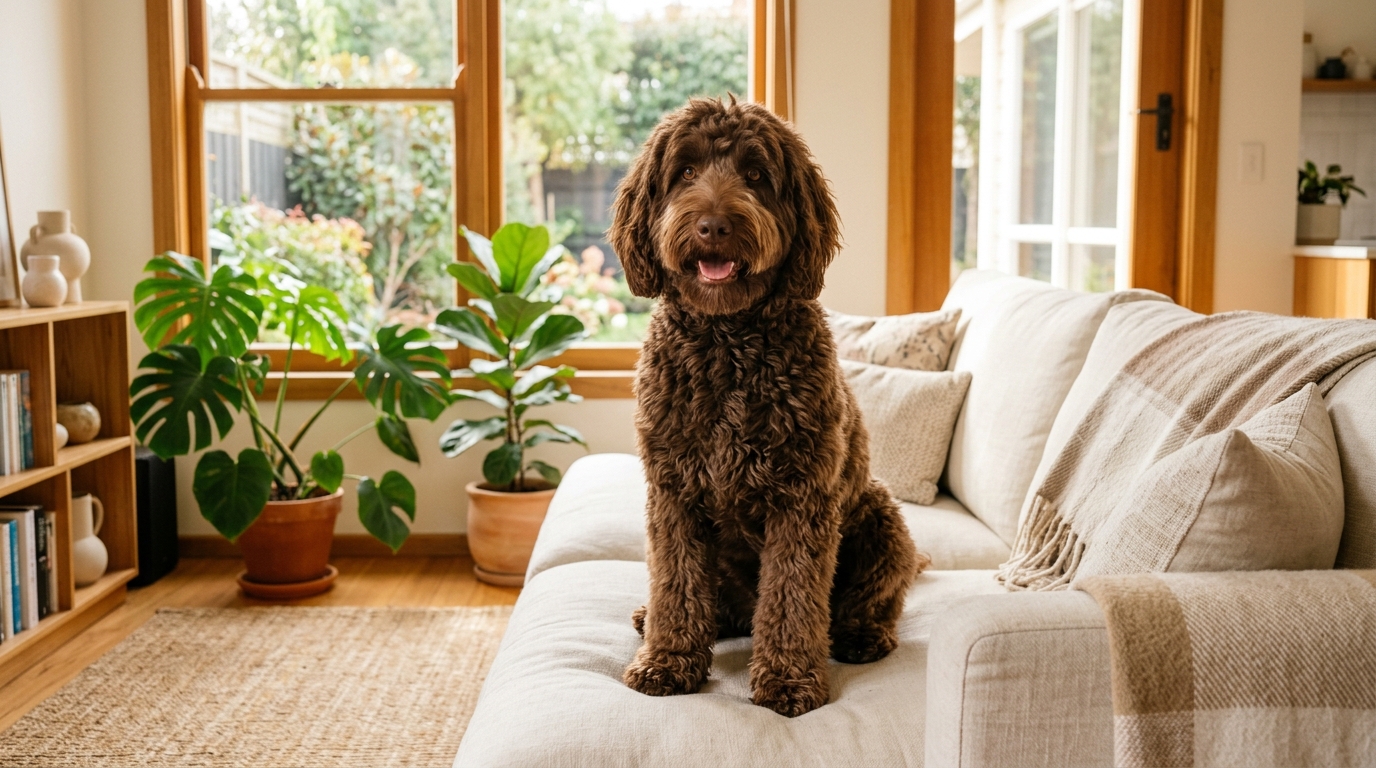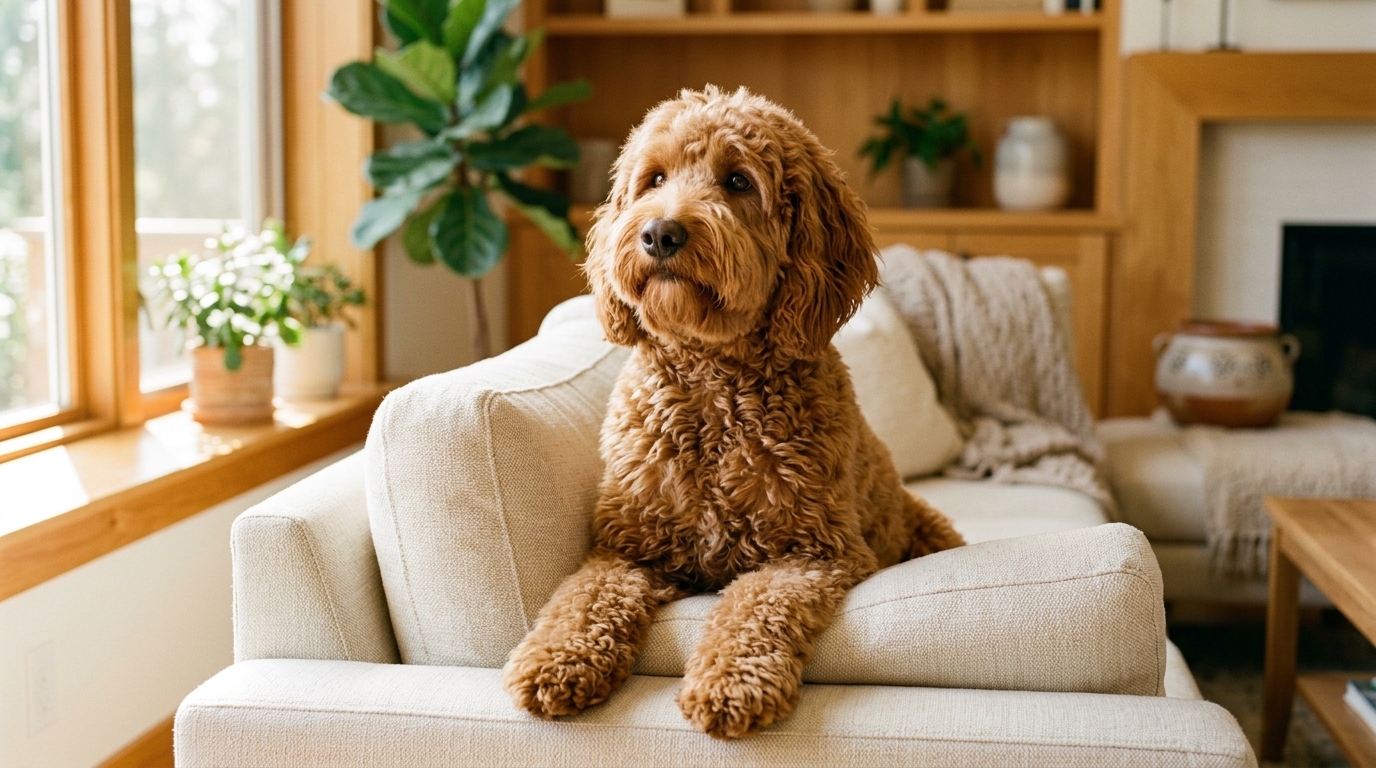
Loud gurgling from your doodle's belly is almost always normal. The sound has a name, borborygmi, and it is simply gas and fluid moving through the intestines, which happens all day in a healthy dog. It becomes a reason to worry only when the noise arrives together with vomiting, diarrhea, a refusal to eat, a hard or bloated belly, or a dog who seems flat and uncomfortable.
If you have ever sat quietly in the evening and heard your doodle's stomach rumble like a coffee machine, you are in good company. We have three Australian Labradoodles and we hear it often, usually right before dinner or late at night. Most of the time it means nothing at all.
This guide walks through what actually causes the noise, how to tell harmless gurgling from the kind that needs a vet, and the practical things we do at home to quiet a loud gut. Because doodles carry the Poodle line's real tendency toward food sensitivities, we will also cover when gurgling is a clue that the diet itself does not suit your dog.
What stomach gurgling actually is
Those rumbles are borborygmi: the sound of gas and liquid being pushed along by the normal muscular contractions of the digestive tract. The Merck Veterinary Manual describes gut motility as a constant background process, and a certain amount of noise is simply part of a working digestive system.
A healthy gut is a noisy gut. The question is never "is my doodle making stomach noises" (they all do) but rather "is the noise part of a bigger picture?" A gurgle on its own, in a dog who is bright, eating, and pooping normally, is background hum. A gurgle alongside other symptoms is the part worth paying attention to.
Why is my doodle's stomach making noises? The common causes
Most loud stomach noises in doodles come down to a short list of everyday reasons.
Hunger and an empty stomach
An empty gut is a loud gut. When there is nothing to digest, contractions still happen and the gas inside the intestines echoes. This is why the noise is loudest before meals and overnight. It is completely normal.
Swallowed air from fast eating
Doodles who inhale their food swallow a lot of air with it, and that air has to go somewhere. Gösta, our medium, is the classic example: he treats every meal like a competition he has to win first, and a rushed bowl leaves him gassy and gurgly afterward. Slowing the meal down fixes it. If your doodle eats like the bowl is about to be taken away, our guide on how to slow down a fast-eating doodle covers which tool actually suits which dog.
Gas from fermentation
As food is broken down in the gut, bacteria produce gas. Certain ingredients ferment more than others, so a change in what your dog eats, or a treat they are not used to, can turn up the volume for a day or two.
A recent diet change
Switching food too fast is one of the most common reasons we hear a louder gut in our house. The gut microbiome needs time to adjust to new ingredients. Sven, our most sensitive stomach, taught us this the hard way: in his first year he had loose stool after every single food change, and a rumbling belly was always the first sign the switch was happening too quickly. A slow, staged transition prevents most of it. We lay out the method in our 7-day food transition plan for sensitive doodles.
Bile buildup, especially overnight
When the stomach stays empty for many hours, acid and bile can pool and irritate the lining. This often shows up as loud early-morning gurgling followed by a small vomit of yellow foam. Sven had morning bile vomiting every single day through his whole first year. If this sounds familiar, our dedicated pieces on bile vomiting in doodles and labradoodle vomiting yellow foam explain the simple snack fix in detail.
Food sensitivities
Here is the doodle-specific angle. The Poodle line behind every doodle carries a genuine predisposition to food sensitivities and allergic skin disease (atopy). It is not a guarantee: some dogs inherit it and some do not. But it means a frequently gurgling, gassy gut can be a quiet clue that an ingredient does not agree with your dog. This is true across Australian Labradoodles, Labradoodles, Goldendoodles, Bernedoodles, and Sheepadoodles, though every cross and every individual differs.
Normal gurgling vs a warning sign: the honest comparison
This is the heart of the question. The table below is how we sort it in our own heads.
| Situation | Usually normal | Call the vet |
|---|---|---|
| Gurgling before meals or at night | Yes, hunger and empty gut | If paired with retching or pacing |
| Gurgling after a fast meal | Yes, swallowed air | If the belly swells and feels hard |
| Gurgling plus one soft stool | Often, a minor upset | If diarrhea lasts beyond 2-3 days |
| Gurgling plus vomiting | No | Yes, especially if repeated |
| Gurgling and not eating | Watch for 24 hrs | If refusal lasts more than ~24 hrs |
| Gurgling with a flat, lethargic dog | No | Yes |
| Loud gurgling + hard, distended belly + unproductive retching | No | Emergency, same day |
That last row matters most. A large, deep-chested build carries genuine bloat and GDV risk, and the Standard Poodle in a doodle's ancestry is one such build. If your doodle has a swollen, drum-tight belly, is trying to vomit without bringing anything up, drools, and seems distressed, do not wait and watch. That is a true emergency.
Dog stomach gurgling and not eating: how long is too long?
A doodle who skips one meal but is otherwise bright, playful, and drinking is usually fine, and many will eat again at the next meal. We do not panic over a single skipped bowl in a happy dog.
The clock starts mattering when refusal passes about 24 hours, or when the not-eating comes bundled with vomiting, diarrhea, or a dog who has gone quiet and withdrawn. Appetite loss is one of the most reliable signals that the gut is genuinely unwell rather than simply noisy. We go deeper into reading this in doodle not eating but acting normal and low appetite in doodles.
The AVMA is clear that persistent appetite loss in dogs warrants a veterinary check, so trust your gut if your doodle will not eat and something feels off.
Doodle gurgling stomach at night: the empty-tank problem
Night gurgling is its own little category, and it is extremely common. By the early hours, dinner is long gone, the stomach is empty, acid and bile build up, and the gut gets gassy and loud. In some dogs it ends in a small early-morning vomit.
The fix is usually boringly simple: a small snack right before bed. A little of their normal food or a bland bedtime bite gives the stomach something to work on overnight. In our house, closing the overnight gap is what ended Sven's morning bile entirely once we switched him to raw.
A short pre-bed potty walk helps too. We do a 5 to 15 minute walk last thing at night so everyone empties out and sleeps peacefully, and a calmer, settled dog tends to have a quieter gut.
What we actually do at home for a gurgling gut
For the ordinary, no-other-symptoms rumble, here is our practical sequence.
For the gentle, supportive options, a little plain pumpkin can firm things up (see can pumpkin help a doodle's upset stomach), and slippery elm is a traditional soother some owners find useful (slippery elm for doodle digestive issues).
A probiotic supports the balance of gut bacteria, which helps when the gurgling follows a diet change, a course of antibiotics, or a generally touchy gut. It is a supportive tool, not an emergency treatment, and for occasional noise it may not be needed at all. Our complete probiotics guide for doodles walks through when it is worth trying.
A calm gut likes a calm dog
One thing that is easy to miss: stress shows up in the gut. A doodle who is wound up, under-rested, or anxious often has a noisier, looser digestive system. Doodles need a lot of sleep, around 12 to 15 hours a day, and learning to genuinely settle matters as much as exercise. We cover the gut-and-stress link in stress diarrhea in dogs.
When gurgling is really a food-sensitivity story
If your doodle's gut is loud as a regular pattern, not just before dinner, and especially if it travels with soft stool, gas, itchy skin, paw licking, or recurring ear trouble, the food itself is worth investigating.
This is familiar territory for us. Gunnar, our ears-and-yeast dog, spent his first two years on a food that did not suit him, and chicken turned out to be his trigger. His problems showed up more in his skin, ears, and paws than his gut, but the thread is the same: an ingredient that does not agree with a doodle rarely stays politely in one place.
A careful elimination diet done with your vet is the honest way to pin down a trigger, far more reliable than guesswork. We have a step-by-step walk-through in elimination diet for doodles, and if you want to understand the difference between a true allergy and a simpler intolerance, food allergy vs food intolerance in doodles sorts it out.
When we build a diet for a sensitive doodle, we skip chicken and reach for fish, then lamb, turkey, duck, or rabbit. Many a "salmon" recipe hides chicken fat in the ingredient list, so always read the whole thing, not just the headline protein.
When to call the vet
To keep it plain, here is the line we draw:
- Watch at home: gurgling alone, or with one soft stool, in a bright, eating, playful doodle.
- Call the vet: gurgling with repeated vomiting, diarrhea lasting beyond 2-3 days, refusal to eat past about 24 hours, blood in stool or vomit, or a dog who is lethargic and uncomfortable.
- Emergency, same day: a hard, swollen belly with unproductive retching, drooling, and distress.
For the vomiting side specifically, when to take your doodle to the vet for vomiting gives a clear threshold, and blood in doodle stool covers that worrying sight.
FAQ
Yes, in most cases. Those loud noises are called borborygmi and they come from gas and fluid moving through the intestines, which happens constantly in a healthy dog. Hunger, a recent meal, a little swallowed air, or a minor diet change all make the gut noisier for a while. It is only a concern when the gurgling comes with vomiting, diarrhea, a refusal to eat, a hard or swollen belly, restlessness, or lethargy.
Gurgling plus not eating together is a combination to watch. A single skipped meal in a dog who is otherwise bright and playful is usually not an emergency, and it often settles within a day. But if your doodle refuses food for more than about 24 hours, seems flat or uncomfortable, or the gurgling is paired with vomiting or diarrhea, call your vet. Appetite loss is one of the clearest signs that the gut is genuinely upset rather than just noisy.
Night gurgling is very common and usually down to an empty stomach. By the early hours the last meal is long gone, acid and bile can build up, and the empty gut gets gassy and loud. In some doodles this leads to early-morning bile vomiting. A small snack right before bed often quiets things down. If the gurgling at night comes with pacing, retching, or a swollen belly, treat that as urgent.
Yes. The Poodle line behind doodles carries a real predisposition to food sensitivities and allergic skin disease, so an ingredient that does not suit your dog can leave the gut noisy, gassy, and producing soft stool. If gurgling is a regular pattern tied to a particular food, a careful diet review or elimination approach with your vet is more useful than any quick fix. Watch for the skin and ear signs that often travel with food issues in doodles.
A probiotic can help if the gurgling reflects an unsettled gut, a recent diet change, or a course of antibiotics, because it supports the balance of gut bacteria. It is a supportive tool, not an emergency treatment. For occasional noise it may not be needed at all. If the gurgling is frequent, or paired with soft stool or appetite changes, a probiotic alongside a vet conversation makes more sense than guessing.
The next step
For most doodles, a louder-than-you-expected stomach is just a working gut, and splitting meals, slowing a fast eater, and closing the overnight gap are the fixes that quiet it. If the noise keeps company with soft stool, gas, or itchy skin, the food is the thread to pull on next.
If you want the full picture of what a touchy doodle gut needs day to day, start with our doodle sensitive stomach: causes, symptoms and what actually helps, or browse the whole sensitive stomach hub for the topic that matches your dog.