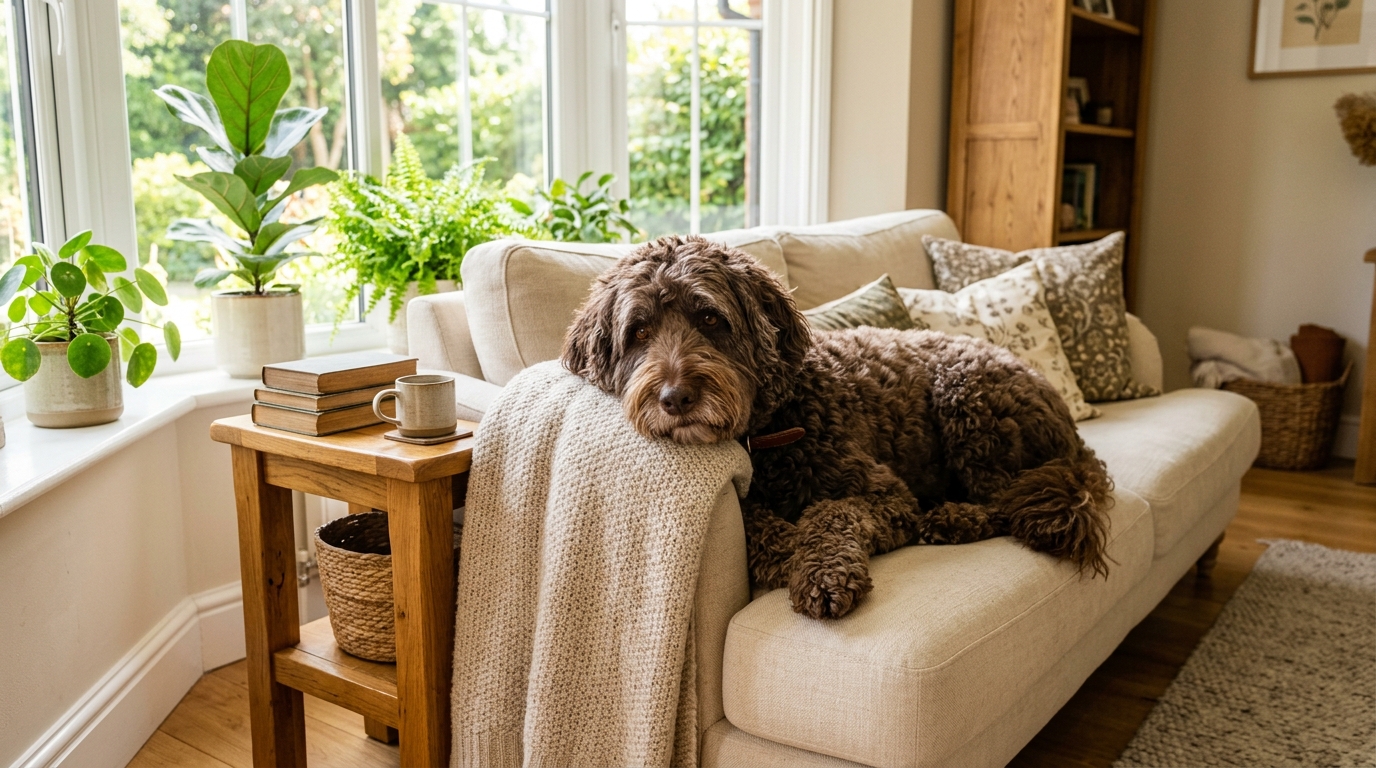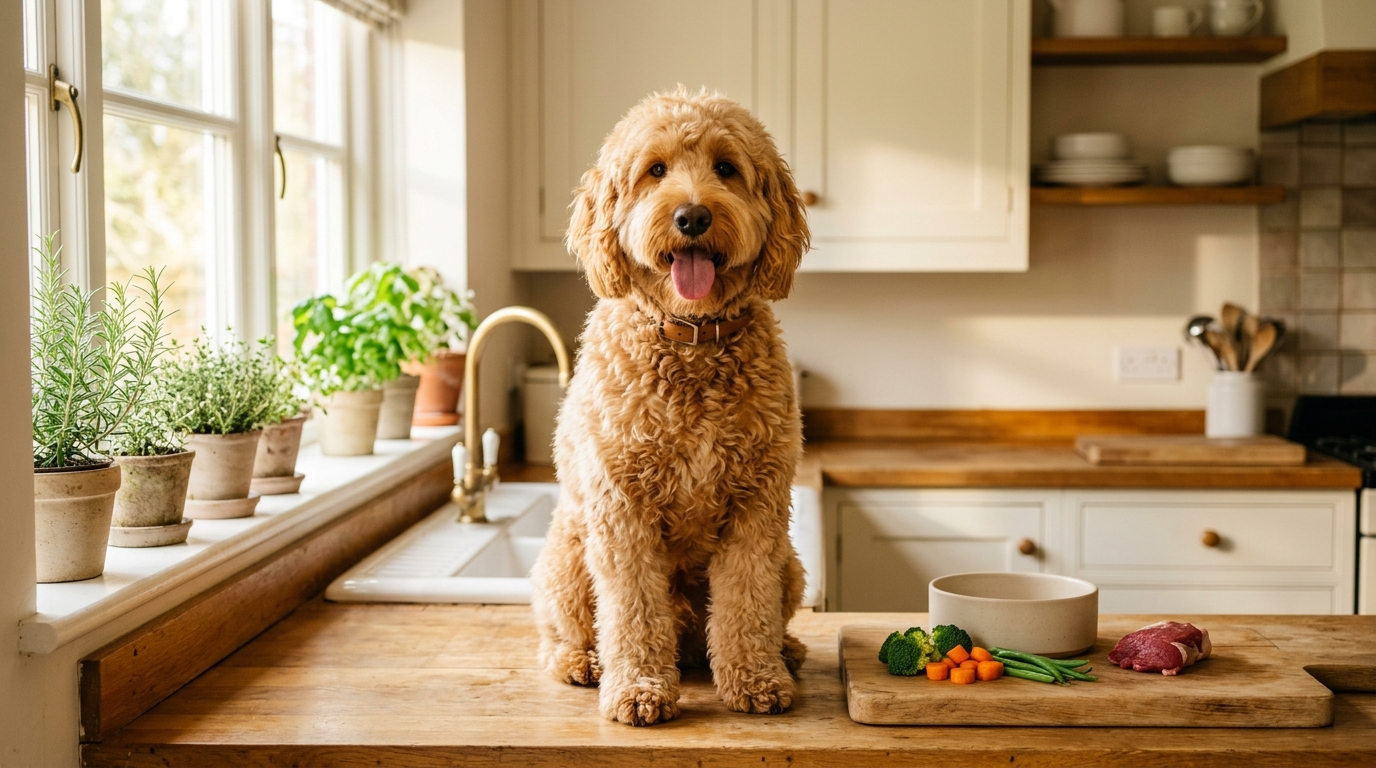
If your doodle has had diarrhea and vomiting that keeps coming back for weeks, along with weight loss or a fading appetite, you are right to wonder about inflammatory bowel disease. IBD is chronic inflammation of the gut lining that causes persistent or recurring digestive signs, and unlike a passing sensitive-stomach flare it does not settle on its own. It is a veterinary diagnosis, reached by ruling out other causes and often confirmed with a biopsy, and it is managed long term with diet, supplements and sometimes medication.
That last point matters, so we will say it plainly up front: this is not a condition you diagnose or fix at home. What you can do at home is recognize the pattern, know when a sensitive stomach has crossed into something more serious, and understand how gut-health support fits alongside the treatment your vet directs.
We feed raw, we have three Australian Labradoodles, and our most sensitive-stomach dog, Sven, taught us how easy it is to confuse a reactive gut with something bigger. None of our three has IBD. But Sven's history of loose stool after every food change in his first year is exactly the kind of story that makes doodle owners worry, so we understand the anxiety behind the search.
If you already suspect a chronic gut problem and just want to be feeding something sensible while you book the vet, our shortlist of everyday food that works for doodles is a reasonable holding place, but it is not a substitute for a diagnosis and it is not a therapeutic diet.
What inflammatory bowel disease actually is
Inflammatory bowel disease is a group of chronic gut disorders where inflammatory cells build up in the lining of the stomach and intestines. That inflammation interferes with digestion and absorption, which is why dogs lose weight, vomit, pass loose or frequent stool, and sometimes go off their food.
It is not a single disease with one cause. The Merck Veterinary Manual describes IBD (and the broader category now often called chronic enteropathy) as a diagnosis of persistent gastrointestinal signs where other identifiable causes have been excluded. In many cases the exact trigger is never pinned down, and the condition is thought to involve the immune system, the gut lining and the resident gut bacteria all interacting in a way that goes wrong.
The key word is chronic. A one-off bad tummy, a reaction to a food switch, a stress belly before a trip: those are acute and they resolve. IBD persists or keeps returning over weeks and months.
IBD vs a sensitive stomach vs a food allergy
This is the part doodle owners get tangled in, because the symptoms overlap and the poodle line genuinely does carry a predisposition to food sensitivities and allergic skin disease. Some doodles inherit it, some do not, but it means owners are primed to expect gut trouble and can struggle to tell ordinary sensitivity from something more serious.
Here is how we think about the three:
| Feature | Sensitive stomach | Food allergy / intolerance | Inflammatory bowel disease |
|---|---|---|---|
| Pattern | Short flares, settles between | Tied to a specific ingredient | Chronic or constantly recurring |
| Resolves on its own? | Usually within days | When trigger is removed | No, needs treatment |
| Weight loss | Rare | Uncommon | Common over time |
| Appetite | Usually normal | Usually normal | Often reduced |
| Diagnosis | Owner observation | Elimination diet | Vet workup, often biopsy |
| Fix | Bland food, time, routine | Avoid the ingredient | Diet plus supplements, sometimes meds, long term |
A sensitive stomach is really a description, not a diagnosis. Our Sven fits it: loose stool after every single food change in his first year, morning bile vomiting that only stopped when we moved him to raw. That is a reactive gut, not an inflamed one. If you want the full picture of what everyday sensitivity looks like, our sensitive stomach owner's guide covers it in detail.
A food allergy or intolerance is tied to a specific ingredient, and it is confirmed with a proper elimination diet. Remove the trigger and the signs go. We have lived this with Gunnar, whose chicken trigger drove his ear and yeast cycle, though his reaction showed in skin and ears rather than persistent gut disease.
IBD is the serious one. The signs are chronic, they do not settle between episodes without help, and weight loss and poor appetite creep in. Importantly, food can be part of the IBD picture too, which is exactly why the two get confused, and why only a vet can draw the line.
The symptoms doodle owners should watch for
The classic signs of IBD in dogs are:
- Chronic or recurring diarrhea that does not fully resolve, or returns again and again
- Vomiting that keeps happening over weeks, not a single episode
- Gradual weight loss, sometimes despite a normal appetite early on
- Reduced or variable appetite, picking at food or skipping meals
- Increased gas, stomach gurgling or abdominal discomfort
- Sometimes mucus or blood in the stool
The honest difficulty with a doodle is the coat. A curly or fleece coat hides a thinning body, so weight loss creeps up on you. We notice condition by hand when we groom Sven and Gunnar, because the coat tells you nothing by eye. If your doodle feels bonier through the ribs and spine than they used to, take that seriously.
The single most useful filter is duration (our guide to how long doodle diarrhea lasts shows what normal looks like). A flare that clears in a few days is not IBD. Signs that run past two to three weeks, or that keep returning on a stable diet, are the ones that warrant a workup. If you are unsure where the line sits for vomiting specifically, our guide on when to see the vet for doodle vomiting lays out the red flags, and blood in the stool has its own threshold.
How vets diagnose IBD
There is no single blood test that says "IBD." Diagnosis is a process of exclusion, and your vet decides how far to take it based on how sick your dog is.
Step one is ruling out the common, treatable causes. That means fecal testing for parasites, bloodwork to check organ function and look for clues, and often a check of pancreatic and thyroid function. Infections, parasites and pancreatic disease can all mimic IBD and are far easier to treat.
Step two is often a diet trial. Because food-responsive disease looks identical to early IBD, many vets run a strict therapeutic diet trial first. If the dog gets completely better on a hydrolyzed or novel-protein diet, that is food-responsive enteropathy, which is good news.
Step three, when needed, is biopsy. A definitive IBD diagnosis requires looking at the gut lining under a microscope and finding inflammatory cells. Those samples are usually taken by endoscopy under anesthesia, sometimes by surgery. This is the step that separates true IBD from everything that looks like it, and it is why you cannot diagnose this at home or online.
The AVMA is clear that chronic GI signs deserve proper veterinary evaluation rather than guesswork, and that is exactly the spirit here. The workup can feel like a lot, but each step rules out something simpler and cheaper to fix.
How IBD is managed
Most dogs with IBD are managed rather than cured, and many do very well. The goal is long stretches of normal stool, steady weight and a happy, comfortable dog. Management usually combines diet, supplements and, when needed, medication.
Diet
Diet is the foundation. Most IBD dogs are put on either a hydrolyzed diet, where the protein is broken into pieces too small for the immune system to react to, or a strict novel-protein diet using a protein the dog has never eaten (see best novel protein dog food for what that looks like on the shelf). Some do better with higher fiber, some with low fat. It is individual, and your vet chooses the starting point.
Whatever diet is chosen, the rule is strictness: no other foods, no table scraps, no random treats during the trial, because one stray snack can wreck the result. If you want to understand how hydrolyzed options work before you discuss them, we cover hydrolyzed dog food for doodles separately.
Because chicken is such a common trigger, and because it is Gunnar's, we avoid it in our house entirely, including the chicken fat that hides in many salmon recipes. But do not let that override your vet's diet choice for an IBD dog. Follow the plan you are given.
Supplements and gut support
Gut-health support sits alongside veterinary treatment, never instead of it. Depending on the case, vets may use:
- Probiotics to support the gut bacteria, a reasonable part of a chronic-gut plan (best probiotics for doodles has the shortlist). Our probiotics guide explains the sensible version.
- Omega-3 fish oil for its anti-inflammatory role, discussed in our omega-3 guide.
- Fiber in some cases, where a fermentable fiber helps stool quality.
- Vitamin B12 supplementation, because IBD dogs are often low on it; this is a vet decision based on bloodwork.
Our own calm, consistent gut-health routine for sensitive doodles is built for everyday sensitivity, not for IBD, but the same principles of steady feeding, no random extras and good gut support are useful background reading.
Medication
When diet and supplements are not enough, vets add medication. This can include anti-inflammatory or immune-modulating drugs, and sometimes a course aimed at the gut bacteria. These are prescription decisions, dosed and monitored by your vet, and they are not something to attempt on your own.
Where home care ends and the vet begins
The honest boundary is this: home care is for genuine sensitive stomachs and short flares. Pumpkin, a bland meal, slippery elm, a slower feeder and a steady routine are all reasonable tools for a reactive gut that settles between episodes. They are not treatment for IBD.
Stop home-managing and see a vet when:
- Signs have lasted more than two to three weeks
- Your doodle is losing weight or feels thinner by hand
- Appetite is dropping or meals are being skipped
- There is blood or persistent mucus in the stool
- Your reliable home fixes keep working briefly and then failing
If any of those fit your dog, this has moved past sensitive-stomach territory. For the broader picture of ongoing loose stool and when it crosses the line, our guide to chronic diarrhea in doodles is a good companion read, and best food for chronic diarrhea covers the diet side to discuss with your vet.
FAQ
No. A sensitive stomach is a label for a dog that reacts easily to food changes or stress with short, self-resolving upset. IBD is chronic inflammation of the gut lining confirmed by a vet, usually by biopsy, and the signs persist or keep returning over weeks regardless of how carefully you feed. A sensitive stomach settles between episodes; true IBD does not without treatment.
The most common early signs are chronic or recurring diarrhea, vomiting, gradual weight loss, reduced appetite and sometimes increased gas or stomach gurgling. The clue that separates IBD from everyday upset is duration: signs that last more than two to three weeks, or that keep coming back despite a stable diet, deserve a vet workup.
There is no single test. Vets work by exclusion: bloodwork, fecal tests, sometimes imaging and diet trials to rule out parasites, infections, pancreatic disease and food reactions. A definitive IBD diagnosis requires a biopsy of the gut lining, usually taken by endoscopy, showing inflammatory cells. Your vet decides how far to take the workup based on severity.
There is no single best diet. Most IBD dogs are managed on either a novel-protein or a hydrolyzed therapeutic diet chosen with your vet, fed strictly with no other foods or treats during the trial. Some do better on higher fiber, some on low fat, and it is individual. Because chicken is a common trigger, we avoid it, but your vet should guide the specific diet for your dog.
IBD is generally managed rather than cured. Many dogs do very well and live normal, comfortable lives once the right diet and, if needed, medication are found, but it is usually a lifelong condition that can flare. The goal is long stretches of normal stool, steady weight and a happy dog, reached and maintained with your vet rather than at home alone.
Your next step
If your doodle's gut trouble has crossed from the occasional flare into something chronic, the most useful thing you can do today is book a vet visit and start a simple log of stool, appetite and weight. That record will make the whole workup faster.
While you wait for the appointment, it helps to understand what ordinary sensitivity looks like so you can describe the difference clearly. Read our sensitive stomach owner's guide next, and if you want to see how we think about feeding a reactive gut in general, our feeding philosophy explains where we stand.