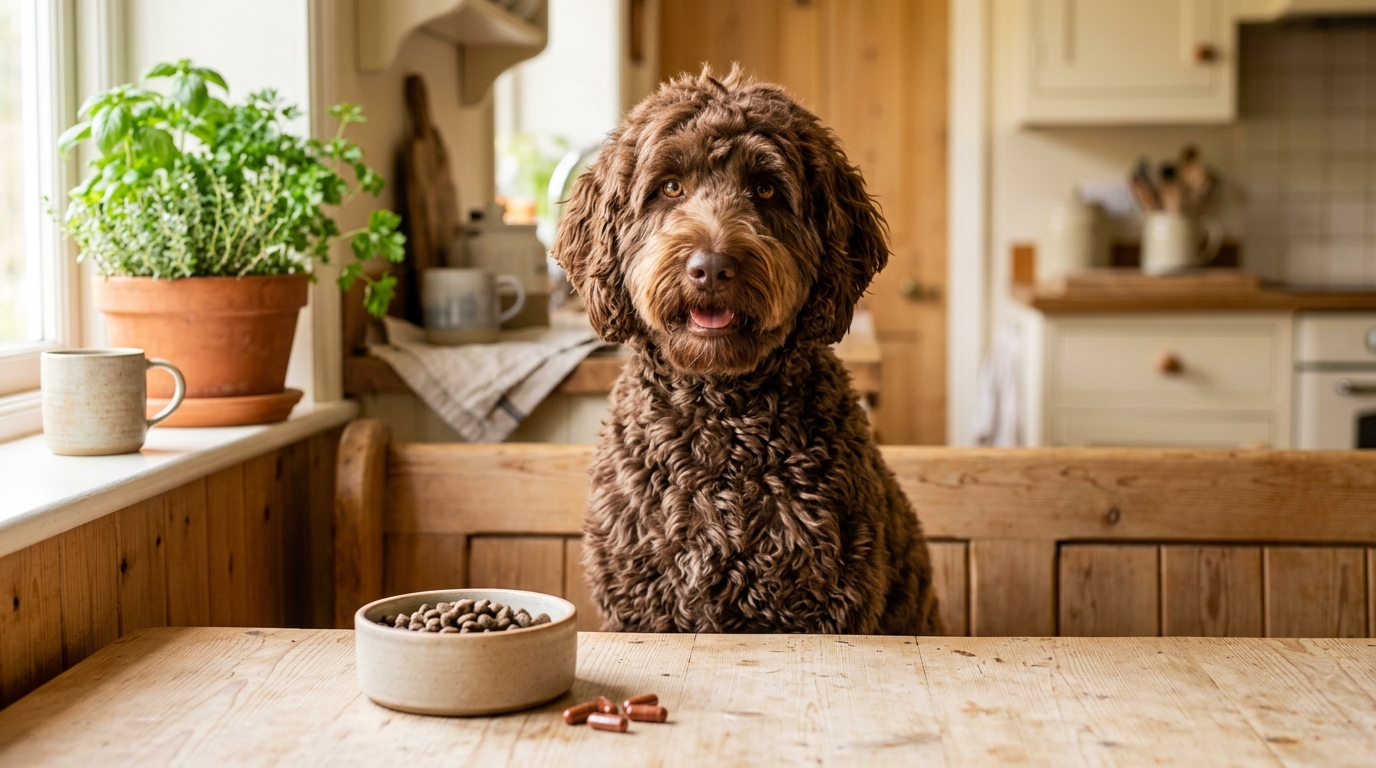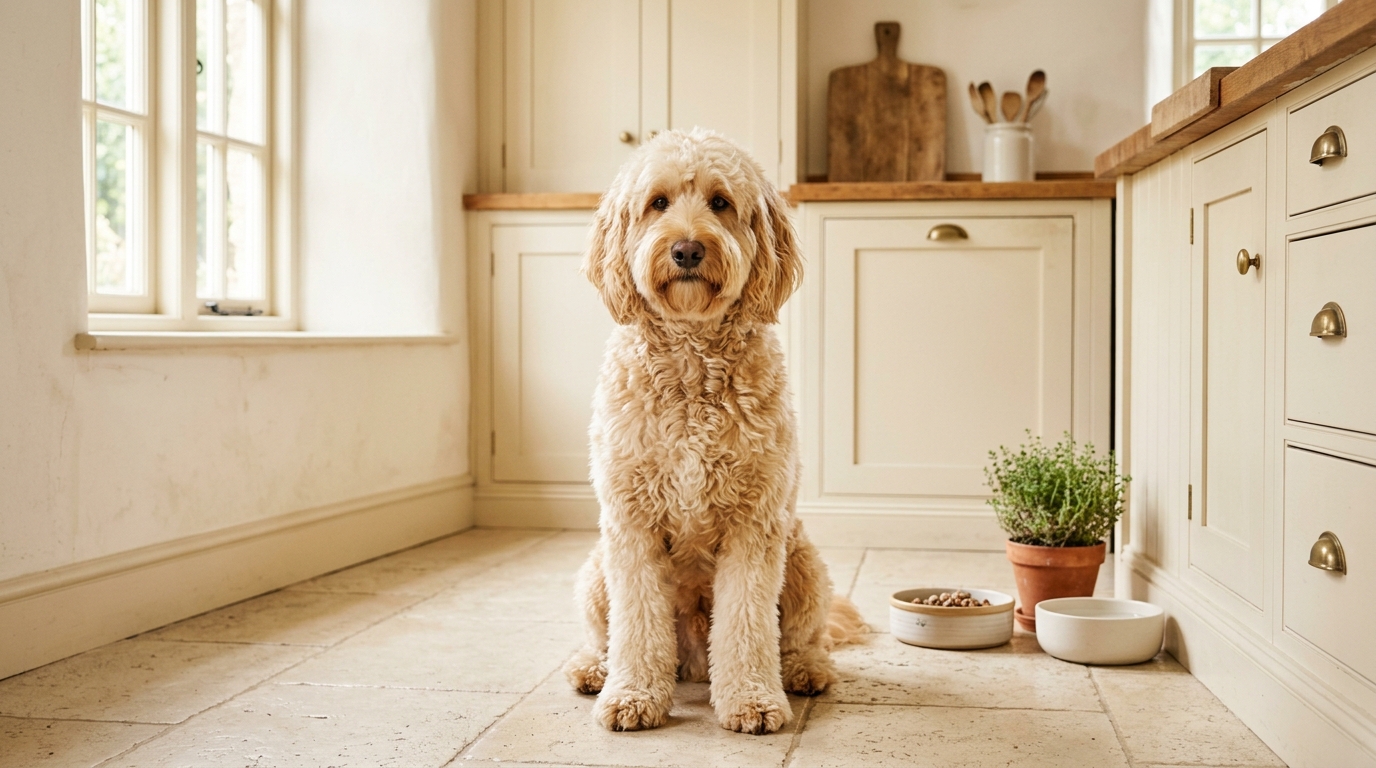
The best wet dog food for a doodle with a sensitive stomach is a limited-ingredient, single-protein canned or pouch food built on fish or lamb, with no chicken and no gut-irritating gums. Our top pick is ZIWI Peak Mackerel & Lamb: fish-forward, no chicken in any form and no gums or carrageenan. Introduce any new wet food gradually over 7 to 10 days so the gut has time to adjust.
If you own a doodle that greets every meal with loose stool, the occasional vomit, or a shrug and a walk away from the bowl, you have probably wondered whether switching to wet or canned food would help. It often does, and in this guide we will explain why, compare a handful of specific picks with honest pros and cons, and walk through how to feed wet food as a topper or a full meal without setting the gut back.
We feed raw at home for our three Australian Labradoodles, with premium kibble and freeze-dried raw for travel, so wet food is not our daily routine. But we understand sensitive doodle stomachs intimately: Sven, our most sensitive stomach, vomited bile every single morning through his whole first year and went loose after every food change. The ingredient-reading habits we built for him are exactly what you need when you are standing in the pet aisle squinting at a can.
Why wet food can help a doodle's sensitive stomach
Wet food is not magic, and it is not automatically better than a good kibble. But there are real reasons it suits a lot of sensitive doodles.
- High moisture. Canned and pouch foods are mostly water, which is gentle on the gut and keeps a dog hydrated. A dry, concentrated meal sits heavier; a moist one moves more easily.
- Shorter recipes. Many limited-ingredient wet foods have a genuinely short list: one protein, a little fat, a few vegetables, vitamins and minerals. Fewer ingredients means fewer things to react to.
- Palatability. Wet food smells stronger and tastes richer, so a nauseous or picky doodle is more likely to eat it. For a dog who turns his nose up at kibble, that alone can break a bad cycle.
The poodle side of a doodle carries a documented predisposition to allergic skin disease and food sensitivities, which is part of why food reactions turn up so often in Australian Labradoodles, Goldendoodles, Labradoodles and Bernedoodles. It is a predisposition, not a guarantee, but it means reading labels carefully is time well spent. If you want the bigger picture on format, we compare it in detail in kibble vs fresh food for sensitive doodles.
If you already know you want a shortlist and just want to skip to proven picks, see our roundup of the best limited ingredient dog food for doodles alongside the wet picks below.
What to look for in sensitive-stomach wet food
Before any brand names, here is the checklist we apply to every can. The format matters less than these.
- A single named protein first on the list (salmon, whitefish, lamb, turkey, duck or rabbit)
- No chicken anywhere, including chicken fat and chicken broth, which hide in many fish recipes
- A short ingredient list overall, ideally limited-ingredient on the label
- Moderate fat, not a very rich recipe, since high fat can trigger loose stool
- Few or no thickening gums (carrageenan, guar gum, cassia gum) if your dog reacts to them
- A complete-and-balanced AAFCO statement if you plan to feed it as the whole meal
That last point matters. The AAFCO nutrient profiles are the baseline that tells you a food is balanced for daily feeding rather than meant only as a treat or topper. If a can says "for intermittent or supplemental feeding only," it is not built to be the whole diet.
Best wet dog food for doodles with sensitive stomachs: our picks compared
A quick, honest note: we feed raw, so we have not fed these specific cans to our own dogs day in and day out. These are researched picks chosen against the checklist above, not products we have personally tested on Sven, Gunnar and Gösta. We have been open about that throughout, because products and formulations differ by country and we will never imply hands-on testing we did not do.
Here is how the two compare at a glance.
| Pick | Main protein | Best as | Watch-outs |
|---|---|---|---|
| ZIWI Peak Mackerel & Lamb | Mackerel + lamb | Full meal or topper, fish-forward | Premium price |
| ZIWI Peak Lamb | Lamb | Full meal, single red-meat protein | Premium price, rich |
One buying note before the picks: with premium cans, price per meal is what matters for a big doodle, not the price per case. A 13.75 oz (390 g) can of a 91% meat food is dense, so many owners use it as a topper over a simple base rather than as the whole bowl, which makes a case last weeks instead of days. If you want to compare can sizes and current case prices, Amazon's pet section lists both the 6 oz (170 g) and 13.75 oz (390 g) options.
ZIWI Peak Mackerel & Lamb (our overall pick)
Why we rate it: fish is a great choice for sensitive and allergy-prone doodles because it is a different protein from the chicken and beef many dogs have already been overexposed to, and oily fish like mackerel brings omega-3 fats that are kind to the skin and coat. Just as important for this list, we checked the full ingredient list: mackerel, lamb, organs, chickpeas, green mussel, kelp, vitamins and minerals, and nothing that thickens the can.
Pros: no chicken, no gums or carrageenan, fish plus a single red meat, very high meat content, works as a topper or a full meal.
Cons: it is expensive, and it combines two proteins, so it is not the right choice in the middle of a strict single-protein elimination trial. Dense and rich, so introduce it slowly.
ZIWI Peak Lamb (the single red-meat option)
Why we rate it: lamb is a solid pick when you want to step away from the usual chicken and beef, and Ziwi's recipe is impressively clean, with a short list of real ingredients rather than a wall of additives. For a doodle whose gut settles best on simple, meat-forward food, it is one of the nicest options on the shelf.
Pros: no gums, no chicken, novel-ish protein for many dogs, very high meat content, minimal processing.
Cons: the price is the headline con, and with a standard doodle eating it as the whole diet, costs add up fast. It is also a rich, dense food, so introduce it slowly and watch for soft stool, especially if your dog is not used to high meat content.
How to feed wet food to a sensitive doodle
Topper or full meal?
Both work. A spoonful of wet food stirred through kibble is one of the easiest ways to tempt a picky or nauseous doodle, add moisture, and make a meal more interesting. Used as a topper, wet food is cheaper and goes further, which matters a lot in a multi-doodle house.
If you feed it as the whole meal instead, make sure the label says complete and balanced for your dog's life stage, and that it carries the AAFCO statement. A topper does not need to be complete; a sole diet does.
Portioning by size
Doodles span a huge size range, from a medium like our Gösta at roughly 35 to 37 lb (16 to 17 kg) up to standards like Sven and Gunnar at around 55 lb (25 kg). Wet food is less calorie-dense than kibble, so a standard eating wet food as the sole diet needs a real volume of it. Always start from the feeding guide on the can for your dog's weight, then adjust based on body condition and stool. If size is new territory for you, our doodle size chart by breed and type puts the ranges in perspective.
Transitioning without the loose stool
This is where sensitive doodles get tripped up. A sudden switch is the single most reliable way to produce a few days of loose stool. With Sven, we learned to go genuinely slowly, slower than the bag suggests.
| Stage | Days | New food | Old food |
|---|---|---|---|
| Quarter | Days 1-3 | 25% | 75% |
| Half | Days 4-5 | 50% | 50% |
| Three-quarter | Days 6-8 | 75% | 25% |
| Full | Days 9-10 | 100% | 0% |
The standard approach is to replace about a quarter of the old food for a few days, move to half, then three quarters, then all new, spread over 7 to 10 days. Sensitive doodles want the slower end. If the stool softens at any step, hold at that ratio an extra day or two before moving on. Our full method is in the 7-day food transition plan for sensitive doodles, and if a switch has already gone wrong, doodle diarrhea after switching food walks you through fixing it.
The Merck Veterinary Manual notes that dietary change is a common cause of acute digestive upset in dogs, which is exactly why gradual transitions exist. Go slow and you avoid most of it.
Storage and the small practical stuff
Once you open a can or pouch, keep the rest in the fridge, covered, and use it within a couple of days. Serve it at room temperature rather than fridge-cold, because a very cold meal can upset a delicate stomach and is less appealing. If your doodle gulps the softer food too fast, a lick mat or a slow feeder bowl slows things down and makes a small meal last, which is kinder on the gut and keeps a bored doodle busy.
In our house the raw equivalent of all this is portioning and thawing in advance, and the same discipline applies: fresh, clean, the right amount, served at a sensible temperature.
When wet food is not the answer
Food changes help mild, chronic sensitivity. They do not fix everything, and switching cans over and over is not a substitute for a diagnosis.
See your vet if any of these show up:
- Vomiting or diarrhea lasting more than about 24 to 48 hours
- Blood in the stool or vomit
- Lethargy, refusing water, or obvious pain
- Symptoms that keep returning despite a clean, simple diet
If your doodle vomits yellow foam specifically, that pattern has its own causes and fixes in Labradoodle vomiting yellow foam, and if loose stool is the ongoing problem, start with chronic diarrhea in doodles. For the full picture on managing a delicate gut long term, our doodle sensitive stomach guide pulls it all together. None of this replaces your vet, and the AVMA is a good general starting point for understanding when a symptom crosses from minor to serious.
FAQ
Wet food is not automatically better, but it often suits a sensitive doodle because the high moisture content is easy on the gut and the recipes tend to be shorter and simpler than kibble. Many doodles eat wet food more willingly too, which helps a picky or nauseous dog. That said, the ingredient list matters far more than the format: a limited-ingredient, single-protein, chicken-free wet food beats a complicated one every time.
Go slow. Replace about a quarter of the old food with the new one for a few days, then move to half, then three quarters, then all new over 7 to 10 days. Sensitive doodles like our Sven need the slower end of that range, because loose stool after a fast switch is one of the most common things we see. Watch the stool at each step and pause if it softens.
Yes, and for many doodles that is the sweet spot. A spoonful of wet food over kibble adds moisture, boosts palatability for a fussy eater, and still keeps costs down. If you feed it as a topper, remember it adds calories, so trim the base meal a little to avoid overfeeding, which is itself a common cause of soft stool.
Avoid chicken in any form, including chicken fat and chicken broth, which hide in many salmon and whitefish recipes. Watch for long ingredient lists, multiple proteins stacked together, and thickening gums such as carrageenan, guar gum and cassia gum, which some dogs tolerate poorly. Look for a named single protein first on the list and as few other ingredients as possible.
See your vet if vomiting or diarrhea lasts more than about 24 to 48 hours, if you see blood, if your doodle is lethargic, not drinking, or in obvious pain, or if symptoms keep returning despite a clean, simple diet. Food changes help mild, chronic sensitivity, but persistent or severe signs need a proper diagnosis rather than another new can.
Your next step
If one of these picks looks right, start with the slow transition above and watch the stool at every step. If you are still weighing up the whole question of what to feed day to day, read our everyday best dog food for doodles next, or dive into the full sensitive stomach hub for everything from probiotics to pumpkin. A calm, simple, chicken-free bowl is almost always the right place to begin.