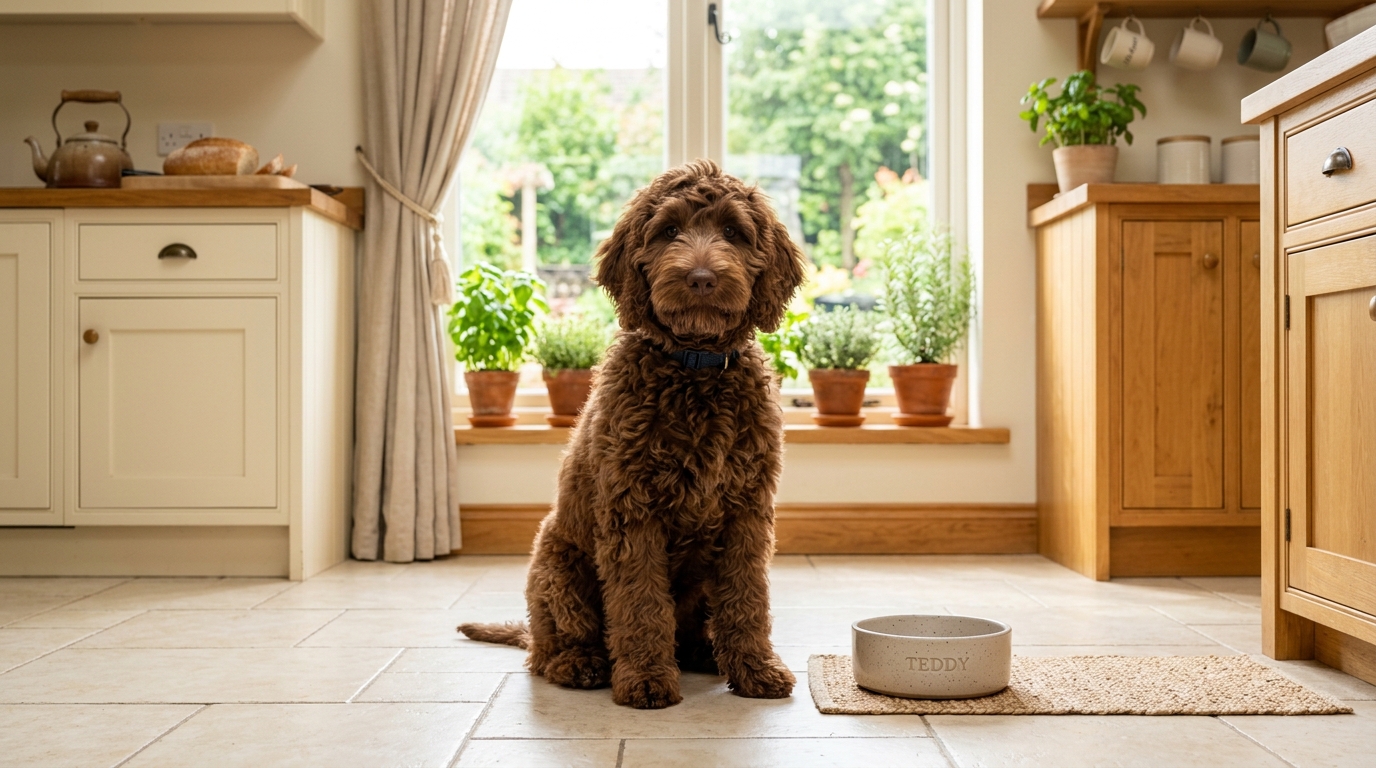
If you share your home with a doodle, there is a good chance you have stared at a puddle of vomit on the kitchen floor or followed your dog outside at midnight hoping the grass-eating phase would just end. You are not imagining things: doodle sensitive stomach issues are genuinely common, and they are not random bad luck. There are real, breed-specific reasons your goldendoodle, labradoodle, or bernedoodle seems to have a more reactive gut - and if you want the bowl-level answer before the full explanation, our best food for a doodle with a sensitive stomach is the shortlist this guide builds toward - than your neighbor's lab.
The frustrating part is that most of the advice out there is generic — "try a bland diet," "switch to sensitive-stomach kibble," full stop. That is not enough when you are dealing with a dog whose digestive quirks are wired into their genetics and their gut microbiome. What you actually need is a clear picture of why this is happening, how to recognize all the symptoms (not just the obvious ones), and a practical framework for figuring out what is driving the problem in your specific dog.
That is exactly what this guide covers. We have three doodles — Sven, Gunnar, and Gösta — and between them they have given us a thorough education in doodle digestive problems. Here is what years of hands-on experience and a lot of research have taught us.
Why Doodles Are Prone to Sensitive Stomachs
Understanding the why makes the solutions make a lot more sense.
The Poodle Genetic Contribution
Poodles — whether standard, miniature, or toy — are widely recognized among breeders and owners as a food-sensitive breed. Their immune systems tend to be highly reactive, and their gut mucosa can respond strongly to proteins and carbohydrates that other breeds handle without a second thought. This is not a flaw; it is simply a characteristic of the poodle line.
When you breed a poodle with a golden retriever or a Labrador retriever, that digestive sensitivity does not disappear. Depending on how the genetics shake out in a given puppy, you may get a dog who inherits the poodle's reactive gut alongside the retriever's enthusiastic, eat-everything attitude — a combination that sets the stage for frequent digestive upset.
The Retriever Side of the Equation
Golden retrievers are no strangers to food sensitivities either. They are one of the breeds most commonly cited for environmental and food allergies, and loose stools in response to dietary changes or rich foods are very common. Labrador retrievers are famously food-motivated to the point of indiscriminate eating, which creates its own digestive chaos.
Put retriever enthusiasm together with poodle gut sensitivity, and you have a dog who will happily eat something that will absolutely disagree with them.
Hybrid Microbiome Variability
One of the less-discussed aspects of doodle digestive problems is gut microbiome variability in hybrid dogs. When two distinct breeds are crossed, the resulting puppies can have quite different gut flora profiles — even within the same litter. Some doodles have robust, stable microbiomes that tolerate dietary variation well. Others have gut flora that is easily disrupted by stress, antibiotics, travel, or a single rich meal.
This variability explains why doodle owners often report wildly different experiences: one person's goldendoodle thrives on any commercial food; another's falls apart with every kibble change. Neither dog is broken — they just landed on different ends of the microbiome stability spectrum.
Early Life Factors That Make It Worse
Many doodles are exposed to antibiotics early in life — for kennel cough, skin infections, or ear issues that are common in the breed. Antibiotics are sometimes necessary and life-saving, but they also significantly disrupt the gut microbiome, and a gut that is wiped out in puppyhood can take months to fully recover without intentional support.
Stress from the transition to a new home, a change in food between breeder and new owner, and the chaos of puppy socialization can all compound early microbiome disruption. If your doodle has had a sensitive stomach since puppyhood, this early-life disruption is worth considering.
Recognizing Doodle Stomach Issues: Symptoms Beyond Loose Stools
Most owners know to watch for diarrhea. But a doodle sensitive stomach often announces itself in quieter, easier-to-miss ways — sometimes for weeks or months before the full digestive chaos arrives.
The Obvious Symptoms
- Loose or soft stools that are not quite diarrhea but never firm
- Intermittent diarrhea that resolves on its own but keeps coming back — if this is your pattern, our guide on how long doodle diarrhea lasts helps you know what is normal and when to act
- Vomiting — either immediately after eating or hours later
- Mucus in the stool, which signals gut lining irritation
The Less Obvious Symptoms
This is where doodle owners often miss the early warning signs:
- Frequent grass-eating, especially first thing in the morning — this is often a sign of nausea or mild stomach acid irritation, not a behavioral quirk
- Audible stomach gurgling (borborygmi) that you can hear from across the room
- Excessive gas, including very foul-smelling flatulence that seems disproportionate to what was eaten
- Morning bile vomiting — yellowish foam on an empty stomach — which points to overnight acid buildup; we cover this pattern in detail in Bile Vomiting in Doodles
- Lip-licking and repeated swallowing in the hour after eating, a subtle sign of nausea
- Reluctance to eat breakfast while being enthusiastic about dinner, which can indicate nighttime gastric acid issues
- Eating poop (coprophagia), which sometimes reflects a gut that is not properly absorbing nutrients
Sven went through a phase where he would eat grass every single morning and then be completely fine for the rest of the day. It took us a while to connect that pattern to the kibble we were using at the time during a travel stretch — once we got back to his regular food, the grass-eating stopped within a week.
Distinguishing Acute Upset from Chronic Sensitivity
Acute upset has a clear trigger — your doodle raided the trash, ate a rich holiday treat, or stress from boarding disrupted their system. It tends to resolve within 24–48 hours with supportive care.
Chronic sensitivity is a pattern: loose stools more days than not, recurring vomiting, persistent gas, or symptoms that keep returning even after things seem to settle. If you are in "two steps forward, one step back" territory for weeks at a time, you are likely dealing with chronic gut sensitivity rather than a one-off incident. Our guide on signs your doodle has a sensitive stomach goes through the full checklist if you are still trying to figure out which camp your dog is in.
Keeping a simple stool log — a quick daily note rating stool quality from 1 (liquid) to 5 (firm and well-formed) — is surprisingly useful for spotting patterns and communicating clearly with your vet.
Common Food Triggers for Doodle Digestive Problems
Food is the most controllable variable in your doodle's gut health, and identifying triggers is one of the highest-leverage things you can do. Here are the most common culprits.
Protein Sources
Chicken is the single most frequently reported protein trigger in doodles with food sensitivities — particularly rendered chicken meal found in most commercial kibbles. This is partly because chicken is so ubiquitous that many dogs have been exposed to it constantly since puppyhood, making sensitization over time more likely.
Other commonly problematic proteins include beef (when consumed in large amounts or in low-quality rendered form), pork, and certain fish meals that have been heavily processed.
Less commonly problematic proteins — useful as novel alternatives — include duck, venison, rabbit, and turkey.
Grains, Fillers, and Additives
- Wheat gluten and corn gluten are common irritants, particularly in poodle-lineage dogs
- Soy can cause gas and loose stools in sensitive dogs
- Beet pulp and chicory root — common prebiotic fiber sources in sensitive-stomach kibbles — can actually worsen gas and loose stools in some doodles, even though they are marketed as gut-friendly
- Artificial preservatives (BHA, BHT, ethoxyquin) are worth avoiding in a dog with a reactive gut
- High-fat table scraps and rich treats can trigger acute pancreatitis-adjacent symptoms in dogs already prone to digestive sensitivity
The Rotation Problem
Many doodles develop sensitivities precisely because they have eaten the same food for years. Feeding the same protein and carbohydrate source daily can eventually trigger an immune response to that food — a phenomenon sometimes called dietary sensitization. Rotating proteins (when the gut is stable enough to tolerate it) is a legitimate long-term strategy, though it needs to be done gradually and thoughtfully.
If you are exploring food allergies more deeply, our Food Allergies hub covers elimination diets and how to distinguish a true allergy from a sensitivity.
The Doodle Sensitive Stomach Action Plan
Here is a practical, step-by-step framework for addressing your doodle's digestive issues. This is not a "try one thing and hope for the best" approach — it is a layered plan that addresses food, transition method, and gut support together.
Step 1: Stabilize First
Before you change anything, stabilize the gut. If your doodle is currently in acute distress — multiple loose stools per day, vomiting — a brief bland diet period (plain cooked chicken breast and white rice, or a prescription GI diet from your vet) for 48–72 hours gives the gut a chance to calm down before you introduce anything new.
Do not use this phase to also switch foods. Stabilize first, then change.
Step 2: Audit Your Current Food
Read the ingredient list on your current food and cross-reference it against the common triggers listed above. Look for:
- Chicken or chicken meal in the first three ingredients
- Multiple grains (wheat, corn, soy)
- Artificial preservatives
- More than one or two fiber additives
- Vague fat sources ("animal fat" rather than named fat)
This audit alone often reveals obvious culprits.
Step 3: Choose a Better-Fit Food
For doodles with genuine sensitivities, a limited-ingredient diet (LID) with a novel protein — one your dog has never eaten before — is often the most informative next step. Duck and sweet potato, venison and pea, or rabbit and oat are classic formats. Our full guide to limited ingredient dog food for doodles covers how to evaluate specific formulas, and our roundup of the best food for doodles with sensitive stomachs narrows down the top choices by diet type.
Raw feeding is what works best for our three dogs, and we have found that species-appropriate raw food — properly sourced and handled — is often the gentlest option for a doodle with a reactive gut. If you are curious about the transition, our guide to transitioning a doodle from kibble to raw covers the process in detail.
If raw is not right for your household right now, a high-quality freeze-dried raw or a single-protein LID kibble with named ingredients is a meaningful upgrade over a standard commercial food. We have a full guide on transitioning to freeze-dried raw if that route appeals to you.
Step 4: Transition Slowly
This step is where most people go wrong. A rushed transition — even to a better food — disrupts the gut microbiome and produces exactly the symptoms you are trying to avoid. Diarrhea after switching food is one of the most common things we hear from doodle owners, and it is almost always a pacing problem rather than a food problem.
Our 7-day food transition plan walks through a gradual approach that actually works for sensitive doodles. For very reactive guts, we actually extend this to 10–14 days.
Step 5: Add Gut Support
Once you have a stable food and a slow transition underway, targeted supplementation can meaningfully accelerate recovery.
We add a probiotic to all three of our dogs' meals daily — not just during flare-ups. Sven in particular seems to maintain much firmer stools and less gas with it than without, even though his food has not changed.
Doodle Sensitive Stomach: Symptoms, Triggers, and Solutions at a Glance
| Area | What You Might See | Common Cause | First Action |
|---|---|---|---|
| Stools | Soft, loose, or mucusy | Food trigger, rapid diet change | Audit ingredients; slow transition |
| Gas | Frequent, very foul-smelling | Fermentable fibers, fillers | Remove beet pulp/soy; add digestive enzymes |
| Vomiting | Morning yellow bile | Overnight acid buildup, empty stomach | Add a small bedtime snack; consider meal timing |
| Vomiting | Shortly after eating | Eating too fast, fat content | Slow feeder; reduce fat in meal |
| Grass-eating | First thing in morning | Mild nausea, acid stomach | Review food ingredients; add probiotic |
| Intermittent loose stools | Comes and goes weekly | Sensitivity to ingredient, stress | Stool log; LID food trial |
| Chronic loose stools | Most days, for weeks | Ongoing trigger, gut dysbiosis, underlying condition | Vet workup; probiotic; food change |
Diet Format Options: Which Approach Fits Your Doodle?
There is no single right answer for every doodle, and we want to be honest about that. Here is a plain comparison of the main dietary approaches for a sensitive-stomached doodle.
High-quality limited-ingredient kibble is the most accessible option and works well for many doodles. Choose a single novel protein, minimal ingredients, no artificial preservatives, and a named fat source. The downside is that even premium kibble involves high-heat processing that degrades some nutrients and can be harder for sensitive guts to break down fully.
Freeze-dried raw is a middle-ground option that preserves more of the nutritional profile of raw food while being easier to handle and measure. Many doodle owners find it an excellent stepping stone — or a permanent solution, especially for travel. We cover travel feeding for raw-fed doodles in full detail, including how we handle kibble as our on-the-road backup.
Raw feeding is what we do at home, and we genuinely believe it has made the biggest difference for all three dogs — particularly in stool quality, coat condition, and overall energy. That said, it requires proper sourcing, handling, and knowledge. If you are interested, our raw food safety guide is the right place to start before you do anything else.
Whatever format you choose, consistency matters more than perfection. A well-chosen kibble fed consistently and transitioned slowly will produce better results than a technically superior food switched in overnight.
Doodle-Specific Considerations Beyond Food
Stress and the Gut-Brain Axis
Doodles are social, emotionally sensitive dogs. Stress — separation anxiety, travel, boarding, a change in household routine — can trigger gut flare-ups entirely independent of what they are eating. This is not a behavioral problem; it is a physiological one. The gut and brain are deeply connected, and in an anxious doodle, stress hormones directly affect gut motility and microbiome stability.
If your doodle's stomach issues seem to correlate with stressful events, gut support through those periods (extra probiotic, bone broth, digestive enzymes) can help the recovery be faster.
The Ear and Skin Connection
It is worth noting that chronic digestive issues and chronic skin or ear problems in doodles often have the same root cause: food sensitivities and gut dysbiosis. If your doodle has both a sensitive stomach and recurring yeast ear infections or itchy paws, they are likely signaling the same underlying immune response from different directions. Our Itchy Skin & Paws hub covers the skin side of this connection in depth.
Floppy Ears and Gut Yeast
Doodles' floppy, fur-lined ears trap moisture and warmth — a perfect environment for yeast overgrowth. But yeast overgrowth in the ears often reflects systemic yeast imbalance that also shows up in the gut. Addressing gut health can, over time, reduce the frequency and severity of ear yeast issues. This is a longer-term benefit that many raw-feeding doodle owners notice after several months.
Go Deeper: The Sensitive Stomach Series
This guide gives you the full picture of why doodle sensitive stomachs happen and how to address them systematically. For a closer look at any specific piece of the puzzle, these focused guides go deeper on each topic:
- Doodle Diarrhea After Switching Food
- Doodle Soft Stool But Acting Normal
- Bile Vomiting in Doodles
- Bile Vomiting Syndrome in Doodles
- How Long Does Doodle Diarrhea Last?
- When Should You See a Vet for Doodle Vomiting?
- Signs Your Doodle Has a Sensitive Stomach
- Limited Ingredient Dog Food for Doodles
- Best Food for Doodle with Sensitive Stomach
- Best Probiotics for Doodles with Digestive Issues
FAQ
Doodles inherit digestive tendencies from both parent breeds. Poodles are widely recognized as a food-sensitive breed prone to gastrointestinal upset, while golden retrievers and Labrador retrievers can carry their own predispositions toward loose stools and food intolerances. When you combine those two genetic lines, you can end up with a dog whose gut microbiome is more variable and whose immune system is more reactive to dietary changes or certain protein and carbohydrate sources. Hybrid genetics also mean that even within the same litter, one puppy may have a cast-iron stomach and another may need careful feeding — which is exactly what we see with our own three boys.
Loose stools and diarrhea are the obvious signs, but a doodle sensitive stomach often shows up in subtler ways first. Frequent grass-eating, audible stomach gurgling (borborygmi), excessive gas, intermittent soft stools that seem to resolve on their own, lip-licking or gulping that suggests mild nausea, and a general reluctance to eat in the morning are all common early signals. Some doodles also show a pattern of vomiting bile — usually yellowish foam — early in the morning on an empty stomach, which points to overnight acid buildup rather than a single food incident.
The most frequently reported triggers for doodle dog digestive problems include chicken (particularly rendered chicken meal in kibble), wheat and corn gluten, dairy, soy, highly processed fats, artificial preservatives like BHA and BHT, and foods with very high fiber from beet pulp or chicory root. Rich treats, table scraps with onion or garlic, and rapid diet changes are also common culprits. Because poodle-lineage dogs can have a heightened immune response in the gut, even a well-regarded protein source can become a problem if the dog has been exposed to it constantly and developed a sensitivity over time.
Most owners start to see meaningful improvement in stool consistency and gas within two to four weeks of a proper dietary change, but full gut lining repair and microbiome stabilization can take anywhere from six to twelve weeks. The key word is "proper" — a rushed transition will reset your timeline because the gut flora is disrupted all over again. We follow a gradual 10-to-14-day transition with all three of our dogs, and we have learned the hard way that cutting corners on transition speed just delays results. Tracking stool quality on a simple 1-to-5 scale daily makes it much easier to spot whether you are trending in the right direction.
You should contact your veterinarian promptly if your doodle has bloody or very dark tarry stools, is vomiting repeatedly within a few hours, seems lethargic or painful when you touch their abdomen, stops eating for more than 24 hours, shows signs of dehydration (dry gums, skin that does not spring back), or if loose stools last longer than 48 to 72 hours without improvement. Chronic intermittent symptoms that keep coming back despite dietary changes also warrant a vet workup to rule out conditions like inflammatory bowel disease, exocrine pancreatic insufficiency, or intestinal parasites — none of which a diet change alone will fix.
Where to Go From Here
A doodle sensitive stomach is manageable — sometimes dramatically so — once you understand what is driving it and address it systematically rather than reactively. The core framework is straightforward: identify the triggers, choose a clean food that fits your dog's sensitivities, transition slowly, support the gut microbiome, and track what you see.
If you are ready to dig deeper into the feeding side of things, the Sensitive Stomach hub is the best next stop — it organizes all of our guides by topic so you can find exactly what you need for where your doodle is right now. And if you have been wondering whether raw feeding might be worth exploring for a truly reactive gut, start with our raw transition guide, which walks through the process in a way that specifically accounts for doodle digestive sensitivities.
You know your dog better than anyone. With the right information and a little patience, most doodles with sensitive stomachs can get to a place where every day is a good gut day — and so is midnight.