If your Bernedoodle keeps dealing with stomach problems, vomiting, diarrhea, gas, or gurgling, the most likely culprits are dietary sensitivity, food changes made too fast, stress, or a food intolerance passed down from their Poodle parent. Occasional soft stool, mild gas, or a bit of morning bile is usually manageable at home with slow transitions and a good probiotic. But vomiting that won't stop, bloody diarrhea, a hard bloated belly, or lethargy is a same-day vet situation.
We live with three doodles here at Happiest Doodles, and if there's one thing years of raw feeding and coat-checking has taught us, it's that "my dog has an upset stomach" is never one problem. It's a handful of very different problems that happen to look similar. So this guide walks you through what's normal versus concerning for a Bernedoodle specifically, how to decode the symptoms, and a practical troubleshooting order you can actually follow.
If you already know a recurring sensitive gut is your battle and you just want the shortlist of probiotics we'd actually reach for, jump straight to our best probiotics for doodle digestive issues, otherwise, read on for how to figure out what's really going on first.
Why Bernedoodles Get Stomach Problems in the First Place
A Bernedoodle is a cross between a Bernese Mountain Dog and a Poodle (usually Standard, sometimes Miniature). It helps to be clear about what each side of that family tree does and doesn't contribute:
- The Poodle line carries a real, documented predisposition to allergic skin disease and to food sensitivities. Poodles appear in breed lists for adverse food reactions, and many do better on limited-ingredient diets. That predisposition can carry into Bernedoodles, some dogs inherit it, some don't.
- The Bernese Mountain Dog line contributes a large, deep-chested build in bigger dogs, which carries a genuine bloat/GDV risk. That makes portion discipline and calm mealtimes matter more, but a delicate or reactive gut is not an established trait of the breed. The Merck Veterinary Manual describes gastric dilatation and volvulus as most common in large, deep-chested breeds.
The honest takeaway is that a Bernedoodle can be genuinely lovely to feed for months, then react to a new treat, a bag of kibble from a different batch, or a stressful weekend, but how sensitive any individual dog is varies at least as much between dogs as it does between crosses. This isn't you doing something wrong. Understanding that takes a lot of the guilt out of it. If you're wondering whether this is a doodle-wide pattern rather than just your dog, our pillar guide on whether doodles have sensitive stomachs covers the causes and fixes across Goldendoodles and Labradoodles too.
Decoding the Symptoms: What Each One Usually Means
Not all Bernedoodle digestive issues point to the same cause. Here's how we mentally sort them before deciding what to do.
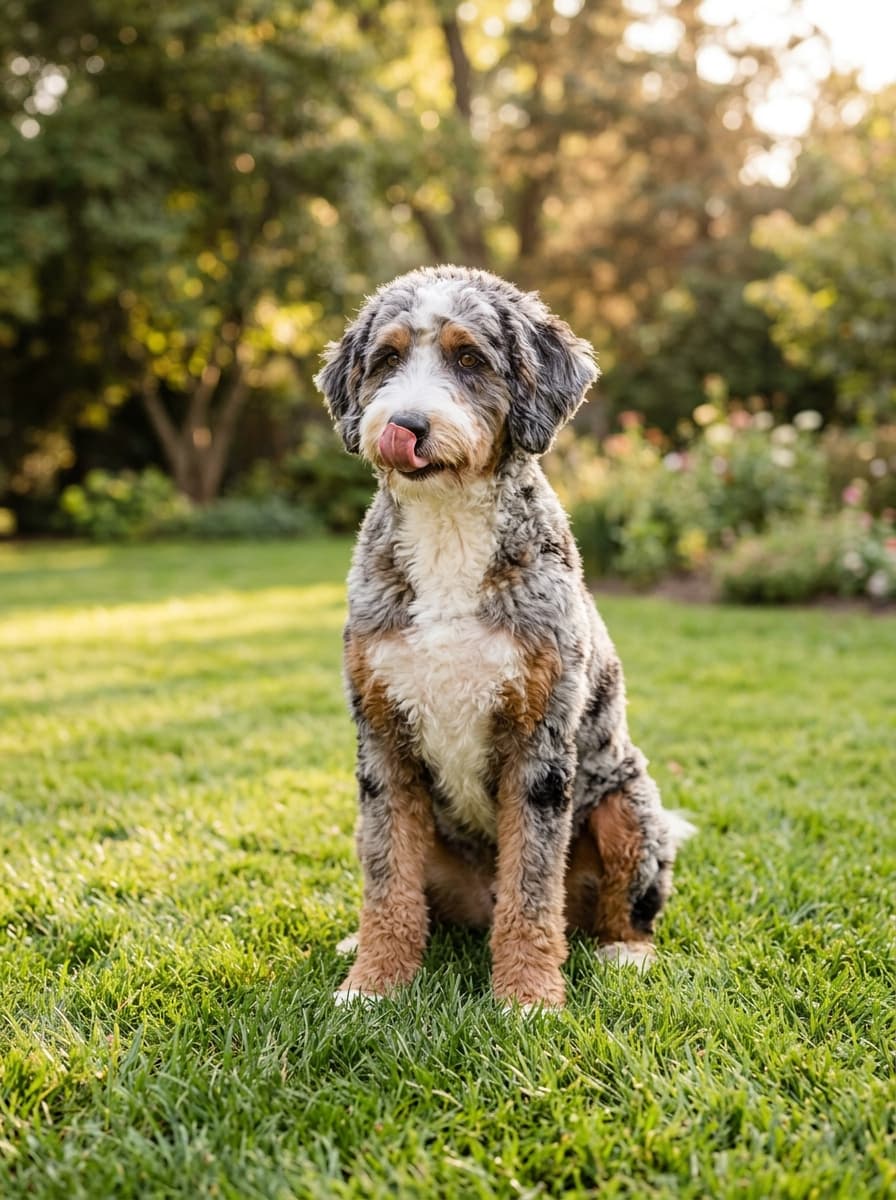
| Symptom | What it usually means | First move |
|---|---|---|
| Soft stool or diarrhea | Food transition or sensitivity | Check recent food/treat changes |
| Gas and bloating | A protein or fiber source that isn't digesting well | Watch for true bloat, a hard, distended belly |
| Morning vomiting (yellow bile) | Empty stomach after a long overnight gap | Try a small bedtime snack |
| Gurgling plus picky eating | Stomach discomfort | Ease off food for a meal and watch closely |
Soft stool or diarrhea
Usually the first sign something's off. A single soft stool from a dog who's otherwise bouncing around is rarely an emergency. Persistent or watery diarrhea, especially with a recent food change, points to a transition problem or a sensitivity. We cover the full breakdown in Bernedoodle diarrhea causes, and if it started right after a diet switch, diarrhea after switching food is the one to read.
Gas and bloating
Occasional gas is normal. Frequent, foul gas often signals a food your Bernedoodle isn't digesting well, commonly a protein or a fiber source that doesn't agree with them. True bloating (a hard, distended belly) is completely different and is a red flag we cover below.
Vomiting
The timing tells you a lot. Yellow foam or bile first thing in the morning usually means an empty stomach that's sat too long overnight, often fixed with a bedtime snack. We explain that in bile vomiting syndrome in doodles. Vomiting food repeatedly, or vomiting paired with lethargy, is more concerning.
Gurgling and picky eating
Loud gut gurgling (borborygmi) plus a Bernedoodle who suddenly turns their nose up at dinner often means their stomach is uncomfortable. In our house, when Sven goes quiet at his bowl, it's almost always his gut telling us to ease off for a meal rather than push food.
Where diarrhea fits in the picture
Diarrhea is the most-searched Bernedoodle stomach symptom, and it has its own set of causes, clues and first moves, we keep the full cause-by-cause breakdown in Bernedoodle diarrhea causes rather than duplicating it here.
What is worth saying in this wider article is which causes actually dominate in Bernedoodles specifically. In our experience and in what owners write to us, it is transition speed and intolerance, both fixable at home. Parasites and true food allergy are the two that cannot be guessed away, and both need a vet rather than another bag of food.
Food Allergy vs Food Intolerance in Bernedoodles
These get muddled constantly, and the distinction changes what you do about it.
- A food intolerance is a purely digestive reaction, gas, loose stool, gurgling, with no immune system involved. It shows up in the gut and usually only in the gut.
- A food allergy is an immune response. It often causes itchy skin, paw licking, recurrent ear issues, and a red belly alongside (or instead of) stomach upset.
Because Bernedoodles can inherit the Poodle line's predisposition to food sensitivities, both are worth watching for, though whether a given dog reacts at all comes down to the individual. If your dog's tummy trouble comes with itch, read food allergy vs food intolerance in doodles and our full food allergies owner's guide. The usual suspects are chicken, beef, and dairy, see common ingredient triggers for the full list.
The only reliable way to confirm a food trigger is an elimination diet, done properly over several weeks. The American College of Veterinary Dermatology makes the same point that a strict elimination diet trial is the standard for diagnosing adverse food reactions. Our step-by-step elimination plan walks through it. If you already suspect the classic culprit, chicken allergy in doodles has alternatives.
Stress: The Cause People Miss
Bernedoodles are sensitive, people-bonded dogs, and their guts feel it. A boarding stay, houseguests, a new baby, a move, even you being away more than usual, any of it can trigger loose stool or off eating. This is a real physiological gut-brain link, not the dog "being dramatic."
When one of ours has a rocky week, say a big schedule change, we don't panic about the food. We keep meals boringly consistent, add a probiotic, and let things settle. Nine times out of ten it does. There's more on this pattern in stress and digestive problems in doodles.
Red Flags: When a Bernedoodle Stomach Problem Needs the Vet
Most upset stomachs settle at home. These do not, and waiting can be dangerous:
Bloat deserves a special mention because larger Bernedoodles can inherit the deep-chested build of the Bernese Mountain Dog side, and a large, deep-chested build carries a genuine GDV risk. It's rare but fast-moving. If the belly is distended and hard and your dog is trying to vomit without producing anything, treat it as an emergency and go.
For vomiting specifically, our guide on when to take your doodle to the vet for vomiting gives a clear decision framework, and how long doodle diarrhea should last sets realistic timelines.
At-Home Management: A Bernedoodle Troubleshooting Framework
When it's mild and your dog is otherwise bright, here's the order we actually work through, not a random pile of remedies.
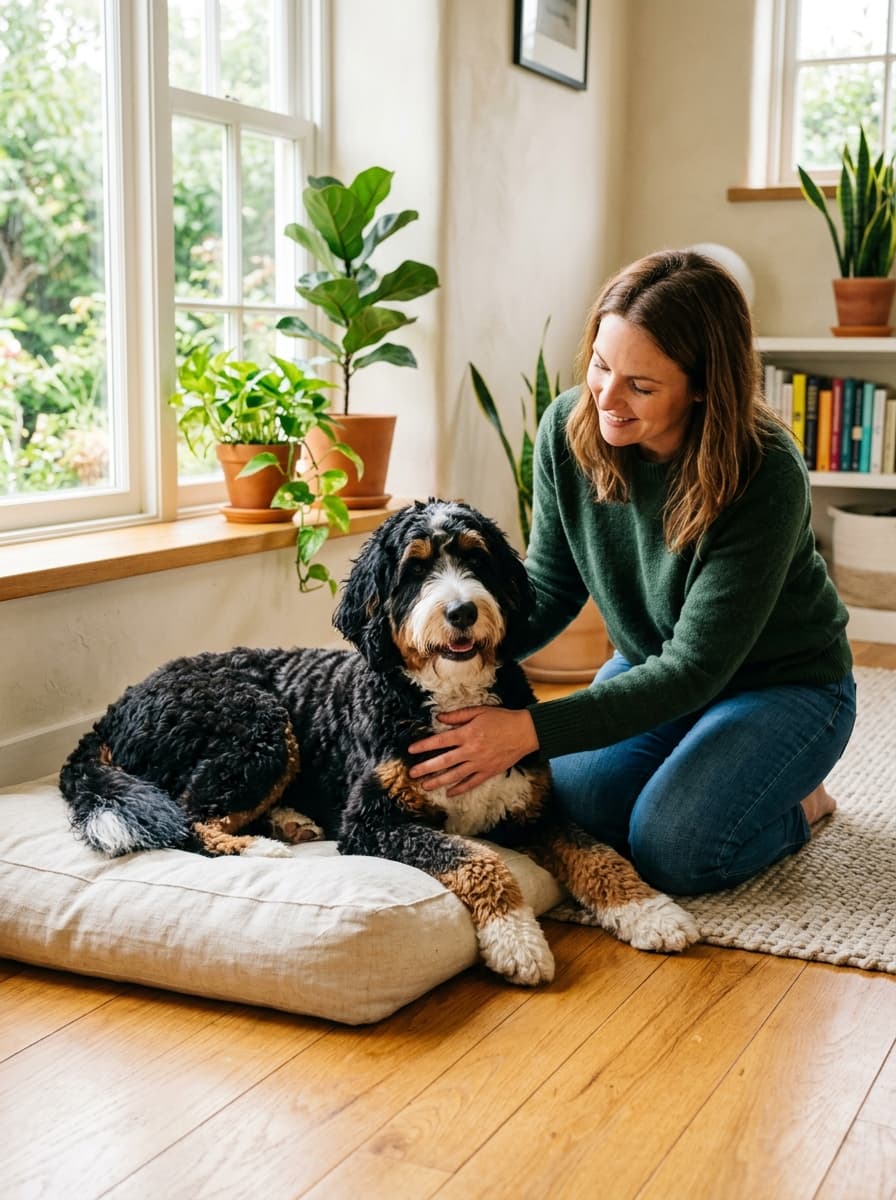
Step 1: Rest the gut, briefly
For an adult Bernedoodle with a mild upset (never young puppies without vet guidance), a short bland approach lets the gut calm down. Small, frequent portions of something plain and easily digested, with free access to water. A spoon of plain pumpkin can firm up stool, here's how pumpkin helps.
Step 2: Soothe the lining
Slippery elm is a gentle demulcent that coats and soothes the digestive tract, and it's a staple in a lot of sensitive-doodle households. We break down dosing and timing in slippery elm for doodle digestive issues.
Step 3: Rebuild the gut flora
A quality canine probiotic helps restore balance after a bout of diarrhea or a stressful stretch. This is the single supplement we'd never skip for a sensitive Bernedoodle. See our best probiotics for doodle digestive issues and the broader probiotics complete guide. If food isn't being broken down well, digestive enzymes can help too.
Step 4: Reintroduce food slowly
This is where most Bernedoodle stomach problems are actually solved. Transition food over 7 days minimum, slower if your dog is sensitive. Our 7-day food transition plan is built for exactly this breed cross.
When we brought Gunnar onto a new protein, we stretched it over closer to two weeks, a small percentage of new food swapped in every few days. Slow felt frustrating at the time, but zero loose stool was worth it. Rushing a sensitive Bernedoodle's transition is the fastest way to land right back where you started.
Step 5: Get the base diet right
If upsets keep recurring, the long-term fix is a diet your Bernedoodle actually tolerates. Many do best on a limited-ingredient or novel-protein food that removes the usual triggers. Start with best food for a doodle with a sensitive stomach, our limited-ingredient explainer, and if allergies are in play, best food for a Bernedoodle with allergies.
Puppies Are a Special Case
Bernedoodle puppies have immature guts, grow fast, and are far more vulnerable to dehydration from diarrhea. They're also the group most likely to have parasites. Don't fast a puppy or wait out repeated diarrhea, loop in your vet sooner. Feeding and digestion through the growth stage is covered in growth and digestion in doodle puppies, and the move to adult food (a classic trigger point) in transitioning a doodle puppy to adult food.
FAQ
Some are and some aren't. Bernedoodles can inherit the Poodle line's documented predisposition to food sensitivities, but sensitivity varies between individual dogs at least as much as between crosses. Not every Bernedoodle struggles, but the ones that do usually settle best on a consistent, limited-ingredient diet with slow food transitions.
A short bland diet, a canine-specific probiotic, a spoon of plain pumpkin, and free access to water help most mild cases. Slippery elm can soothe the gut lining. Always keep portions small and reintroduce their normal food gradually, and skip home remedies entirely if symptoms are severe or your dog seems unwell.
Both are possible. A true food allergy is an immune reaction that often shows up as itchy skin, paw licking, and ear issues alongside gut upset, while an intolerance is a digestive-only reaction with no immune component. Beef and dairy are common triggers; an elimination diet is the reliable way to identify the culprit.
Mild upset should improve within 24-48 hours. If vomiting is repeated and won't stop, diarrhea lasts beyond two days, you see blood, or your Bernedoodle is lethargic, refusing water, or has a hard swollen belly, contact your vet promptly rather than waiting it out.
The Bottom Line
Most Bernedoodle stomach problems aren't a mystery once you know the breed cross you're working with: a Poodle-inherited predisposition to food sensitivities that some dogs get and some don't, a personality that feels stress in the belly, and, in the larger dogs, a deep-chested build that makes bloat a genuine risk to watch for. Slow your food changes, keep the diet consistent, support the gut with a good probiotic, and learn the handful of red flags that mean "vet, now."
If diarrhea is your specific battle right now, go straight to Bernedoodle diarrhea causes next, or start building the everyday routine that prevents flare-ups with our gut health routine for sensitive doodles. You can also see how we feed our own three over on our feeding philosophy.