If your Bernedoodle has diarrhea, the most likely causes are dietary indiscretion (eating something off-limits), a food change made too quickly, food sensitivities common in poodle-line dogs, stress, or parasites, and mild cases usually settle within 24 to 48 hours with a bland diet and plenty of water. Call your vet if you see blood, black tarry stool, repeated vomiting, lethargy, or diarrhea lasting more than two days, and sooner for puppies, seniors, and small Mini Bernedoodles, who dehydrate faster.
Diarrhea is one of the most common reasons Bernedoodle owners email us in a panic, and I get it, cleaning up a runny mess at 2 a.m. is nobody's idea of fun. The good news is that the vast majority of loose-stool episodes are minor and manageable at home. The trick is knowing which ones aren't.
Below is exactly how we think about it in our house of three doodles, plus a clear action plan for firming things up.
Why does my Bernedoodle have diarrhea?
Bernedoodles are a cross of the Bernese Mountain Dog and the Poodle, and one of those parent lines has a documented bearing on digestion. The Poodle side carries a real, well-known predisposition to food sensitivities (and to allergic skin disease), some dogs inherit it and some don't. The Bernese side contributes size: a large, deep-chested build, which matters more for bloat/GDV risk than for loose stool. It's worth remembering that sensitivity varies between individual dogs at least as much as it varies between crosses, so your own Bernedoodle may have a rock-steady gut or a touchy one regardless of the label.
That doesn't mean something is wrong with your dog. It means that if your Bernedoodle did inherit the poodle-line sensitivity, the bar for "upset" can be lower than it is for a hardier dog. Here are the causes we see most often.
Dietary indiscretion
This is the number one cause of sudden Bernedoodle loose stool. Dietary indiscretion is the polite term for "my dog ate something they shouldn't have", trash, a dropped piece of pizza, deer poop on a walk, too many training treats, or a rich table scrap. The gut reacts by flushing the offender out. It's usually a one-and-done episode that clears within a day or two.
A food change made too fast
Switching foods overnight is a classic trigger for Bernedoodle diarrhea after eating a new diet. Their gut bacteria need time to adjust to new proteins and fiber levels, and rushing it almost guarantees a loose stool. If your dog's diarrhea started right after a bag of new kibble or a fresh protein, that timing is your answer, walk it back and slow down. We have a full walkthrough on doodle diarrhea after switching food and a gentle 7-day food transition plan that our sensitive doodles do best on.
Food sensitivities and intolerances
Some Bernedoodles react to specific ingredients, chicken, beef, dairy, or certain grains are common culprits in doodles. This shows up as recurring soft stool rather than a single dramatic episode, sometimes with gas, gurgling, or itchy skin. A true food allergy and a food intolerance aren't the same thing; we break down the difference in food allergy vs food intolerance in doodles. If you suspect an ingredient, an elimination diet is the honest way to find it. If you're wondering whether this is just a broader breed trait, Do Doodles Have Sensitive Stomachs? Causes & What Helps covers why so many Goldendoodles and Labradoodles deal with the same gut sensitivity and what settles it long term.
Stress
Bernedoodles are famously velcro dogs, and for a stress-prone dog that sensitivity can extend to the gut. Boarding, travel, a new baby, houseguests, thunderstorms, or even a schedule change can trigger stress colitis, often frothy, mucousy stool that may have a streak of fresh blood at the very end. It looks alarming but usually settles once the stressor passes. We go deeper in stress and digestive problems in doodles.
Parasites and infections
Puppies especially can pick up giardia, roundworms, or coccidia, all of which cause persistent or recurring diarrhea. Bacterial and viral infections are less common but more serious. These need a vet, you can't treat what you can't identify, and a fecal test is quick and inexpensive. The Merck Veterinary Manual covers these intestinal parasites and their treatment in detail.
Mild upset vs. emergency: how to tell the difference
This is the part that actually matters. Most Bernedoodle upset stomach episodes are mild, but a few are not. Here's how we sort them.
| Situation | Likely mild, manage at home | Call the vet |
|---|---|---|
| Energy | Bright, playful, normal | Lethargic, weak, hiding |
| Appetite | Still wants food | Refusing food or water |
| Frequency | A few loose stools | Constant, can't hold it |
| Blood | None, or one small end-streak | Fresh blood throughout or black, tarry stool |
| Vomiting | None or once | Repeated vomiting |
| Belly | Soft, comfortable | Hard, painful, bloated |
| Duration | Improving within 24-48 hrs | Longer than 48 hrs or worsening |
| Age | Healthy adult | Puppy, senior, or tiny Mini |
If your dog is passing soft stool but bouncing around like nothing's wrong, that's usually the reassuring category, we cover exactly that scenario in doodle soft stool but acting normal. For a full recovery timeline, see how long does doodle diarrhea last.
How to stop Bernedoodle diarrhea at home
For a healthy adult who's acting normal, here's the plan we follow. (Puppies, seniors, and tiny dogs, call your vet first and skip any fasting.)
1. A short rest for the gut (adults only)
For a healthy adult dog, a 6 to 12 hour fast with free access to water can let an irritated gut calm down. Never fast a puppy, senior, or very small Bernedoodle, they can crash their blood sugar. When in doubt, skip the fast and go straight to bland meals.
2. Keep water available
Diarrhea drains fluids fast, and dehydration is the real risk with any GI upset. Always leave fresh water out. A good test: gently lift the skin between the shoulder blades, if it snaps back quickly, hydration is decent; if it stays tented, that's a vet call.
3. Feed a bland diet
Once you reintroduce food, keep it simple and gentle:
- Plain boiled chicken breast (no skin, no oil, no seasoning) or lean ground turkey
- White rice, plain and well-cooked
- Or plain canned pumpkin (not pie filling) stirred in for soluble fiber
Feed small, frequent meals rather than one big bowl. Pumpkin is a genuine workhorse for firming stool, we lean on it constantly and explain why in can pumpkin help a doodle's stomach.
4. Add a probiotic
A dog-specific probiotic helps repopulate good gut bacteria after diarrhea has flushed things out. This is especially useful after stress colitis or antibiotics. Our picks are in best probiotics for doodle digestive issues, and some owners find slippery elm soothing for a raw, irritated gut.
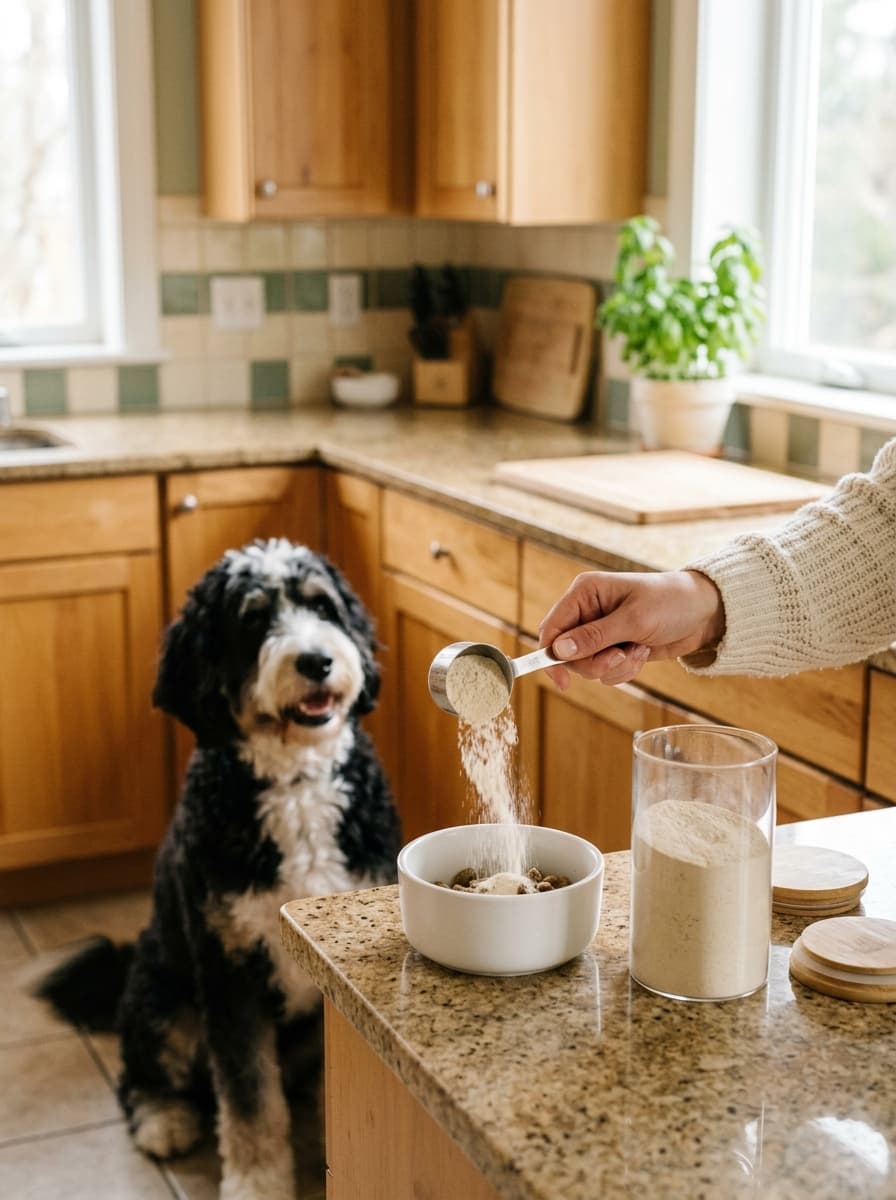
5. Transition back slowly
Once stool is firm for a full day, gradually mix the normal food back in over 3 to 4 days. Jumping straight back to full rations is the most common reason diarrhea returns.
When Gösta got into something on a woodland walk last fall, this exact sequence, a short rest, small chicken-and-rice meals, a scoop of pumpkin, and his probiotic, had him back to solid stool inside two days. No drama, no vet, just patience.
Preventing the next episode
The best cure for Bernedoodle diarrhea is not triggering it in the first place. A few things make the biggest difference in our house.
Consistency beats variety
Dogs' guts thrive on routine. We feed the same food, at the same times, in the same amounts every day. Constant menu-switching is one of the fastest ways to keep a sensitive Bernedoodle's stool loose. Pick a food that agrees with your dog and stick with it.
Watch the treats and the scraps
Rich table food, fatty scraps, and too many new treats overwhelm a sensitive gut. Keep treats simple and count them as part of the daily food. We also stay on top of trash and counter access, a huge share of "mystery" diarrhea is just something they grabbed.
Right food for a sensitive breed
Because Poodle-line dogs are prone to sensitivities, a limited-ingredient or sensitive-stomach formula often keeps things steady for a dog that reacts to its food. See best food for a doodle with a sensitive stomach and, if allergies are in play, best food for a Bernedoodle with allergies.
Don't overfeed
A too-full bowl passes through faster and looser, and Bernedoodles are big enough that portions add up quickly. More on that in overfeeding and stomach issues in doodles.
Build a gut-health routine
For dogs who get loose stool often, a steady routine of probiotics, enzymes, and consistent feeding pays off. We map it out in gut health routine for sensitive doodles. If diarrhea keeps coming back, it's worth reading Bernedoodle stomach problems explained to look at the bigger picture.
When diet isn't the whole story
If your Bernedoodle has diarrhea plus itchy skin, licking paws, or recurring ear gunk, you may be dealing with a food sensitivity rather than a passing upset. Digestive and skin symptoms often travel together in doodles, doodle licking paws after eating explains that connection. And if your dog is also vomiting, our guide on when to take your doodle to the vet for vomiting will help you judge how urgent it is.
FAQ
The most common reasons are dietary indiscretion (eating something they shouldn't have), a sudden food change, food sensitivities that are common in poodle-line dogs, stress, or intestinal parasites. The Poodle side carries a documented predisposition to food sensitivities, so some Bernedoodles inherit a gut that reacts to small changes while others don't. If your dog is otherwise bright and eating, a mild dietary cause is most likely.
For an adult dog acting normal, feed a bland diet of plain boiled chicken breast and white rice (or plain pumpkin) in small, frequent meals, make sure fresh water is always available, and consider a dog-specific probiotic. Most mild cases firm up within 24 to 48 hours. Reintroduce their normal food gradually over a few days once stool is solid.
Simple diarrhea usually improves within 24 to 48 hours. If it lasts longer than 48 hours, keeps returning, or is paired with blood, black tarry stool, repeated vomiting, lethargy, or a painful belly, call your vet. Puppies, seniors, and small Mini Bernedoodles dehydrate faster, so don't wait as long with them.
For a healthy adult, a short 6 to 12 hour fast with free access to water can give the gut a rest, then reintroduce a bland diet. Never fast puppies, seniors, or very small dogs, they can drop their blood sugar dangerously. When in doubt, skip the fast and go straight to small bland meals, and call your vet.
Yes. Bernedoodles are sensitive, people-oriented dogs, and stress from boarding, travel, new pets, thunderstorms, or a change in routine can trigger loose stool. This 'stress colitis' usually resolves once the stressor passes and often responds well to a bland diet and probiotics. Persistent stress diarrhea is worth a vet conversation.
The bottom line
Most Bernedoodle diarrhea is minor and clears within a day or two with rest, a bland diet, water, and a little patience, but if your dog inherited the poodle line's sensitivity, prevention through consistent feeding is your best long-term tool. Trust your instincts: a bright, hungry dog with loose stool can usually be managed at home, while blood, repeated vomiting, lethargy, or a painful belly means it's time to call the vet.
If loose stool is a recurring theme rather than a one-off, start with our doodle sensitive stomach guide to build a steadier long-term plan.