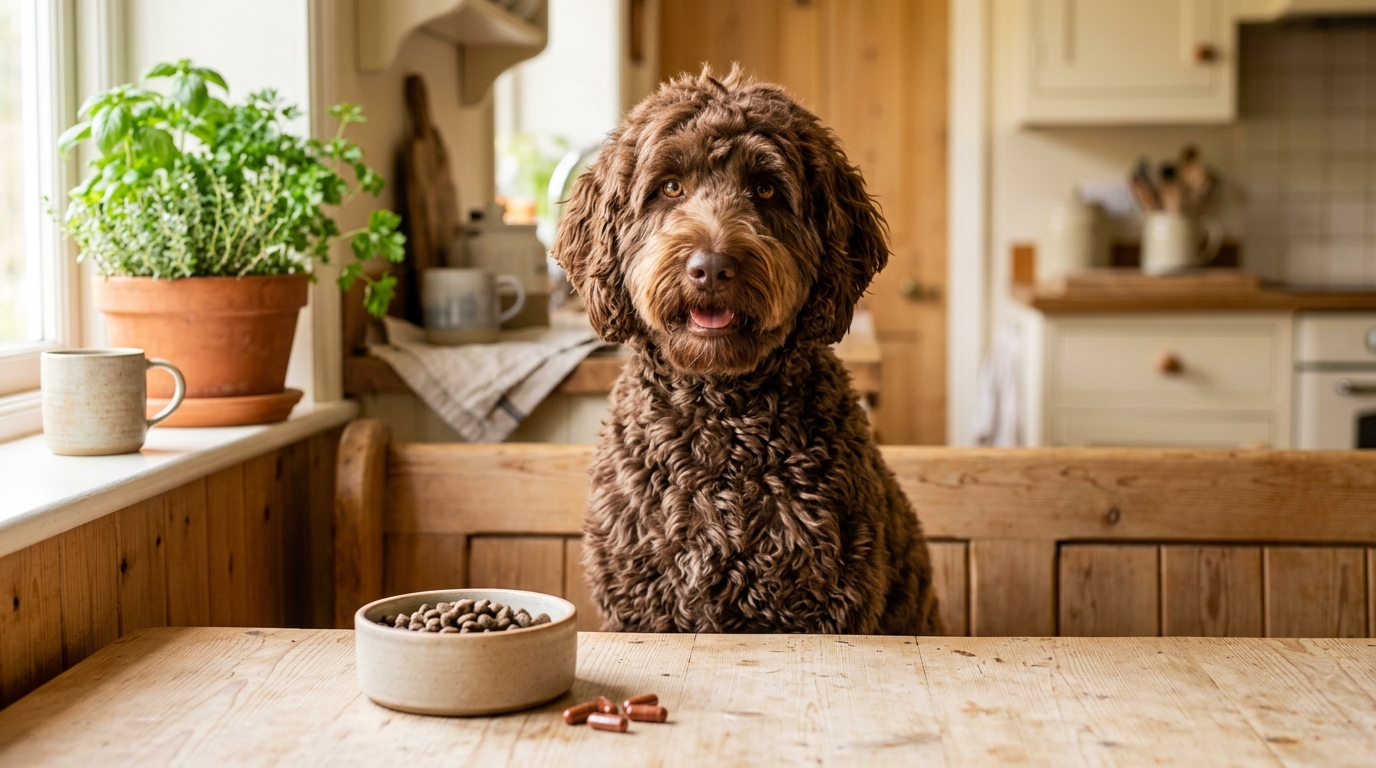
The best senior dog food for a sensitive stomach pairs a single, highly digestible protein (fish or turkey are both good choices, and we skip chicken for allergy-prone doodles) with moderate fat, added prebiotic fiber and senior-appropriate calories. Match the food to the symptom you actually see: soft stool needs more fiber, a picky older dog often eats better with a softer wet format, and a dog with confirmed allergies may need a limited-ingredient or hydrolyzed diet chosen with your vet.
If your doodle sailed through their younger years and has suddenly started leaving food, having soft stool, or bringing up a little yellow foam now that they are seven or older, you are in the right place. Aging genuinely changes a dog's gut, and the food that worked at three may not sit well at nine.
Below we walk through what shifts in a senior doodle's digestion, the exact features worth looking for on a bag, and three concrete picks with honest pros and cons so you can match one to your own dog. This is written from a household that feeds raw at home and has lived with doodle stomachs for years, so we will be clear about what a food can and cannot fix.
What Changes in a Senior Doodle's Gut
Dogs are generally considered "senior" from around age seven, a little earlier for the biggest standard doodles and a bit later for a mini. Several things tend to shift at once:
- Fewer digestive enzymes and slower gut motility, so food that used to pass fine now sits heavier.
- A less resilient microbiome, meaning the gut bounces back more slowly from any upset.
- Lower calorie needs, because most older dogs slow down, so the same portion can mean weight gain and a sluggish gut.
- A pickier appetite, often tied to dental discomfort or a weaker sense of smell.
On top of all that, doodles from the poodle line carry a real predisposition to allergic skin disease and food sensitivities. The Merck Veterinary Manual describes cutaneous adverse food reactions as a recognised problem in dogs, and poodles appear on breed lists for it. That is a predisposition, not a guarantee: some dogs inherit it and some do not. But it means a senior Goldendoodle or Australian Labradoodle with new stomach trouble deserves a thoughtful food choice rather than whatever is cheapest on the shelf.
What to Look For in Senior Sensitive-Stomach Food
Once your vet has ruled out a medical cause, the food itself is where you get real control. Here is what we weigh up, and what actually matters for a doodle.
A single, highly digestible protein
Highly digestible means the dog absorbs more of what they eat and leaves less in the bowel, which usually firms up the stool. Fish (salmon, whitefish) and turkey are both gentle, digestible choices. We steer doodle owners away from chicken: it is one of the most common triggers in this line, and it was our own Gunnar's trigger during his rough early years. Worth knowing is that many "salmon" recipes sneak in chicken fat, so read the whole ingredient list, not just the headline protein. If you suspect a true food allergy, read our food allergies in doodles guide before choosing.
Moderate fat and senior-appropriate calories
High fat is harder to digest and can trigger that queasy, gurgly morning. A moderate-fat senior formula is easier on the gut and helps prevent the weight creep that comes with a slower older dog. If your dog is leaving food or losing weight, that is a different problem, covered in low appetite in doodles.
Added fiber, prebiotics and probiotics
Fiber (including beet pulp and added prebiotics like inulin) feeds the good gut bacteria and regulates stool. Some senior formulas add live probiotics too. We get into the difference in our prebiotics vs probiotics for doodles guide, and a general gut health routine often matters as much as the brand on the bag.
Joint and skin support as a bonus
Senior doodles often need joint help anyway, and the poodle line's skin sensitivity means omega-3s (from fish oil) do double duty for coat and gut inflammation. A food that includes these is a nice efficiency, though you can always add them separately.
If you already know you need a sensitive-stomach food and just want the shortlist, jump to our best dog food for a doodle with a sensitive stomach picks, or keep reading for the senior-specific comparison below.
Top Picks
We chose these three for the senior sensitive-stomach reader specifically: each is a widely available, digestible or limited-ingredient formula, and each suits a slightly different dog. None of these are foods we feed our own three (we feed raw at home with premium kibble and freeze-dried raw for travel), so we present them honestly as researched picks. We read the full ingredient panel of every candidate, and all three picks are chicken-free on their current labels, including the fat and broth. Two well-known senior and sensitive-stomach formulas from Hill's did not make the cut for exactly that reason: both list chicken, chicken meal or chicken fat, even the salmon version.
| Product | Best For | Rating |
|---|---|---|
| Wellness Complete Health Sensitive Skin & Stomach Salmon & Rice | Best chicken-free everyday dry food | 4.5 |
| Purina Pro Plan Sensitive Skin & Stomach, Senior | Best senior-specific with salmon | 4.7 |
| Blue Buffalo Basics Grain-Free Senior Wet, Turkey | Best limited-ingredient wet food | 4.5 |
One practical note before you buy: start with the smallest bag the brand offers, even if it costs more per pound. A sensitive senior gut can reject a food you were sure would work, and you do not want 30 lb (14 kg) of rejected kibble in the garage. Once a food proves itself over a few weeks, size up. You can compare current options across brands in Amazon's pet food section.
How to Transition Without Setting Off the Stomach
The food is only half the job. How you switch matters just as much, and with an older or already-sensitive gut, you go slower than the bag suggests.
Our own Sven is the most sensitive stomach of our three. For his whole first year he brought up bile every morning, and loose stool followed every single food change. Going raw ended the morning bile, but the lesson about transitions stuck: rush an older sensitive dog and you pay for it in the yard for a week.
| Day | New food | Old food | What to watch for |
|---|---|---|---|
| Day 1 | 25% | 75% | Normal digestion, appetite, energy |
| Day 2 | 25% | 75% | Stool consistency, any vomiting |
| Day 3 | 50% | 50% | Halfway point — watch for soft stools |
| Day 4 | 50% | 50% | If soft stools, stay here an extra day |
| Day 5 | 75% | 25% | Any change in digestion, energy |
| Day 6 | 75% | 25% | Digestion should be stable |
| Day 7 | 100% | 0% | Complete transition — allow 2–4 weeks for full benefits |
Day 1
New food
Old food
What to watch for
Normal digestion, appetite, energy
Day 2
New food
Old food
What to watch for
Stool consistency, any vomiting
Day 3
New food
Old food
What to watch for
Halfway point — watch for soft stools
Day 4
New food
Old food
What to watch for
If soft stools, stay here an extra day
Day 5
New food
Old food
What to watch for
Any change in digestion, energy
Day 6
New food
Old food
What to watch for
Digestion should be stable
Day 7
New food
Old food
What to watch for
Complete transition — allow 2–4 weeks for full benefits
If the stool softens at any stage, hold at that ratio an extra few days rather than pushing on. A spoon of plain pumpkin or a probiotic can smooth the change, something we cover in can pumpkin help a doodle's upset stomach. For the full step-by-step, our 7-day food transition plan was written for exactly this kind of dog.
What a New Food Will and Will Not Fix
A gentler, more digestible food genuinely helps a sensitive senior gut, and matching the type to the symptom (fiber for soft stool, wet for appetite, limited-ingredient for suspected allergy) is the real skill here. But be honest with yourself about the limits.
A food change will not fix a true, confirmed food allergy on its own: that needs an elimination diet or a hydrolyzed food chosen with your vet, which we explain in hydrolyzed dog food for doodles. It will not resolve stomach trouble that has an underlying medical cause, which is why the vet visit comes first in an older dog. And it will not undo overfeeding: portion size matters enormously, something many owners miss, and we dig into it in overfeeding and stomach issues in doodles.
One last doodle-specific point. In an older dog especially, skin and gut trouble often travel together. If your senior is both itchy and off their food, the two may share a root, and our piece on whether diet can fix doodle skin problems is a good next read.
FAQ
The best choice is a food with a single highly digestible protein, moderate fat, added prebiotic fiber and senior-appropriate calories. For doodles we lean toward fish or turkey over chicken, because chicken is one of the most common triggers in the poodle line. Match the exact formula to your dog's main symptom: soft stool responds to fiber, a fussy senior often does better on a softer wet food, and any dog with confirmed allergies may need a limited-ingredient or hydrolyzed diet discussed with your vet.
Older dogs often produce fewer digestive enzymes, have slower gut motility and a less resilient gut microbiome, and many become less active so they need fewer calories. On top of that, doodles from the poodle line can carry a predisposition to food sensitivities that shows up more clearly with age. The result is softer stool, occasional vomiting or a smaller appetite. A gentler, more digestible food and smaller, regular meals usually help, but new or sudden symptoms always warrant a vet check first.
Wet food can be a good option for an older doodle who has lost appetite, has dental discomfort or struggles with dry kibble, because it is softer, more aromatic and higher in moisture. A limited-ingredient senior wet food is one route. You do not have to switch completely: many owners mix a little wet food into kibble to boost palatability. Transition slowly over about a week to avoid loose stool.
Not automatically. Grain-free matters only if your dog actually reacts to grains, which is less common than many owners assume, and the FDA has an ongoing investigation into a possible link between some grain-free diets and a heart condition called DCM. If you are considering grain-free, discuss it with your vet first. For most sensitive senior doodles, a highly digestible food with moderate fat and added fiber matters more than whether it contains grain.
Go slowly, especially with an older or sensitive gut. Over 7 to 10 days, gradually increase the new food while decreasing the old: mostly old food for the first few days, a roughly even mix mid-week, then mostly new food by the end. Watch the stool at each stage and slow down if it softens. A spoon of plain pumpkin or a probiotic can smooth the change. Our own sensitive dog, Sven, needed every one of those days.
Your Next Step
Pick the food that matches your dog's main symptom, buy the smallest bag first, and transition over a slow week while you watch the stool. If the sensitivity is more than mild, build a proper routine around the food rather than relying on the bag alone: our gut health routine for sensitive doodles brings the feeding, portions and supplements together in one place, and our senior doodle care guide covers the wider picture of looking after an aging doodle well.