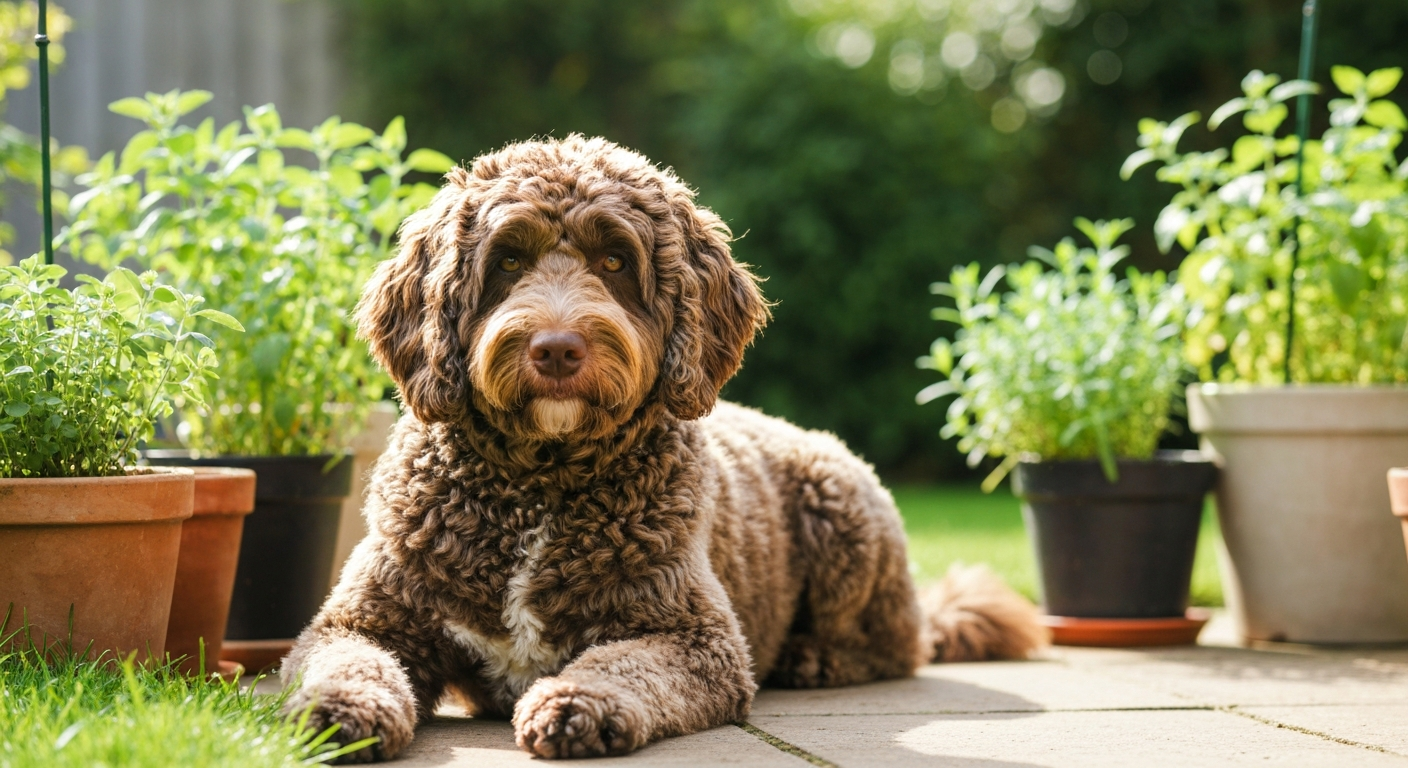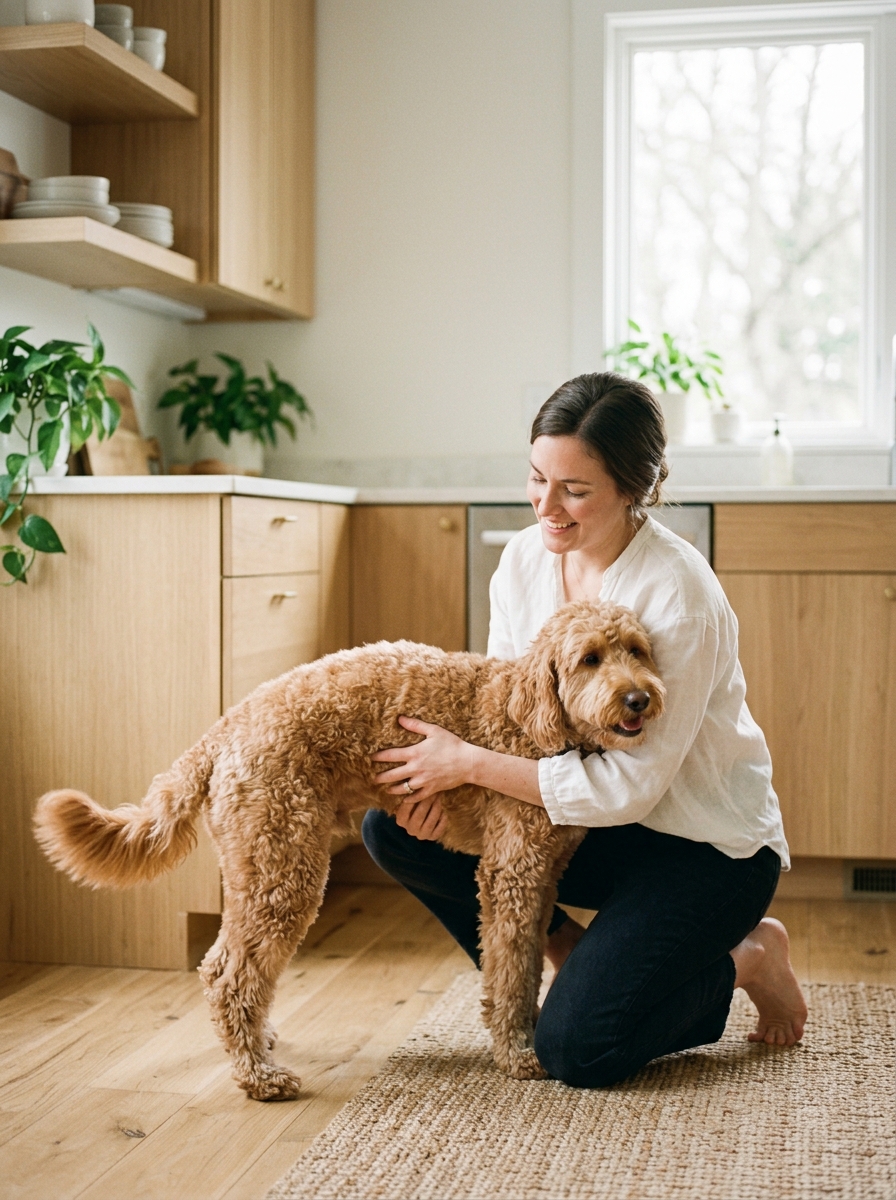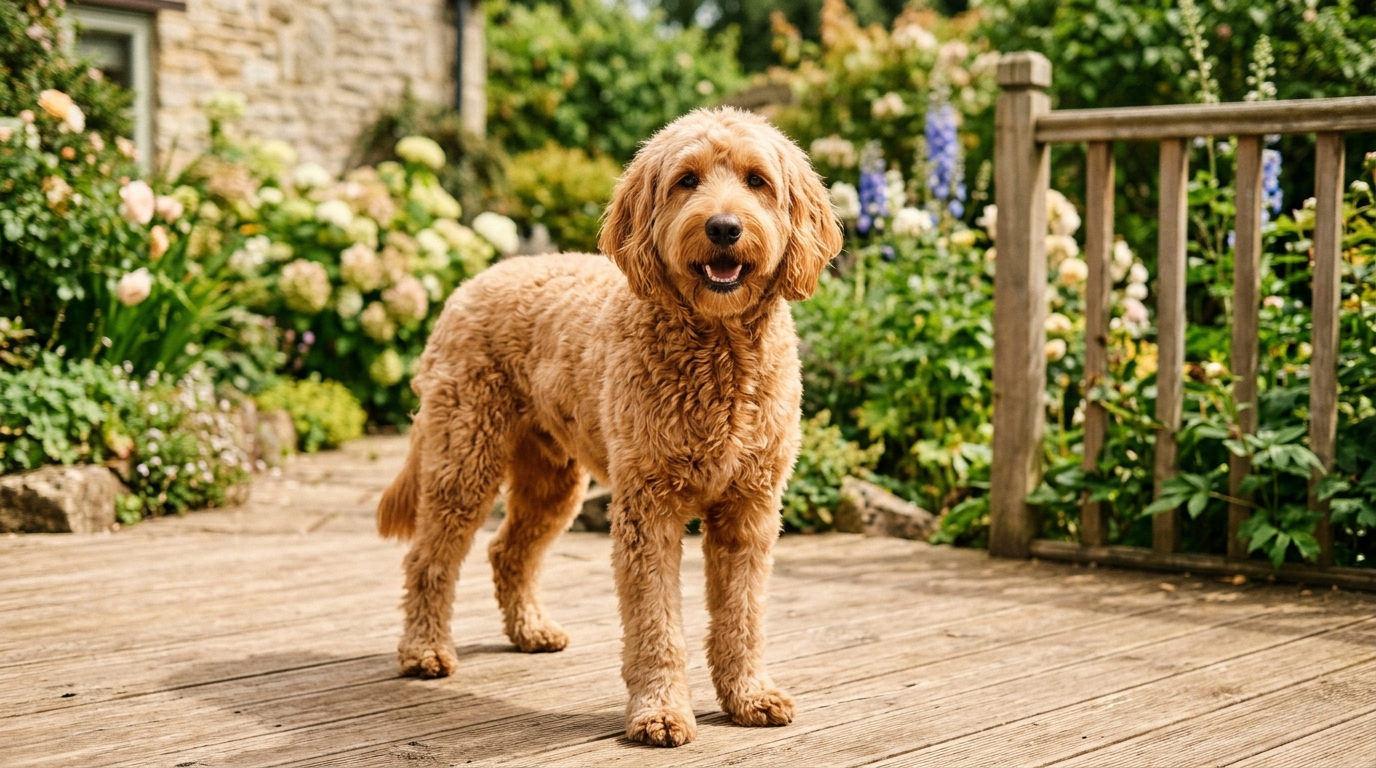
A mini Goldendoodle typically weighs 15-35 lb (7-16 kg), a medium 35-50 lb (16-23 kg), and a standard 50-70 lb (23-32 kg). But here's the honest answer no scale gives you: the number matters less than how your dog carries it. The right way to judge whether a Goldendoodle or Labradoodle is at a healthy weight is a hands-on rib and waist check, not a glance at a fluffy silhouette.
That fluff is the whole problem. A dense fleece or curly coat hides both a slim waist and a soft belly, so plenty of doodles are quietly a few pounds heavy without their owners ever seeing it. And weight sits at the center of joint health, every extra pound loads hips and knees that are already working hard on a big, growing frame.
This guide gives you the size ranges, the 1-9 body condition score explained in plain language, and a safe, unrushed way to slim a doodle down.
If you already know your doodle is heavy and just want the practical shortcut, jump to portions and treats below, and if you want tools to slow the eating and portion sensibly, see our slow feeder bowls and portion tools guide.
How Much Should a Goldendoodle Weigh by Size?
Goldendoodles and Labradoodles come in a few size bands depending on the Poodle parent, so "healthy weight" is a range, not a single figure. These numbers stay consistent with our size chart by breed and our mini vs medium vs standard breakdown, check those if you're still working out which size you have.
| Size | Typical adult weight | Rough shoulder height |
|---|---|---|
| Mini Goldendoodle / Labradoodle | 15-35 lb (7-16 kg) | 13-20 in (33-51 cm) |
| Medium | 35-50 lb (16-23 kg) | 17-20 in (43-51 cm) |
| Standard | 50-70 lb (23-32 kg) | 20-24 in (51-61 cm) |
A few honest caveats:
- Males usually sit at the top of the band, females toward the bottom. A lean standard female at 52 lb (24 kg) and a big-boned standard male at 68 lb (31 kg) can both be textbook healthy.
- Australian Labradoodles and Bernedoodles follow the same size logic, Bernedoodles from a Bernese Mountain Dog cross often run heavier and deeper-chested, which matters for joints, not just weight.
- Generation affects size predictability. An F2 or multigen litter can vary more than an F1b; our generations guide explains why.
So the chart tells you roughly where to expect your dog to land. It does not tell you whether your dog is at a good weight today. For that, you use your hands.
For a vet-written reference on the conditions mentioned here, the Merck Veterinary Manual is a reliable place to check.
Is My Goldendoodle Overweight? The Hands-On Check
You cannot judge a doodle by eye. The coat lies. What you can trust is feel, and it takes about thirty seconds.
1. The rib check
Run both palms firmly along the rib cage, just behind the front legs. Compare it to your own hand:
- Back of your hand (ribs easy to feel under a thin cover) = healthy.
- Palm (you have to press to find ribs) = overweight.
- Knuckles (ribs sharp and obvious with no cover) = too thin.
2. The waist check from above
Stand over your doodle and look down. Behind the rib cage you want to see the body narrow into a waist, then widen again at the hips. No narrowing, a straight-sided sausage, means extra weight.
3. The tuck check from the side
From the side, the belly line should slope up from the bottom of the rib cage toward the back legs. A belly that hangs level or sags is a flag.
Doodle Body Condition Score Explained (1-9)
Vets don't guess "a bit chubby", they use a body condition score (BCS) on a 1-9 scale. It's the single most useful tool for a doodle owner because it's built on feel, so the coat can't fool it.
- 1-3 (too thin): ribs, spine and hip bones easy to see; no fat cover; obvious waist and severe tuck.
- 4-5 (ideal): ribs felt easily with slight fat cover; waist clearly visible from above; belly tucks up from the side.
- 6-7 (overweight): ribs hard to feel under fat; waist barely there or missing; tuck flattening.
- 8-9 (obese): ribs unfeelable; fat pads over the spine, hips and tail base; belly may sag; no waist at all.
Aim for 4-5. For most doodles, a 5 is the sweet spot, enough cover that a lean working line doesn't look bony, without loading the joints.
Why Weight Matters More for Doodles' Joints
Weight and joints are closely linked. Doodles from Standard Poodle and larger crosses carry real orthopedic risk, and body weight is the one factor you fully control. Every extra pound multiplies the load on hips and knees over a lifetime of jumping off couches and pounding down stairs.
If your doodle is already showing stiffness, slowing on walks, or is a senior, keeping weight at a lean 4-5 is the highest-value thing you can do, more than any supplement. Our guide on senior doodle care covers keeping older doodles comfortable. If you're stacking support, see our joint supplement picks too.
How to Slim a Doodle Down Safely
Slow and boring wins. Aim to lose roughly 1-2% of body weight per week, for a 60 lb (27 kg) standard, that's under a pound a week. Crash diets backfire and stress the dog.
Fix the portions first
Most overweight doodles are simply eating too much, often because "a scoop" quietly grew.
- Weigh food by the gram, don't scoop. A kitchen scale is the cheapest weight-loss tool there is.
- Feed for the goal weight, not the current weight once your vet confirms the target.
- Slow the eating and portion sensibly with the right gear, our slow feeder bowls and portion tools guide walks through the options, then adjust every couple of weeks based on the rib check.
Overfeeding doesn't just add weight, it upsets doodle stomachs, as we cover in overfeeding and stomach issues in doodles.
Rein in the treats
Treats should stay under 10% of daily calories. This is where the pounds hide.
- Swap high-calorie biscuits and chews for green beans, carrot sticks, or cucumber.
- Break training treats into tiny pieces, dogs count rewards, not size.
- Count dental chews and table scraps. They add up fast.
Slow the eating and add enrichment
A doodle who inhales a bowl in twenty seconds isn't satisfied. Spreading a meal out helps him feel fed on the same calories.
- A slow feeder bowl or a lick mat stretches a meal into a real activity. See our tested slow feeder guide and lick mat picks.
- A puzzle feeder turns dinner into a job for the day's brain workout, our ranked puzzle feeders sort them by difficulty.
With three doodles, we do a "flat coat" body check on all of them the day after grooming, it takes two minutes and keeps everyone honest, including us at the treat jar.
FAQ
It depends on size. A mini Goldendoodle usually weighs 15-35 lb (7-16 kg), a medium around 35-50 lb (16-23 kg), and a standard 50-70 lb (23-32 kg). These are ranges, not targets, a lean standard female and a stocky standard male can both be perfectly healthy at different numbers, which is why body condition matters more than the scale.
Do the hands-on check. Run your palms firmly over the rib cage: you should feel each rib under a thin layer of fat, like the back of your hand. Look down from above for a waist behind the ribs, and from the side for a belly that tucks up. If you have to press hard to find ribs and there's no waist, your doodle is likely carrying extra weight.
Body condition score (BCS) is a 1-9 scale vets use to rate a dog's fat, where 4-5 is ideal. At 4-5 you can feel ribs easily, see a waist from above and a belly tuck from the side. Below 4 the ribs and spine are too prominent; at 6-9 the waist disappears and fat pads build over the ribs, hips and tail base.
Weigh food by the gram rather than scooping, cut treats to under 10% of daily calories, swap high-calorie chews for veggies like green beans or carrot, and add a daily walk. Aim for slow loss, roughly 1-2% of body weight per week. If your doodle needs to lose a lot or has a health condition, plan the diet with your vet.
Yes, a dense fleece or curly coat easily adds a visual layer that hides both a tuck and a bit of extra fat. This is why you can't judge a doodle by eye alone. Always go by feel, and do your rib and waist check right after a bath or a short groom when the coat is flat, so you're feeling the dog and not the fluff.
Your Next Step
Do one flat-coat rib and waist check this week and note where your doodle lands on the 1-9 scale. If he's a 6 or above, trim the treats and slow the eating with the gear in our slow feeder bowls and portion tools guide. And because keeping a doodle lean pays off most as he ages, read our senior doodle care guide next, a lean body condition is the best comfort insurance you can give an older dog.