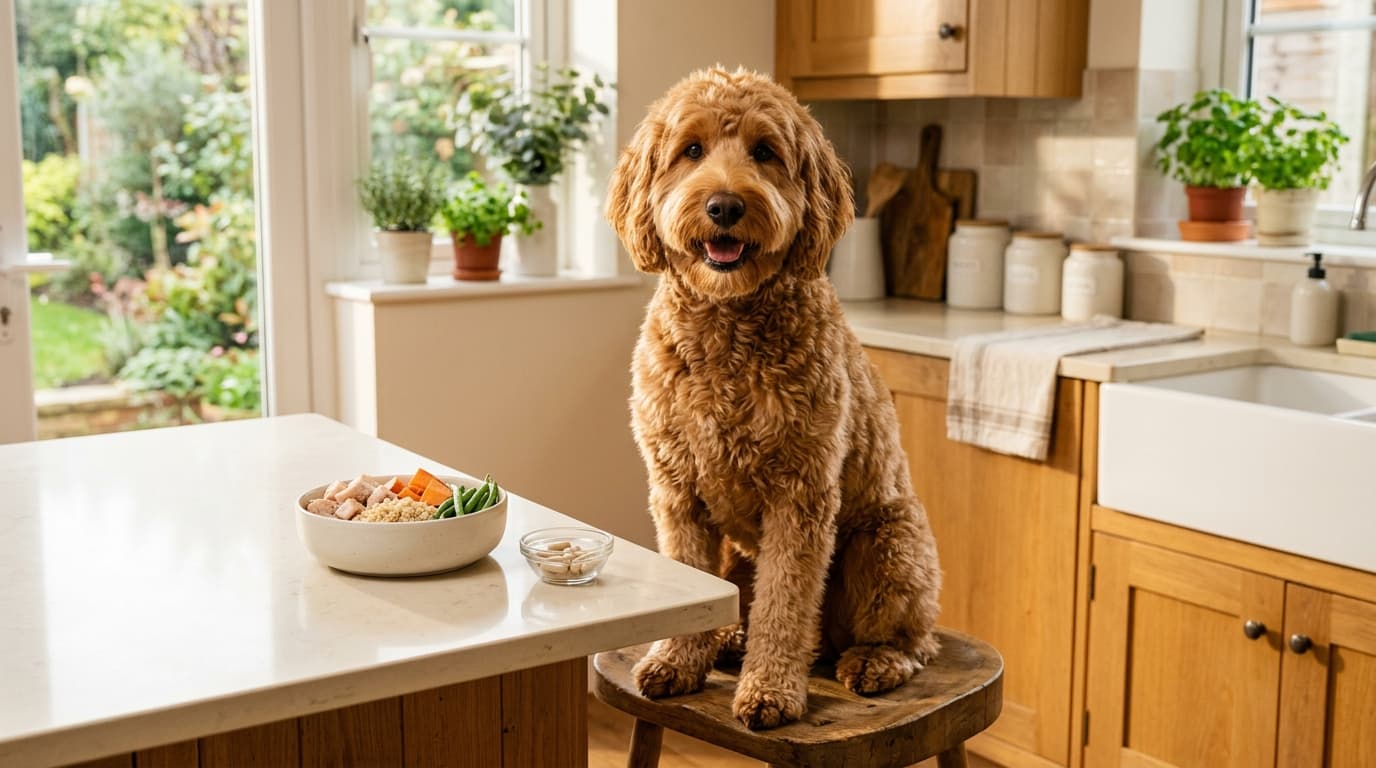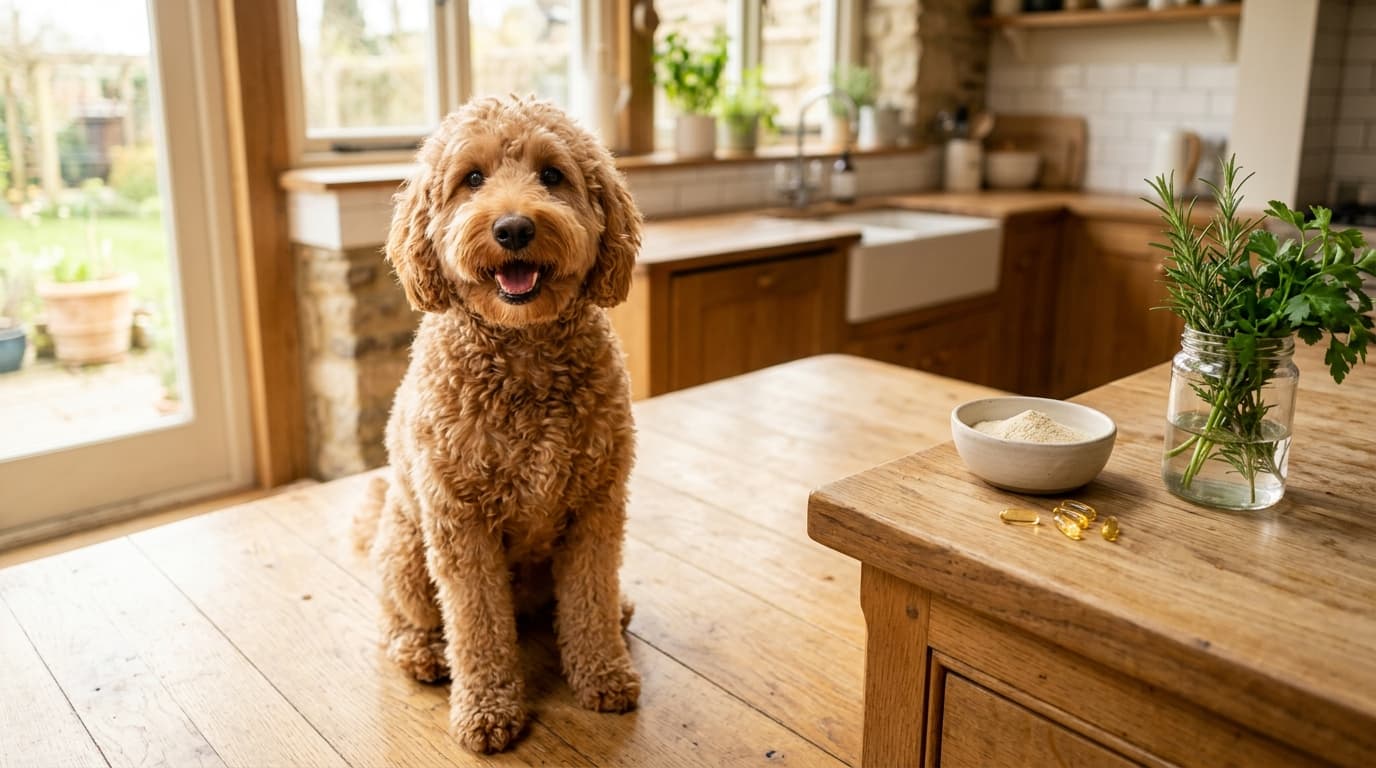
If your doodle has soft stool, gas, or undigested food showing up in the poop, digestive enzymes for dogs can help, but only in the right situation. Digestive enzymes (amylase, protease, and lipase) break down carbohydrates, protein, and fat so nutrients can actually be absorbed. Most healthy doodles make plenty of their own, but a supplement may help dogs with sensitive stomachs or trouble digesting certain foods. Persistent greasy, high-volume stool with weight loss points to true enzyme deficiency (EPI) and needs a vet, not a shelf product.
We feed three doodles raw at home, Sven, Gunnar, and Gösta, and we get asked about enzymes constantly, usually by owners staring at a bowl of shiny supplements wondering if they're missing something. Here's the honest version: enzymes are a real, useful tool for some doodles, and completely unnecessary for others. If you already know digestive support is what your doodle needs and you just want the shortlist, jump straight to our best probiotics for doodle digestive issues picks, otherwise, this guide will help you figure out which group yours is in, how enzymes differ from probiotics, and how to dose safely without oversolving a small problem.
What digestive enzymes actually do
Enzymes are proteins that act like tiny scissors, snipping food into pieces small enough for the gut wall to absorb. Your doodle's pancreas produces these naturally, and there are three main players:
- Amylase, breaks down starches and carbohydrates into simple sugars
- Protease, breaks down proteins into amino acids
- Lipase, breaks down fats into fatty acids
When this system works well, food gets fully broken down, nutrients get absorbed, and what comes out the other end is firm and unremarkable. When it doesn't work well, because of a deficiency, a fast food change, an inflamed gut, or a meal that's hard to digest, you start seeing gas, soft stool, or recognizable food in the poop.
Supplemental digestive enzymes simply add more of these same scissors to the meal. They come from three sources:
- Plant/fungal-based (like from Aspergillus), active across a wide pH range, common in over-the-counter products
- Pancreatic (animal-derived), closest to what the dog makes itself, used for medical deficiency
- Fruit-derived (bromelain from pineapple, papain from papaya), milder, often blended into general "gut" formulas
Do dogs need digestive enzymes?
Here's the part the supplement marketing tends to skip: a healthy dog with a healthy pancreas makes all the enzymes it needs. If your doodle eats well, holds a steady weight, and produces firm stool, adding enzymes usually does nothing measurable.
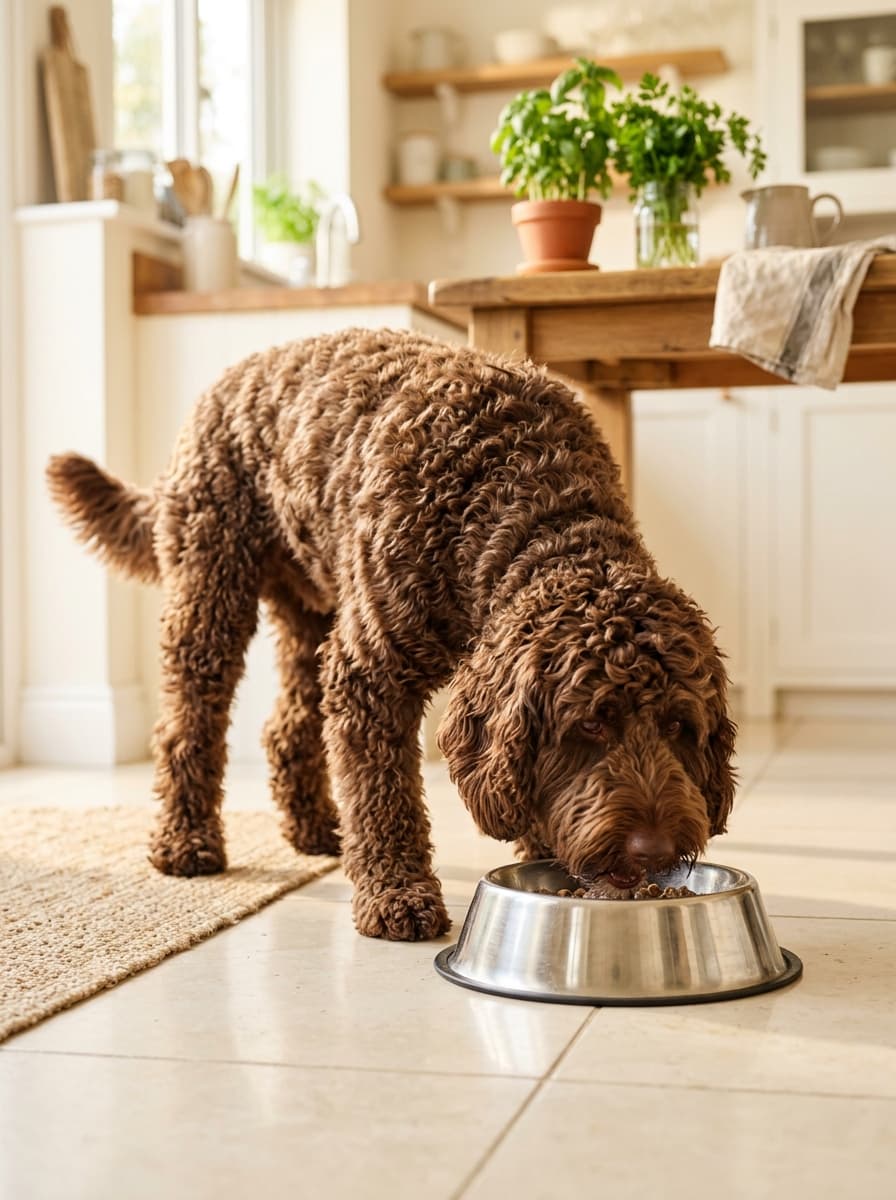
So who actually benefits? In our experience and from the research, enzymes are worth considering for doodles who:
- Regularly pass gas that clears a room despite a decent diet
- Have chronically soft stool without another obvious cause
- Show undigested food in the poop (visible chunks of kibble, veg, or meat)
- Have a genuinely sensitive stomach and struggle with richer meals
- Are older, since enzyme output can gently decline with age
Enzymes vs probiotics: they're not the same thing
This is the mix-up we see most often. People buy enzymes hoping to fix loose stool, when what they actually wanted was a probiotic, or vice versa.
| Digestive enzymes | Probiotics | |
|---|---|---|
| What they are | Proteins that break food down | Live beneficial bacteria |
| When they work | Instantly, at each meal | Over days to weeks |
| Main job | Nutrient breakdown & absorption | Microbiome balance, stool quality |
| Best for | Gas, undigested food, poor absorption | Loose stool, post-antibiotic recovery, immune support |
| Given | With food | With or between meals |
The short version: if the problem is breaking food down, think enzymes. If the problem is stool consistency and gut balance, think probiotics. They can absolutely be used together, and for a lot of sensitive doodles a combined approach works best. We break the bacteria side down in our probiotics for doodles guide, and if you're unsure which comes first, prebiotics vs probiotics clears up the related confusion.
When enzyme deficiency (EPI) is the real problem
Everyday sensitivity is one thing. Exocrine pancreatic insufficiency (EPI) is another, this is a true, serious enzyme deficiency where the pancreas stops producing enough digestive enzymes at all. The Merck Veterinary Manual describes the same hallmark pattern of weight loss despite a good appetite.
The classic EPI picture is hard to miss once you know it:
- The dog is hungry, often ravenously so, but losing weight
- Stool is large-volume, pale, greasy, and foul-smelling
- Sometimes eating stool or other unusual substances (a sign of unmet nutrition)
- A generally poor, unthrifty coat despite eating plenty
The good news: EPI is genuinely manageable once diagnosed, and dogs often do very well on the right enzyme replacement. But it's a medical diagnosis, not something a $30 supplement fixes. The takeaway is simply this: everyday sensitivity and EPI can look superficially similar, but weight loss is the dividing line. When in doubt, get the blood test.
How to choose the best digestive enzyme supplement for dogs
Assuming your doodle is in the "sensitive stomach, mild gas, or occasional soft stool" camp, not the EPI camp, here's how we'd evaluate a product. (We don't name specific brands here; for our current picks see our roundup of the best digestive enzymes for doodles.)
Look for a complete enzyme profile
A good general product includes all three core enzymes, amylase, protease, and lipase, rather than just one. Some also add cellulase, which helps break down plant fiber, useful if your doodle eats vegetables or a food with lots of plant matter.
Match the source to the goal
- Plant/fungal enzymes are the practical everyday choice, stable, effective across the stomach's pH range, and gentle.
- Pancreatic (animal) enzymes are more potent and generally reserved for diagnosed deficiency under vet direction.
Check for useful add-ins (and skip the junk)
Many "gut" blends bundle in probiotics, prebiotics, or soothing agents like slippery elm. That can be genuinely convenient for a sensitive doodle. What you don't want is a long list of fillers, artificial colors, or a "kitchen sink" of trendy ingredients at token doses.
Prioritize a form your doodle will actually take
Powder mixes into raw or wet food easily and lets you fine-tune the dose. Capsules and chews are tidier for travel. With three dogs, we lean toward powder at home because it disappears into a raw meal and we can portion it per dog.
How to dose digestive enzymes safely
Dosing varies a lot by product potency, so the label is your primary guide, but a few universal principles keep things safe:
- Start low. Begin at roughly half the suggested dose for the first few days to check tolerance. High-potency enzymes can occasionally cause loose stool or mouth irritation if introduced too aggressively.
- Give with food. Enzymes work on the meal, so they belong in the bowl, not on an empty stomach.
- For potent pancreatic powders, let it sit briefly. Some vets suggest mixing the enzyme into moistened food and letting it stand a few minutes before serving, follow your vet's specific instructions here.
- Give it time. Judge the results over two to three weeks, watching stool quality, gas, and appetite, not over two days.
- Watch the mouth. If you see any lip or gum redness with high-strength products, back off the dose and talk to your vet.
Enzymes work best as part of a bigger gut plan
Here's the mistake we'd steer you away from: treating enzymes as a magic bullet. They're one tool. For most sensitive doodles, the bigger wins come from the fundamentals:
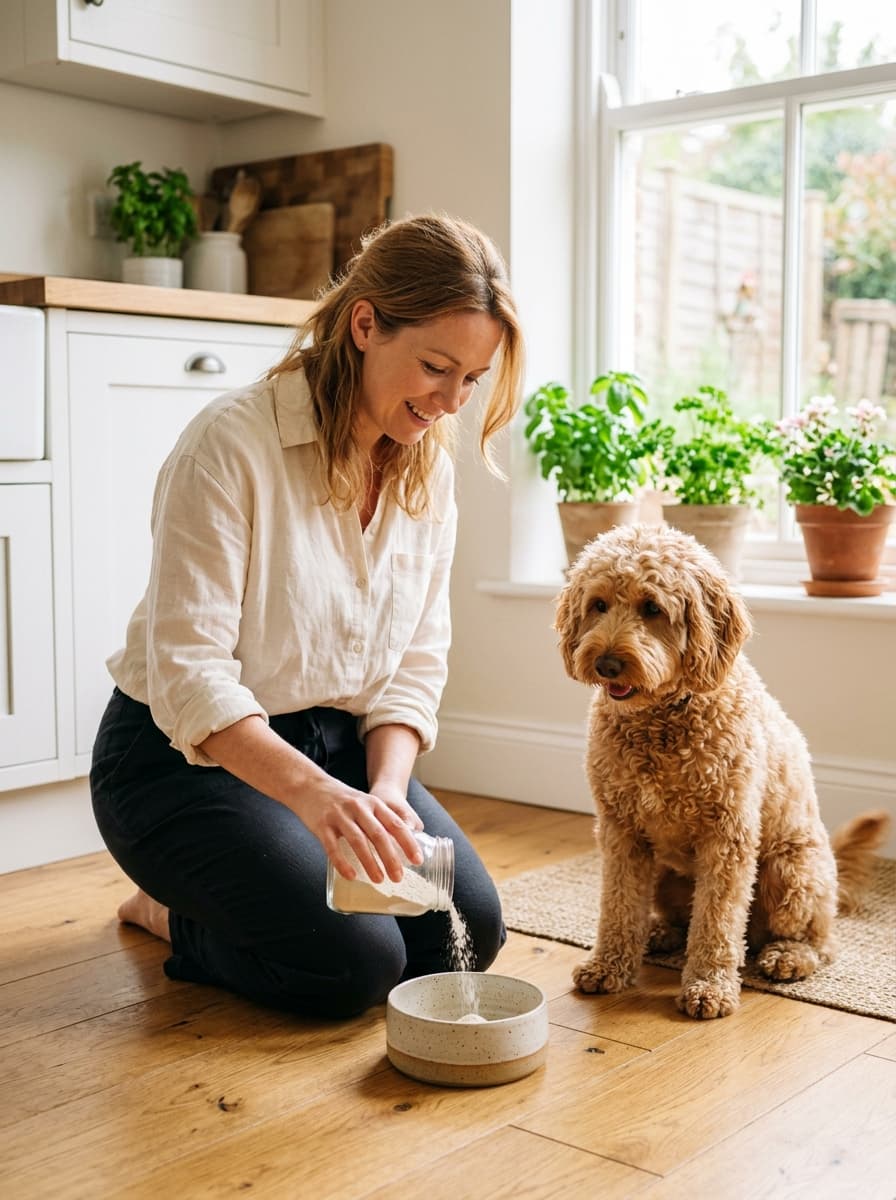
- Slow, patient food transitions. A huge share of doodle tummy trouble is just changing food too fast. Our 7-day transition plan fixes more soft stool than any supplement.
- Right portions. Overfeeding causes soft stool and gas that no enzyme will out-muscle.
- Identifying triggers. If specific ingredients set your doodle off, that's a food intolerance question, not an enzyme one.
- A calm feeding routine. Even stress affects digestion in anxious doodles.
Layer enzymes on top of a solid diet and feeding routine, and they can be a nice finishing touch. Use them to paper over a diet that doesn't suit your dog, and you'll be disappointed. For the whole system, our gut health routine for sensitive doodles ties it all together.
FAQ
Most healthy dogs, including doodles, produce all the digestive enzymes they need in their own pancreas and don't require a supplement. Enzymes become genuinely useful when a dog has a diagnosed deficiency like EPI, or as a gentle support for dogs with sensitive stomachs, mild gas, or trouble digesting certain foods. If your doodle is thriving with firm stool and a healthy weight, you probably don't need to add enzymes at all.
Digestive enzymes are proteins that physically break food down into absorbable pieces the moment it hits the gut, working immediately at each meal. Probiotics are live beneficial bacteria that colonize the intestines over time to support a balanced microbiome. They do different jobs and can be used together, but they aren't interchangeable. If your doodle's main issue is loose or inconsistent stool, probiotics are often the better first step.
They sometimes can, especially if the soft stool or gas comes from incompletely digested food. Enzymes help break down fat, protein, and starch more completely, which can reduce fermentation and gas. That said, soft stool has many causes, from too-fast food changes to overfeeding, so enzymes are a support tool rather than a guaranteed fix. Give any new supplement two to three weeks before judging it.
EPI (exocrine pancreatic insufficiency) is a true enzyme deficiency, and its hallmark is a dog that eats normally or ravenously but loses weight, with large-volume, pale, greasy, foul-smelling stool. Everyday sensitivity tends to cause occasional soft stool without dramatic weight loss. EPI is diagnosed with a specific blood test (TLI) and requires prescription-strength pancreatic enzymes, so if you see that pattern, see your vet rather than reaching for a supplement.
For most dogs, plant- or animal-based digestive enzymes are well tolerated and can be given daily at meals. Start with a lower dose to check tolerance, since some dogs get mild loose stool or mouth irritation with high-potency products. Dogs with pancreatitis, ulcers, or on certain medications should only use enzymes under veterinary guidance. When in doubt, loop in your vet before starting.
The bottom line
Digestive enzymes are a real, useful tool, for the right doodle. If yours has stubborn gas, undigested food in the stool, or a genuinely sensitive stomach, a quality enzyme blend is worth a careful two-to-three week trial alongside a solid diet. If yours is thriving, save your money. And if you're seeing weight loss with greasy, pale stool, skip the shelf and book the vet.
Next step: if you're ready to compare specific products, head to our best digestive enzymes for doodles roundup, or browse the full gut health supplements hub to build the complete routine.