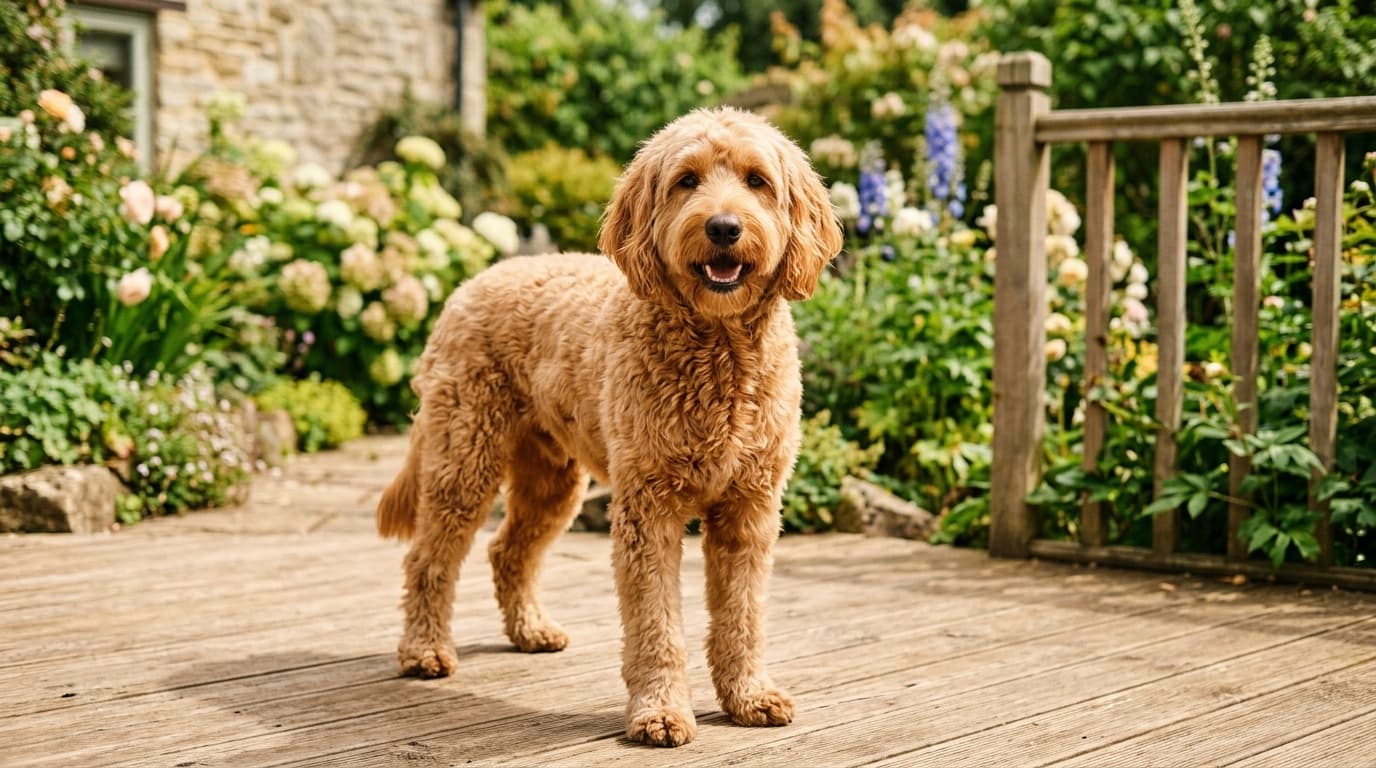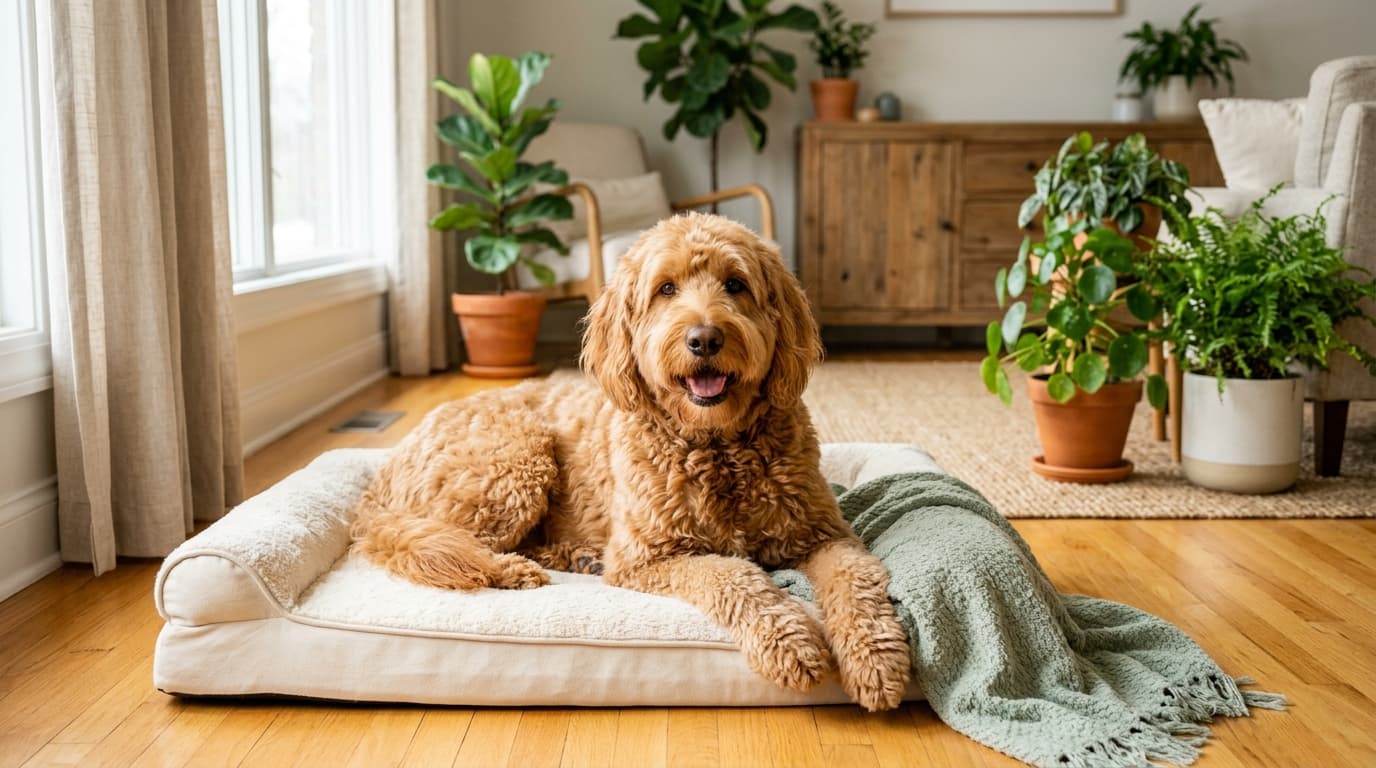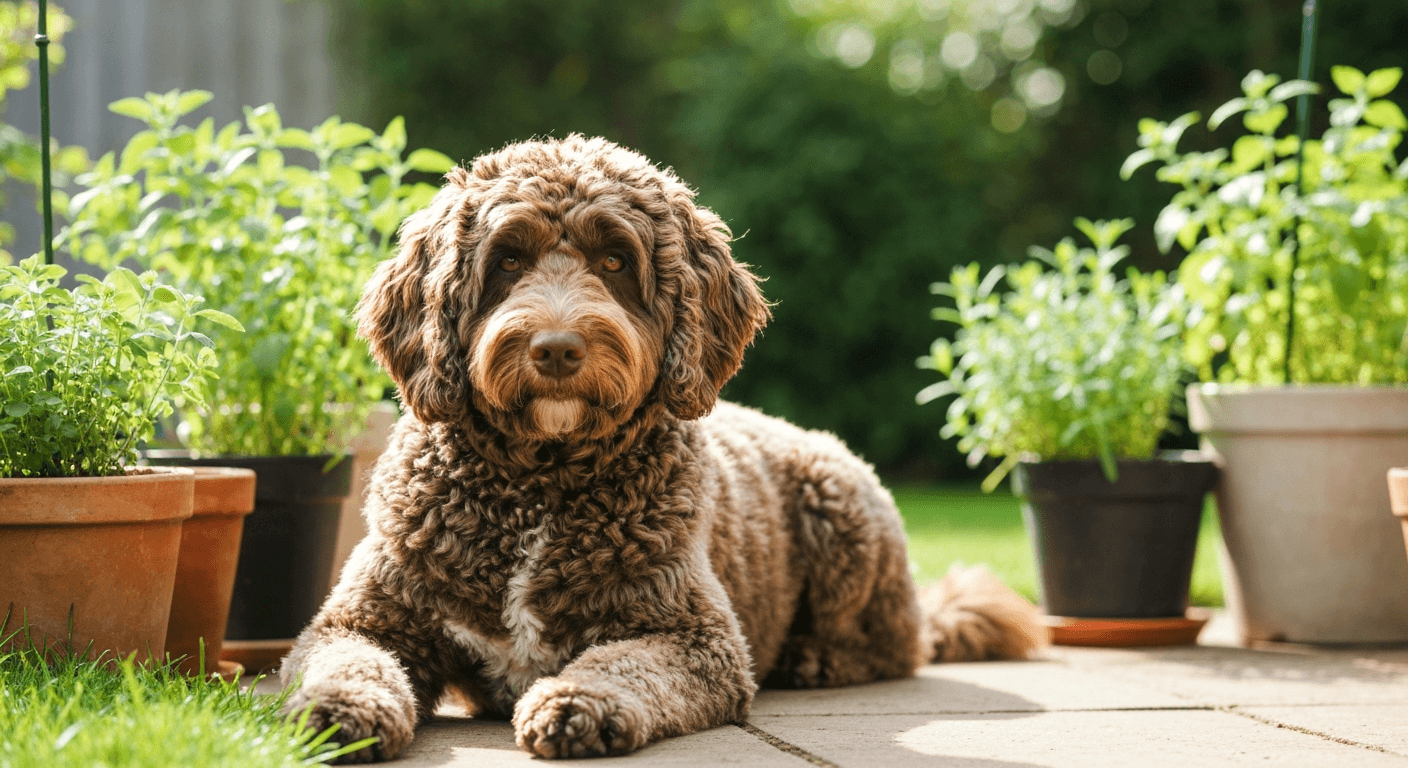
Most goldendoodles count as senior around 7-8 years old, but size shifts that line: a Mini Goldendoodle often isn't "senior" until 8-10, while a Standard may qualify at 6-7. Senior care comes down to a few practical things: highly digestible food with quality protein to protect muscle, more traction and gentler exercise to spare aging joints, careful weight control, and vet check-ups roughly every 6 months so problems get caught early.
If your once-bouncy Australian Labradoodle now takes the stairs one at a time, or your Goldendoodle's muzzle has gone silver, that's not a crisis. It's a cue to adjust. The good news is that senior doodles usually thrive with small, steady changes rather than a dramatic overhaul. Joints do the heavy lifting at this age, so if you already know that's your dog's weak spot and just want the practical shortlist, our best joint supplements for doodles roundup is the fast route, and if you want to look at digestive support too, our guide to the best gut health bundle for doodles is the shortcut while the rest of this article explains the why first.
This guide walks through the four things that matter most: knowing when your doodle is a senior, feeding for this stage, supporting joints and mobility at home, and keeping up with grooming and vet care.
When is a goldendoodle a senior?
There's no single birthday. Larger dogs age faster than smaller ones, so a doodle's size, driven mostly by the Poodle parent used in the cross, sets the timeline more than the calendar does.
As a rough guide:
| Doodle size | Typical adult weight | Usually "senior" around |
|---|---|---|
| Mini Goldendoodle / Mini Labradoodle | 15-30 lb (7-14 kg) | 8-10 years |
| Medium Goldendoodle | 30-45 lb (14-20 kg) | 7-8 years |
| Standard Goldendoodle / Standard Labradoodle | 45-70+ lb (20-32+ kg) | 6-7 years |
The same logic applies to a senior Labradoodle, a Bernedoodle or a Sheepadoodle: the bigger the frame, the earlier the senior label. The AAHA senior care guidelines take a similar size-based view of when a dog enters its senior years. If you're unsure where your dog will land, our size chart by breed and type and the Mini vs Medium vs Standard breakdown help you predict adult size and, with it, the aging curve.
The signs that matter more than the number
Age in years is a starting point. What you actually watch for:
- A graying muzzle and face
- More sleep, less spontaneous zooming
- Slower on stairs, hesitating before jumping into the car
- Stiffness after rest that loosens up once they're moving
- Cloudier eyes, or not hearing you the first time
None of these alone means something is wrong; they're normal aging. But together they tell you it's time to shift into senior mode.
How should you feed a senior doodle?
Feeding a senior doodle is about digestibility, quality protein and lean weight, not just "less food." Older dogs move less and often need fewer calories, but cutting protein is a common mistake: aging bodies need good protein to hold onto muscle, which in turn supports the joints.
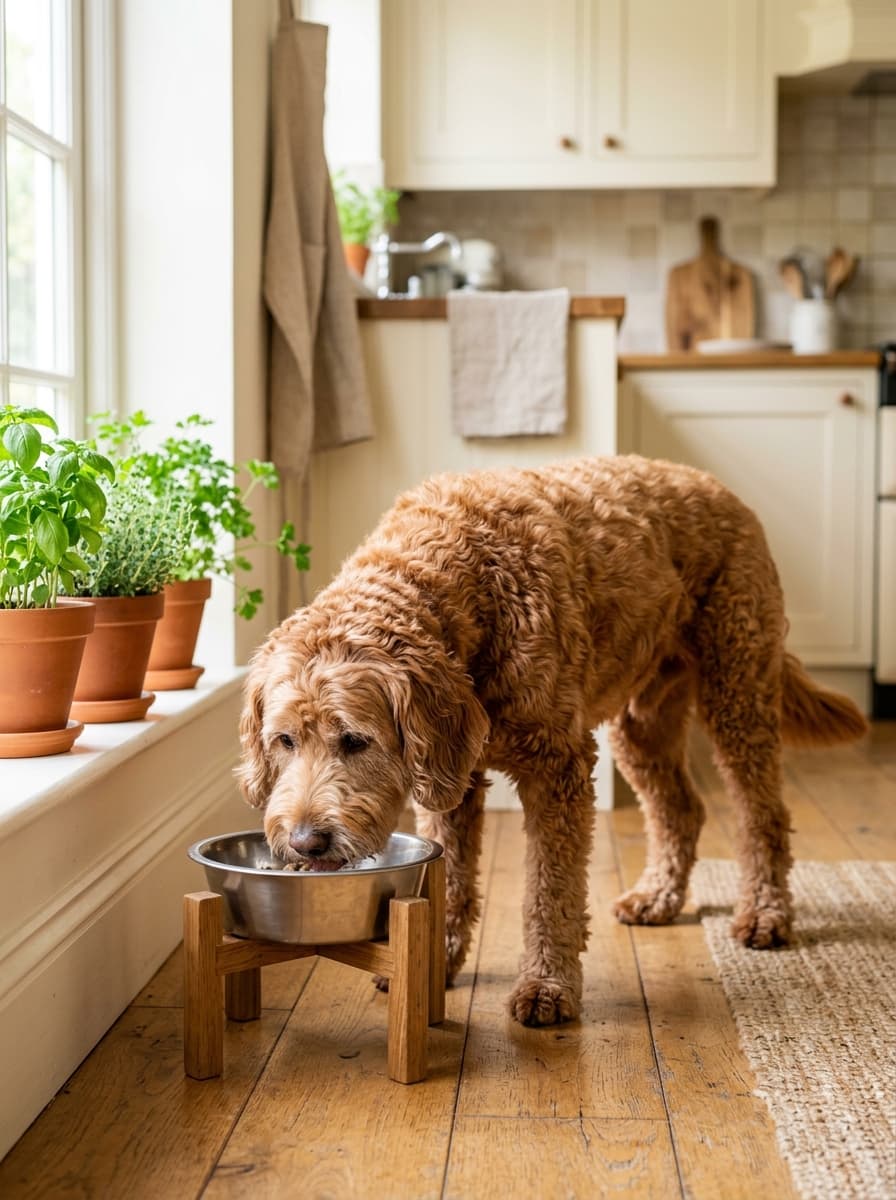
If you already know you'll want to reassess the bowl and just want the framework, start with our full guide to what to feed a Goldendoodle: it covers protein quality and how to read a label, which apply doubly at this stage.
The senior priorities:
- Keep protein quality high. Fish (salmon, whitefish), lamb, turkey and duck are all good options. We avoid chicken across the board in our house: Gunnar's chicken sensitivity taught us to read the whole ingredient list, not just the headline protein.
- Match calories to a lean body, not the past. A senior who's slowed down and eats the same portions will gain weight, and every extra pound loads aging hips and knees.
- Favor digestibility. Older guts can be less efficient. Highly digestible recipes and, for some dogs, a probiotic can help: see our probiotics guide for doodles.
- Add omega-3s. Fish oil supports both joints and the coat, which tends to change texture with age.
Making any diet change slowly
Senior stomachs don't love surprises. When we moved Sven's food years ago, going too fast meant loose stool every time. The lesson stuck, and it matters even more with an older dog. Transition over about a week, and if you want a step-by-step schedule, follow the 7-day food transition plan.
Keeping your senior at a healthy weight is one of the single best things you can do for their joints and lifespan. The AVMA lists obesity as one of the most common and preventable health problems in dogs, and it bears hardest on aging joints. Check body condition by feel, running your hands over the ribs and waist, rather than trusting the scale alone.
How do you support a senior doodle's joints and mobility?
Joints are the cluster that defines senior care for most doodles, and both parent lines carry relevant risk: a large, deep-chested build (Standard Poodle, and in Bernedoodles the Bernese Mountain Dog) means bigger doodles carry genuine orthopedic load as they age. Our guide to Goldendoodle Hip Dysplasia and Doodle Joint Health covers what parent health testing means, how weight and growth matter, and the signs to see a vet.
We compare the day-to-day options in our best joint supplements for doodles roundup, but below is what actually changes at home, which matters just as much as any chew.
Traction first
Hard, slippery floors are brutal on aging joints. A doodle scrambling for grip on hardwood or tile is doing repeated small damage and often loses confidence.
Gentle, consistent exercise
The goal shifts from "tire them out" to "keep them moving." Movement lubricates joints and preserves muscle; too much rest stiffens everything.
- Swap one long walk for two or three shorter, flat ones.
- Warm up gradually, no sprinting straight out of the car.
- Keep sessions consistent day to day rather than a quiet week then a big hike.
- Swimming is excellent low-impact exercise if your dog enjoys water.
Supplements and pain relief
A joint supplement (typically glucosamine, chondroitin, omega-3s, sometimes green-lipped mussel) is a reasonable early step for many senior doodles; we compare options in best joint supplements for doodles. What a supplement is not is a substitute for veterinary pain management. If your dog is clearly sore, reluctant to rise, yelping, limping, that's a vet conversation about proper pain relief, not something to manage with a chew alone.
Does a senior doodle need different grooming?
Yes, gentler and, usually, a little shorter, but the right routine depends on the coat type. Older skin is thinner, joints stiffen, and standing still for a long detangling session is genuinely uncomfortable for an aging dog.
- Keep sessions short. Several quick sessions beat one marathon.
- Support their weight. Let a stiff dog lie down; don't make them hold an awkward stand.
- Consider a shorter clip. A lower-maintenance coat is easier on both of you and lets you see the skin, important for spotting new lumps, hot spots or thinning.
- Match brushing to the coat. A wavy fleece coat (like our Gosta) still needs thorough, frequent brushing to stay mat-free, just done gently and in short bursts. A curly wool coat (like our Sven and Gunnar) is a different story: brushing frizzes wool and never stopped the mats for us, so we skip routine brushing, bathe once a month with conditioner (the conditioner is what actually helps against matting), hand-check the coat for mats daily or several times a week, and clip any single mat out right away. We keep those two kept short. Our doodle matting guide covers prevention in more detail.
Grooming time is also your best routine health check. Run your hands over the whole body and note anything new, a lump, a warm spot, a sore area, to mention at the next vet visit. On a curly wool coat that hands-on check is the whole point, since mats hide underneath where you can't see them.
How often should a senior doodle see the vet?
Twice a year. Most vets recommend a check-up every 6 months for senior dogs rather than annually, because problems progress faster at this age and early detection changes outcomes. Routine senior bloodwork can flag kidney, liver and thyroid changes before you'd ever notice a symptom.
Book sooner, don't wait for the next scheduled visit, if you see:
- Sudden or steady weight loss
- Increased drinking or urination
- New lumps or fast-growing ones
- Difficulty rising, new limping, or reluctance to move
- A clear change in appetite, energy, or bathroom habits
- Confusion, pacing at night, or getting "stuck" in corners
None of these means the worst. They mean get it looked at, because a senior dog has less margin than a young one.
FAQ
It depends on size. A Standard Goldendoodle is usually considered senior around 6-7 years, a Medium around 7-8, and a Mini Goldendoodle later, closer to 8-10 years. Larger dogs age faster, so the same birthday means a different life stage across the size range. Watch for the real signs, graying muzzle, slower stairs, more sleep, rather than fixing on one number.
Older doodles usually need fewer calories because they move less, but they still need good-quality, digestible protein to hold onto muscle. The goal is a lean body, easy-to-digest ingredients, and often added omega-3s for joints and coat. Watch weight closely, since even a couple of extra pounds add load to aging hips and knees. Any big diet change should be made gradually.
Traction and gentle movement help most. Add rugs or runners over slippery floors, use a ramp for the car or couch, keep nails short, and swap one long walk for two or three shorter ones. Keep your dog lean, talk to your vet about a joint supplement or pain relief, and never let an older dog skid on hard flooring.
Most vets suggest a check-up every 6 months for senior dogs instead of once a year, because problems move faster at this age. Bloodwork can catch kidney, liver and thyroid changes before you'd see symptoms. Book sooner if you notice sudden weight loss, increased drinking, new lumps, difficulty rising, or a change in appetite or bathroom habits.
Yes, gently, and it depends on the coat. Older skin is thinner and joints stiffen, so keep sessions short and support your dog's weight. A wavy fleece coat (like our Gosta) still needs thorough, frequent brushing. A curly wool coat frizzes if you brush it, so we skip routine brushing, bathe monthly with conditioner, hand-check for mats daily or several times a week, and keep it short. A shorter coat on any senior lets you spot lumps, hot spots or thinning.
Where to go next
Senior care isn't one big decision; it's a handful of small, steady ones: the right food, traction underfoot, gentle movement, coat-appropriate grooming, and twice-yearly vet visits. Get those in place and most doodles handle their later years comfortably.
Since joints do the heavy lifting at this stage, the best next read is our roundup of the best joint supplements for doodles: it walks through what to look for, how to compare options, and how to build a long-term joint plan with your vet.