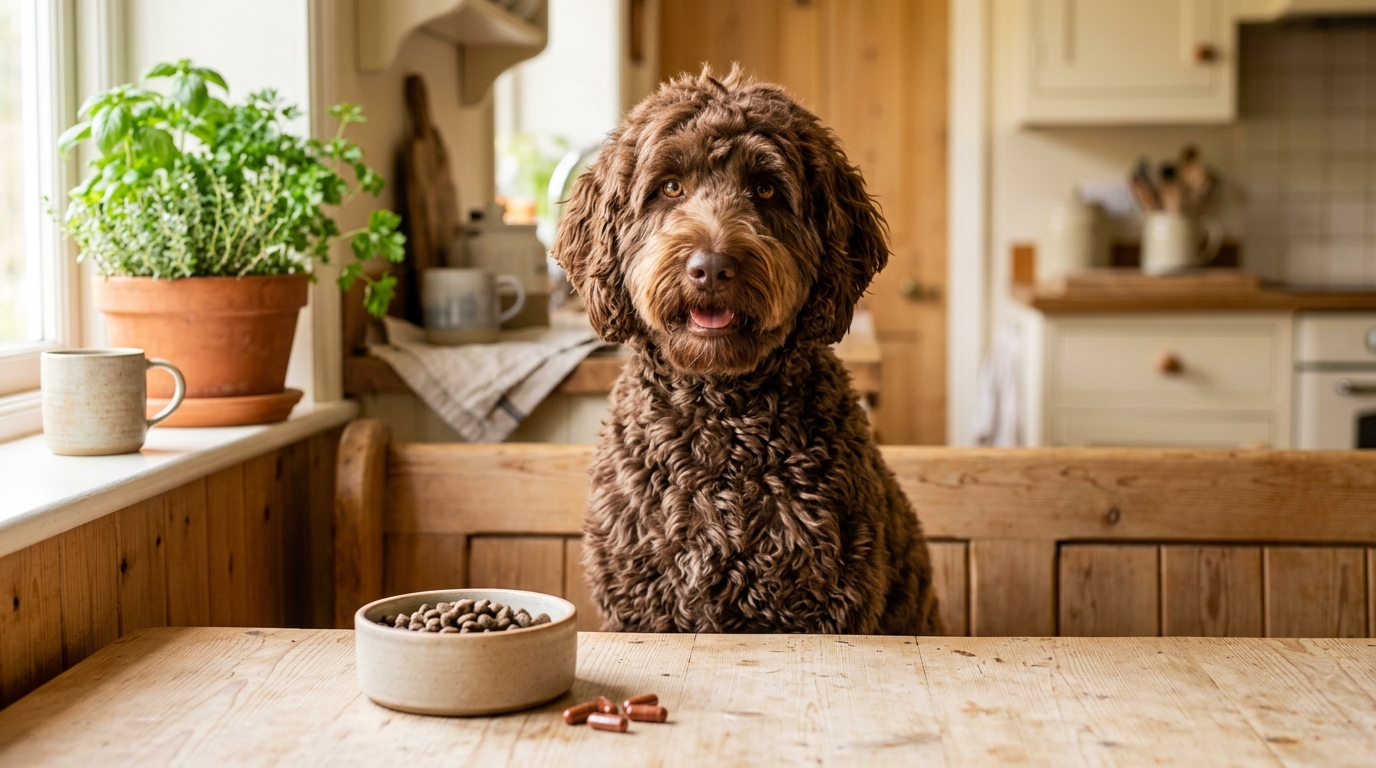
The best omega 3 for dogs with itchy skin is a purified fish or wild salmon oil chosen for its EPA + DHA content, not its total fish oil number. Aim for roughly 20 mg of combined EPA + DHA per pound of body weight per day, pick a product that's third-party tested (look for IFOS certification), and give it a full 6 to 12 weeks before judging results.
That's the short version. But if you have a doodle with flaky skin, a dull coat, or that maddening scratch-scratch-scratch that keeps you both up at night, you probably want to know which oil, how much, and whether the fancy krill and green-lipped mussel options are worth the extra money.
We feed our three doodles, Sven, Gunnar, and Gösta, raw at home, and omega 3 is one of the few supplements we run year-round. Here's how to choose one that actually helps.
Why doodles need omega 3 in the first place
Doodles inherit two things from the poodle line that make skin a recurring theme: a tendency toward food and environmental sensitivities, and a dense curly coat that hides trouble. By the time you notice flaking or a dull coat, the skin barrier has usually been struggling for a while under all that fur.
Omega 3 fatty acids, specifically EPA and DHA, are anti-inflammatory. They don't sedate an itch the way a medication does; instead they lower the baseline level of inflammation in the skin and reinforce the barrier that keeps moisture in and allergens out. For an itchy doodle, that often means less redness, less scratching, and a coat that feels soft instead of straw-like. The Merck Veterinary Manual notes the same anti-inflammatory role of omega-3 fatty acids in canine skin conditions.
If your doodle's itch flares up specifically after eating, that's a different signal worth reading first, see Doodle Licking Paws After Eating. And if the itching is constant year-round, our guide to why your doodle is itchy all the time covers the full list of culprits.
EPA and DHA matter more than "total fish oil"
This is the single most common mistake I see. A bottle screams "2,000 mg fish oil!" on the front, but flip it over and the actual EPA + DHA is only a few hundred milligrams. The rest is filler oil.
EPA and DHA are the active anti-inflammatory omega 3s. Total fish oil (or "salmon oil") is just the delivery vehicle. When you compare products, ignore the big front number and add up the EPA + DHA on the back panel.
The five omega 3 sources, compared
Here's how the common sources stack up for a doodle with itchy skin:
| Source | EPA/DHA potency | Best for | Watch-outs |
|---|---|---|---|
| Fish oil (concentrated) | High | Most doodles; efficient dosing | Oxidizes if cheap or old |
| Wild salmon oil | Medium | Gentle food topper, picky eaters | Not for confirmed fish allergy |
| Krill oil | Medium (well-absorbed) | Small doodles | Expensive per mg; sustainability |
| Algae oil | DHA-focused | Fish-allergic or vegan households | Lower EPA; pricey |
| Green-lipped mussel | Low omega 3, high joint support | Joint + skin combo | Not a primary skin dose alone |
For itchy skin specifically, concentrated fish oil or wild salmon oil are the workhorses. Krill absorbs well but you pay a premium. Algae oil is the answer if your doodle genuinely can't have fish, helpful given how many doodles react to fish protein, but it's DHA-heavy and lighter on the EPA that drives the anti-inflammatory effect. Green-lipped mussel shines for joints and adds a small skin benefit, but it's a companion, not your main omega 3.
Best Fish Oil and Salmon Oil for Dogs With Itchy Skin: Our Picks
A good omega 3 for an itchy doodle is purified, third-party tested, high in EPA + DHA, and low on unnecessary ingredients. We favor brands that publish their testing, use clean single-source oils, and come in a format that fits your dog, a concentrated liquid for efficient dosing, or softgels for mess-free travel. Every pick below meets those bars; the right one depends on your doodle's size, palate, and whether fish is off the table.
| Product | Best For | Rating |
|---|---|---|
| Nordic Naturals Omega-3 Pet Liquid, 8 oz | Best Overall | ★★★★★ |
| Natural Dog Company Wild Alaskan Salmon Oil | Best Liquid Topper | ★★★★½ |
| Nutramax Welactin Softgels, 120 ct | Best Vet-Formulated | ★★★★½ |
| Nordic Naturals Omega-3 Pet Softgels, 180 ct | Best for Sensitivities | ★★★★½ |
Buy a size you will actually finish. Fish oil oxidizes once opened, and a bargain bulk bottle that takes eight months to get through is a false economy, rancid oil does nothing for skin. Match the bottle to your dog's dose, and check current prices when it is time for the next one.
As an Amazon Associate we earn from qualifying purchases. This doesn't change what we recommend, we only list oils we'd give our own three.
EPA/DHA dosage for dogs with itchy skin
For general maintenance, dogs need modest omega 3. But for active skin issues, the therapeutic dose is higher, roughly 20 mg of combined EPA + DHA per pound of body weight per day.
| Doodle weight | Daily EPA + DHA (skin support) |
|---|---|
| 15 lb (6.8 kg) (mini) | ~300 mg |
| 30 lb (14 kg) | ~600 mg |
| 50 lb (23 kg) | ~1,000 mg |
| 70 lb (32 kg) (standard) | ~1,400 mg |
These are starting targets, not a prescription. Start at about half the target for the first week and build up, that's how we introduce anything oily to our crew, because doodle stomachs do not love a sudden slug of fat.
Purity and sourcing: the part cheap brands skip
Fish oil goes rancid. Once oxidized, it's not just useless, it actually adds inflammation, the opposite of what you want. Cheap oils, poorly stored oils, and anything that smells sharp or "off" belong in the trash.
What to look for:
- Third-party testing, IFOS (International Fish Oil Standards) certification is the gold standard for purity and freshness.
- Low mercury / heavy-metal testing, smaller fish (anchovy, sardine) and reputable salmon sources tend to be cleaner.
- Antioxidants or a nitrogen-flushed bottle to slow oxidation.
- Minimal ingredients, for a sensitive doodle, you want oil and maybe vitamin E, not flavorings and thickeners.
Store liquid oils in the fridge after opening and use them within a couple of months. We keep ours next to the raw prep so it's part of the routine, more on that system in our daily kitchen routine for raw feeders.
Realistic timelines (this is the part people quit too early on)
Omega 3 is not a switch. Here's roughly what to expect:
- Weeks 1-2: nothing visible. You're just building it into the routine.
- Weeks 4-6: coat starts feeling softer, less flaking, more shine.
- Weeks 8-12: reduced itching, calmer skin, if omega 3 was a missing piece.
When we added consistent fish oil for Gunnar, whose coat runs a little coarser than his brothers', the shine showed up around the six-week mark, but the "he's stopped scratching after breakfast" difference took closer to two months. Give it the full 90 days before you decide.
And be honest about the root cause: if it's a food allergy, omega 3 alone won't fix it. Our guide on whether diet can fix doodle skin problems walks through that, and if you suspect food is the driver, start with the food allergies hub.
Pair omega 3 with skin AND gut support
The doodles who get the biggest skin turnaround aren't the ones who just add fish oil, they're the ones who fix the foundation at the same time:
- Diet, if a protein is triggering flares, no supplement outruns it. See our picks for the best limited ingredient dog food for doodles.
- Gut health, the gut-skin axis is real; a good probiotic supports the skin barrier from the inside. Start with best probiotics for doodles with digestive issues.
- Coat care, trapped moisture in that curly coat and floppy ears breeds yeast. A soothing wash helps; see best shampoo for itchy doodles.
Omega 3 is the foundation you build the rest on, not the whole house.
FAQ
For skin and coat support, aim for roughly 20 mg of combined EPA + DHA per pound of body weight per day, which is higher than a basic maintenance dose. So a 50-pound (23 kg) goldendoodle would need around 1,000 mg of EPA + DHA daily. Always read the label for EPA/DHA content rather than total fish oil, start low to protect a sensitive stomach, and check with your vet if your doodle is on medication or has a health condition.
Omega 3s work slowly. Most doodle owners notice a softer, shinier coat in about 4 to 6 weeks and reduced itching in 8 to 12 weeks. Give any supplement a full three months before deciding it isn't working, and keep dosing consistent every day rather than skipping around.
Both work well. Concentrated fish oil usually delivers more EPA + DHA per dose, so you give less liquid, while single-source wild salmon oil is often gentler and easier to pour as a food topper. For confirmed skin allergies where you want maximum anti-inflammatory omega 3s in a small amount, a concentrated fish oil is usually the more efficient choice.
Yes, especially if you start at a full dose. Too much oil too fast can cause loose stool or an upset stomach, which doodles with sensitive digestion are already prone to. Introduce it over 5 to 7 days, give it with food, and back off the dose if stool goes soft. Persistent diarrhea is a reason to pause and call your vet.
Usually not on its own. Omega 3s reduce inflammation and support the skin barrier, but if the root cause is a food allergy, environmental allergy, or yeast, you also need to address that. Think of omega 3 as a foundation you pair with the right diet, gut support, and good coat care rather than a standalone cure.
Your next step
Pick one oil from above, start at half dose, and commit to the full 90 days, consistency beats perfection here. Then work on the root cause alongside it: if you're not sure whether food, environment, or yeast is driving the itch, start at our Itchy Skin & Paws hub or read why your doodle is itchy all the time to figure out what to tackle first. Omega 3 gives your doodle's skin the best chance to heal, the rest of the plan is what keeps it that way. For more doodle-tested picks across food, probiotics, and health tools, see our Best Products for Sensitive Doodles: Food, Supplements & Tools guide.