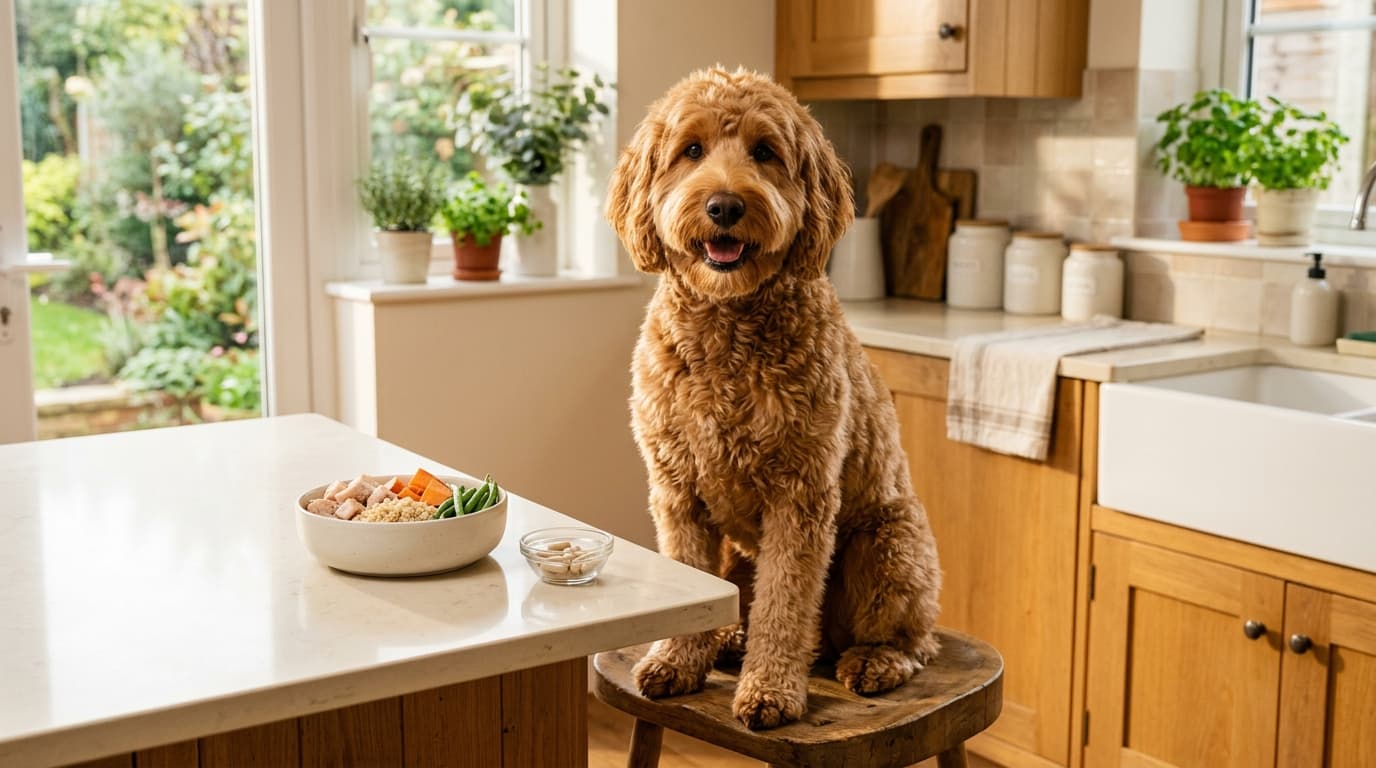
Probiotics are live beneficial bacteria you add to your dog's gut, and prebiotics are the fibers that feed the good bacteria already there. For most doodles with a sensitive gut, the answer to "prebiotics vs probiotics for dogs" is both, a probiotic to seed helpful microbes and a prebiotic to keep them fed. Start with a probiotic for acute soft stool or after antibiotics, then layer in a gentle prebiotic for long-term gut and skin support once stool is stable.
If you've stood in the supplement aisle (or scrolled a hundred product pages) trying to figure out which one your doodle actually needs, you're not alone. The words sound almost identical, the marketing blurs them together, and a doodle with a reactive stomach or yeast-prone skin is exactly the dog where getting this right pays off.
If you already know you're dealing with a touchy gut and just want the shortlist, skip ahead to our best probiotics for doodle digestive issues, otherwise, here's how we think about the whole picture.
We feed our three doodles, Sven, Gunnar, and Gösta, raw at home, and gut health is the quiet engine behind everything from firm stool to a calmer coat. Here's how we think about it, minus the hype.
The difference between prebiotics and probiotics for dogs
Let's clear up the core confusion first, because the whole decision flows from it.
Probiotics are live microorganisms, strains of beneficial bacteria (and sometimes yeasts), that add to the population of good bugs in your dog's gut. Common canine strains include Enterococcus faecium, several Lactobacillus species, Bifidobacterium, and the beneficial yeast Saccharomyces boulardii. The Merck Veterinary Manual describes probiotics as live microorganisms intended to confer a health benefit on the host.
Prebiotics are not alive. They're specialized fibers that pass through the small intestine undigested and become food for the beneficial bacteria in the colon. Common ones you'll see on labels:
- Inulin and FOS (fructooligosaccharides)
- MOS (mannan-oligosaccharides)
- Beet pulp
- Chicory root
- Psyllium and, loosely, pumpkin
A simple way to picture it: probiotics are the seeds you plant, and prebiotics are the fertilizer. Plant seeds with no fertilizer and many won't take. That's why the smartest gut products combine the two.
What's a synbiotic?
When a product contains both prebiotics and probiotics designed to work together, it's called a synbiotic. The prebiotic fiber is right there to feed the probiotic strains as they arrive, giving them a better shot at establishing. For a doodle you're supporting long-term, a synbiotic is usually the most efficient single product.
Why gut health matters extra for Australian Labradoodles and Goldendoodles
Doodles aren't generic dogs, and their gut isn't generic either. A couple of realities make the microbiome worth caring about:
A Poodle-line predisposition to sensitive skin and food reactions. The Poodle carries a documented predisposition to allergic skin disease (atopy) and to food sensitivities, and that trait can pass down into any Poodle cross, Australian Labradoodles, Labradoodles, Goldendoodles, Bernedoodles and Sheepadoodles alike. It's a predisposition, not a guarantee: some individual dogs inherit it and some don't, and how sensitive any one dog is varies far more between individuals than between crosses. If soft stool and food fussiness sound familiar, our guide to the signs your doodle has a sensitive stomach is worth a read.
Skin and gut are connected. A big chunk of the immune system lives in the gut wall. When the microbiome is off-balance, you often see it show up on the outside, itchy skin, that yeasty smell, red bellies, gunky ears trapped under all that curly coat. Doodles hide skin trouble under their fleece or curly coat, so a gut that's quietly struggling can go unnoticed until the scratching starts. If itching is already the main event, see why is my doodle so itchy all the time and allergy vs yeast infection in doodles.
To be clear: supplements are support, not a cure for allergies or infections. But a well-fed microbiome gives a sensitive doodle a more stable baseline.
Do doodles need prebiotics or probiotics? A simple decision framework
Here's how we'd choose, based on what's actually going on.
| Situation | Start with | Why |
|---|---|---|
| Soft stool or diarrhea flare | Probiotic (short course) | Rebalances gut fast during upset |
| After antibiotics | Probiotic, then add prebiotic | Antibiotics wipe good bacteria too |
| Food transition or new food | Probiotic + gentle prebiotic | Smooths the adjustment |
| Chronic sensitive stomach | Synbiotic (both) | Long-term stability needs both |
| Itchy/yeasty skin linked to gut | Synbiotic + omega-3 | Gut-skin support takes time |
| Healthy dog, general maintenance | Prebiotic-rich food ± probiotic | Feeds the colony you already have |
If diarrhea is the reason you're here, don't just supplement blindly, check how long doodle diarrhea should last so you know when it's a "watch and wait" versus a "call the vet" situation.
Prebiotics vs probiotics for dogs with a sensitive stomach
This is where doodle owners get tripped up, so let's be specific.
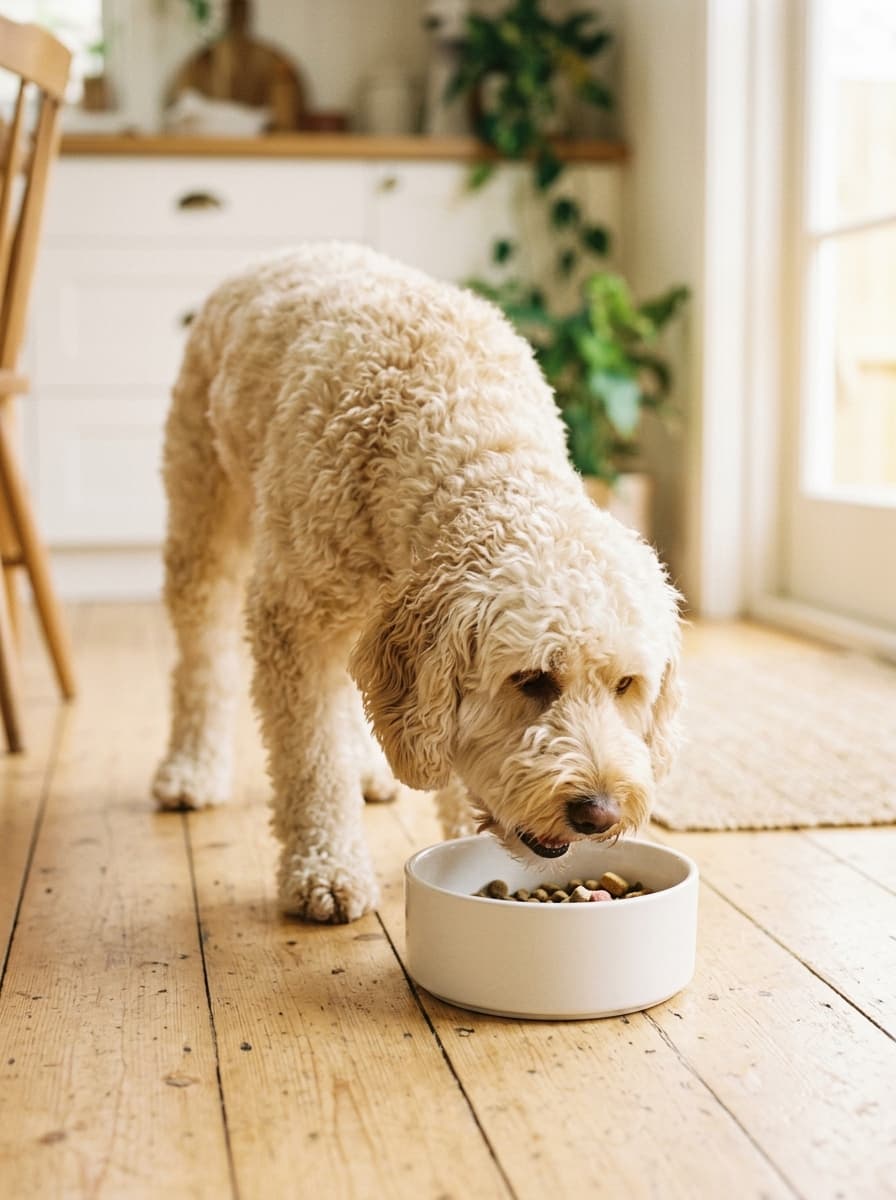
Probiotics are usually well tolerated even by sensitive dogs, but quality and strain matter. Look for a stated CFU count (colony-forming units), named strains, and a guarantee of live count through the expiration date, not just at manufacture.
Prebiotics for dogs with a sensitive stomach need more care. Strong fermentable fibers like inulin and FOS are excellent food for good bacteria, but introduce them too fast in a reactive doodle and you can trigger gas or looser stool while the gut adapts. That's not the prebiotic "failing"; it's the microbiome catching up.
Our approach with a sensitive gut:
- Start low. A fraction of the recommended dose.
- Go slow. Increase over one to two weeks.
- Watch the stool. A little softening at first can be normal; worsening diarrhea is not.
- Choose gentler fibers if needed, beet pulp or a spoon of plain pumpkin tends to be kinder than concentrated inulin. See can pumpkin help a doodle's stomach.
Food sources: the underrated first step
Before you buy anything, know that both prebiotics and probiotics exist in food, and for a healthy doodle, food-based support is often enough.
Prebiotic food sources (introduce small amounts):
- Pumpkin and squash
- Cooked, cooled sweet potato
- A little asparagus or dandelion greens
- Slippery elm, which is soothing and mildly prebiotic, see slippery elm for doodle digestive issues
Probiotic food sources:
- Plain, unsweetened kefir or plain yogurt with live cultures (tiny amounts; watch dairy tolerance)
- Fermented vegetables in very small quantities
We feed raw, so a lot of our gut support comes from the diet itself plus targeted additions. When we travel and switch to kibble or freeze-dried raw, that's exactly when a probiotic earns its keep, a food change is a classic gut-rocker.
Reading the label: what actually matters
Supplement marketing is loud. Here's what we actually check before buying a gut product for a doodle:
On a probiotic:
- Named strains (not just "probiotic blend")
- CFU count guaranteed through expiry
- Multi-strain is often better than single-strain for general support
- Saccharomyces boulardii if diarrhea-proneness is the issue, it's a beneficial yeast that many find helpful for loose stool
On a prebiotic (or synbiotic):
- A named prebiotic fiber (inulin, FOS, MOS, beet pulp), not vague "fiber"
- Gentle options if your doodle is sensitive
- Minimal fillers, no unnecessary flavor junk your allergy-prone doodle might react to
Red flags: no CFU count, no named strains, wild health claims ("cures allergies"), or a mile-long ingredient list packed with things a sensitive doodle doesn't need.
For our current picks and how we compare them, see best probiotics for doodles with digestive issues. If you want the full deep-dive on probiotic strains and dosing specifically, we keep that in probiotics for doodles: complete guide.
Dosing and how to introduce them
General guidance (always follow the product label and your vet's advice for your specific dog):
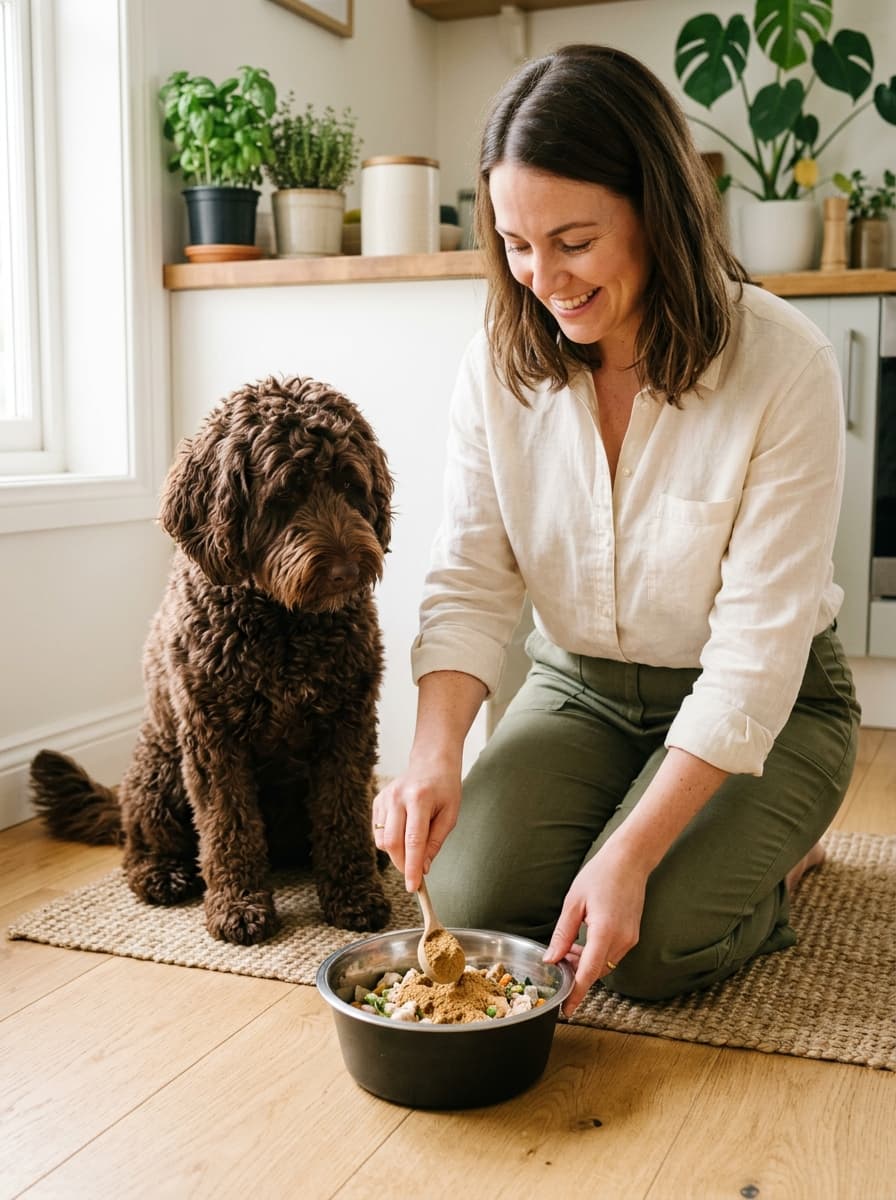
- Probiotics: dose by the product's weight or CFU chart. Give with food. Consistency beats megadosing, daily matters more than the number.
- Prebiotics: start at roughly a quarter of the target amount and build over 1-2 weeks.
- Synbiotics: follow label dosing, but still ramp up slowly in a sensitive doodle.
A quiet household routine helps more than any single product. We fold gut supports into the same daily rhythm, our 5-minute daily kitchen routine and the gut health routine for sensitive doodles show how we keep it low-effort across three dogs.
A quick anecdote
When we bring the crew back onto kibble for a trip, Sven is our canary, he's the one whose stool tells you first when something's changed, and loose stool has followed every food change he's ever had. We start a probiotic a few days before the switch and keep it going through the transition. It's a small habit, but it's the difference between a smooth week away and a stressful one. Stress itself matters too, by the way, see stress and digestive problems in doodles.
Signs it's working (and signs it isn't)
Give it real time, but know what to look for.
Working:
- Firmer, more consistent stool within 1-2 weeks
- Less gas
- Over 4-8 weeks, calmer skin, less scratching, reduced yeasty smell
- Better appetite and steadier digestion around food changes
Not working (or not enough):
- No stool improvement after 3-4 weeks
- Worsening diarrhea or new vomiting
- Skin issues that keep escalating despite gut support
If skin is the real problem, remember that gut supplements are one lever, not the whole machine. Diet, omega-3s, and ruling out allergies all matter, start with can diet fix doodle skin problems and best omega-3 for doodle skin health. And if you suspect a true food allergy underneath it all, our complete owner's guide to food allergies in doodles is the place to go.
FAQ
Probiotics are live beneficial bacteria you add to your dog's gut, while prebiotics are special fibers that feed the good bacteria already living there. Think of probiotics as new residents and prebiotics as the food that keeps them and the existing colony thriving. Most sensitive doodles do best with both, because a probiotic without prebiotic fuel often struggles to establish.
It depends on the situation. For an acute issue like soft stool after antibiotics or a food change, start with a probiotic. For long-term gut and skin support in a doodle with ongoing sensitivities, a combination product (synbiotic) with both prebiotics and probiotics tends to work best. Australian Labradoodles, Goldendoodles and other Poodle crosses can inherit a predisposition to sensitive skin and food sensitivities, so a healthy microbiome is worth caring about.
Yes, and it is often the goal. A product that combines both is called a synbiotic. Giving them together means the prebiotic fiber is on hand to feed the probiotic bacteria you just introduced. Introduce them slowly over one to two weeks, especially for a doodle with a sensitive stomach, to avoid gas or looser stool while the gut adjusts.
Stool quality often firms up within one to two weeks. Skin and coat changes tied to gut health, like less itching or reduced yeasty smell, usually take four to eight weeks because the skin barrier turns over slowly. If you see no improvement in stool after three to four weeks, or symptoms worsen, talk to your vet before continuing.
Generally yes, but start low. Some prebiotic fibers like inulin and FOS can cause gas or looser stool if introduced too fast in a sensitive doodle. Begin with a small dose, increase gradually over one to two weeks, and choose gentler options like beet pulp or a small amount of pumpkin if your doodle reacts to stronger fermentable fibers.
Where to go next
If you've decided your doodle needs support, the simplest path is: pick a quality probiotic for now, add a gentle prebiotic once stool is stable, or choose a synbiotic to do both at once. Then give it four to eight weeks and watch stool and skin.
For our tested shortlist and how we'd set up a sensitive doodle from scratch, start with best probiotics for doodles with digestive issues, then build the daily habit around it with our gut health routine for sensitive doodles. For the complete owner's guide to which probiotics, digestive enzymes, prebiotics and omega-3s actually help a sensitive doodle, see Doodle Gut Health & Supplements: Probiotics, Enzymes & Omega-3s.