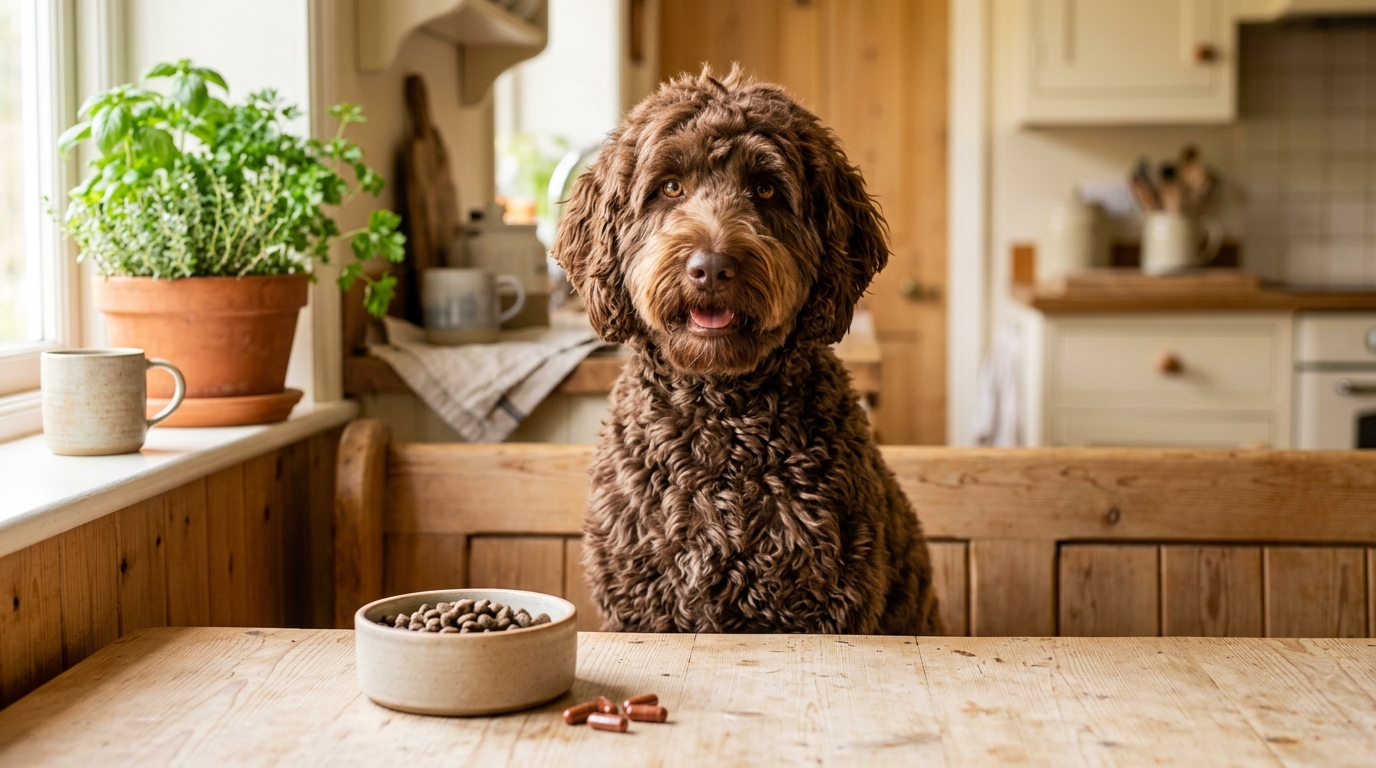
For most doodles, the safest and most effective tear stain remover is a gentle, fragrance-free topical wipe used daily, like Earth Rated Dog Eye Wipes, paired with a fine comb to lift dried discharge from the fur. If the staining is driven by chronically runny eyes, a soothing hypochlorous eye wash can help at the source. And whatever you do, avoid any oral tear stain supplement that contains an antibiotic such as tylosin, dosing a dog with antibiotics for a cosmetic problem is not appropriate.
Tear stains are one of the most-asked-about cosmetic issues in doodles, and for good reason: on a cream or white Australian Labradoodle, a Goldendoodle, or a parti Bernedoodle, those rust-colored streaks show up against light fur like nothing else. The good news is that a simple daily routine handles most of it. The catch is that the shelves are full of products that either do nothing or do something you don't want.
Below is what actually makes a tear stain remover safe and useful for a doodle, our researched picks, and an honest read on the oral supplements everyone asks about.
Why Doodles Get Tear Stains in the First Place
Tear staining is mostly cosmetic. Dog tears contain porphyrins, iron-rich pigments that turn reddish-brown when they sit on light fur and are exposed to air. Any dog can produce them, but they only show on pale coats, which is why the question comes up so often for cream and apricot doodles.
Two doodle-specific traits make it worse:
- A fleece or wool coat around the eyes wicks tears into the fur and holds them there, so the damp, stainable zone is bigger than on a short-coated dog.
- A damp face that stays damp, long facial hair keeps moisture against the skin, which both deepens staining and, over time, can encourage yeast around the muzzle and eyes.
So the real target isn't "bleach the stain out." It's keep the area clean and dry so new tears never get the chance to oxidize into the coat. That reframing matters, because it tells you which products are worth buying and which are selling you a miracle.
For a vet-written reference on the conditions mentioned here, the Merck Veterinary Manual is a reliable place to check.
What Makes a Good Tear Stain Remover for a Doodle
You're working millimeters from your dog's eye, so the bar for "safe" is high. Here's what we look for:
- Fragrance-free and alcohol-free. Doodles skew toward sensitive skin (the Poodle line carries a real predisposition to allergic skin disease), so anything scented or drying is a bad idea near the eye.
- A short, clean ingredient list. Fewer preservatives and additives means fewer things to react to.
- Labeled for use around a dog's eyes. Never repurpose human eye products or baby wipes.
- No antibiotics, ever, in anything oral. More on this below, it's the single most important rule on this page.
- A fine comb to finish. The wipe loosens; the comb lifts. A doodle's coat needs the mechanical step or the discharge just smears.
If you already know you want the shortlist and just want to buy, the picks are right below. If you want the full story on why doodles stain and how to sort a face problem from a skin problem, our guide on telling allergy and yeast infection apart covers the bigger picture around the muzzle and eyes.
Top Picks: Tear Stain Removers We'd Actually Buy
We chose products that are gentle enough for daily use on sensitive doodle skin, honest about what they do, and, for the one edible on this list, screened against our household rules. A quick note on how we buy: the topical picks are the reliable workhorses here. A wipe or rinse you use every day beats any product you use occasionally, no matter how it's marketed.
| Product | Best For | Rating |
|---|---|---|
| Earth Rated Dog Eye Wipes | Best Overall | 4.6 |
| Vetericyn Plus Eye Wash | Best for Runny, Irritated Eyes | 4.6 |
| Paw Science Dog Eye Wipes | Best Budget | 4.5 |
One buying note before the picks: with wipes, count matters more than headline price, a 70-100 count tub used once a day lasts one dog a couple of months, and resealable tubs keep the wipes from drying out. An eye wash is a better value per use if you'll dampen a reusable cloth rather than pour it freely. Browse current options and check sizes in Amazon's pet section.
How to Actually Use It: The Two-Minute Daily Routine
The product is half the job; the routine is the other half. With three doodles we keep this dead simple, because a routine you'll actually do every day beats a perfect one you skip:
The Antibiotic Warning You'll Want to Read
The part the marketing won't say plainly is this: some older tear stain "supplements" and powders worked because they contained a low dose of an antibiotic, usually tylosin. Antibiotics can fade the porphyrin stain, which is why those products looked like they worked, but dosing a dog with antibiotics day after day for a cosmetic issue is not appropriate, it can upset the gut, and it contributes to antibiotic resistance.
Rule of thumb: read the full ingredient list on anything edible, and if it contains tylosin or any other antibiotic, put it back. The picks on this page are antibiotic-free. If your dog's tears are heavy enough that you're tempted to reach for something that strong, that's a conversation for your vet, not the supplement aisle.
What a Tear Stain Remover Won't Fix
Be realistic about the limits:
- It won't bleach out old, deeply set stains instantly. Stained fur has to grow out; wipes prevent new staining and clean the surface.
- It won't fix a plumbing problem. Blocked or shallow tear ducts, ingrown lashes, and eye infections need a vet, not a wipe.
- It won't cure a diet or yeast issue. If your doodle's face staining comes with itchy skin, a yeasty smell, or paw-licking, the eyes may be the least of it. Yeast and allergy overlap heavily in this breed, our guide on telling allergy and yeast infection apart helps you sort out what's really going on, and the itchy skin & paws hub covers the bigger picture.
If staining goes hand-in-hand with recurrent ear gunk, very common on floppy-eared doodles, clean ears are part of the same "keep the face-and-head zone dry" job; our best ear cleaners for doodles round-up pairs naturally with this routine.
FAQ
For most doodles the best tear stain remover is a gentle, fragrance-free topical wipe used daily to lift discharge before it dries and oxidizes, such as Earth Rated Dog Eye Wipes. If staining is driven by chronic runny eyes, a soothing hypochlorous eye wash like Vetericyn Plus can help at the source. Skip oral products that contain antibiotics.
No, avoid any oral tear stain product that contains an antibiotic such as tylosin. Some older tear stain supplements worked by dosing dogs with low levels of antibiotics, which fades the stain but is not appropriate for a cosmetic problem and can drive antibiotic resistance. Read the full ingredient list and choose antibiotic-free options only.
Not necessarily. Most tear staining is just porphyrin-rich tears oxidizing on light fur, made worse by a face that stays damp. But sudden, heavy, colored, or smelly discharge, squinting, redness, or pawing at the eye are reasons to call your vet, because those can signal blocked tear ducts, an eye infection, or a corneal problem.
Wipe the area daily with a gentle unscented wipe or a soft cloth dampened with a dog-safe eye wash, then comb the damp fur with a fine flea comb to lift dried discharge. Keep the hair around the eyes trimmed short so tears do not wick into the coat. Existing stains fade slowly as new, clean fur grows in, there is no instant erase.
No. Human eye products and baby wipes often contain fragrances, alcohol, or preservatives that are irritating or unsafe near a dog's eye. Use only products labeled for use around a dog's eyes, and never put anything inside the eye that is not a veterinary eye rinse.
Your Next Step
Start with a daily wipe and a fine comb, that alone solves most doodle tear staining, and it's the habit worth building before you spend on anything fancier. If the staining comes packaged with itchiness, a yeasty smell, or a persistently damp muzzle, the eyes are a symptom of something bigger. Read our guide on telling allergy and yeast infection apart to sort out what's really going on, and if skin and coat issues are in the mix, the itchy skin & paws hub is where to go next.