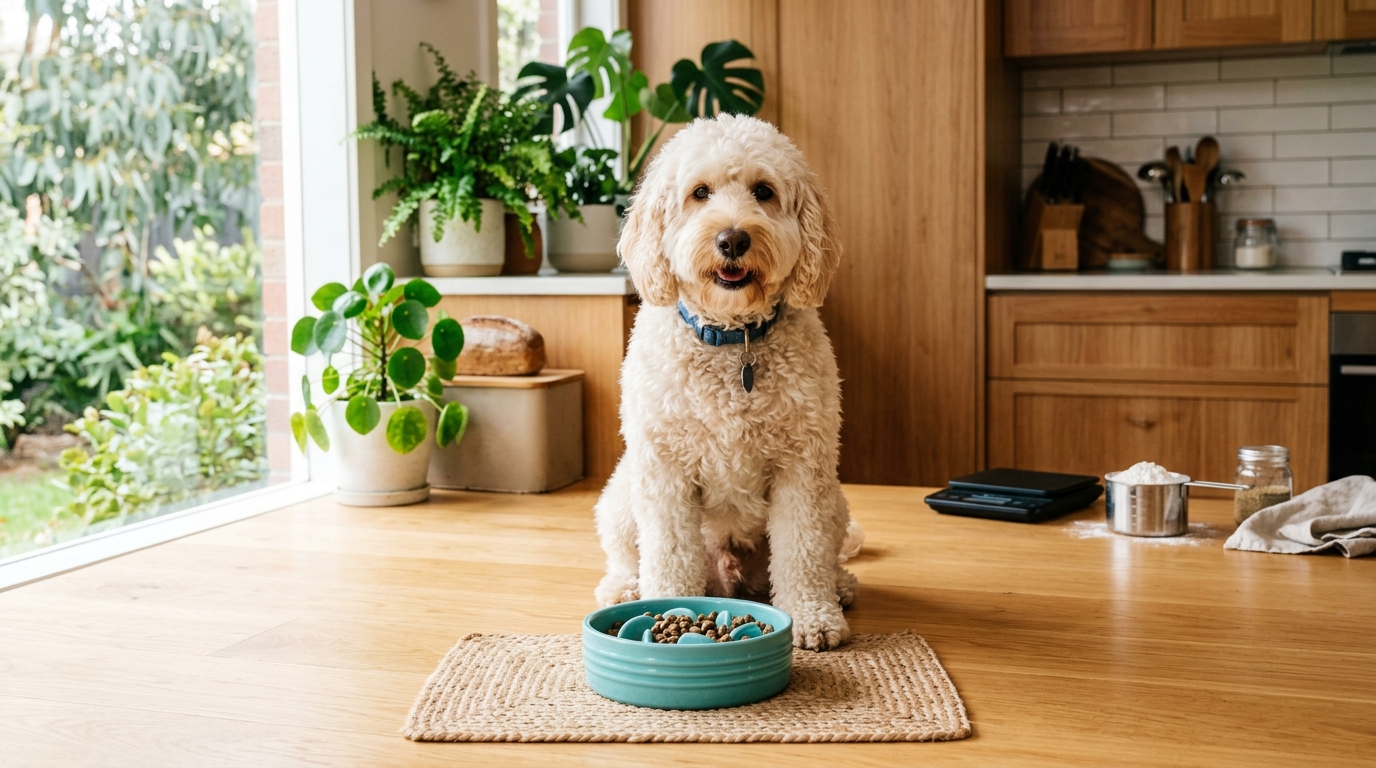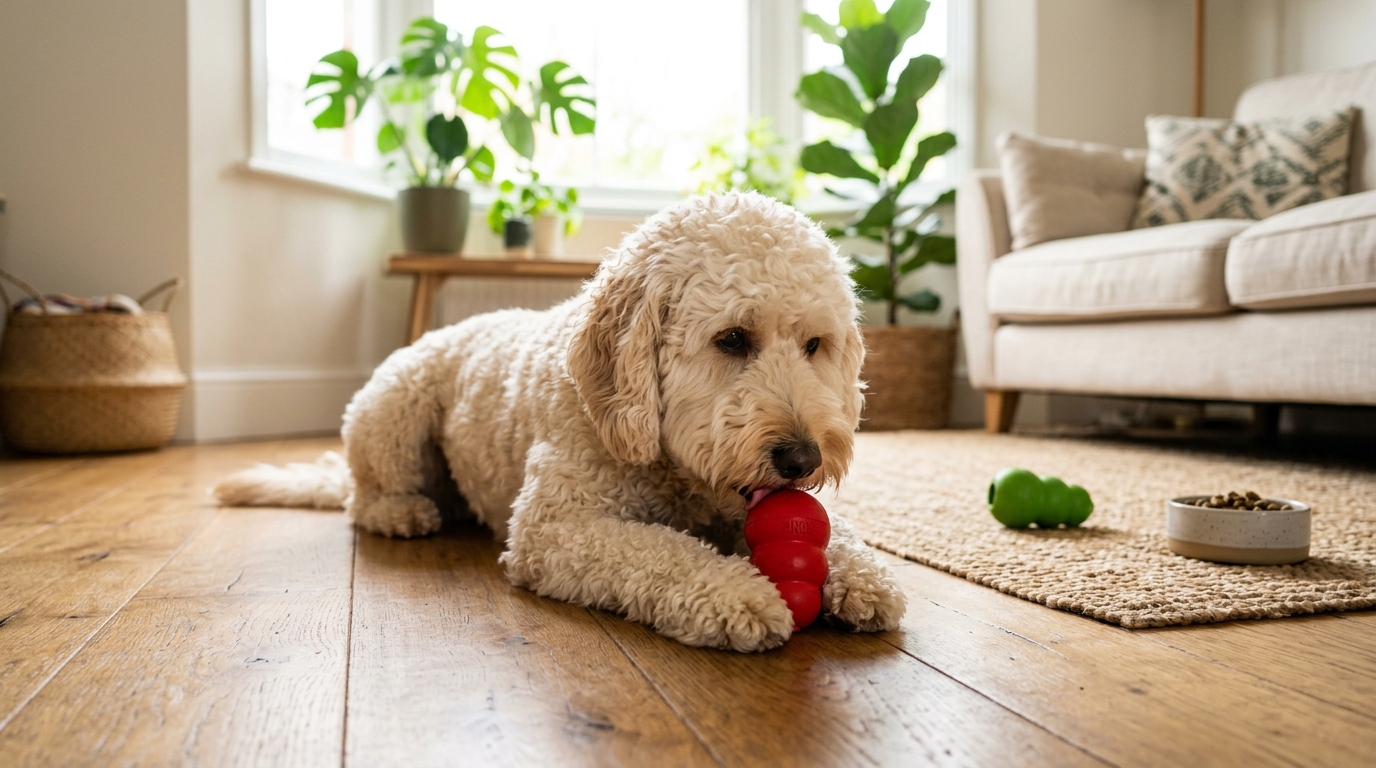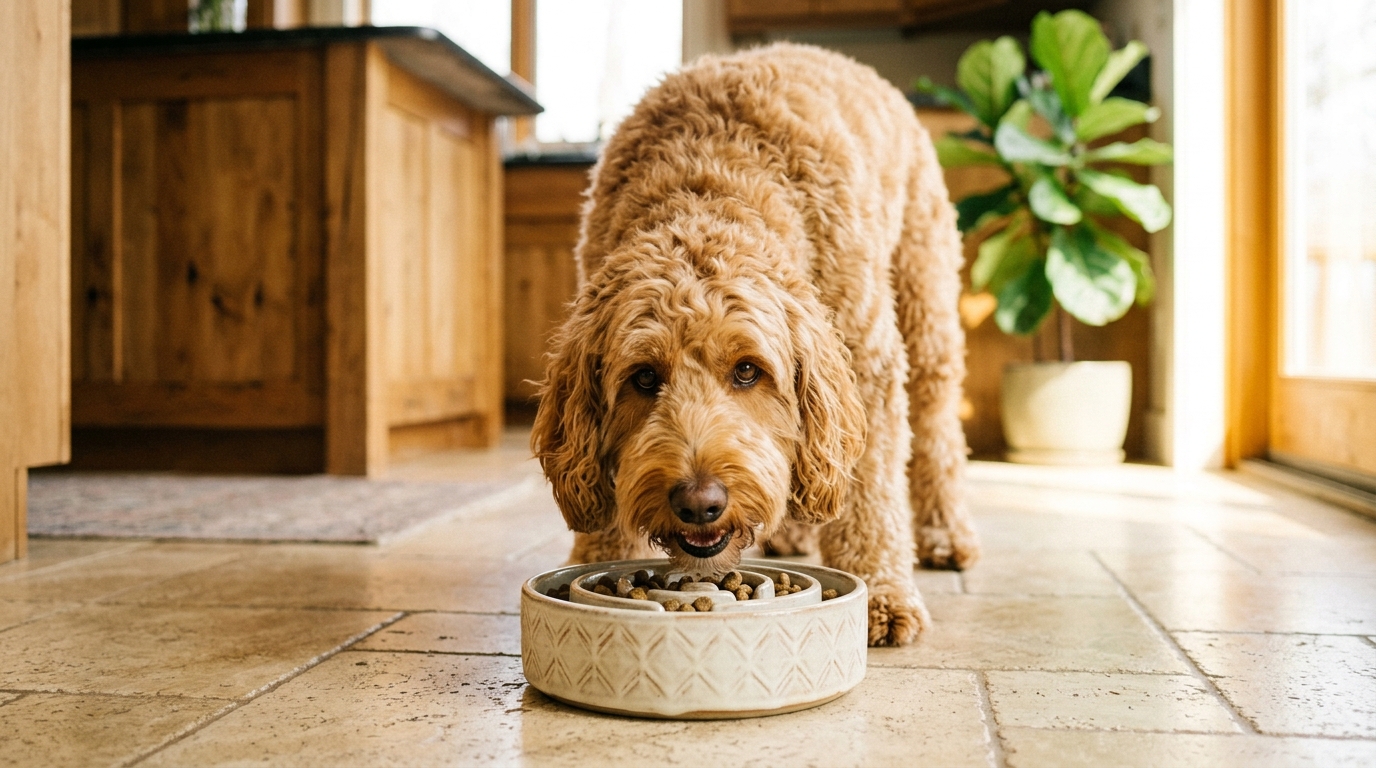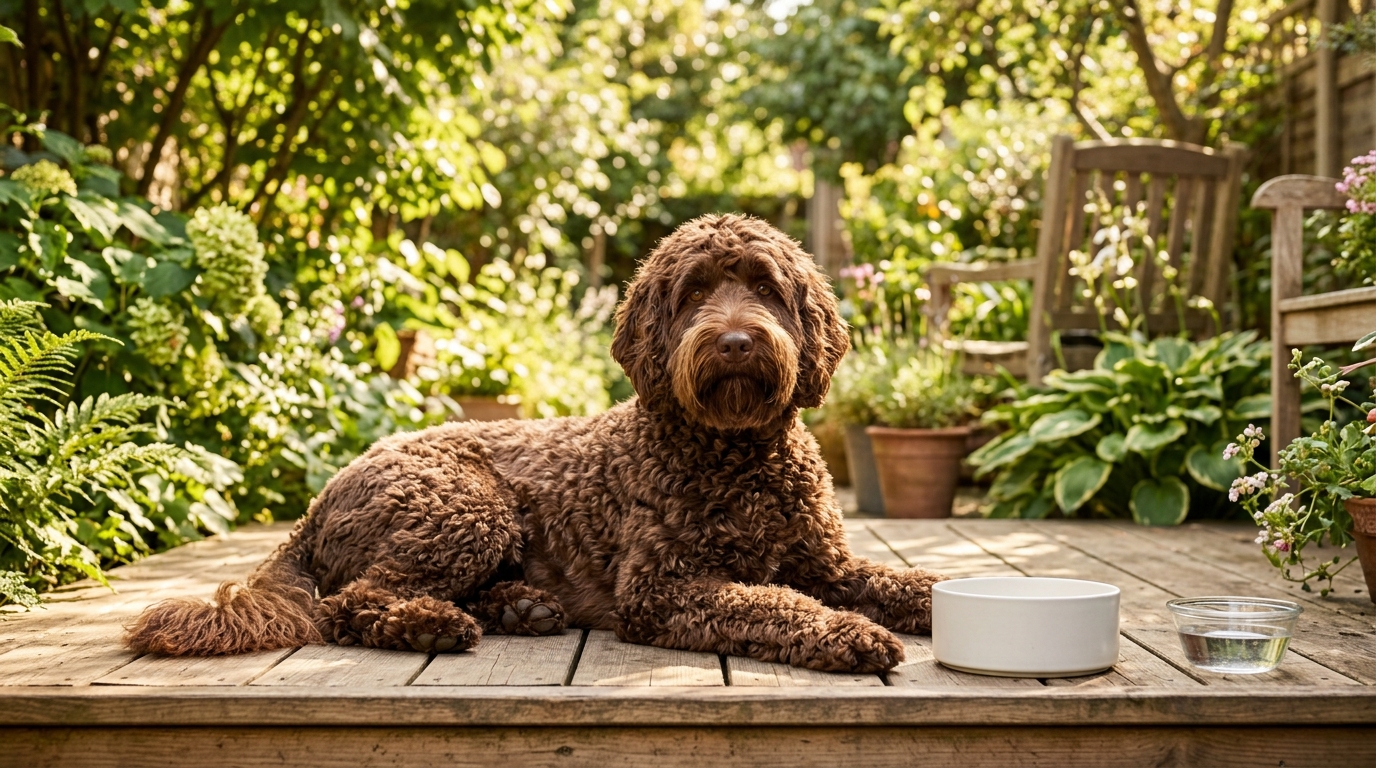
For a healthy adult doodle with no specific health problem, the best everyday dog food has three things: one named animal protein, an omega-3 source (salmon is ideal) for that curly coat and skin, and calcium suited to your doodle's adult size. Our overall pick is Open Farm Wild-Caught Salmon & Ancient Grains; Taste of the Wild Ancient Stream is the one with built-in probiotics, and Diamond Naturals Skin & Coat is the budget option. All three are salmon-based and chicken-free.
That is the short answer. But "best" depends a lot on your particular dog, so this guide is written for the owner of a healthy adult doodle who just wants a solid everyday food — not someone chasing down a diagnosed problem.
We feed our three doodles — Sven, Gunnar and Gösta — raw at home, with premium kibble and freeze-dried raw when we travel. Between them they cover most of what can go sideways with a doodle: Gunnar has the ears, yeast and itchy-paw history, Sven has the sensitive stomach, and Gösta happily eats anything you put down. So we come at food from the "what actually works over years" angle, not just the label.
What makes a food genuinely good for a doodle
Doodles are not one animal. An Australian Labradoodle, a Goldendoodle, a Labradoodle, a Bernedoodle and a Sheepadoodle are different crosses with different adult sizes and different coats. But there are a few things that matter across all of them, because they come from traits you can actually see in your own dog.
A named single animal protein, and not chicken. Look for "salmon" or "lamb," not "meat meal" or a blend of three proteins. This matters twice over: it is easier on digestion, and it makes life far simpler if your doodle ever turns out to be sensitive to a protein. The Poodle line — which sits behind every doodle on this list — carries a real, documented predisposition to allergic skin disease and food sensitivities. We also leave chicken out of every pick: it is in so many foods, treats and chews that it is one of the proteins we see doodles react to most, and it was Gunnar's trigger. Check the fat source too, because "chicken fat" hides in plenty of fish recipes.
An omega-3 source for the coat and skin. That curly or fleece coat is beautiful and it hides a lot. A dull, flaky coat or itchy skin often shows up before you can see anything underneath. Salmon-based foods, or foods with added fish oil, support skin barrier and coat quality — genuinely useful for a breed whose coat is half its charm.
Calcium and calories that match your doodle's adult size. A Mini doodle and a Standard doodle have very different needs. If you are not sure where your dog will land, our size chart by breed and type helps.
Easily digestible carbs. Oats, rice, sorghum and millet are gentle. Grain-free is only necessary for the small number of dogs with an actual grain problem — for most doodles it solves nothing.
The three ways to feed a doodle well
Before the picks, it helps to know there are three legitimate tiers, and the "best" one depends on your budget, your schedule, and how much kitchen work you want to do. This is the framework behind our whole feeding philosophy.
Fresh or raw is what we feed at home. It is what we default to. It is also the most work and the most expensive, and it demands real handling hygiene — see our raw food safety playbook before you start.
Better kibble is the practical everyday choice for most families, and there is no shame in it. A good salmon kibble covers the coat, skin and gut needs above without the freezer logistics.
Freeze-dried raw is our travel answer — raw nutrition, shelf-stable, no cooler. If you are curious how we manage food on the road with three dogs, the travel feeding playbook covers it.
Top Picks
We chose these on the criteria above: a named protein, no chicken, coat-and-skin support, gentle grains, and a track record we trust. We deliberately picked three different roles — an overall everyday pick, a probiotic-supported option and a budget option — so you can match one to your household rather than being pushed to the priciest bag.
| Product | Best For | Main protein |
|---|---|---|
| Open Farm Wild-Caught Salmon & Ancient Grains | Best Overall Everyday Kibble | Salmon and whitefish |
| Taste of the Wild Ancient Stream | Best With Built-In Probiotics | Salmon |
| Diamond Naturals Skin & Coat Salmon | Best Budget Pick | Salmon |
One practical note before you buy: kibble is only fresh for about four to six weeks once the bag is open, so buy a bag size you will finish in that window rather than the biggest bag on offer. Start with the small trial bag (4 to 5 lb (1.8 to 2.3 kg)) of whichever pick you choose, and size up only once your doodle does well on it. You can compare current sizes and prices in Amazon's pet food section.
More good foods for doodles
Three picks is not the whole list. We review more foods on the pages where they fit best: salmon and limited-ingredient kibbles in best food for a doodle with allergies and the best limited-ingredient dog food for doodles, gentle digestion-first recipes in best food for a doodle with a sensitive stomach, and freeze-dried raw in the freeze-dried transition plan.
How to actually switch your doodle over
The best food in the world will still cause loose stool if you rush the change. Sven taught us this the hard way — he loosened after every single food change in his first year, so we now transition every dog slowly regardless.
Use the same 25% steps as our 7-day transition plan: 25%, 50%, 75%, then 100% new food, two days on each step for most doodles and a day longer for a sensitive one, watching stool at each step. Gösta could switch overnight and be fine; a sensitive dog cannot. If you're moving from kibble toward raw, use the kibble-to-raw plan instead.
What good food will — and won't — fix
Food is the foundation, but it is not a cure-all, and it is worth being honest about that.
Food can improve coat quality, support skin, and keep stool firm and consistent. Choosing a single, appropriate protein also makes it much easier to spot a problem later.
Food won't fix an established ear or yeast cycle on its own, resolve a diagnosed allergy without a proper elimination approach, or stop a dog gulping so fast they vomit. Gunnar's ear and yeast pattern improved most with a protein change — moving off chicken — but that sat alongside routine ear care, not instead of it. If ears are your issue, pair the diet with the right ear cleaners. If your doodle inhales meals, a slow feeder bowl does more than any food.
Does the specific doodle breed change the answer?
Not as much as the marketing implies. A Goldendoodle and a Labradoodle of the same adult size have very similar needs, and there is no single "best dog food for goldendoodles" that a same-sized Labradoodle wouldn't also do well on. What actually changes the answer is:
- Adult size — sets calcium and calorie needs (Mini vs Standard matters far more than Golden vs Labra)
- Coat and skin health — the omega-3 question
- Individual sensitivities — whether your dog reacts to a protein
If you want the full breakdown of feeding by breed and life stage, our pillar guide on what to feed a Goldendoodle goes into it, and for choosing a size that suits your home, see Mini vs Medium vs Standard.
FAQ
For a healthy adult doodle with no specific health problem, the best everyday food has one named animal protein, an omega-3 source for the coat, and calcium suited to your doodle's adult size. Our overall pick is Open Farm Wild-Caught Salmon & Ancient Grains; Taste of the Wild Ancient Stream is the pick with built-in probiotics, and Diamond Naturals Skin & Coat is the budget choice. All three are salmon-based. If your doodle has allergies or a sensitive stomach, choose from our narrower guides instead.
We choose salmon. It brings omega-3s that support the curly coat and skin, and it avoids chicken, which is in so many foods for so long that it is one of the proteins we see doodles react to most. That is why every pick on this page is chicken-free. If your doodle is itchy or has recurring ear or paw issues, a salmon or other single-protein formula is a sensible starting point.
Not fundamentally. A goldendoodle and a labradoodle of the same adult size and activity level have similar nutritional needs. What matters far more than the specific cross is adult size (which sets calcium and calorie needs), coat and skin health, and whether your individual dog has food sensitivities. Feed for the dog in front of you, not the breed label.
Not for most doodles. Grain-free only helps the small number of dogs with a genuine grain sensitivity, and the FDA has flagged a possible link between some grain-free diets and heart issues. Unless your vet has identified a grain problem, a food with easily digestible grains like oats or rice is perfectly good and often gentler on the gut. All three picks here include grains.
Go slow: use the same 25% steps as our 7-day transition plan (25%, 50%, 75%, then 100% new food), which takes seven days for most doodles; a sensitive doodle stays on each step a day longer. Watch stool at each step, and adding a probiotic during the switch can smooth things out.
Where to go next
If you've matched a food to your healthy doodle from the picks above, your next best move is nailing the switch — read the 7-day transition plan before you open the bag. And if reading this raised a specific worry — itch, ears, loose stool — head to the guide built for it rather than guessing: the sensitive stomach hub, the food allergies hub, or the itchy skin & paws hub will each take you further than a general food list can.