
Goldendoodles are not guaranteed to have more allergies than every other breed, but both parent breeds carry real genetic predispositions worth knowing about. Poodles and Golden Retrievers are both prone to atopic dermatitis (environmental allergy) and to skin and ear problems, so a Goldendoodle draws allergy risk from both sides of its family tree. Hybrid vigor softens some inherited disease risk, but it does not reliably erase allergy tendencies, which is why many Goldendoodles do develop environmental, food, or flea allergies.
If you've landed here because your Goldendoodle is licking its paws raw, scratching after every walk, or having digestive upset, you're asking exactly the right question. The honest answer isn't "all dogs get allergies" filler, it's grounded in the specific heritability of the two breeds behind your dog.
If you already know your dog is itchy and you just want the shortlist of supplements that actually help, you can skip ahead to our honest allergy supplement guide, otherwise, read on and we'll help you figure out the cause first.
In our own house we live with three doodles (Sven, Gunnar and Gösta), and one of them is far itchier in high pollen weeks than the others. Same food, same yard, very different skin. That's genetics and individual variation in action, and it's the whole story of this article.
Do Goldendoodles Have More Allergies? The Genetic Reality
Here's the part generic articles skip. "Are Goldendoodles prone to allergies?" isn't really answered by looking at the Goldendoodle, it's answered by looking at the Poodle and Golden Retriever parent lines.
- Golden Retrievers are widely recognized as one of the breeds most predisposed to atopic dermatitis (allergic skin disease driven by environmental triggers), along with recurrent ear infections and skin issues.
- Poodles, the other half, also carry a documented tendency toward atopic skin disease, sensitive skin, and ear problems, especially because of their coat type (more on that below).
When you cross two breeds that both sit on the higher-risk end for allergic skin disease, you don't magically land in the safe zone. You produce a dog that can inherit those tendencies from either parent, or both. The Merck Veterinary Manual notes that atopic dermatitis has a strong breed-related genetic predisposition.
This is the core of the poodle mix allergy predisposition question. It's not unique to Goldendoodles; Labradoodles, Australian Labradoodles, Bernedoodles and Sheepadoodles all carry Poodle genetics and the same general caution applies. But because the Golden Retriever side is also allergy-prone, Goldendoodles are a particularly relevant breed to watch.
The Hybrid Vigor Myth (And What It Really Buys You)
You'll see breeders and forums claim that crossbreeding gives Goldendoodles "hybrid vigor" that protects them from health problems, including allergies. There's a kernel of truth and a lot of overreach here.
Hybrid vigor can genuinely reduce the risk of certain single-gene recessive diseases, because you're less likely to double up on the same faulty gene from two unrelated parents. That's real.
But allergic tendency is polygenic, influenced by many genes plus environment, and both parent breeds carry it. Crossing two allergy-prone breeds doesn't cancel the trait out the way it might cancel a rare recessive disorder. So hybrid vigor is not a shield against goldendoodle skin and food allergies. It's a nice bonus for some conditions and irrelevant for this one.
Coat Type and Grooming: The Extra Risk Layer
This is where Goldendoodles differ from your average Labrador or shepherd, and it's worth its own section.
That gorgeous curly or wavy coat is a double-edged sword. It hides skin problems until they're advanced, and it traps moisture and debris against the skin. A short-coated dog's owner sees a red patch immediately; a Goldendoodle's dense curls can conceal a growing hot spot or a rash for days.
Two coat-related risk points stand out:
Floppy Ears and Trapped Moisture
Both Poodles and Golden Retrievers pass down floppy ears, often with hair growing inside the canal. That warm, damp, poorly ventilated environment is a perfect setup for recurring ear infections, which in allergic dogs are frequently the first visible sign of underlying allergy. If your Goldendoodle gets ear infection after ear infection, allergies belong on the suspect list.

Curls That Hide (and Hold) Trouble
Dense doodle coats hold onto pollen, grass, and shampoo residue. Contact irritation from grass or from harsh grooming products is common, and the coat makes it linger. If your dog gets itchier right after a groom, that's a known pattern, we cover it fully in our guide on doodles itchy after grooming.
The Four Allergy Types Goldendoodles Actually Get
"Allergies" isn't one thing. Here's what's actually behind the itching or upset, ranked roughly by how common they are.
| Allergy type | Trigger | Typical signs | How common in Goldendoodles |
|---|---|---|---|
| Environmental (atopic) | Pollen, grass, dust mites, mold | Paw licking, face rubbing, recurring ears, seasonal itch | Most common |
| Flea allergy | Flea saliva | Intense itch, tail-base scabbing | Common, often overlooked |
| Food allergy | Proteins (chicken, beef, dairy) | Year-round itch, ears, sometimes GI upset | Less common than people think |
| Contact | Shampoos, cleaners, grass | Belly/paw redness where skin touches | Situational |
The big surprise for most owners: food is not the number one cause. Environmental allergy is far more common. Many owners switch food repeatedly chasing an itch that was really pollen all along. Our broader are doodles prone to allergies guide digs into this ranking across all doodle types.
That said, food allergies are real and worth ruling out properly. If you suspect food, don't guess, follow a structured elimination diet rather than random switching, and read our complete food allergy guide first. Everything we have on the topic is collected on our doodle food allergies page.
Gut Health, Digestion, and the Allergy Connection
The gut and the skin overlap here, so it's worth naming the difference. Food allergies and food intolerances are different things, a true allergy is an immune response; an intolerance is a digestive one. Both can cause the paw licking and soft stool that scare owners, but they need different fixes. We spell out the difference in food allergy vs food intolerance.
Goldendoodles are also known for sensitive stomachs through the same Poodle line, so digestive upset and skin symptoms sometimes travel together. If GI upset is your main worry, start with our Goldendoodle digestive issues guide and signs of a sensitive stomach. For the bigger picture on which probiotics, digestive enzymes, and omega-3s are actually worth giving a sensitive doodle, see our complete guide to doodle gut health and supplements.
One thing we watch closely in our house: paw licking right after eating. It's a specific pattern with its own meaning, which we break down in doodle licking paws after eating.
Early Warning Signs to Watch For
Because a Goldendoodle's coat hides so much, you have to look and feel deliberately. Catch these early and you can often prevent a minor itch from becoming a chronic, miserable, secondary-infection cycle.
- Paw licking or chewing, especially at night or after walks, a classic early atopy sign. See itchy paws at night.
- Recurring ear infections, often the very first flag of environmental allergy.
- Face and muzzle rubbing on carpet or furniture.
- Red belly or armpits, thin-skinned areas show irritation first. Details in red belly rash.
- A musty or greasy smell, this often means secondary yeast overgrowth, which rides along with allergic skin.
- Seasonal patterns, worse in spring or fall points strongly toward environmental triggers.
What You Can Actually Do (Prevention and Management)
You can't rewrite your Goldendoodle's genetics, but you strongly influence how much those tendencies flare. Here's what works, in rough order of impact.
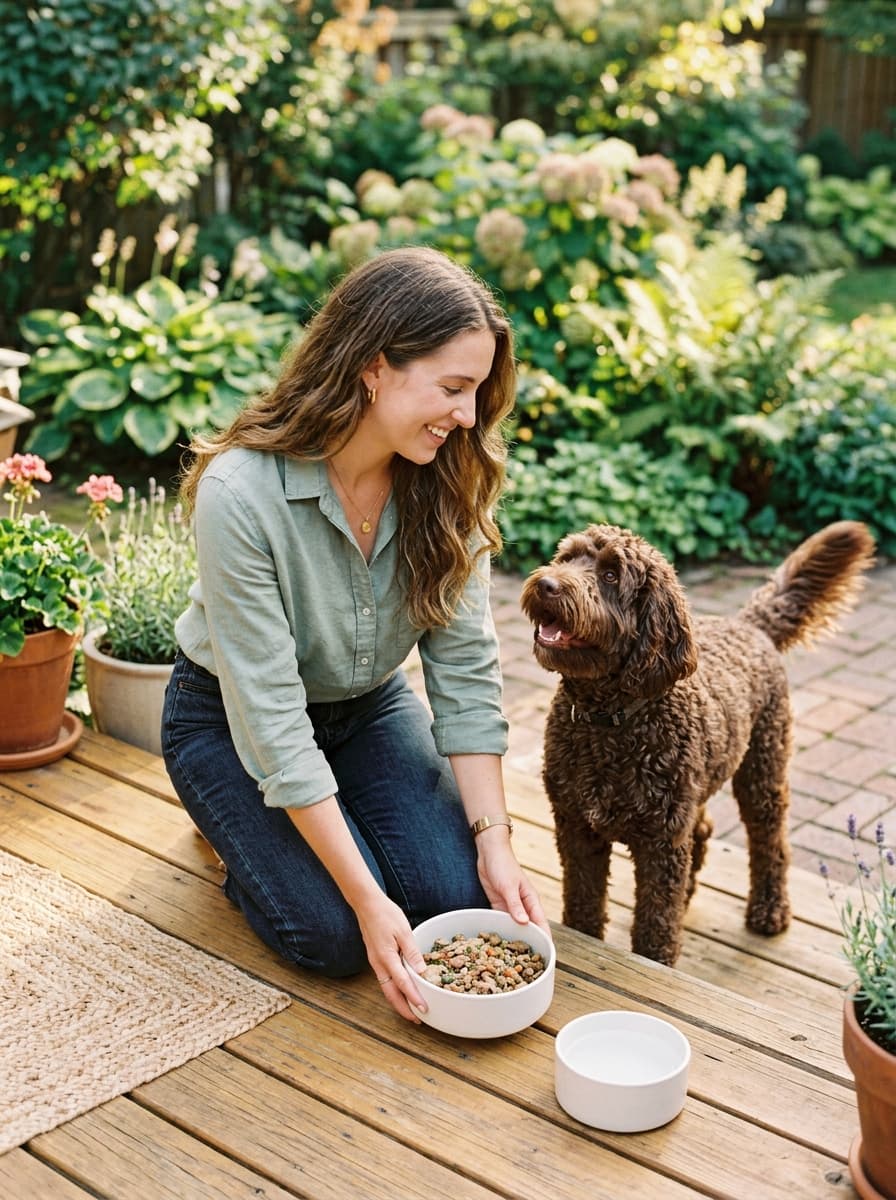
1. Keep flea prevention airtight. Flea allergy is common, sneaky, and completely preventable. A single bite can trigger weeks of itch in a sensitive dog. Year-round prevention is the cheapest allergy insurance you'll buy.
2. Rinse off the pollen. For environmental allergy, physically removing allergens helps. A quick paw rinse after walks and regular baths with the right product reduce the load. Match the shampoo to the cause, our best shampoo for itchy doodles guide explains how.
3. Support the skin barrier with omega-3s. Fatty acids help calm inflammatory skin and are one of the few supplements with genuinely solid support. See best omega-3 for doodle skin.
4. Stay on top of grooming and ears. Regular, gentle grooming lets you spot problems the curls would otherwise hide, and dry, clean ears prevent the infection cycle. Don't over-bathe with harsh products, which strips the barrier.
5. Feed a consistent, appropriate diet. If food is a genuine trigger, a limited-ingredient or hydrolyzed diet may help, but confirm it properly first. See best food for a Goldendoodle with allergies and, for severe cases, hydrolyzed dog food.
6. Consider supplements as support, not cure. Some help; many are hype. Our honest allergy supplement guide sorts them out.
In our own routine, the single biggest win with our itchiest doodle was consistency: same food, disciplined flea prevention, a rinse-down after high-pollen walks, and omega-3s that never get skipped. None of it is dramatic. Together it's the difference between a comfortable dog and a scratchy one.
FAQ
Goldendoodles are not automatically more allergic than every other breed, but they inherit real predispositions from both parent lines. Poodles and Golden Retrievers are both listed among breeds prone to atopic dermatitis (environmental allergy), plus skin and ear problems. A Goldendoodle draws its genetics from both, so allergy tendencies are common enough that owners should watch for them, even though plenty of Goldendoodles live comfortably itch-free.
The most common allergy in Goldendoodles is environmental (atopic) allergy to things like pollen, grass, dust mites, and mold. Food allergies are less common but do happen, usually to proteins like chicken or beef. Flea allergy and contact allergies (shampoos, cleaners, grass) round out the list. Environmental and flea allergies are far more frequent than true food allergies.
Environmental allergies most often appear between about six months and three years of age. Food allergies can show up at any age, including in dogs that ate the same food for years. If your Goldendoodle puppy is licking paws, getting recurring ear infections, or scratching seasonally, mention it to your vet early rather than waiting for it to worsen.
Hybrid vigor can reduce the odds of some single-gene inherited diseases, but allergic tendency is complex and polygenic, and both parent breeds carry it. So crossing them does not reliably cancel it out. A Goldendoodle can absolutely inherit allergy predisposition from one or both sides, which is why hybrid vigor is not a guarantee of allergy-free skin.
Allergies and yeast infections often overlap and can occur together, since allergic skin frequently develops secondary yeast overgrowth. Yeast tends to smell musty, feel greasy, and show up in paws, ears, and skin folds, while allergy itch is often seasonal or tied to food. Because they look similar, our full comparison guide walks through how to tell them apart, and persistent cases need a vet.
Your Next Step
If your Goldendoodle is already itchy and you want to know what's actually driving it, don't start by switching food at random. Start by figuring out the cause, allergy, yeast, or something else. Our guide on why your doodle is so itchy all the time walks through the five real causes in order, and if you suspect yeast rather than allergy, read allergy vs yeast infection next. From there you'll know exactly what to bring up with your vet, and that's how you turn a worried scratch-watch into a clear plan.