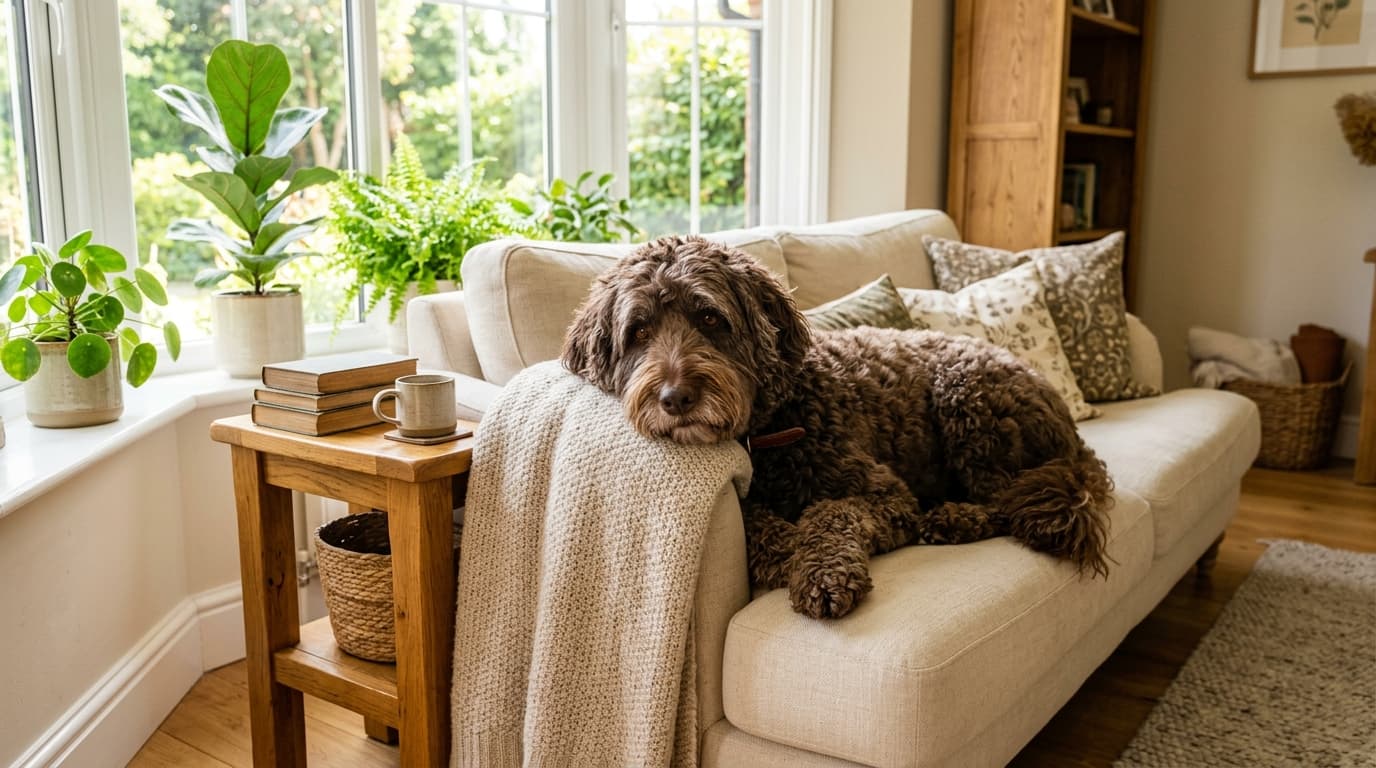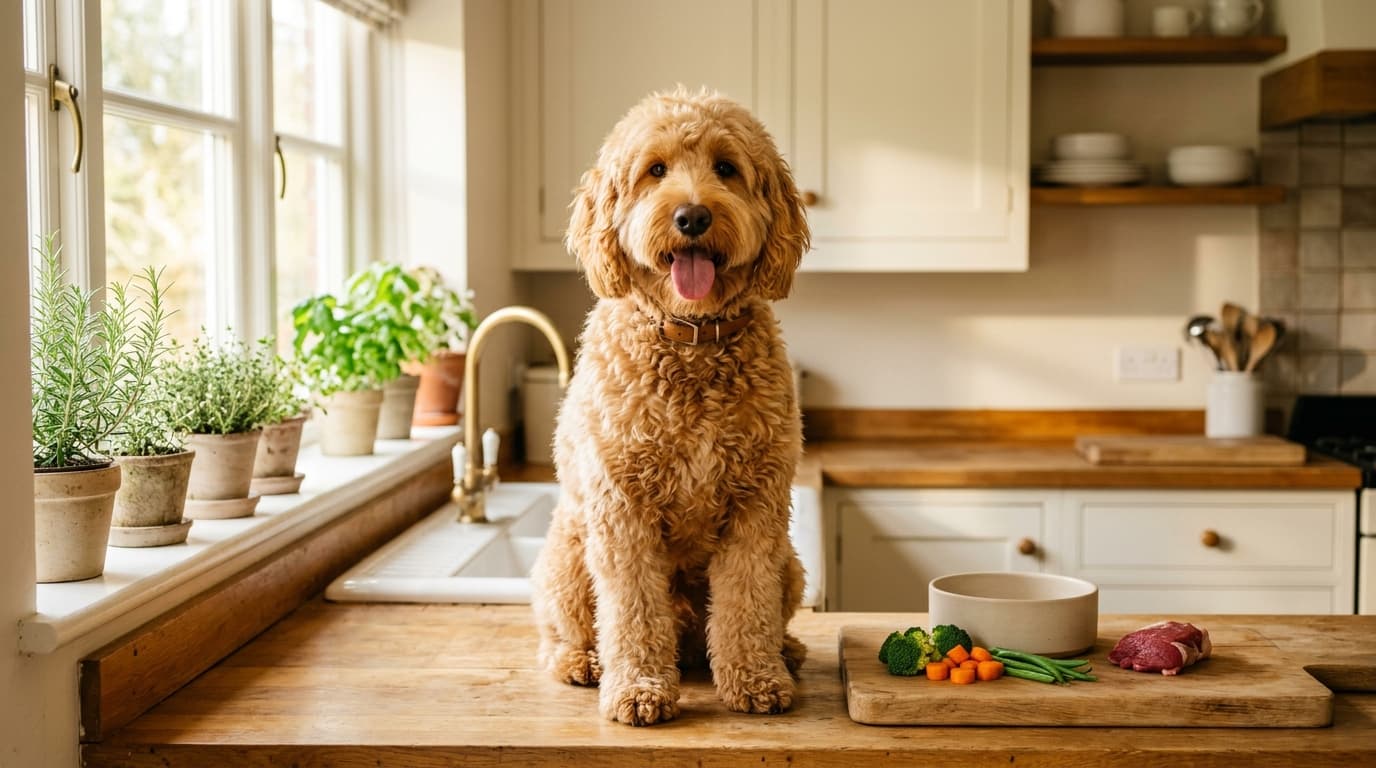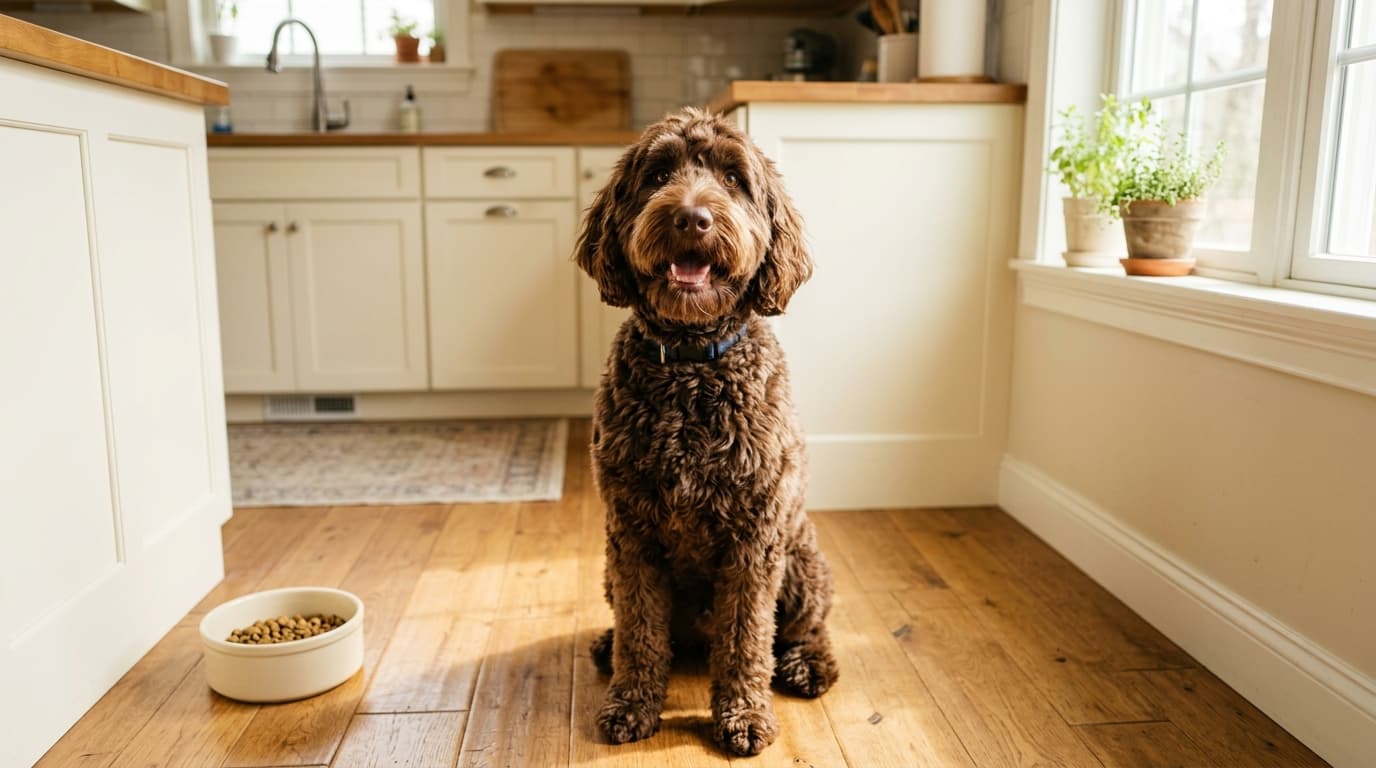
If your doodle skipped a meal or two but is still bouncing around, drinking water normally, and generally acting like their usual goofy self, you're probably fine to relax. A doodle not eating but acting normal is one of the most common, and most benign, things doodle owners run into. In a healthy, energetic, well-hydrated adult doodle, a missed meal is almost always down to pickiness, food boredom, recent treats, heat, or a bit of mild stomach upset. A healthy adult can safely skip food for roughly 24-48 hours.
The big exceptions are young puppies (under about 5 months), tiny doodles, and seniors, who have far less energy reserve, and any doodle where the "acting normal" part slips away into lethargy, vomiting, or diarrhea.
Below is the calm, decision-tree version: what's usually going on, what actually warrants a vet call, and how long you can reasonably wait by age and size. Plus the at-home steps we use with our three (and the picky-eater habits we work hard not to create). And if you already suspect the skipped meals trace back to a genuinely sensitive stomach and just want the shortlist of foods that work, jump straight to best food for a doodle with a sensitive stomach.
The quick decision tree: act normal + not eating
Here's the mental shortcut we use in our house:
- Acting normal + skipping food + drinking water = usually benign. Watch and wait within the safe timeline.
- Acting normal + skipping food + plus vomiting, diarrhea, or refusing water = worth a closer look, and possibly a vet call depending on frequency.
- Off/lethargic + not eating = call your vet, regardless of how long it's been.
The single most reassuring signal is that your doodle is still playful and still drinking. A goldendoodle refusing food but playful is a very different situation from one that's flat, hiding, or turning away from water too.
Common benign reasons a doodle won't eat
Most of these are unremarkable and resolve on their own. Doodles, thanks to their poodle and retriever lines, tend to be both sensitive-stomached and a little opinionated about food, so a few of these show up more than you'd expect.
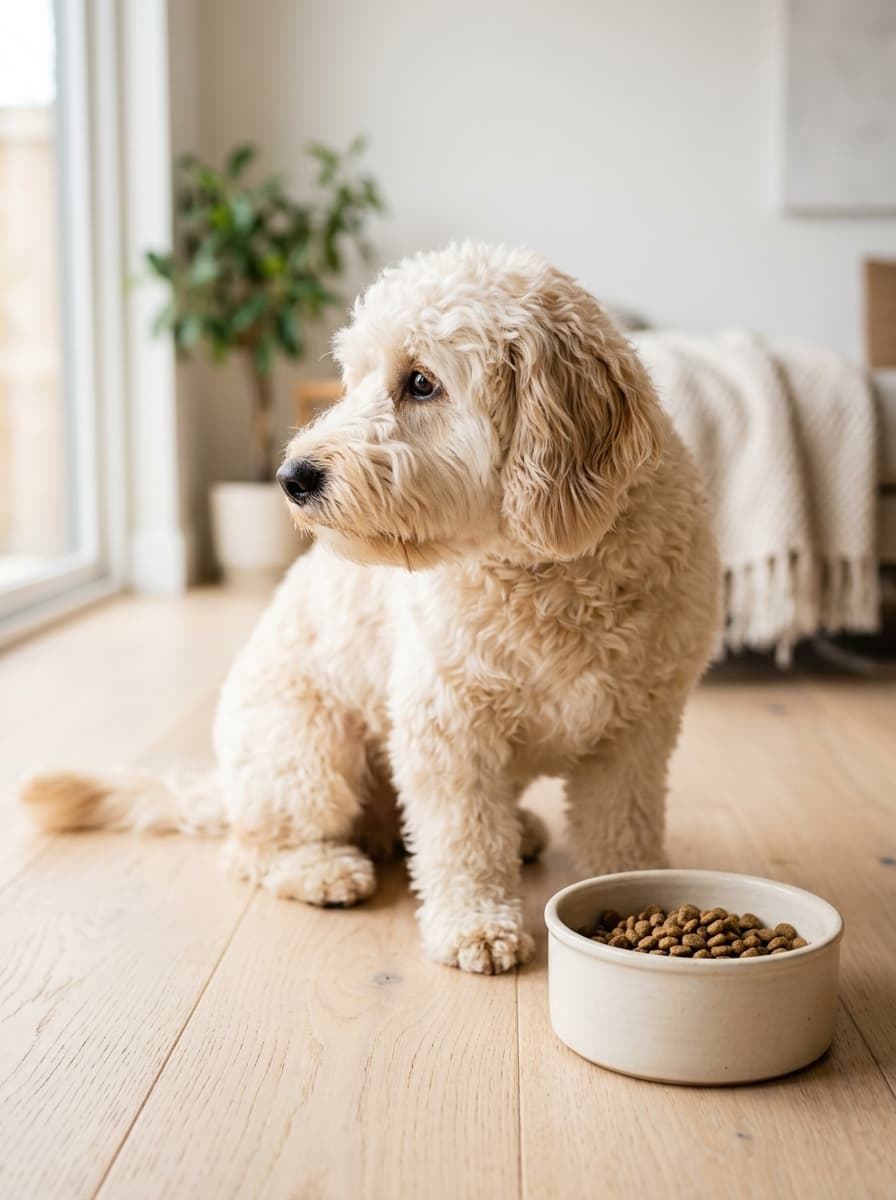
They're just being picky
Doodles can be champion negotiators. If your doodle has learned that skipping kibble sometimes produces a topper, a bit of cheese, or hand-feeding, they'll happily hold out. A doodle picky eater not eating is usually a training problem, not a health problem. (More on breaking that cycle below.)
Food boredom
The same bag, day after day, can get boring, especially for food-motivated retriever-line doodles who then suddenly aren't motivated. This is common and harmless, but resist the urge to constantly switch foods, which just teaches them to wait for the next new thing (and can upset a sensitive stomach, see doodle diarrhea after switching food).
They filled up on treats or scraps
This one's sneaky. A busy training day, a few extra chews, or somebody slipping table scraps can easily blunt appetite for the next meal. Treats should stay under about 10% of daily calories; go over that regularly and you'll get a dog that "isn't hungry" at dinner. The AAHA makes the same point about keeping treats to roughly 10% of daily calories.
Heat and weather
Appetite genuinely dips in hot weather. Our doodles eat noticeably less on the muggiest summer days, then make up for it once things cool off. Totally normal.
Mild stomach upset
A slightly off tummy, too many treats, a gulp of pond water, a bit of stress, can make a doodle self-fast for a meal. If it's paired with a single soft stool but everything else is fine, that's usually minor. See doodle soft stool but acting normal for where the line is. If this happens repeatedly, it may point to a broader question of whether your doodle has a sensitive stomach rather than a one-off issue.
Stress and routine changes
Doodles are sensitive, people-bonded dogs. A houseguest, a schedule shift, boarding, a new dog, or even you being away can knock appetite off for a day. Stress and digestion are tightly linked in this breed, we cover it in stress and digestive problems in doodles.
Puppy teething
Teething puppies (roughly 3-6 months) sometimes eat less because their mouths are sore. Softening kibble with warm water or offering slightly cooler food can help.
After spay/neuter or vaccines
It's common for appetite to dip for a day or two following a spay, neuter, or a round of vaccines. Mild and short-lived is expected; anything more than that, check with your vet.
When to worry about a dog not eating
Here's where we get specific, because most articles gloss right over it. Not eating becomes a vet conversation when it's paired with any of the following:
That bloat point deserves emphasis: unproductive retching plus a distended, tight abdomen and distress is a life-threatening emergency, go straight to an ER vet, don't wait. It's less common in doodles than in deep-chested giant breeds, but standard doodles can be affected, so it's worth knowing the signs. The Merck Veterinary Manual describes the same warning signs for gastric dilatation-volvulus.
If vomiting is part of the picture, our guide on when to take your doodle to the vet for vomiting walks through the specific thresholds. And if a genuinely sensitive stomach seems to be the root issue, signs your doodle has a sensitive stomach helps you spot the pattern.
How long can a doodle safely skip food? By age and size
There's no single number, reserves vary a lot by age and body size. Here's the practical framework we use. These assume a doodle that is otherwise acting normal and drinking water; any red flag above overrides the timeline.
| Age / size | Safe watch-and-wait window | Call the vet if... |
|---|---|---|
| Puppy under 5 months | 8-12 hours max | Refuses two meals or seems flat/wobbly, risk of low blood sugar |
| Toy/mini doodle (adult) | ~24 hours | Still refusing after a day, or any red flag |
| Standard doodle (adult) | 24-48 hours | Past 48 hours, or any red flag |
| Senior doodle | ~24 hours | Refusing more than a day, or any change in energy |
| Post-surgery / post-vaccine | ~24 hours | Not eating by next day, or seems in pain |
The through-line: the younger, smaller, or older your doodle, the shorter your leash on this. A big, healthy adult standard doodle who skips breakfast and dinner but is stealing socks and drinking normally is very different from a 12-week-old mini who's turned down two meals.
At-home steps to encourage eating
Before assuming anything is wrong, try these, but only for a doodle who's genuinely acting normal.
- Stick to the schedule. Offer food, give it 15-20 minutes, then pick it up. Re-offer at the next scheduled meal. Free-choice grazing masks appetite changes and encourages fussiness.
- Cut treats to zero for the day. Let them get genuinely hungry for real meals.
- Warm it slightly. Warming raw or wet food (or adding a splash of warm water to kibble) releases aroma and often tempts a reluctant eater.
- Add a simple, gentle topper, but not a fancy one. A spoon of plain pumpkin or a little bone broth can bridge a mild-tummy day without teaching them to hold out for steak.
- Feed somewhere calm. Anxious or over-stimulated doodles sometimes won't settle enough to eat. A quiet corner, away from the other dogs, helps.
- Rule out the obvious. Check the food isn't spoiled or rancid (raw and freeze-dried especially), and that the bowl is clean.
For sensitive doodles, we lean on probiotics and a steady gut health routine to keep everyday digestion smooth, which tends to translate into more consistent appetite over time.
How we handle it with three doodles
With Sven, Gunnar, and Gösta, we long ago learned that the worst thing you can do is turn a skipped meal into a negotiation. Gunnar is our fussiest, he's the one most likely to sniff his bowl, look at us, and walk off on a hot afternoon. Early on we'd panic and start adding toppers, and he learned that trick fast.
Now our rule is boring on purpose: bowl down, 20 minutes, bowl up, nothing extra. On summer days when they all eat a little less, we don't sweat it, they even out over the week. Feeding them separately also matters; when they eat together, one dog eyeing another's bowl can put a sensitive eater off entirely. The calmer and more predictable we keep mealtimes, the more reliably they eat.
Preventing picky-eater habits long-term
A doodle that "won't eat" is often a doodle that's been accidentally trained to wait for better. To keep the good habits:
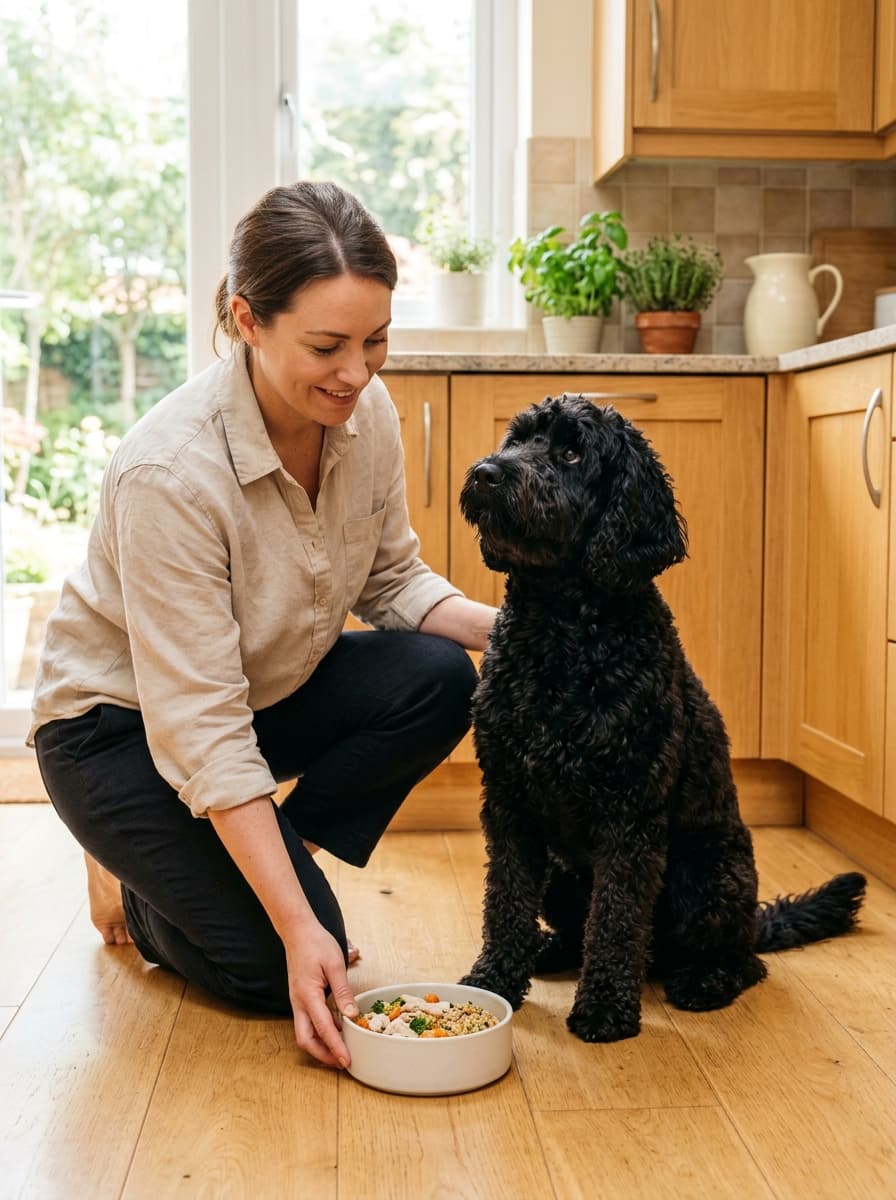
- Feed twice daily on a set schedule, meals picked up after 20 minutes.
- Don't offer alternatives to a healthy dog who refuses a meal. Missing one meal won't hurt them.
- Keep treats modest and don't let scraps become routine.
- Resist constant food-switching. If you do need to change diets, do it gradually, our 7-day food transition plan is built for sensitive doodle stomachs.
- Feed separately in multi-dog homes so anxiety or competition doesn't kill appetite.
If your doodle is genuinely a fussy sensitive-stomach type, a well-matched diet makes a real difference, best food for a doodle with a sensitive stomach covers what's actually worked.
FAQ
A healthy adult doodle that is playful, energetic, and drinking water can typically skip food for 24 to 48 hours without harm. Puppies under 5 months are the exception, they have small energy reserves and shouldn't go more than 8 to 12 hours without eating, so call your vet the same day if a young puppy refuses food. Seniors and small doodles also have less reserve, so use the shorter end of the range for them.
Yes, generally it's reassuring. A doodle that is still drinking normally and staying hydrated is far less concerning than one that refuses both food and water. Steady water intake plus normal energy usually points to a benign cause like pickiness, mild stomach upset, or heat. That said, drinking noticeably more than usual, or drinking then vomiting it back up, are both reasons to call your vet.
A playful, happy goldendoodle that skips a meal is most often picky, bored with its food, full from treats or table scraps, warm from summer heat, or slightly off from a minor stomach upset. The combination of good energy and refused food is usually benign in the short term. Watch for any change in demeanor, if the playfulness fades into lethargy, or vomiting or diarrhea appear, that shifts it into vet territory.
Almost never. A single skipped meal in an otherwise normal, energetic doodle is extremely common and rarely means anything is wrong, dogs self-regulate their appetite day to day. Simply pick the bowl up after 20 minutes and offer the next meal on schedule. Worry is warranted when multiple meals are refused alongside other symptoms, or when a young puppy is involved.
The biggest fix is to stop rewarding fussiness. Put the bowl down for 15 to 20 minutes, then pick it up whether or not it's finished, and don't offer alternatives or hand-feeding to coax a healthy dog. Feed on a consistent twice-daily schedule, keep treats under about 10% of daily calories, and avoid constantly switching foods, which teaches a doodle to hold out for something better.
The bottom line
A doodle not eating but acting normal, still playful, still drinking, still their usual self, is almost always a short, benign blip. Watch the clock (24-48 hours for a healthy adult, far less for puppies), don't reward the fussiness, and keep an eye out for the red flags that turn "watch and wait" into "call the vet."
If skipped meals keep happening, the real culprit is often an underlying sensitive stomach. Start with signs your doodle has a sensitive stomach to see whether that's the pattern you're dealing with, and how to build a diet and routine that keeps mealtimes boring in the best way.