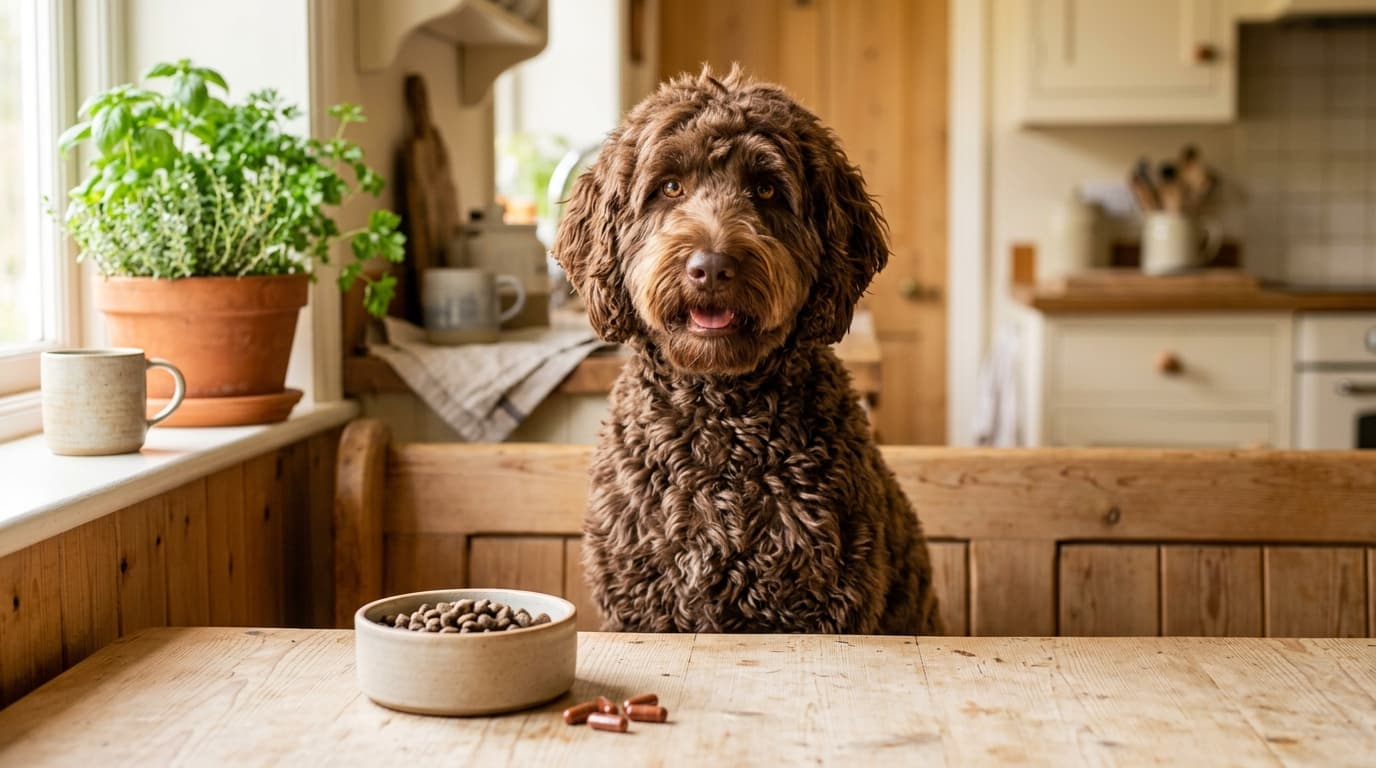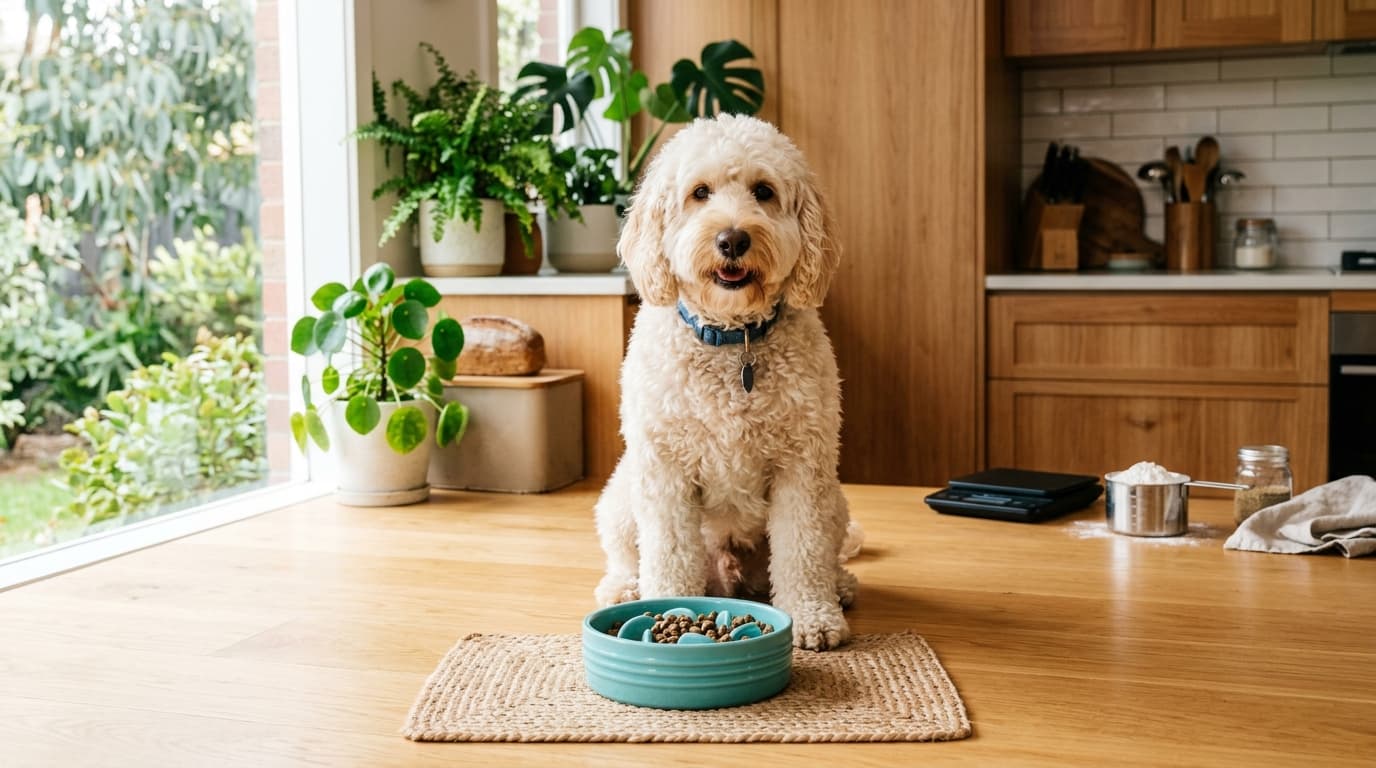
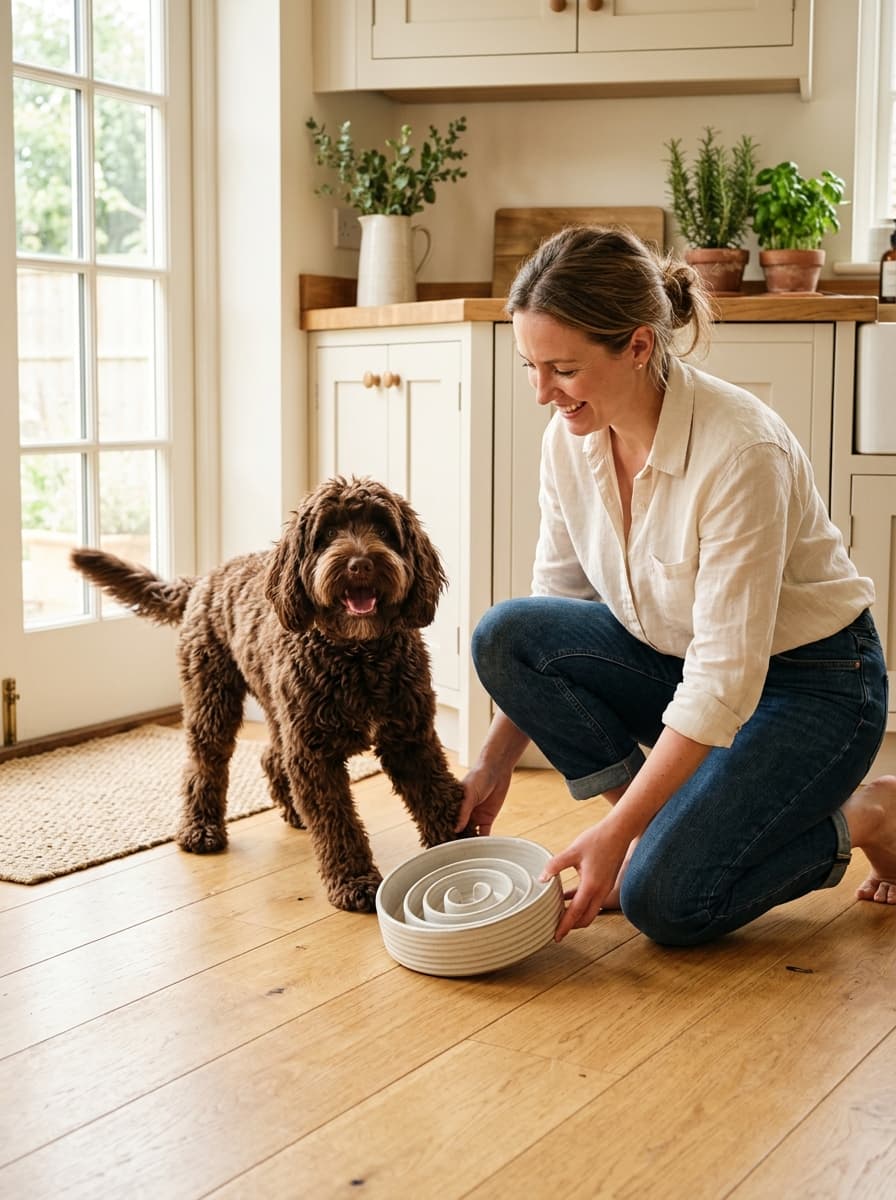
The fastest way to slow down a fast-eating doodle is a slow feeder bowl: the ridges and mazes stretch a thirty-second dinner into four or five minutes, which cuts the swallowed air behind the burping, gas and occasional post-meal vomiting. Pair it with a digital kitchen scale, because eyeballed portions drift larger across a week without anyone noticing.
If your doodle finishes dinner before you have put the scoop away, then burps, gets gassy, or brings some of it back up ten minutes later, the food itself may be fine. The speed is the problem. And the second half of that problem is quieter: portions that creep upward a little at a time until the dog is carrying weight nobody meant to add.
If you already know you want a slow feeder and just want the shortlist, our everyday pick is the Outward Hound Fun Feeder Slo Bowl in the size that matches one meal. The rest of this guide covers why speed matters for a doodle specifically, which tool fits which situation, and how to measure food so the portions stay honest. For the full four-way comparison in each category, see best slow feeder bowls, best lick mats and best puzzle feeders.
Why eating speed matters for a doodle
A dog who empties a bowl in seconds swallows a lot of air along with the food. That air has to go somewhere, and it shows up as burping, a bloated-feeling belly, room-clearing gas, and sometimes a meal that reappears on the floor minutes later looking barely touched by digestion. Our free portion calculator does the arithmetic.
Doodles land in this category often for an unglamorous reason: many of them are enthusiastic eaters. Our Gösta has never had a gut-driven problem in his life, but he would still hoover a bowl in under a minute given the chance, food motivation and a delicate stomach are separate traits, and a fast eater does not need to be a sensitive dog to benefit from slowing down.
There is also a size argument. Standard Goldendoodles, Bernedoodles and Sheepadoodles are large, deep-chested dogs, and a deep chest carries a genuine, documented risk of bloat and gastric torsion. Gulping a large meal at speed is one of the situations sensibly avoided in a big-framed dog. That is worth taking seriously without becoming anxious about it. The Merck Veterinary Manual describes rapid eating as one of the recognised risk factors for gastric dilatation and volvulus in deep-chested breeds.
The portion problem nobody notices
The tools below all slow a meal down. Only one of them fixes the other half.
Portion creep is quiet. A scoop that is heaped rather than levelled, a small top-up because the bowl looked empty, an extra handful because the walk was long. None of it feels like overfeeding in the moment, and across a week it adds up to a real surplus. In a coated breed it is easy to miss visually too, because a doodle's coat hides a waistline until the groomer takes it off.
Three habits fix it:
- Weigh raw, fresh and freeze-dried food on a kitchen scale. These foods vary in density, so volume tells you very little and weight tells you exactly what went in the bowl.
- Use a levelled measuring cup for kibble, not a heaped scoop and not a random mug.
- Stop topping up. If the portion is right, an empty bowl is the expected outcome, not a sign of a problem.
Overfeeding is one of the most common causes of soft stool we hear about, and it gets blamed on the food far more often than it deserves. The AAHA makes the same point about weight gain creeping in through small, unmeasured additions.
Which tool for which doodle
| Tool | Food it suits | Meal length | Best for |
|---|---|---|---|
| Ridged slow feeder bowl | Dry kibble, freeze-dried | 4-5 min | The everyday fast eater, start here |
| Puzzle feeder | Kibble, dry treats | 10-15 min | Bored, clever doodles who need the work |
| Lick mat | Raw, wet, yoghurt, pumpkin | 5-20 min | Raw feeders, anxious dogs, grooming days |
| Digital kitchen scale | All of it | , | Ending portion creep for good |
Each category has its own four-way comparison, slow feeder bowls, lick mats and puzzle feeders, if you want to compare within a type rather than across them.
The honest summary: most doodles need the bowl and the scale. The puzzle feeder and lick mat are worth adding when there is a second problem to solve, boredom, anxiety, or a raw diet that does not sit well in a ridged bowl.
Our picks
Best overall: Outward Hound Fun Feeder Slo Bowl
The bowl we would buy first for a fast-eating doodle. Moulded ridges and grooves force the dog to nose food out in small mouthfuls, which reliably stretches a gulped meal into several minutes. The non-slip base matters more than it sounds, a determined doodle will push a light bowl around the kitchen until the ridges stop doing their job.
Size is the decision that matters. It comes in a small three-quarter-cup, a medium two-cup and a large four-cup, and you match it to one meal, not to the dog. Overfill it and food sits above the ridges where it can be inhaled as usual.
The con: the moulded grooves need a proper wash rather than a rinse, especially with wet or raw food, and food can dry into the narrow channels if it is left overnight.
Portion tools are cheap; bowls are not always. A measuring scoop costs a couple of dollars, while maze bowls range widely for much the same design. Worth checking what things cost right now before you buy the whole set at once.
Best puzzle feeder: Outward Hound Nina Ottosson Dog Brick
When the fast eating is really boredom, a puzzle feeder does more than a bowl. Flip-open lids, sliders and removable covers hide compartments the dog has to work out, which turns dinner into fifteen minutes of thinking rather than a race. It holds around a cup and a half, so it takes a full meal for most Medium doodles.
We reach for the puzzle on days when the dogs have had less exercise than usual. A doodle who has not had enough to do is a doodle who eats too fast and then looks for the next thing.
The con: it needs supervision. A dog who decides that chewing the puzzle is faster than solving it will do exactly that, and it is a slower thing to clean than a plain bowl.
Best for raw and wet food: Hyper Pet IQ Treat Lick Mat
A ridged bowl is built around dry food. Raw, wet food, plain yoghurt or pumpkin work better spread thin across a textured mat, where the dog has to lick rather than bite. That takes time, and the licking itself is calming, repetitive licking is self-soothing for a lot of dogs, which makes the mat useful well beyond mealtimes.
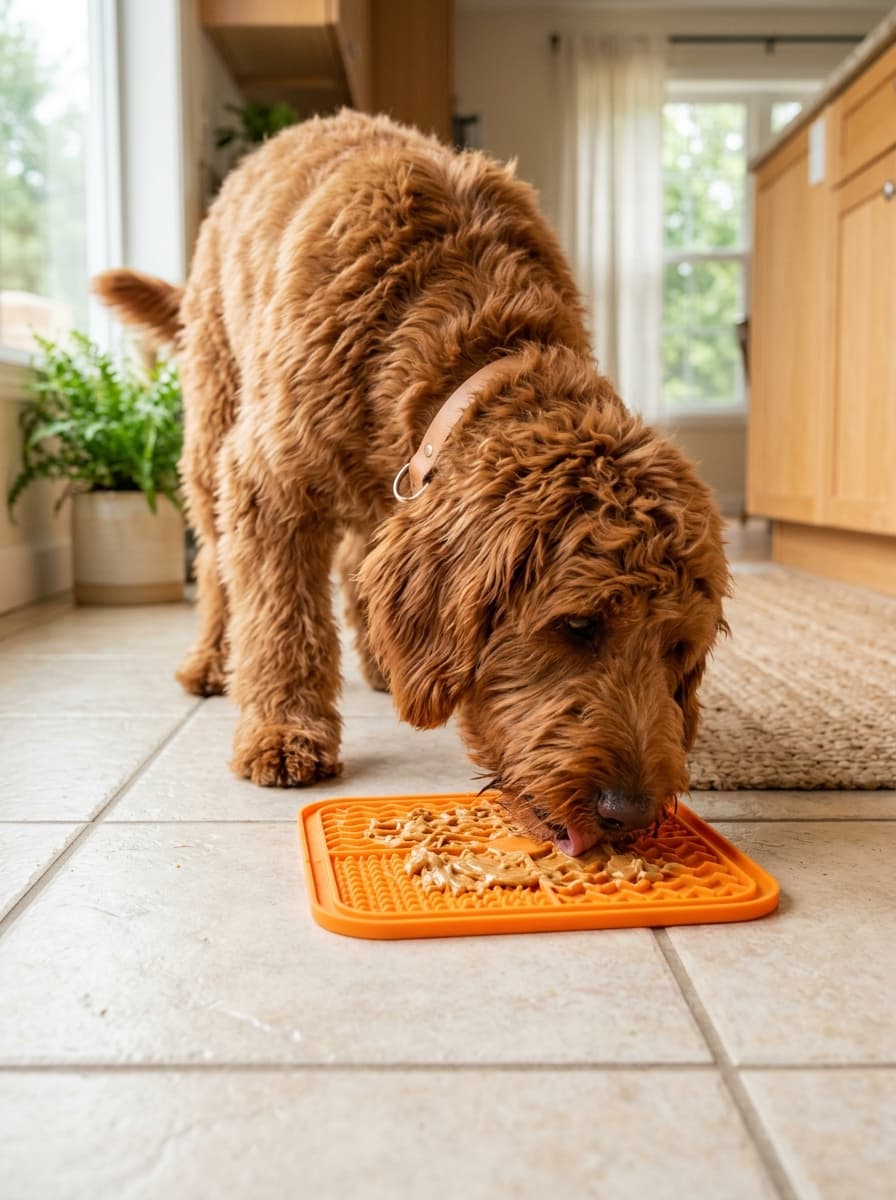
We use one on grooming days. Post-groom afternoons in a three-doodle house are chaos, and a mat with something spread on it keeps a busy mouth occupied instead of chewing at freshly clipped skin. It also earns its keep during a food transition, when a topper needs to go down slowly.
The con: it is a topper-and-snack tool rather than a whole-meal solution for a big dog, and it wants rinsing straight away or the residue sets hard.
Best for honest portions: OXO Good Grips Digital Kitchen Food Scale
The least exciting item here and the one that changes the most. Weighing raw, fresh or freeze-dried food removes guesswork completely: an eleven-pound capacity covers batch prep, the zero function lets you subtract the bowl, and gram increments are fine enough for a Mini doodle's portion.
If you feed raw and prep in batches, weighing is the only way to portion consistently, density varies between proteins and grinds, so a cup of one thing is not a cup of another. Our full batch routine is in the 5-minute daily kitchen routine for raw-feeding doodle households.
The con: it is a kitchen scale rather than a pet product, so there is no dog-specific dosing guidance on it. You still need to know your dog's target intake.
What slowing meals down will not fix
Worth stating plainly, because a slow feeder gets recommended for things it cannot touch:
- Food sensitivity or allergy. If the soft stool or itching continues on a slower meal, the issue is the food. Start with best food for a doodle with a sensitive stomach.
- Morning bile vomiting. Yellow foam on an empty stomach is a fasting-window problem, not a speed problem, see bile vomiting in doodles.
- Diarrhea after a food change. That is transition pace, covered in the 7-day food transition plan.
- An imbalanced gut. A probiotic addresses that; a bowl does not.
FAQ
Yes, for the specific problem of eating speed. The ridges and mazes force a dog to work food out in smaller mouthfuls, which typically stretches a meal from under a minute to four or five. That matters because a doodle who gulps swallows a lot of air along with the food, and swallowed air is what drives the burping, gas and occasional post-meal vomiting owners notice. A slow feeder does nothing for food sensitivity or allergies, so treat it as one tool rather than a cure.
Match the bowl capacity to one meal, not to the dog. A Mini Australian Labradoodle or Mini Goldendoodle eating three quarters of a cup does well with a small bowl, most Medium doodles fit a two-cup bowl, and a Standard Goldendoodle or Bernedoodle eating two cups per meal wants the four-cup size. A bowl that is too small makes the food spill over the ridges, which defeats the point.
They solve different halves of the problem. A slow feeder handles dry kibble and takes a whole meal. A lick mat suits wet, raw or freeze-dried food spread thin, takes longer, and has a calming effect because repetitive licking is self-soothing for many dogs. Households feeding raw often use both: the bowl for the bulk of the meal, the mat for toppers or for keeping a dog busy while the others eat.
Weigh it on a digital kitchen scale for raw, fresh and freeze-dried food, and use a levelled measuring cup for kibble rather than a heaped scoop. Weight is the only accurate method for anything that is not uniform in density, and it removes the guesswork entirely. The topping-up habit is the usual culprit behind slow weight gain: a small extra handful at each meal adds up to a meaningful surplus across a week.
It can. A dog who empties the bowl in seconds swallows air and barely chews, and the stomach sometimes responds by bringing the meal straight back up, usually within minutes and looking largely undigested. Slowing the meal down often resolves that pattern on its own. Vomiting that happens well after meals, contains bile, or comes with lethargy is a different problem and warrants a vet call.
Where to start
If your doodle inhales meals, buy the bowl sized to one meal and the scale, and give it a fortnight. Those two cover the speed and the portions, which is most of the problem for most households. Add the lick mat if you feed raw or need a calming tool, and the puzzle feeder if the real issue is a clever dog with too little to do.
If the gulping is not actually the problem, if the soft stool, gas or vomiting continues on a slower meal, the next place to look is the food itself. Start with doodle sensitive stomach: causes, symptoms and what actually helps, and see how we feed our three on our feeding philosophy page. For our full, doodle-tested shortlist across food, supplements and tools for dogs with digestive, allergy and skin issues, see Best Products for Sensitive Doodles: Food, Supplements & Tools.