For most doodles, the single most important coat-care routine is a monthly bath with a gentle, sulfate-free shampoo followed by a proper rinse-out conditioner, and the conditioner is the part that actually helps prevent matting. Look for a dog-pH, residue-free formula, apply it generously to a soaked coat, rinse it out completely, and dry to the skin. That framework works whether you own a Goldendoodle, a Labradoodle or an Australian Labradoodle, and everything below is the detail.
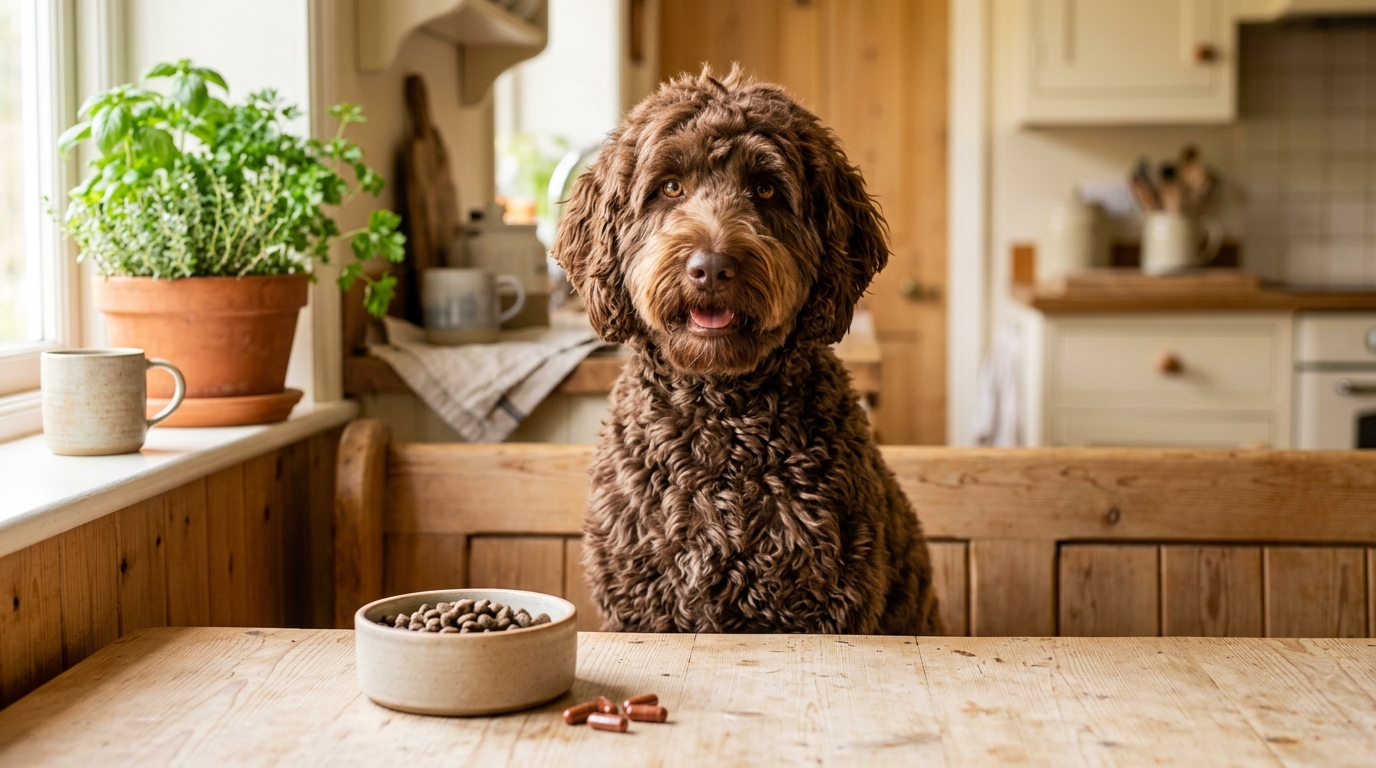
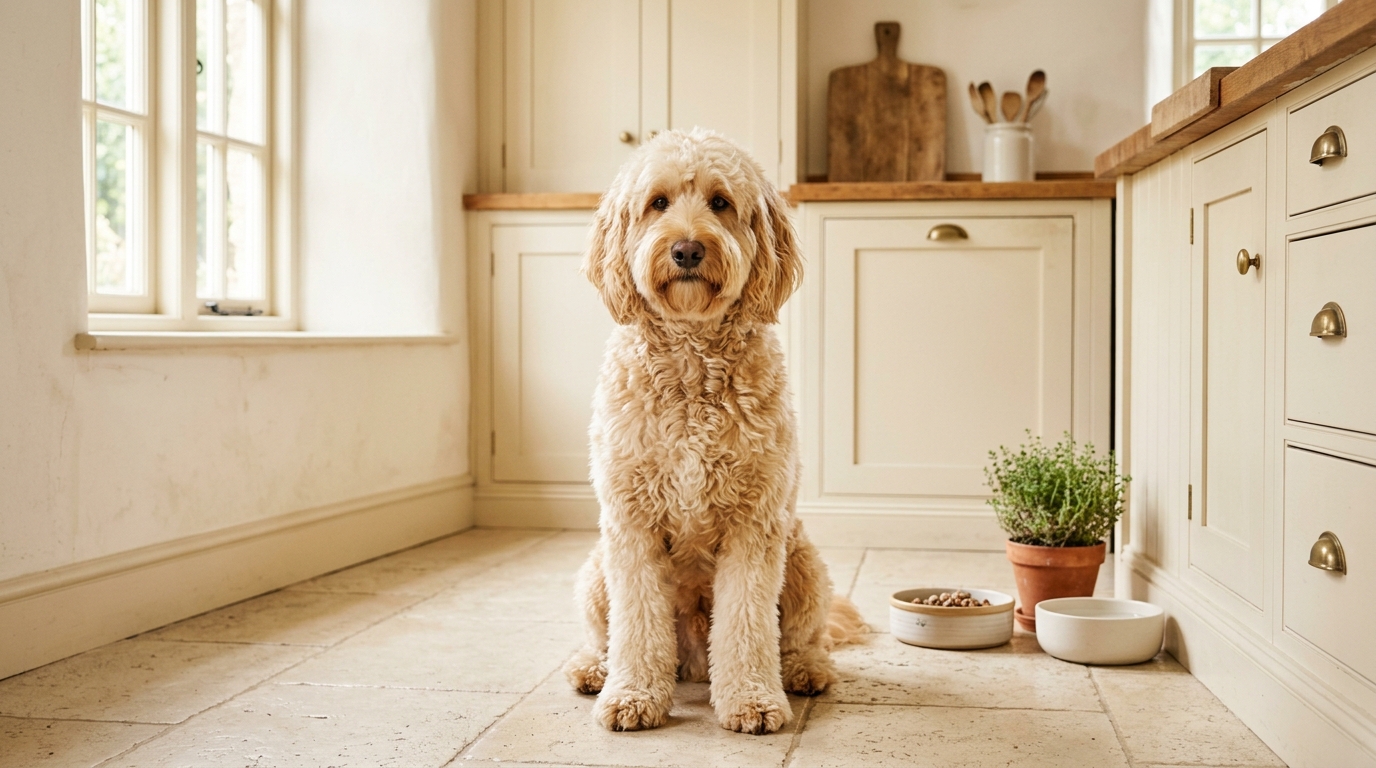
We feed and groom three Australian Labradoodles at home, an Australian Labradoodle is its own established cross, not the same thing as a first-generation Labradoodle or a Goldendoodle, though the wash routine is the same for all of them. Two of our boys, Sven and Gunnar, have curly wool coats, and Gösta has a wavy fleece coat. Different coats, same wash routine: the same gentle shampoo, the same conditioner, and a good rinse and dry every time.
This page is about everyday coat care on healthy skin, softness, shine, and mat prevention. If your doodle is genuinely itchy or has red, flaky or irritated skin, that is a different problem and needs a different product.
Why conditioner is the most important step for doodle coats
Shampoo does one job: it cleans. But cleaning alone leaves the hair shaft rough, and a rough curly or fleece coat grabs onto itself and mats. Conditioner smooths the cuticle back down, so the hairs slide past each other instead of tangling. On a curly wool coat especially, that smoothing is what stands between you and a felted mess two weeks after a bath.
In our house this was a real turning point. With Sven and Gunnar's curly wool coats, we do not brush at all, brushing the adult curly wool made it frizzy, a bit like the "curly girl method" for curly human hair (one of us has curly hair and never brushes it, and we ended up doing the same for the boys). What actually keeps the mats down for them is the monthly bath with a conditioner. We skip brushing completely, but we never skip the checking: we feel through their coats by hand daily or several times a week so there are no mats anywhere, and clip out any single mat ourselves right away. Then roughly every 2-3 months, about four times a year, we clip the whole coat off short, sooner if the coat looks in poor shape, and sometimes we leave the face a little longer.
Gösta's wavy fleece coat is a different animal: he gets the exact same shampoo and conditioner, but he also needs thorough, frequent brushing, and with that he stays mat-free and can be kept long. His fleece gets brushed once it has dried a little after the bath and is still slightly damp. If you want the full breakdown of which coat you have, our Australian Labradoodle coat types guide walks through fleece vs wool vs hair.
If you already know you just want the shortlist, jump to the best-products hub or read on for the picks below.
For general, vet-backed guidance on coat and skin care, the American Veterinary Medical Association is a reliable place to start.
What to look for in a Goldendoodle or Labradoodle shampoo and conditioner
You are washing a large, dense, absorbent coat, often on skin that leans sensitive, the Poodle line behind every Goldendoodle, Labradoodle and Australian Labradoodle carries a genuine predisposition to allergic skin disease, so gentleness matters more for doodles than for a lot of breeds. Here is what we screen for:
- Dog-appropriate pH. Dog skin is more neutral than ours; human products can be too acidic and drying over time.
- No harsh sulfates. Strong detergents strip the coat and can leave it squeaky, rough and prone to tangling, the opposite of what you want.
- Rinses clean, no residue. Residue attracts dirt and can irritate skin. If the coat feels coated or waxy after drying, that is a problem.
- Curly-coat friendliness. Silk proteins, oatmeal and light humectants smooth without weighing the coat down.
- Sensible scent. A light, quickly fading fragrance is fine; a heavy perfume can bother a sensitive dog (and you).
- Value per bath. A Standard doodle uses a lot of product. A bigger bottle or a concentrated formula matters when you are washing 50+ lb (23+ kg) of coat every month.
Top Picks: our doodle shampoo and conditioner shortlist
We chose these for gentle, dog-pH formulas, clean rinsing, and coat-smoothing ingredients that suit curly wool and wavy fleece alike. None of them contain the kind of harsh sulfates that leave a doodle coat rough and tangle-prone, and they range from the Isle of Dogs line we use ourselves to budget everyday bottles and a doodle-specific 3-in-1.
| Product | Best For | Rating |
|---|---|---|
| Isle of Dogs Silky Oatmeal Shampoo + Conditioner | What we use: everyday wash for soft, silky coats | 4.6/5 |
| Isle of Dogs Keratin Volume Shampoo + Conditioner | What we use: volume and fullness | 4.7/5 |
| Veterinary Formula Smart Coat Ultra Oatmeal Conditioner (17 fl oz / 503 ml) | Best budget conditioner | 4.6/5 |
| BioSilk Silk Therapy Detangling Conditioner (12 fl oz / 355 ml) | Best for detangling curly coats | 4.7/5 |
| We Love Doodles 3-in-1 Shampoo, Conditioner & Detangler (16 fl oz / 473 ml) | Best all-in-one for sensitive skin | 4.6/5 |
One practical note before you buy: bottle size is your real cost driver for a big doodle. A Standard doodle can go through a surprising amount of conditioner per bath. What changed our running costs was buying shampoo and conditioner as concentrate and mixing them in two cheap, ratio-marked dilution bottles, one for shampoo and one for conditioner. One bottle of concentrate makes many baths, and diluted shampoo travels through a dense coat and rinses out, where neat shampoo squeezed onto the back sits on top and takes endless rinsing. If you have two or three doodles like we do, buy the largest sensible size and check the current options in Amazon's pet section before you commit.
How to bathe a doodle (to the skin, then dry to the skin)
The product only works if the wash does. Here is the routine we use on all three:
- Soak the coat completely, down to the skin. Doodle coats repel water at first, keep going until the hair is wet through, not just on top.
- Shampoo to the skin, not just the surface. Work it in with your fingers where the coat is densest: chest, armpits, behind the ears, between the back legs.
- Rinse until the water runs completely clear. Residue is a top cause of dull, itchy, tangle-prone coats. Rinse longer than you think you'll want to.
- Apply conditioner generously and leave it a couple of minutes. For a Standard doodle you'll use a good palmful; work it right down to the skin. This is the step that helps most against matting, don't rush it.
- Rinse the conditioner thoroughly too. Left-in rinse-out product turns waxy.
- Dry to the skin. A damp coat under a dry surface is where mats and yeast start.
On that last step, we've stopped blow-drying as a routine. With an ordinary hair dryer, drying a doodle coat all the way to the skin can take the better part of an hour, unless you invest in a proper high-velocity grooming dryer. What we use now is dog drying robes (bathrobes for dogs), and they work really well, the coat dries down evenly while the dog wanders around. A high-velocity dryer is a good option if you have the time and budget and want a perfect finish at home, but it is a big purchase. With Gösta's fleece, we brush him straight through once the coat has dried a little and is still slightly damp.
What conditioner will, and won't, fix
A good conditioner smooths the coat, reduces surface tangling, and buys you time between grooms. It will not rescue a coat that is already matted to the skin, and it will not replace clipping a curly wool coat short when it gets too long. Mats are a welfare issue, not a cosmetic one, they pull on the skin, hurt, and hide problems underneath.
This is the hard lesson Gunnar taught us. He was our first doodle, and his puppy coat was fairly straight, almost fleece-like. We brushed him and thought he was in great shape, but we had a poor brush and not yet the technique, so we were only skimming the surface while believing we'd reached the skin. His coat then turned much, much curlier as an adult, and the first time we clipped him ourselves we found he was matted all over underneath: we'd been brushing over the mats. We had to shave him completely down, and felt terrible after trying our best. It's exactly why no amount of conditioner replaces checking by hand right down to the skin.
If a mat is already tight or pelted at the skin, it comes off with clippers, never scissors, scissors near the skin cut the dog. A confident owner with a clipper and a suitable blade can do this at home, including a full clip-down; that's what we do. Reach for a groomer only if the dog is stressed or the mats are widespread, and a vet if there are sores, redness or broken skin under the mat.
If you're already fighting mats, work through our dedicated doodle matting guide, and for keeping things tidy between full grooms, a small trimmer for toes, face and the sanitary area is genuinely useful even if you use a professional, see how to trim a doodle at home. And remember the coat type sets the rules: curly wool can't realistically be kept long, wavy fleece can with enough brushing.
FAQ
The best conditioner for doodles is a gentle, dog-pH, sulfate-free rinse-out formula that fully rinses clean without leaving residue. We like silk-protein and oatmeal-based conditioners for curly and fleece coats because they smooth the cuticle and reduce tangling. What matters more than the exact brand is that you actually use a conditioner at every bath, it is the step that helps most against matting.
For everyday coat care on healthy skin, once a month works well for most doodles. That is our routine for all three of our Australian Labradoodles. Bathing more often than that can dry out the coat and skin unless you are treating a specific skin problem under a vet's guidance. Always follow shampoo with a conditioner and dry fully to the skin.
Yes. Shampoo cleans but can leave the coat rough and prone to tangling, and conditioner is the step that smooths the hair shaft and helps prevent matting. Skipping conditioner is one of the most common reasons a freshly bathed doodle mats up within days. A rinse-out conditioner at every bath is the core of the routine; a leave-in spray is an optional extra between baths.
No, think of them as different jobs. A rinse-out conditioner does the deep smoothing work at bath time and is what helps most against matting. A leave-in detangling spray is a lighter top-up for tidy-ups between baths. Use the rinse-out at every bath, and add a leave-in only if it suits your dog's coat and routine.
It is best not to. Dog skin has a different, more neutral pH than human skin, and human products (especially anything with strong sulfates or heavy fragrance) can dry out or irritate a doodle's skin over time. Use a product formulated for dogs. If your doodle has itchy or problem skin rather than a healthy coat, match the shampoo to the cause instead of using a general coat-care product.
Your next step
Get the monthly bath-plus-conditioner routine going, dry fully to the skin (drying robes made this far easier for us), and check by hand a few times a week for single mats. If mats are already the battle you're fighting, work through our doodle matting guide next, and if your dog's problem is scratching rather than coat care, start with best shampoo for itchy doodles instead.