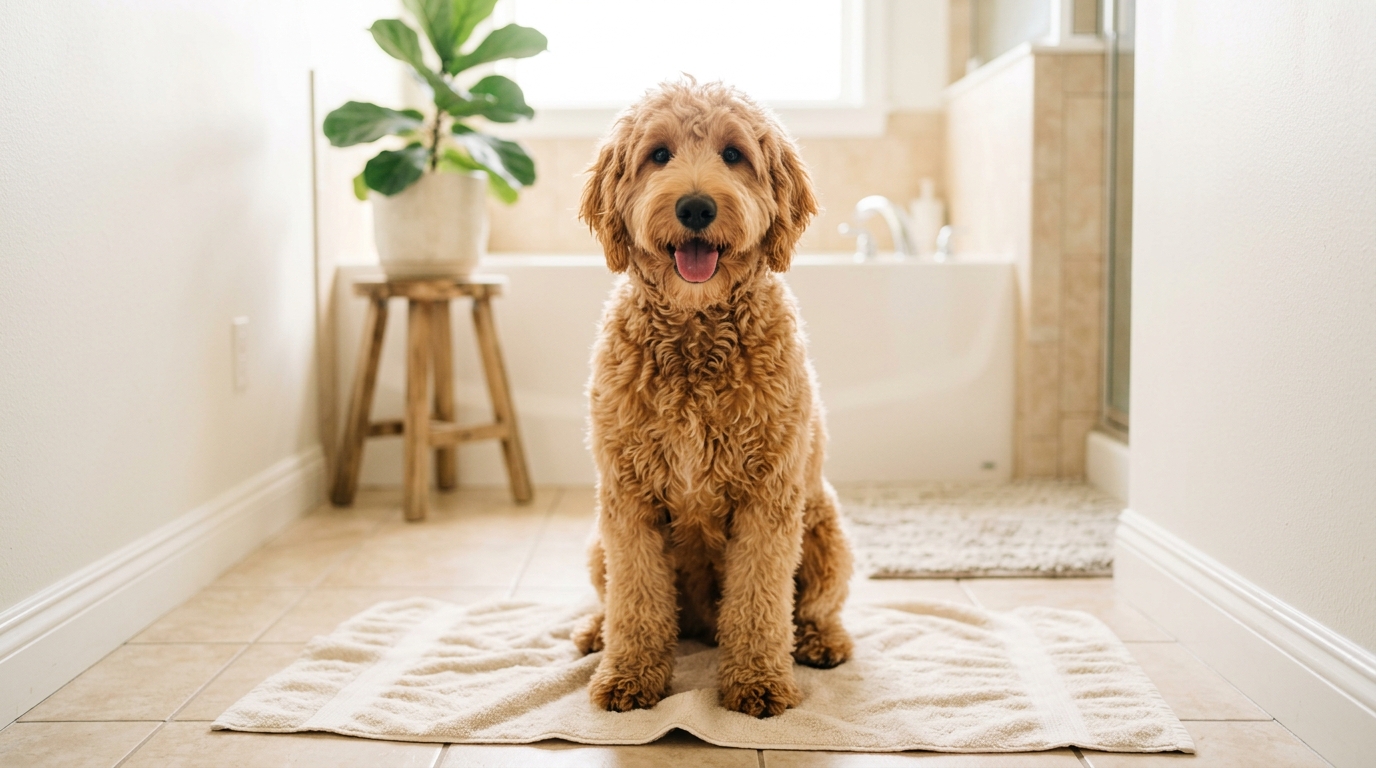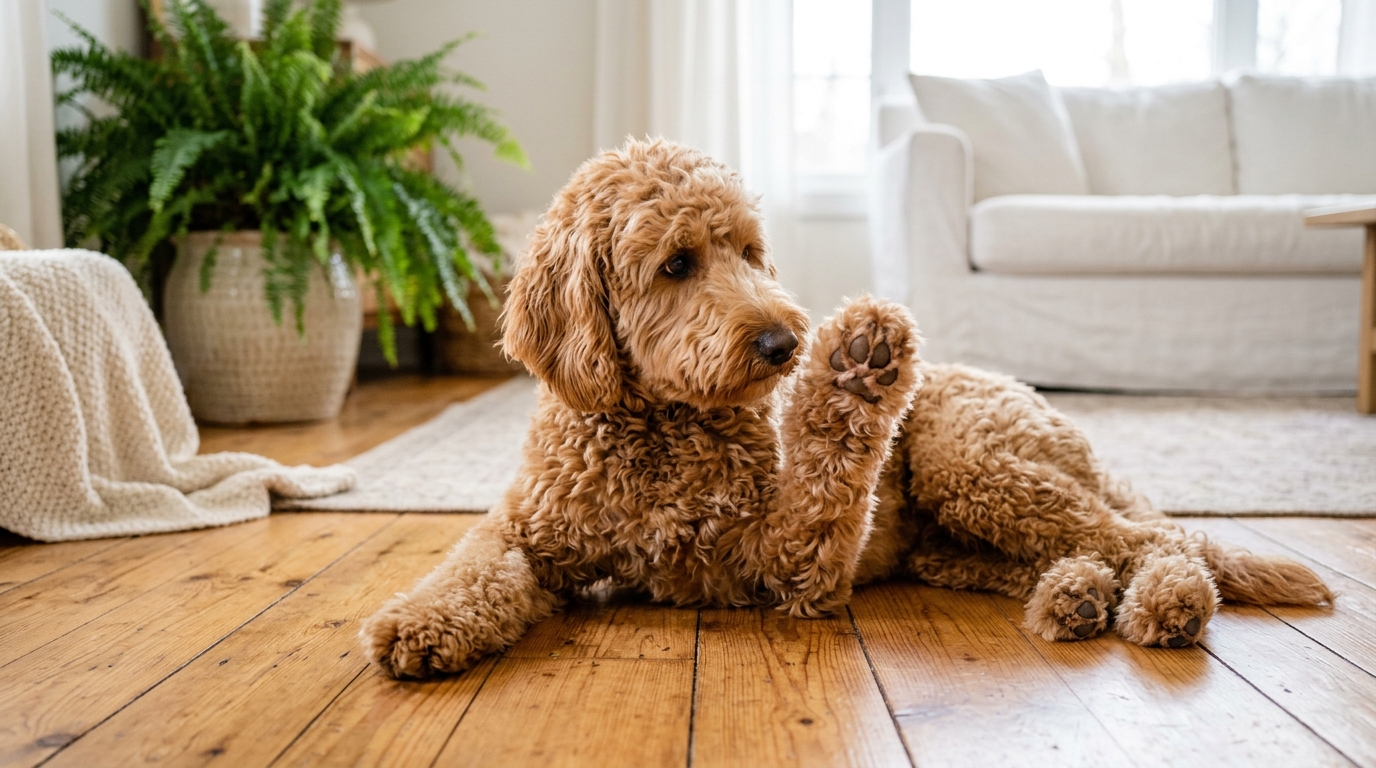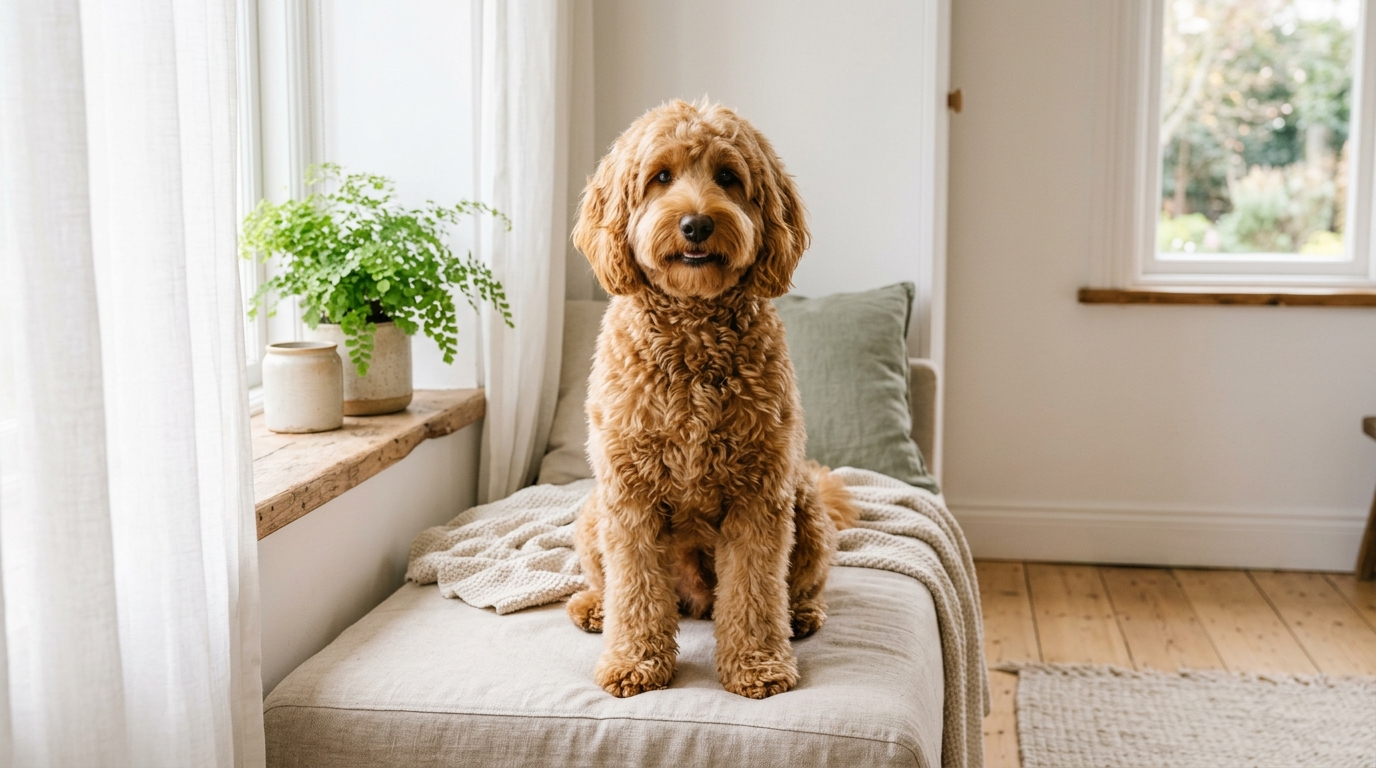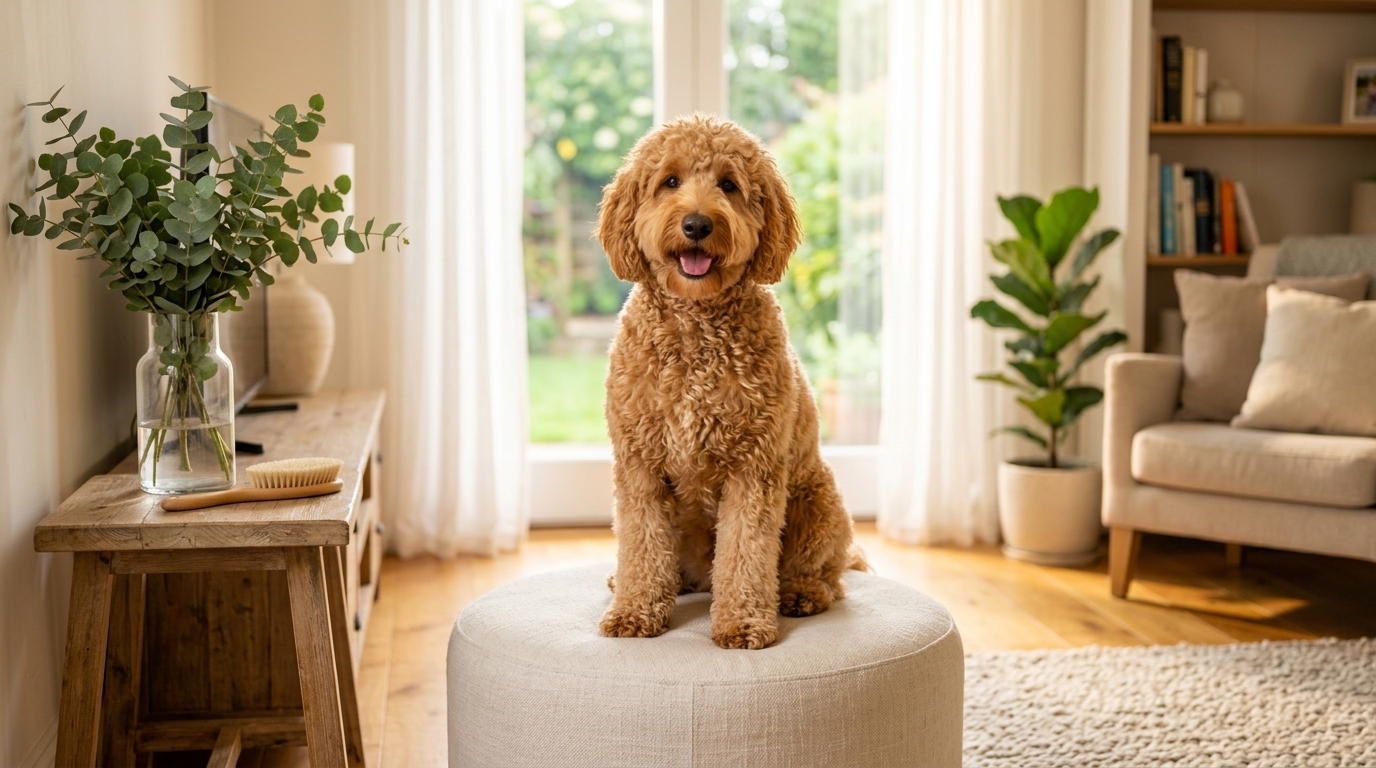
Doodle matting happens where friction and moisture meet the coat, under the collar and harness, in the armpits, behind the ears, and on the tail. But how you prevent it depends on your dog's coat type: a wavy fleece stays clear with frequent, thorough line brushing to the skin, while a curly wool coat is often easier to keep mat-free with a short clip plus a monthly bath with conditioner than by fighting tangles with a brush. Small loose mats can be teased apart at home; a tight, pelted mat close to the skin is shaved out with clippers, never cut with scissors.
If you own an Australian Labradoodle, Goldendoodle, Bernedoodle, or Sheepadoodle, you already know the coat is the best and hardest thing about the breed. That gorgeous fleece is a shedding coat that holds onto every loose hair instead of dropping it, which is exactly why it tangles. The good news: matting is largely manageable once you know where it starts and, crucially, once you match your routine to the coat you actually have.
If your doodle is already itchy or reacting under a matted area and you want the shortlist first, see our guide to the best shampoo for itchy doodles.
Why doodle coats mat in the first place
A doodle's curl or wave is a cross between the Poodle's tight coat and the straighter coat of a Labrador Retriever, Golden Retriever, or Bernese Mountain Dog. That texture traps shed hair inside the coat rather than letting it fall to the floor. Those loose hairs wind around the growing coat, and any friction or dampness twists them into a knot.
The trap is that a doodle's fluffy top layer hides everything underneath. The coat can look perfect on the surface while a firm mat is forming against the skin. This is the hardest lesson we ever learned. Gunnar was our first doodle, and his puppy coat was fairly straight, almost fleece-like, we brushed him and thought he was in good shape. But we had a poor brush and not yet the technique, so we were only brushing the surface while believing we reached the skin. His coat then changed into a much curlier adult coat, and the first time we started trimming him ourselves we found he was matted all over underneath: we had been brushing over the mats. We had to shave him completely down that first time and felt terrible about it after trying our best. We bought a proper slicker brush, learned how curly coats work, and with Sven (our second) the same thing never happened.
Coat type changes the risk. Australian Labradoodle coats come in fleece (wavy or curly) and wool (curly/spiral), plus the less common straight-hair coat. A tighter, curlier wool coat mats faster and closer to the skin than a looser wavy fleece, and puppies going through their coat change (usually somewhere between eight and fourteen months) mat almost overnight as the soft puppy coat is pushed out by the adult coat. If your doodle suddenly seems to mat far more than last month, the coat change is usually why, that is exactly what happened to Gunnar.
For general, vet-backed guidance on coat and skin care, the American Veterinary Medical Association is a reliable place to start.
The friction spots where mats always start
Mats are not random. They form where something rubs the coat or where moisture sits. Check these first, every time:
- Under the collar, constant rubbing, and the one spot owners never think to brush because the collar hides it.
- Armpits and chest (harness lines), the tightest mats we see. Straps rub with every step.
- Behind and under the ears, the ear flap moves against the head all day, and doodle ears also trap moisture inside, which feeds mats and yeast alike.
- The tail and the "trousers" on the back legs, long feathering that swings and drags.
- The rear end and belly, moisture and friction from sitting and lying down.
- Between the paw pads, the hardest mats on our boys, and the ones that cause constant paw licking (see mats between the paw pads). We'll come back to these because they get missed so often.
How to prevent matting depends on the coat type
Here is the honest version, because it matters. Many groomers recommend line brushing every doodle coat, right down to the skin, several times a week, and for a lot of coats that genuinely is the answer. But in our house, with three Australian Labradoodles, the routine that actually keeps each dog mat-free is different for the fleece dog than for the wool dogs. Match the method to the coat and you save yourself a lot of grief.
Wavy fleece: frequent, thorough line brushing
Gösta has a wavy fleece coat, and for him brushing is exactly the thing that works. Brushed thoroughly and often, right down to the skin, he stays mat-free and we can keep him long. This is the coat that rewards line brushing, and he lets us do every grooming chore without any fuss. We brush his fleece once it has dried a little after the bath and is still slightly damp.
Line brushing is the single technique that keeps a fleece doodle mat-free. Instead of skating a brush over the top, you part the coat in a line with one hand, exposing the skin, and brush the small section right at the parting from the skin outward. Then you move the parting up an inch and repeat, working in lines across the whole body. It sounds slow, maybe ten to fifteen minutes for a standard-size doodle once you have the rhythm, and it is the difference between a coat that never mats and one that pelts.
A good slicker and a metal comb are all you need. The comb is your test: if it glides from skin to tip without catching, that section is clear. If it snags, you found a mat before it became a problem.
Curly wool: a short clip plus a monthly bath with conditioner
Sven and Gunnar have curly wool coats, and for them we do something different, and this is where we part ways with the "brush everything" advice.
Here is what changed for us. As puppies, we brushed Sven and Gunnar several times a week, sometimes daily, and that was completely fine while they were small. But once the adult curly wool coat came in (more on that in the doodle puppy coat change), brushing started to make the coat frizzy. It's a lot like the "curly girl method" for curly human hair: one of us has curly hair and never brushes it, and we ended up doing the same for the boys. Brushing did not stop the matting anyway, their wool coat could tangle close to the skin regardless, so we do not brush them routinely now.
The single most important thing for their coats is the monthly bath WITH a conditioner. The conditioner is what actually helps against matting, not the brush. Between baths, we feel through their coats by hand daily or several times a week for single mats and clip those out ourselves right away before they can grow or join up. Alongside that, we clip the whole coat off short roughly every two to three months (about four times a year), sooner if the coat looks in poor shape or there is a problem, sometimes leaving the face longer. A curly wool coat cannot realistically be kept long, and our groomer agrees.
We trim all three ourselves at home, which lets us keep on top of length rather than waiting weeks for an appointment while a wool coat gets away from us. Even if you use a professional groomer, a small trimmer is genuinely handy for tidy-ups between full trims, the toes and between the pads, the face, the sanitary area, and single mats you catch early. You don't need to be a full groomer to keep a dog comfortable between appointments.
Our tools and home setup
We groom on a table or on the floor, and a lick mat keeps them nicely still. Gösta lets us do everything; Sven and Gunnar are more sensitive to handling, so for the tricky spots one of us holds while the other trims. That tolerance can be trained with short, rewarded sessions.
For the wool boys we use a corded Andis clipper, we tried a cordless one, but it only coped with Gösta's fleece; Sven's and Gunnar's curly wool was too tough for it. We run a #10 blade on the boys, and because blades get hot we own four #10 blades and swap them as they heat up, which lets us trim all three dogs in one session without long breaks. For Gösta we use a #10 (or a longer equivalent blade), or a #10 with attachment guard combs that leave the coat at different lengths. A small trimmer handles the toes, the face, and the sanitary area, and we trim nails too.
Don't forget between the paw pads
The mats between the paw pads are the hardest ones on our boys, and they cause the kind of constant paw licking that owners often blame entirely on allergies. To be clear, this doesn't replace the real yeast and allergy story, Gunnar's paw licking has always had a skin side to it, but a hidden mat pressed between the pads is a genuine, separate cause of licking that gets overlooked. We check and trim between the pads with the small trimmer regularly, and it makes a real difference.
Accept the short-clip look for a few weeks
A short clip does not look very "doodle" for the first few weeks, we'll be honest, it can look a bit plain. We've made our peace with that: a mat-free dog that feels well matters far more to us than the look. Mats are a welfare issue, not a cosmetic one, they pull on the skin, hurt, and hide skin problems underneath (does matting hurt dogs?). The doodle look grows back; a painful pelt does not fix itself.
Dry the coat fully, always
A damp coat is a matting coat. Water shrinks and tightens tangles, so a doodle that air-dries after a bath, a swim, or a rainy walk mats far worse than one dried through to the skin. We towel first, then use dog drying robes, which work really well and save the hour it can take an ordinary hair dryer to reach the skin. Gösta's fleece gets brushed once it has dried a little and is still slightly damp; for the wool boys we just make sure they are dry to the skin. Pay special attention behind the ears and in the armpits, where moisture lingers.
This matters for skin health too, not just tidiness. A matted, damp coat traps moisture against the skin and sets up the exact conditions for hot spots and itching.
Choose and manage the harness
Any harness will rub, but a wide, soft, well-fitted harness rubs less than a thin one that digs in. Loosen it or take it off between walks so the straps are not pressed against the coat all day, and check the armpit and chest area by hand on any day the harness was worn.
How to get mats out of a doodle at home
You can safely handle small, loose mats, the kind you can slide a comb partway under. Here is the sequence that works without hurting your dog.
- Work on a dry coat. Never bathe a matted dog. Water tightens the knot.
- Isolate the mat and hold its base flat against the skin with one hand so brushing does not tug the skin.
- Fingers first. Gently pull the mat apart into smaller sections with your fingertips.
- Add a detangling spray to give the hairs some slip.
- Slicker or comb from the outside in. Start at the loose outer edge of the mat and work toward the skin in tiny strokes, never dig the brush straight down into the middle.
- Take breaks. If your dog is uncomfortable or the mat is not budging, stop. A break is free; a stressed dog who now hates handling is not.
When a mat is past brushing, clip it, don't cut it
Some mats will not brush out, and pushing through them with a comb is where dogs get hurt. When a single mat is tight and flat to the skin, we shave it out with the clippers and a short blade, sliding the blade flat against the skin, never scissors. A confident owner with a clipper can do this at home, as we do. Choose a groomer instead if:
- You are unsure or nervous about clipping close to the skin.
- The dog is stressed by handling.
- The mats are widespread and joined across the body.
And get a vet involved first if the skin underneath a mat is red, broken, or smells, that gets seen before anything is clipped, at home or at the groomer.
Home de-matting vs. groomer: which situation is which
| Situation | Handle at home? | What to do |
|---|---|---|
| Small, loose mat, comb slides under | Yes | Finger + spray + slicker, outer edge in |
| Mat behind ear, still loose (fleece coat) | Yes, carefully | Line brush the whole ear area weekly to prevent |
| Single mat between the paw pads | Yes, carefully | Clip it out with a small trimmer; check both feet |
| Tight mat flat to the skin | Yes, with clippers | Shave out with clippers and a short blade, never scissors |
| Wool coat matting repeatedly | Yes | Full clip-down every 2-3 months + monthly bath with conditioner |
| Several mats joined together | Yes, with clippers | Clip out at home if confident; groomer optional if unsure |
| Pelted coat (lifts like a sheet) | Yes, if confident | Full clip-down at home as we do; groomer if unsure or dog stressed |
| Red, sore, or smelly skin under a mat | Vet first | Vet first, then clip at home or at the groomer |
A three-doodle routine that keeps the coats clear
With three doodles the only thing that works is matching the routine to each coat rather than running one plan across all of them. For Gösta's wavy fleece, we do a quick line-brush pass on the friction spots, collar area, armpits, behind the ears, tail, most evenings while the dogs settle, plus a full head-to-tail line brush once a week, and that keeps him long and clear.
For Sven and Gunnar's curly wool, we skip routine brushing entirely: they get a bath once a month with conditioner and a full clip-down every two to three months when the coat starts getting long. Between baths we run our hands through the coat daily or several times a week and clip out any single mat we find on the spot, including between the paw pads with the small trimmer. Gunnar's skin needs more attention anyway, so we still check him more often, especially behind the ears, where moisture likes to sit and can feed both mats and yeast.
The takeaway is not "brush more" or "brush less", it is know your coat. For a fleece, the five-minute daily brush genuinely prevents the two-hour de-matting session. For a tight wool coat, a sensible short clip every two to three months plus a monthly conditioning bath and regular hand-checks does the same job with far less fighting.
FAQ
Doodle coats are a curly or fleece cross of Poodle and a Labrador, Golden Retriever, or Bernese Mountain Dog coat, and that texture holds every shed hair instead of dropping it. Those loose hairs twist together at friction points, under the collar and harness, in the armpits, and behind the ears, and dampness from rain, baths, or a wet mouth locks them in place. Under the fluffy top layer, tangles form where you cannot see them, and how you fight them depends on whether the coat is a fleece or a tighter wool.
For small, loose mats, work on a dry coat. Hold the base of the mat against the skin so you are not pulling, then tease it apart with your fingers first, followed by a detangling spray and a slicker or comb working from the outer edge inward. Never wash a matted coat, because water shrinks the tangle tighter. If a single mat is tight to the skin, shave it out with clippers and a short blade, never scissors. If the mats are widespread or the skin under them looks sore, get a groomer or vet involved.
No. Cutting mats with scissors is the most common cause of accidental grooming wounds, because a tight mat pulls the skin up into the tangle and you cannot see where the coat ends and the skin begins. Doodle skin lifts far more easily than owners expect. If a mat will not brush out, shave it flat against the skin with clippers and a short blade, as we do at home, a confident owner with a clipper can handle this, and a groomer is an option if you are unsure or the dog is stressed.
A pelted coat is when mats have spread and joined into a solid mat layer across the body, so the coat lifts away from the skin like a single sheet. At that point brushing it out is not possible or humane, and the kind option is a short clip-down with clippers. A confident owner can do this at home as we do; choose a groomer if you are unsure or the dog is stressed, and a vet first if there are sores under the pelt. The coat grows back, a pelt trapping moisture against the skin is a genuine welfare problem, not just a cosmetic one.
Yes, any harness creates friction mats at the armpits and across the chest where the straps rub, and those are some of the tightest mats we deal with. It does not mean you should skip the harness, it means you check those exact spots by hand on any day the harness is worn and clip out any single mat you find. Loosening a correctly fitted harness at home also reduces constant rubbing.
Your next step
Start by figuring out which coat you have, wavy fleece, curly wool, or something in between, and build the routine around it before the coat change hits. For a fleece, keep a five-minute line-brush going most evenings; for a tight wool coat, don't be afraid to keep it clipped short every two to three months, bathe monthly with conditioner, and hand-check between baths instead. Either way, dry the coat fully after every bath and rainy walk, check between the paw pads, and check the friction spots on any day the harness was worn. If your dog is already itchy or reacting under a matted area, the doodle hot spots guide will help you tell a skin problem from a grooming one, and the best shampoo for itchy doodles shortlist covers gentle, coat-friendly washing. For skin that flares even with careful grooming, our best omega-3 for doodle skin health guide is worth a read.