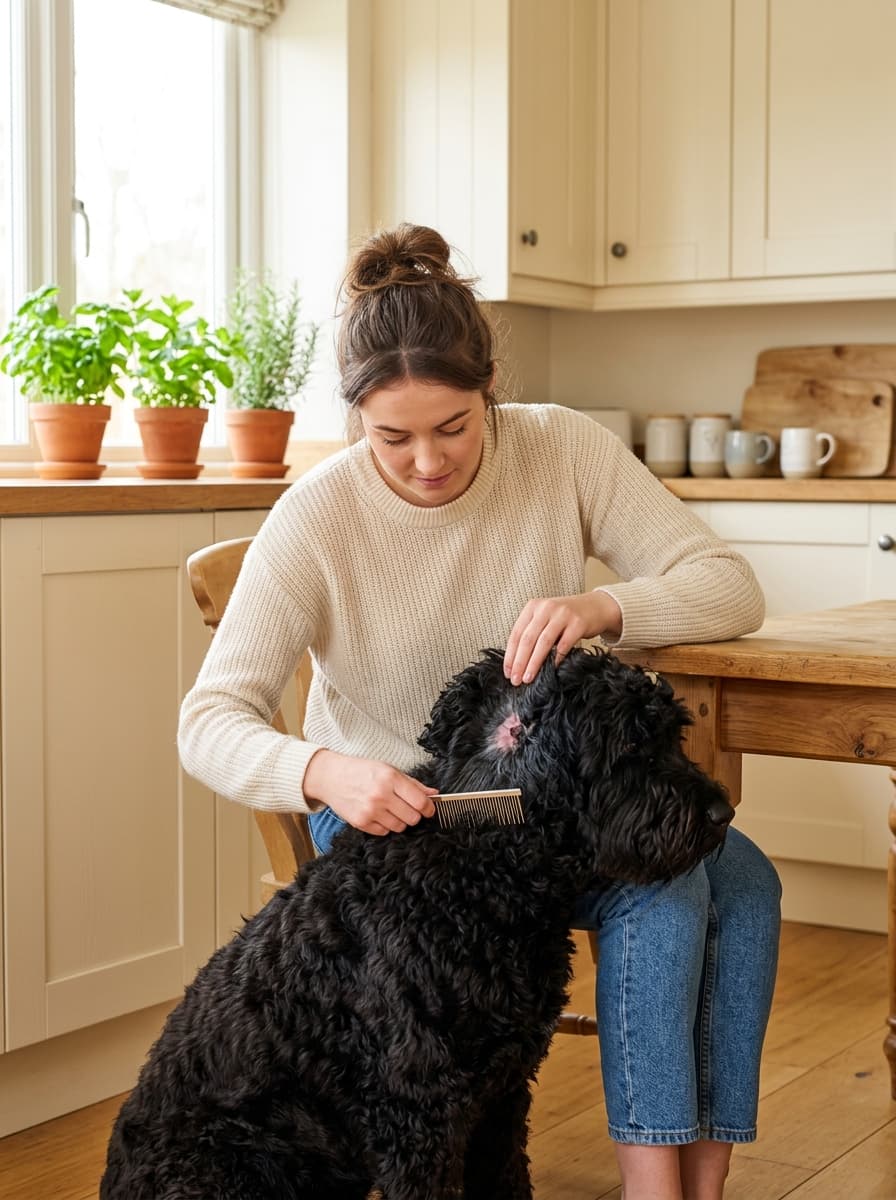
Doodle hot spots are patches of acute moist dermatitis, red, oozing, painful sores that seem to appear out of nowhere, usually hidden under a dense coat. You treat a mild one at home by clipping away the fur around it, cleaning the area, keeping it bone-dry, and applying a vet-approved topical while stopping your dog from licking. See a vet if the spot is bigger than a quarter, spreading quickly, or your doodle is clearly in pain.
If you've just parted your dog's coat and found an angry, wet, red sore that wasn't there this morning, take a breath, this is one of the most common and most treatable skin problems doodle owners deal with. The tricky part isn't treating the sore itself. It's figuring out why it happened, because in doodles a hot spot is almost always a symptom of something bigger.
That bigger thing is usually allergy-driven inflammation and a skin barrier that never fully recovers between flares. Dogs who stop getting hot spots are almost always the ones on steady skin support rather than repeated rescue treatment - our best omega-3 supplements for doodle skin covers what actually helps there.
This guide walks you through recognizing a hot spot, treating it safely at home, knowing when it's a vet situation, and, most importantly, stopping the cycle so you're not back here in three weeks.
What a hot spot actually is
A hot spot (the clinical term is acute moist dermatitis) is a localized area of inflamed, infected skin. It starts when something irritates or breaks the skin barrier, a scratch, a bug bite, trapped moisture, and your dog responds by licking, chewing, and scratching the spot. That self-trauma damages the skin further, bacteria move in, and within hours you have a raw, weeping, painful lesion that can double in size overnight. The Merck Veterinary Manual describes the same self-trauma cycle behind acute moist dermatitis.
The key features of a hot spot:
- Red and inflamed, the skin looks angry
- Moist or oozing, often weepy, sometimes with yellowish discharge
- Warm to the touch and clearly painful
- Spreads fast, this is what separates it from an ordinary scab
- Hair loss in and around the area, with matted fur at the edges
Why doodles are especially prone to hot spots
Here's where doodle owners get blindsided. That gorgeous, thick, curly coat that makes doodles doodles is also a near-perfect hot spot incubator. The denser and longer the coat, the longer the skin underneath stays damp, so a thick fleece or wool coat needs more drying than a looser wavy one, whether it sits on a Goldendoodle, a Labradoodle or a Bernedoodle.
Think about what a dense poodle-cross coat does:
- It traps moisture against the skin after swimming, baths, rain, or even a humid walk. Damp + warm + no airflow is exactly what bacteria want.
- It hides everything. A hot spot the size of a dime can be forming for a day before you feel the wet patch through the fur. By the time you see it, it's often well established.
- It mats. Matting pulls on skin, traps debris, and creates warm pockets with zero ventilation, classic hot spot territory.
Add in that the poodle line brings a real tendency toward allergies and sensitive skin, and you've got a breed mix that's genuinely predisposed to this. If you want the bigger picture on why, our guide on whether doodles are prone to allergies covers the breed-specific side in depth.
What causes hot spots on doodles
Understanding the trigger is everything, because treating the sore without addressing the cause just resets the clock. Here's what's usually behind a doodle hot spot:
Moisture that never dried
The number-one cause we see. Your doodle swims, gets a bath, or comes in from the rain, and the undercoat stays damp for hours. Gunnar is our water-lover, and the very first summer we had him we learned the hard way that "he seems dry on top" is meaningless, the skin underneath a curly coat can stay wet long after the surface feels fine.
Allergies (food and environmental)
Itchy skin from allergies leads to scratching, and scratching breaks the skin barrier. Recurring hot spots, especially in the same spots, are one of the biggest red flags for an underlying allergy. This can be environmental (pollen, dust mites) or dietary. Our complete guide to food allergies in doodles is the place to start if you suspect food is involved.
Yeast overgrowth
Yeast loves warm, moist, poorly ventilated skin, which describes a doodle coat perfectly. Yeasty skin is itchy, and itchy skin gets scratched into hot spots. Because yeast and allergies so often overlap, it's genuinely hard to tell them apart; our breakdown of allergy vs yeast infection in doodles can help you sort out which you're dealing with. If your doodle is also scratching constantly and licking at their paws, our pillar guide Doodle Itchy Skin, Paws & Yeast: The Gut-First Fix explains the gut-first, food-first approach that clears recurring yeast for good.
Ear infections
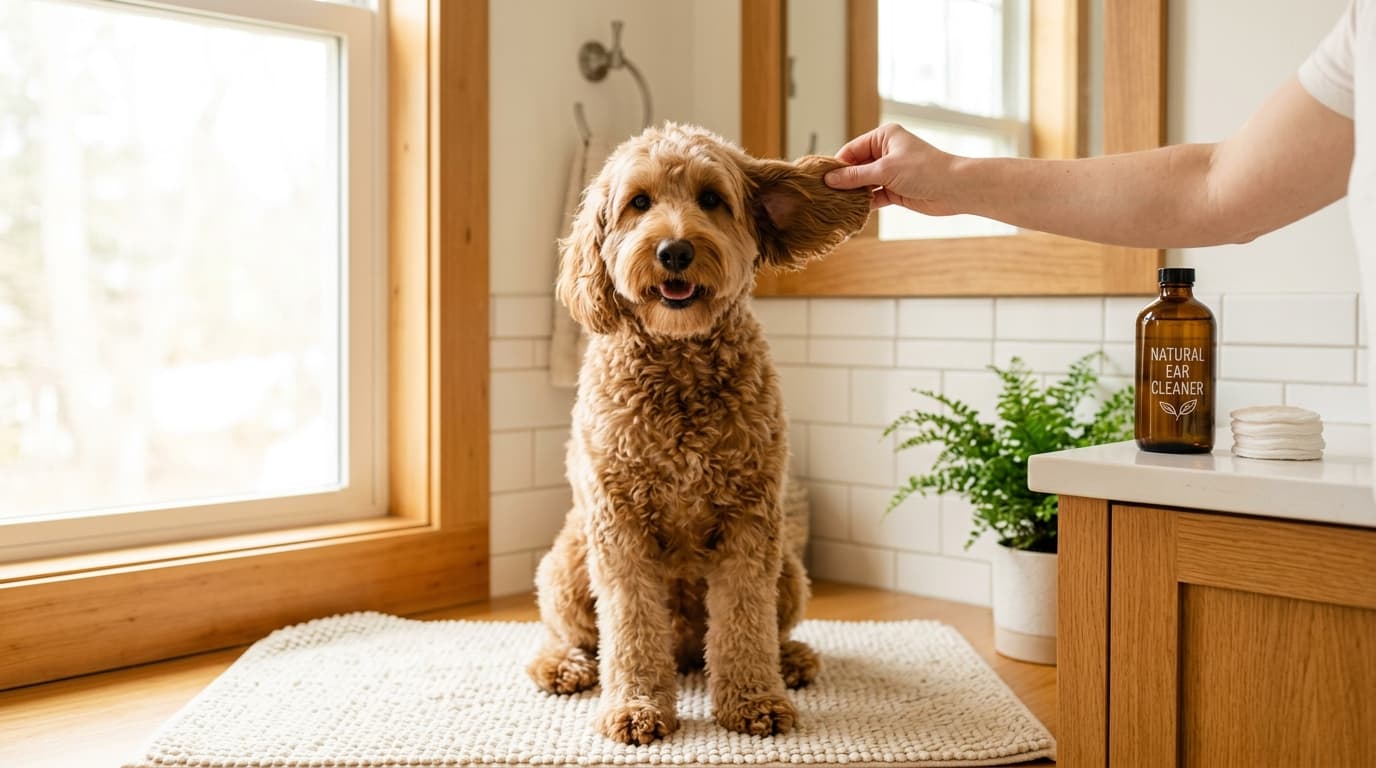
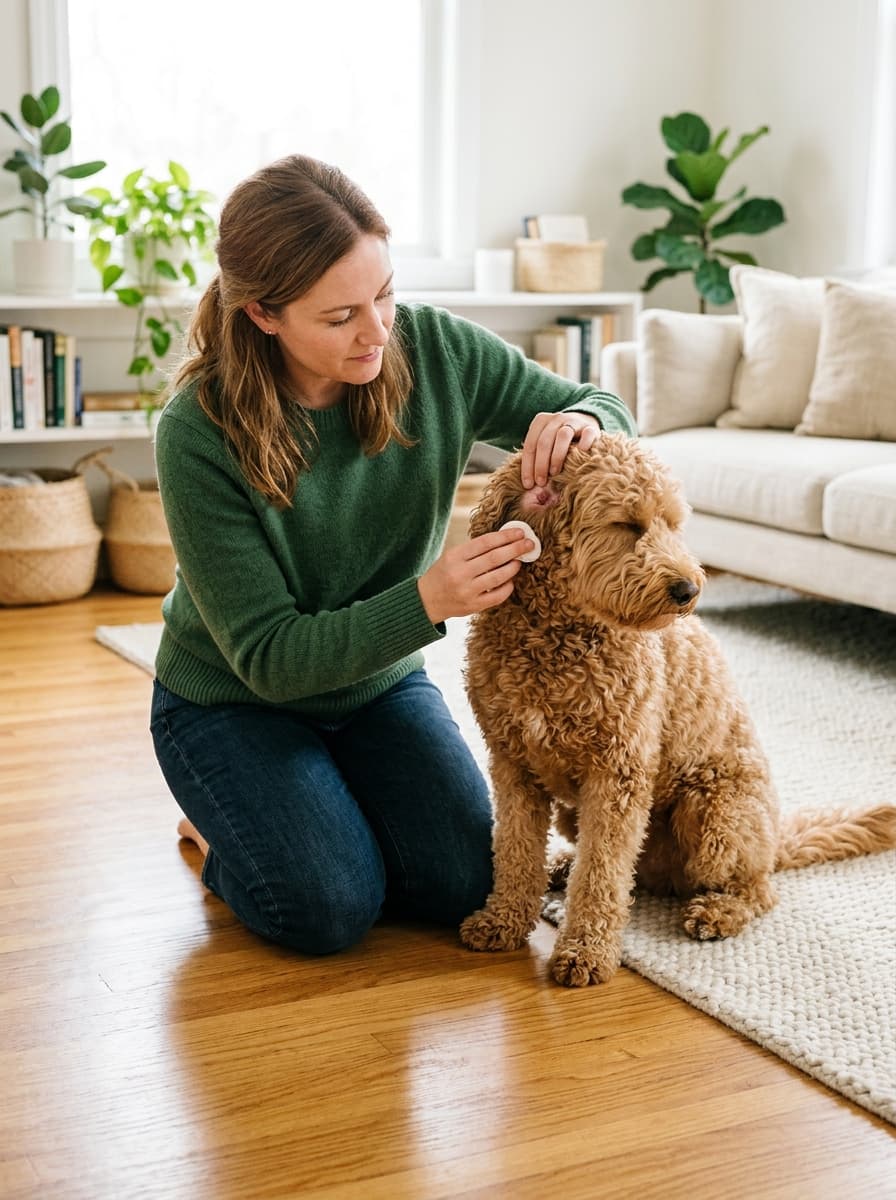
This one catches people off guard. A doodle with itchy, infected ears shakes their head and scratches at the sides of the face and neck, and hot spots on the cheek or below the ear are incredibly common as a result. Floppy doodle ears trap moisture and set up exactly this chain.
Fleas, matting, and minor wounds
A single flea bite, a stubborn mat pulling on the skin, or a scrape from rough play can all be the initial insult that starts the licking cycle. Doodle owners often miss fleas entirely because the coat hides them.
How to treat a doodle hot spot at home
If the spot is small, freshly discovered, and your dog isn't in severe distress, here's the safe at-home approach. The whole strategy is: expose it, clean it, dry it, protect it.
Step 1: Clip the fur around it
This is the step most people skip and it's the most important one for doodles. Using clippers (not scissors, you can nick the sore skin), carefully trim the hair well beyond the edges of the spot. This lets air reach the skin and stops the surrounding fur from wicking moisture back into the wound. If your doodle won't tolerate it or you can't get a clear view, this is a fine reason to head to the groomer or vet.
Step 2: Clean gently
Clean the area with lukewarm water and a mild, vet-approved antiseptic. Chlorhexidine-based solutions are commonly recommended, but check with your vet on concentration. Avoid alcohol, hydrogen peroxide, and anything stingy or harsh, which damages healing tissue.
Step 3: Dry it completely
Pat (don't rub) the area fully dry. This can't be overstated. A hot spot will not heal in a damp environment.
Step 4: Apply a vet-approved topical
A vet-recommended topical (often containing a mild antibacterial and something to soothe and dry) helps calm the inflammation. Do not reach for human creams like hydrocortisone or antibiotic ointments without checking first, many are unsafe if licked and can make things worse.
Step 5: Stop the licking
Healing is impossible if your dog keeps chewing the area. An e-collar (cone) or a recovery suit is essential here, leaving it open to air but out of reach.
Home care vs. vet care: a quick guide
| Situation | Home care OK? | What to do |
|---|---|---|
| Small (under a quarter), caught early, mild | Usually yes | Clip, clean, dry, topical, cone |
| Larger than a quarter or spreading fast | No | Vet, likely needs oral meds |
| Thick discharge or bad smell | No | Vet, deeper infection likely |
| Near eyes, or dog in severe pain | No | Vet, same day |
| Keeps coming back in the same area | Treat + investigate | Vet workup for allergies/yeast |
| Head-shaking or ear odor alongside it | Treat + check ears | Vet ear exam |
Preventing the next hot spot
Treating the sore is the easy 20%. Preventing recurrence is where doodle owners either win or end up in a frustrating loop.
Dry thoroughly, every single time
After every swim, bath, or wet walk, get your doodle dry all the way to the skin, not just the surface. We towel hard, then use a dryer on a cool-to-warm setting, working against the curl to reach the undercoat. In our house it's an automatic post-swim ritual for all three boys, including Gösta, who has never had a hot spot: the drying is why, not luck.
Stay ahead of matting
Regular brushing right down to the skin and consistent grooming appointments keep the coat ventilated and mat-free. A matted coat is a hot spot waiting to happen. If your doodle gets itchy after grooming rather than better, that's its own puzzle, we cover it in doodle scratching after grooming.
Keep ears clean and dry
Since ear infections drive so many facial and neck hot spots, routine ear care matters. Floppy, hairy doodle ears need regular checking, especially after swimming.
Address the root cause
If hot spots keep coming back, stop treating them as isolated events. The recurring pattern is almost always allergy or yeast underneath. Options worth exploring with your vet:
- An elimination diet if food is a suspect
- Reviewing common ingredient triggers for doodles
- Supporting the skin barrier from the inside, omega-3s for doodle skin health are one of the more evidence-supported additions
If you're seeing itching all over rather than just one spot, our overview of chronic itching in doodles will help you connect the dots.
FAQ
A hot spot is a patch of acute moist dermatitis, it's warm, red, often oozing or weepy, and painful to the touch, and it usually appears and spreads quickly over hours to a day. A simple scab is dry, firm, and not painful. If the area is moist, growing, or your doodle keeps licking and biting at it, treat it as a hot spot and start with clipping, cleaning, and drying.
Small, mild hot spots (smaller than a quarter, caught early, not deeply infected) can often be managed at home by clipping the surrounding fur, cleaning gently, keeping the area dry, and applying a vet-approved topical while preventing licking. See a vet if the spot is larger than a quarter, spreading fast, has thick discharge or a bad smell, if your dog is in obvious pain, or if it isn't clearly improving within 2-3 days.
Recurring hot spots almost always point to an underlying trigger rather than bad luck. Common culprits in doodles are food or environmental allergies, yeast overgrowth, chronic ear infections that lead to head-shaking and scratching, and moisture trapped in a dense coat after swimming or bathing. If the same spot keeps flaring, it's worth investigating allergies and yeast with your vet rather than just treating the surface.
Leave it open to air. Hot spots heal best when they stay clean and dry, and covering them traps the exact moisture that fuels them. That's also why clipping the fur around the spot matters so much in doodles, the coat itself acts like a bandage that holds heat and dampness against the skin. Use an e-collar or recovery suit to stop licking rather than a physical dressing.
It can, indirectly. Swimming and baths leave a dense doodle coat damp right down to the skin, and if that moisture sits, especially in warm weather or thick, curly areas, it creates the perfect environment for a hot spot to start. Swimming doesn't cause hot spots on its own, but not drying your doodle thoroughly afterward is one of the most common triggers we see.
The bottom line
Treat the sore quickly, clip, clean, dry, protect, but don't stop there. In doodles, a hot spot is a message: something is irritating the skin, and the coat is trapping the conditions that let it explode. Get the surface calm, then play detective on the cause.
If your doodle's hot spots keep returning, the most common hidden driver is diet-related irritation. Start with our honest look at whether diet can fix doodle skin problems, it's the piece that finally breaks the cycle for a lot of families.