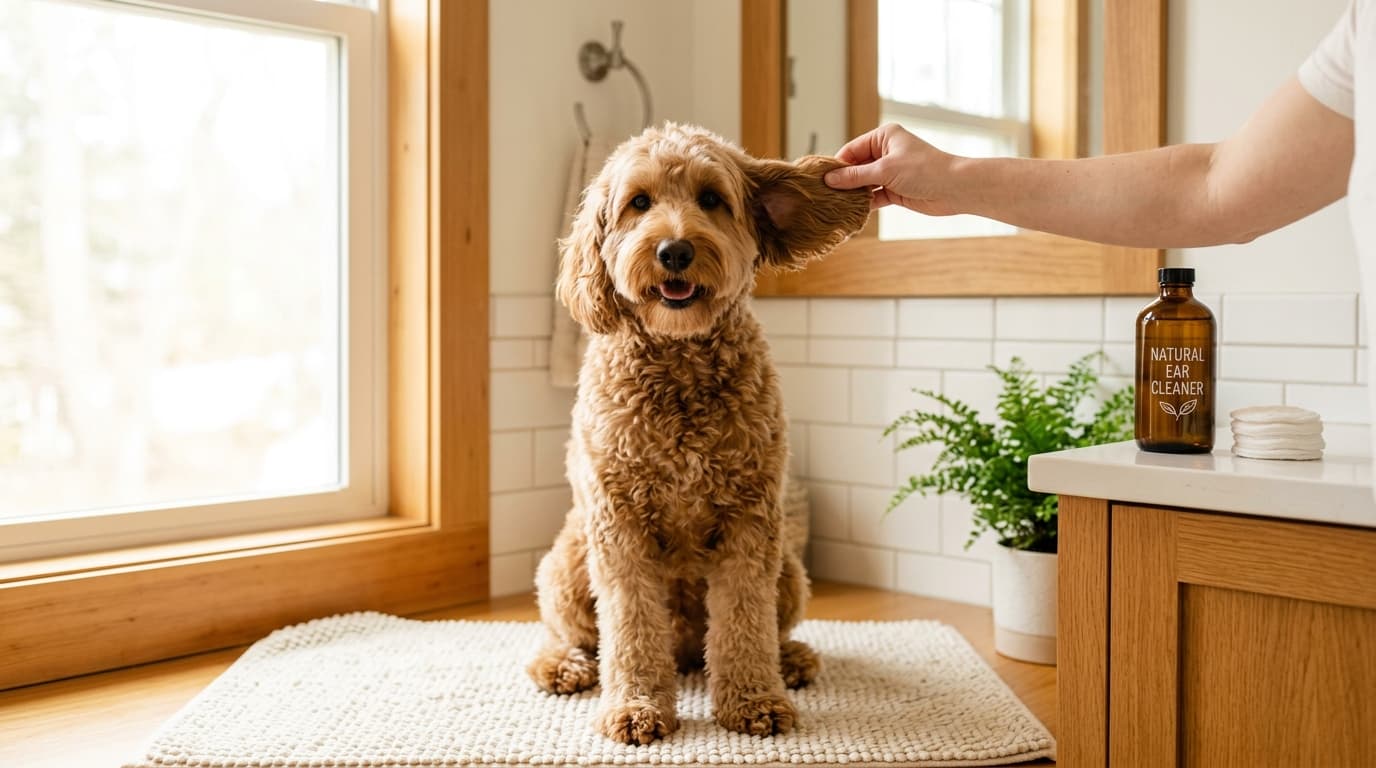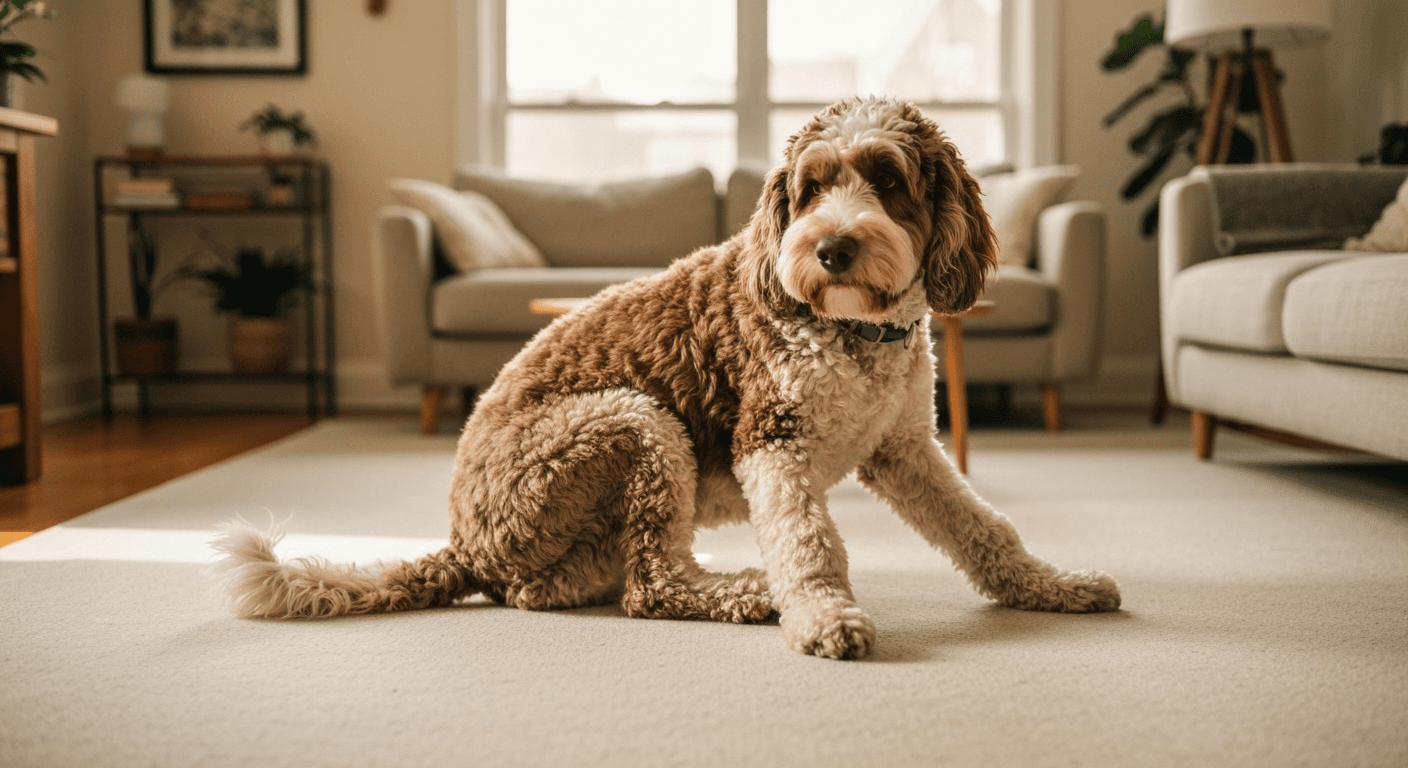
If your doodle is itchy after grooming, the good news is that most of the time it's mild, temporary irritation, clipper friction, leftover shampoo, or freshly exposed skin after a short cut, and it settles down within 24 to 48 hours. You can help by rinsing with cool water, using an oatmeal or plain aloe soother, and keeping your dog from scratching the area raw. If you see spreading redness, hives, oozing, or itching that gets worse past two days, that's a vet call, because it points to an allergic reaction or infection rather than everyday post-groom sensitivity.
If your doodle comes home itchy after every single groom, the shampoo is worth examining before the groomer is - our best shampoos for itchy doodles covers the gentler options.
We've been through this more times than I can count with our three, Sven, Gunnar, and Gösta all come home from a big groom doing a bit of the itchy-scratchy dance. Below I'll walk you through exactly why doodles react this way (their coats are a special case), how to soothe it fast, and the honest timeline for when to relax versus when to pick up the phone.
Why doodles get itchy after grooming (it's the coat)
Doodles aren't like short-coated breeds where the clippers glide over and you're done. That dense, curly, often double-textured coat is the whole reason grooming is more intense, and why the skin underneath reacts.
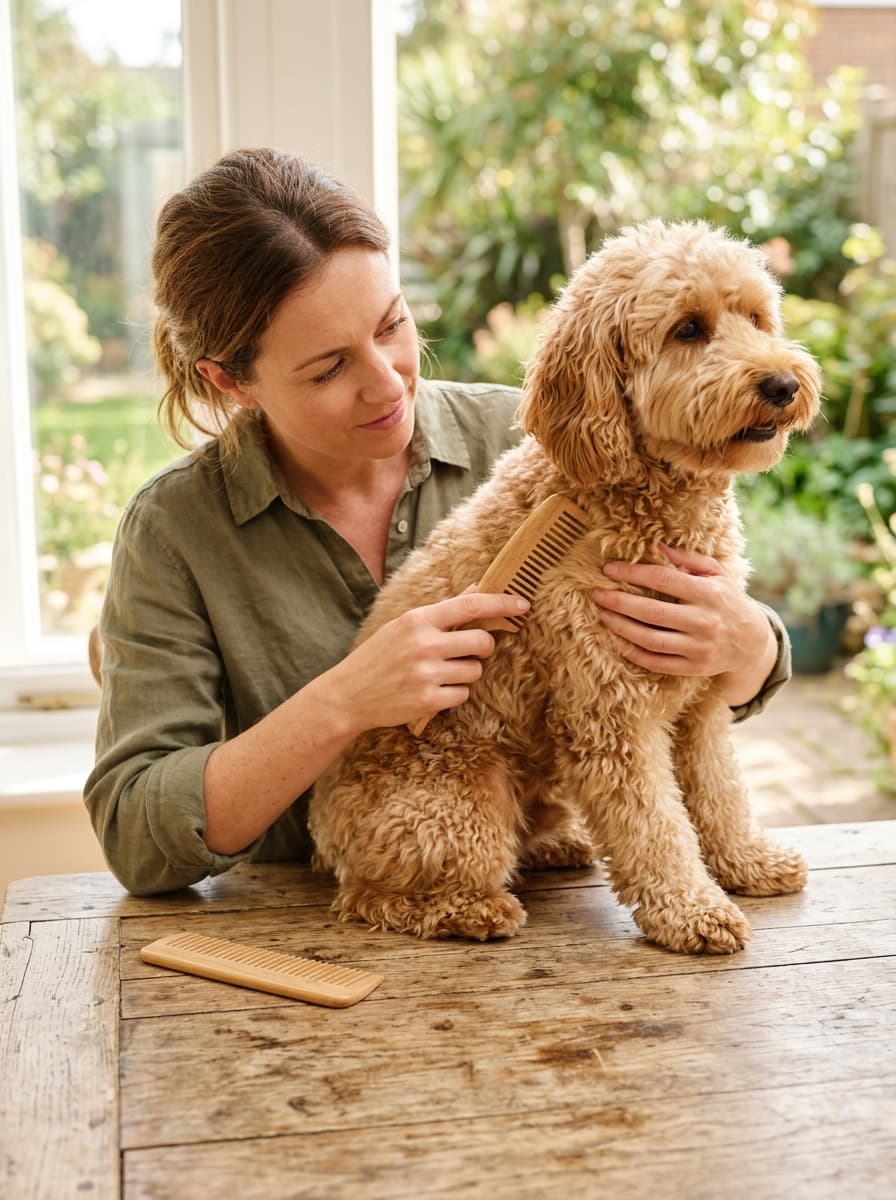
Here are the most common triggers we see, and they're very doodle-specific:
- Clipper irritation and clipper burn. Thick coat means the blade works harder and gets warmer, and the skin gets more friction. Thin-skinned areas, belly, groin, armpits, sanitary area, redden easily. This is the number-one cause of a doodle itchy after grooming.
- Shampoo sensitivity. Doodles often have sensitive, sometimes poodle-line-reactive skin. A new shampoo, a heavily fragranced one, or one not fully rinsed out leaves residue that itches.
- Blow-dryer heat and force. Getting a dense coat fully dry takes serious airflow, and hot, forced drying can dry out and irritate skin.
- Mat removal trauma. De-matting pulls the skin. When a coat is tightly matted, the groomer has to work close, and the skin left behind can be tender, pink, and itchy for a day or two.
- Exposed skin after a short cut. Once you strip away that thick buffer, the skin suddenly meets air, sun, and your dog's own scratching for the first time in weeks.
When grooming just reveals a problem that was already there
This is the part generic "dog scratching after haircut" articles miss. Sometimes the groom didn't cause the itch, it uncovered something the coat was hiding.
Doodle coats are excellent at concealing skin issues. Curls trap moisture, hide redness, and mask early yeast or hot spot activity until the coat comes off and suddenly you can see (and your dog can feel) it.
- Yeast overgrowth loves warm, damp, coat-covered spots, armpits, groin, paws, and those floppy doodle ears. A bath that doesn't dry fully can tip a mild case into an itchy, musty-smelling flare. We cover the full picture in yeast infection on doodle paws. The Merck Veterinary Manual describes how Malassezia yeast overgrowth thrives in warm, moist skin folds.
- Allergy flares can be brewing before the groom, and the shampoo or handling just amplifies them. If your dog is generally itchy, grooming may not be the real story, see why is my doodle itchy all the time?.
- Hot spots can appear fast on freshly cut, irritated skin. More on those in doodle hot spots: causes & treatment.
If the itch pattern looks familiar, same spots every time, worse in humid months, paw-licking, it's worth reading up on allergy vs yeast infection in doodles, because the treatment is completely different.
The clear timeline: normal vs. not
Here's the framework we use in our house to decide whether to wait it out or act.
| Timeframe | What's usually normal | What's a red flag |
|---|---|---|
| First 24 hours | Occasional scratching, mild pink on belly/groin, a bit of licking | Hives, facial swelling, frantic non-stop scratching |
| 24-48 hours | Irritation calming down, less scratching each hour | Redness spreading, new bumps, oozing, bad smell |
| Day 2-3 | Skin back to normal, dog comfortable | Still itchy or worse; raw or broken skin |
| Beyond 3 days | , (should be resolved) | Any ongoing itch = investigate underlying cause |
Your post-grooming soothing action plan
When one of ours comes home doing the itchy dance, here's the routine that reliably settles things.
1. Look before you soothe
Part the coat and check the usual trouble spots, belly, groin, armpits, sanitary area, paws, and behind the ears. You're looking for whether it's mild pink irritation (soothe at home) or angry red, bumpy, oozing, or smelly (vet). Knowing which one you're dealing with changes everything.
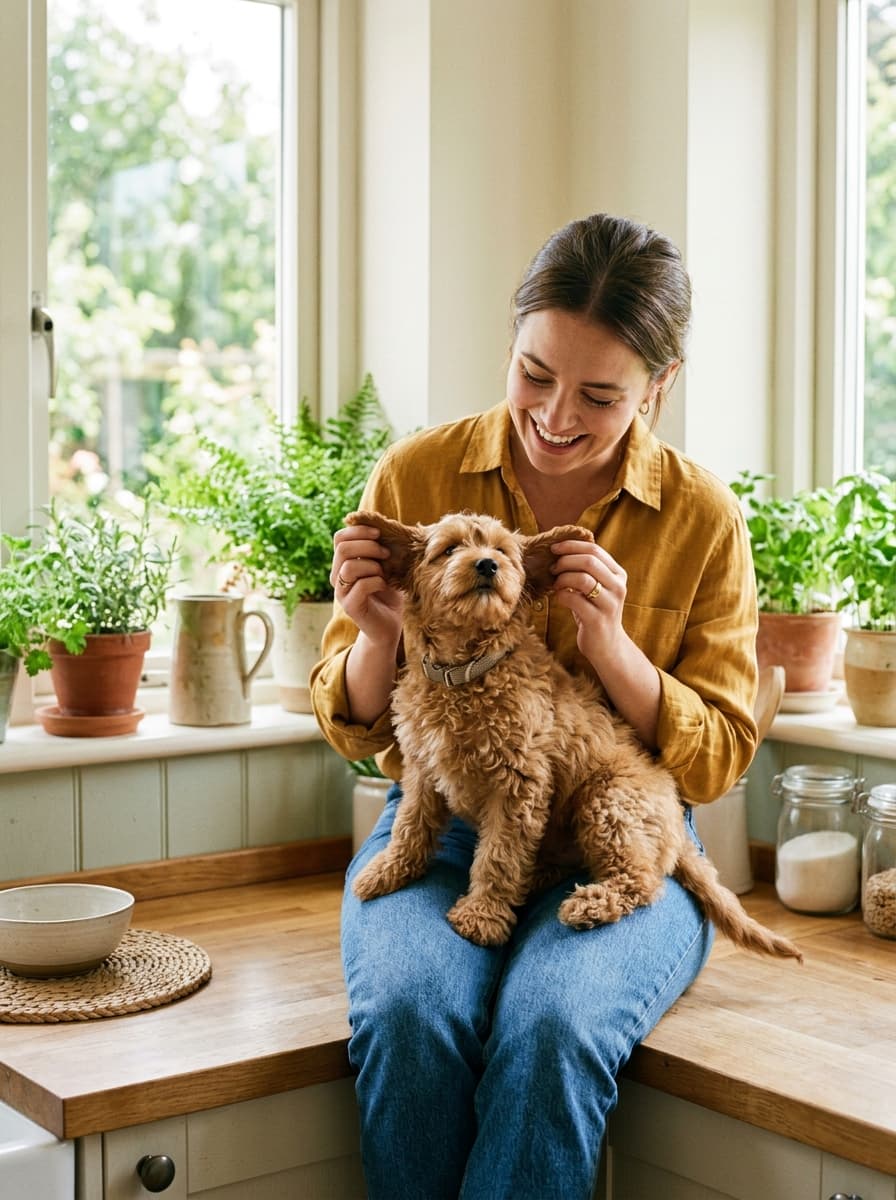
2. Cool it down
A cool (never hot) rinse or a cool, damp washcloth held gently on red spots for a few minutes calms clipper irritation nicely. Cool water constricts irritated blood vessels and takes the sting out.
3. Soothe gently
Good options for mild irritation:
- A colloidal oatmeal rinse or soothing spray made for dogs
- Plain aloe vera (no alcohol, no additives)
- A vet-recommended anti-itch spray
Skip human hydrocortisone creams unless your vet gives the okay, and avoid anything your dog will lick off in quantity. If you're rebathing, use a genuinely gentle formula, our roundup of the best shampoo for itchy doodles covers what to look for.
4. Dry completely (this is the doodle rule)
If the itch involves damp areas, ears, paws, armpits, make sure they're bone dry. Trapped moisture in a doodle's dense coat is how a minor irritation becomes a yeast problem. Towel and low-heat dry right down to the skin.
5. Stop the scratch cycle
Scratching turns mild irritation into raw, broken skin fast. A recovery collar for a few hours, a light t-shirt over a belly, or just supervised distraction can break the cycle long enough for the skin to calm down.
Preventing it at the next groom
A little planning makes the next haircut far less itchy.
- Brush and de-mat between grooms. Mat removal trauma is preventable. A coat that isn't matted lets the groomer work gently instead of close and hard. This is the single biggest thing you control.
- Don't stretch grooms too long. For most doodles, every 4-6 weeks keeps the coat manageable. Longer gaps mean more matting and more aggressive grooming.
- Ask for a slightly longer cut if your dog is prone to post-groom itch, so there's still a protective buffer of coat.
- Flag known sensitivities. Tell your groomer if your doodle has sensitive skin, reacts to fragranced shampoos, or has recurring yeast or ear issues. A good groomer will use a gentle or medicated shampoo and dry extra carefully.
- Consider a DIY hypoallergenic shampoo you know your dog tolerates, and hand it to the groomer.
If the itch keeps coming back
If your doodle is itchy after every groom, or itchy in general, grooming is probably just the trigger, not the cause. Chronic itch usually traces back to allergies, yeast, or diet. Diet matters more than most owners expect, we dig into that in can diet fix doodle skin problems? and it's worth understanding whether your dog is one of the many that are doodles prone to allergies. Supporting the skin barrier from the inside with the best omega 3 for doodle skin health can also make skin more resilient to everyday irritants like grooming.
For the bigger picture on persistent itch, our guide to chronic itching in doodles walks through causes and relief step by step.
FAQ
A little scratching in the first day or two is common, especially after a short cut or a de-matting session, because the shampoo, blow-drying, and clippers all mildly stimulate the skin and expose areas that are usually buried under coat. Mild, occasional scratching that fades within 24 to 48 hours is usually nothing to worry about. Persistent, frantic, or worsening itching, or any redness that spreads, is not normal and should be looked at.
Most simple grooming-related irritation calms down within 24 to 48 hours. Clipper burn on sensitive areas can take a few days to fully settle. If your doodle is still itchy after two to three days, is getting worse rather than better, or develops bumps, oozing, or a smell, that points to an allergic reaction, a skin infection, or an underlying yeast issue the groom uncovered, time to call your vet.
Goldendoodle skin irritation after grooming usually comes from clipper friction on thin-skinned areas like the belly, groin, and armpits, from a shampoo the skin reacted to, or from close shaving that removed the coat's protective buffer. Because doodles have dense curly coats and thin skin underneath, these spots redden easily. A cool compress and a gentle oatmeal rinse usually help, but spreading or raised redness needs a vet.
Grooming itself doesn't cause yeast, but it can expose or worsen one. Moisture trapped under a thick coat, especially in the ears, armpits, and paws, creates the warm, damp environment yeast loves, and incomplete drying after a bath makes it worse. If your freshly groomed doodle is itchy with a musty smell, greasy skin, or brown ear gunk, you may be dealing with yeast rather than simple clipper irritation.
A cool oatmeal rinse, plain aloe vera (no additives), or a vet-recommended soothing spray can calm mild post-groom irritation. A cool, damp cloth held on red spots for a few minutes also helps. Avoid human hydrocortisone creams unless your vet okays them, and never use anything your dog can lick off in large amounts. If the itch needs medication to control, that's a conversation for your vet.
The bottom line
A freshly groomed doodle doing a bit of scratching is usually just adjusting to bare skin, a bath, and clipper work, give it a cool rinse, a gentle soother, complete drying, and 24 to 48 hours, and it fades. What you're watching for is the itch that spreads, worsens, or comes back every single time, because that's your doodle telling you there's a deeper skin, yeast, or allergy story underneath.
If the itch keeps returning, start with the root causes: head over to our itchy skin & paws hub or read why is my doodle itchy all the time? to figure out what your dog's coat has been hiding all along.