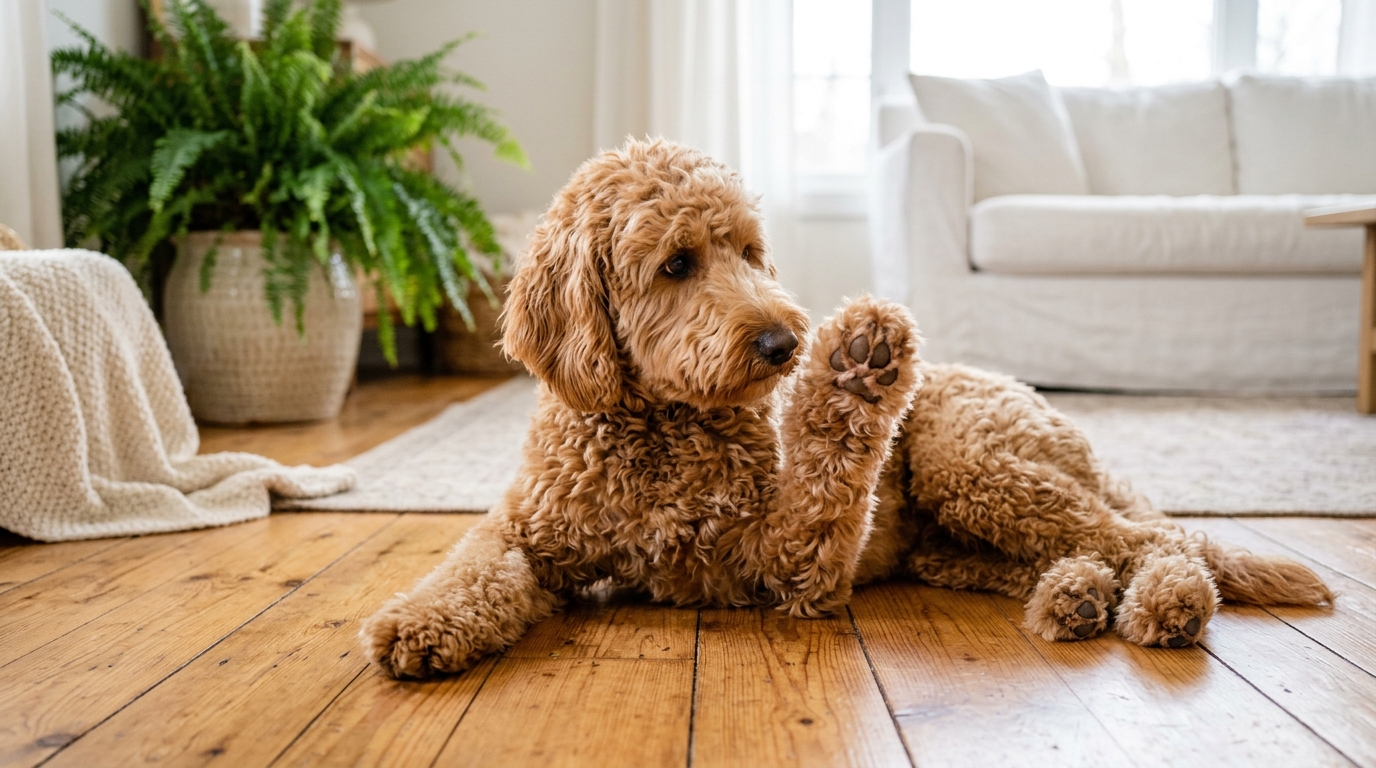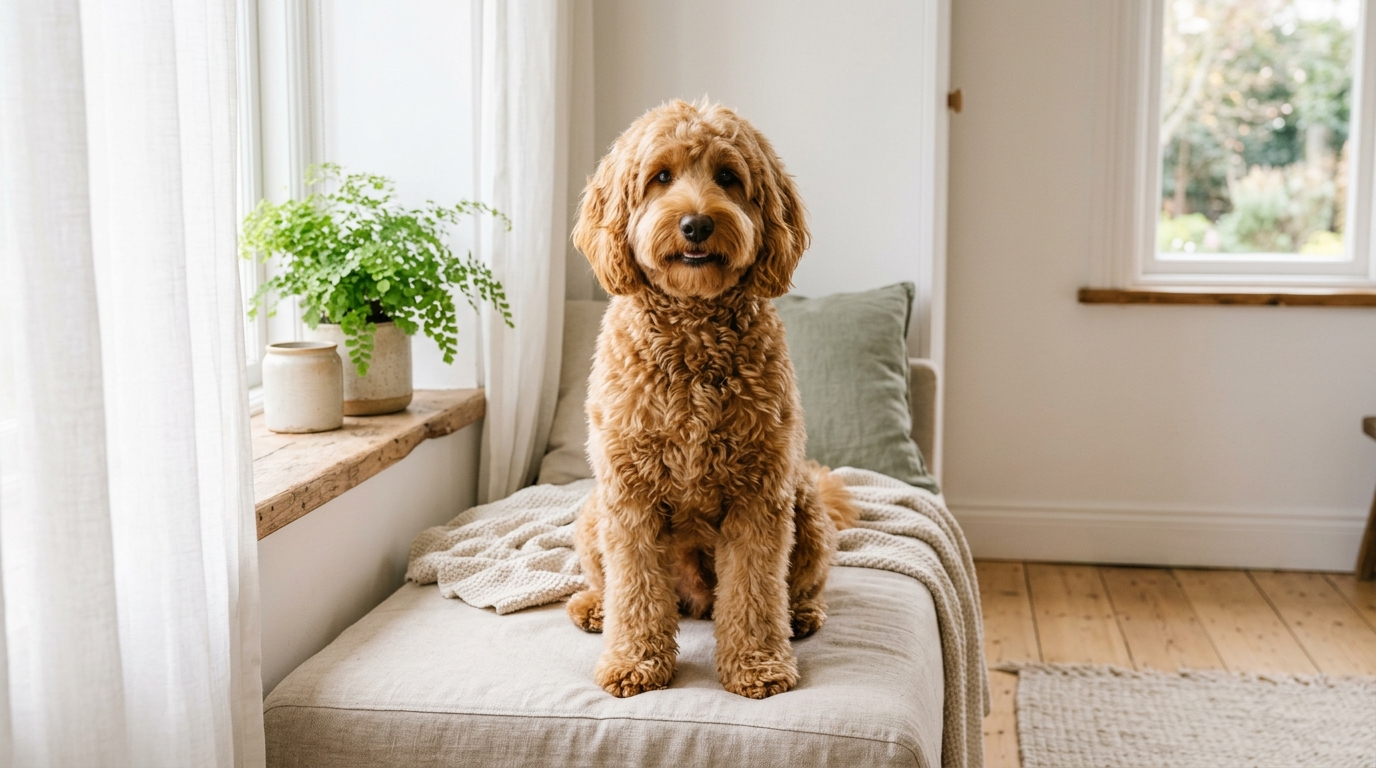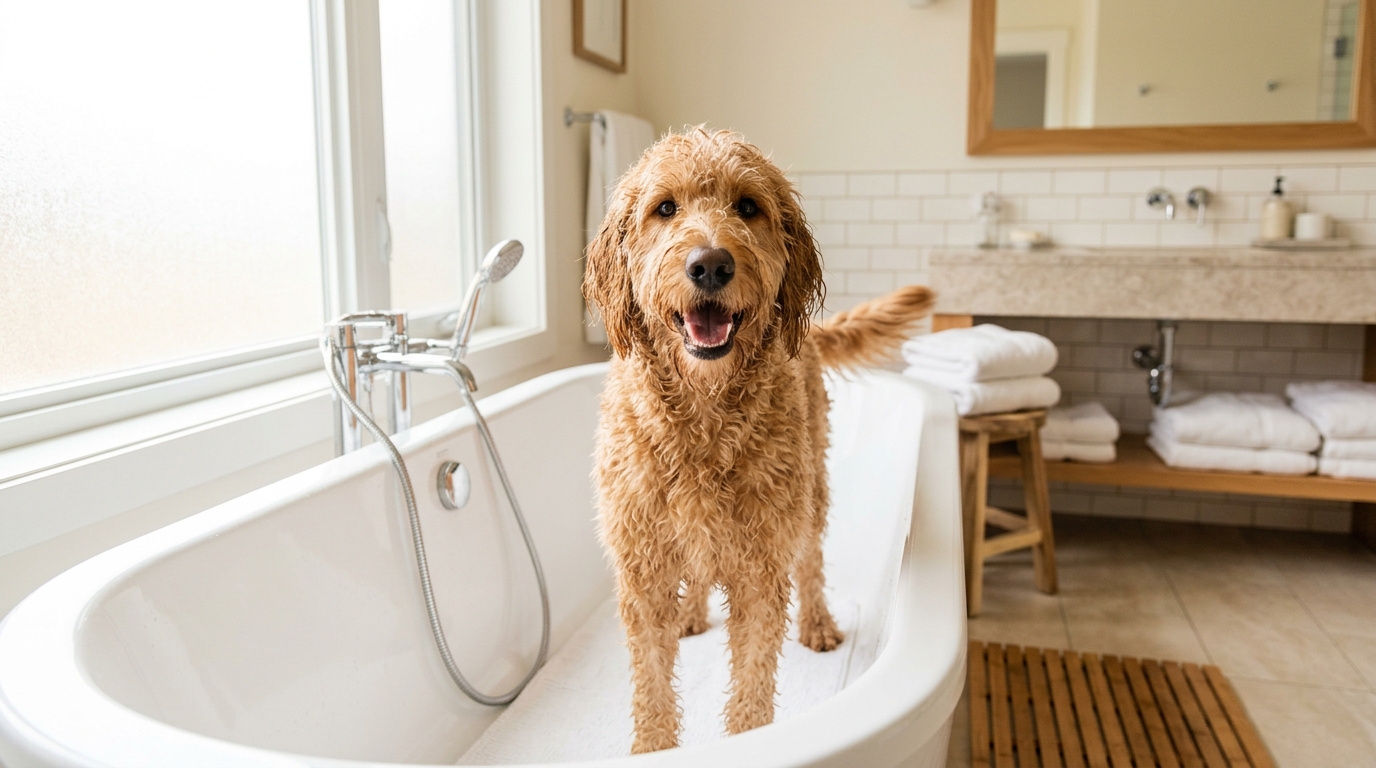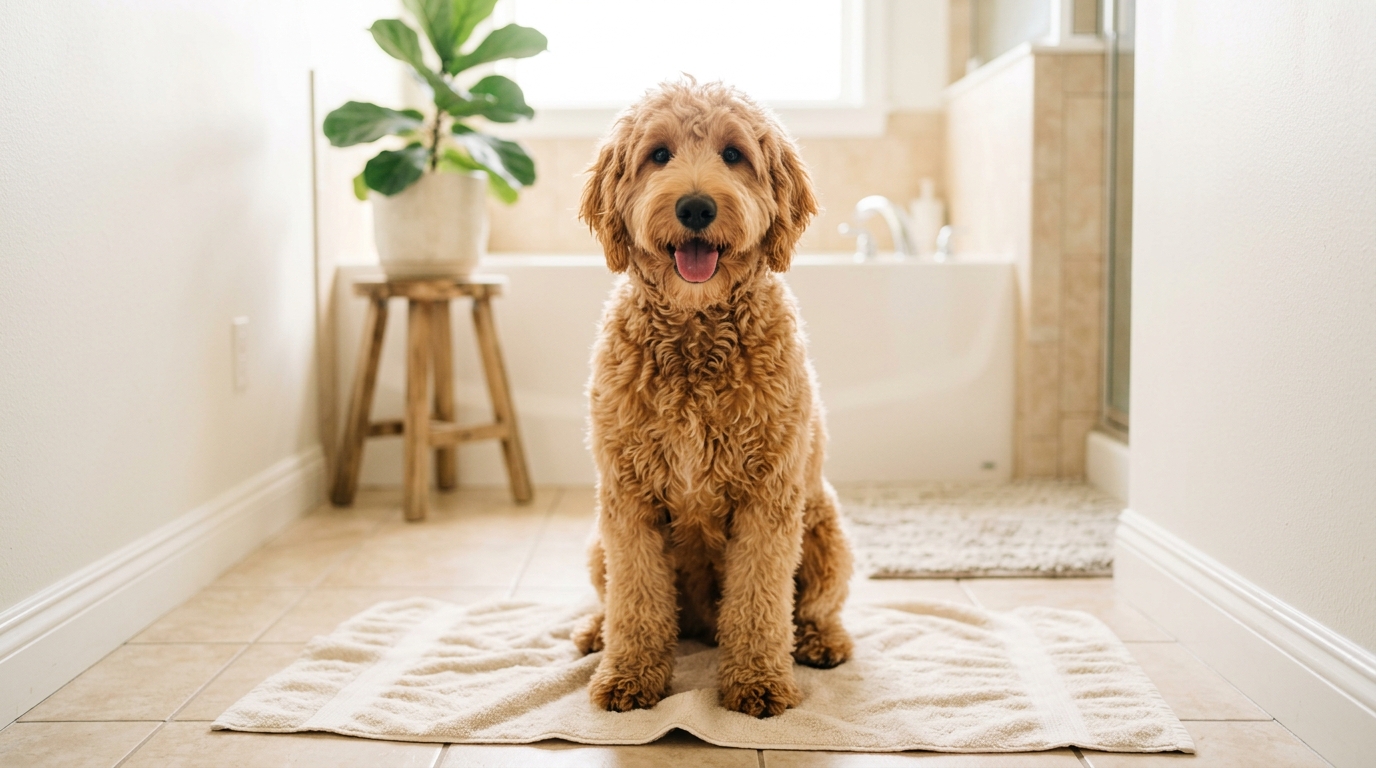
Most of the time, a smelly Goldendoodle comes down to a coat that stayed damp to the skin after a bath, swim or rainy walk, a dense curly or wavy doodle coat holds water you can't feel on the surface, and within a day that trapped moisture lets bacteria and yeast grow into a sour, musty smell. The other usual suspects are trapped debris and mats (especially between the paw pads), yeasty ears or paws, skin infection, anal glands, teeth and diet.
The good news: the everyday cause is the easy one to fix, and you can do it at home. The trick is telling the "just needs drying" smell from the "call your vet" smell, and that comes down to where the smell is and what it smells like.
In our house of three Australian Labradoodles, damp coat is the smell we chase most often. This guide walks through all seven causes, how to tell them apart, and what actually helps.
Why does my Goldendoodle smell even after a bath?
This is the question we hear most, and the answer is nearly always the same: the coat dried on the outside but stayed wet underneath.
A Goldendoodle, Labradoodle or Australian Labradoodle coat is doing exactly what it was bred to do, trap air and insulate. That same density traps water. You towel the dog, the surface feels dry, and there's still a damp layer sitting against warm skin. Give that eight to twenty-four hours and normal skin bacteria and yeast bloom, and you get that faintly sour, wet-dog smell right after a bath that was supposed to fix it.
Two things cause it:
- The coat never dried to the skin. Most common by far.
- Shampoo wasn't fully rinsed out. Residue holds moisture and irritates skin. Rinse until the water runs completely clear, then rinse again.
What helps: dry to the skin, every time
We stopped routine blow-drying years ago, with an ordinary hair dryer, drying a doodle coat all the way to the skin can take an hour. What works for us is dog drying robes (bathrobes for dogs); they wick the deep moisture out while the dog mooches around, and they work really well. A proper high-velocity grooming dryer is a good option if you want a perfect finish and have the budget, but it's a big investment.
Whatever you use, the test is your hand: push your fingers down to the skin in the thickest spots, chest, base of the tail, behind the ears, and it should feel dry, not cool and damp. Our full method is in how to bathe a doodle at home.
For general, vet-backed guidance on coat and skin care, the American Veterinary Medical Association is a reliable place to start.
What does a yeast smell like on a dog?
Yeast is the smell most people are actually noticing when they say their doodle "smells musty." It's stale, sweetish and heavy, the classic descriptions are corn chips, stale bread or a moldy dishcloth. Unlike the fresh sour smell of a damp coat, yeast smell hangs around and gets stronger over days.
Yeast lives on all dogs in small amounts. It becomes a smell problem when something lets it overgrow: trapped moisture, or an underlying allergy that inflames the skin. Gunnar, our ears-and-yeast dog, taught us this the long way, his was driven by a food that didn't suit him (chicken is his trigger), and no amount of bathing touched it until the underlying cause was addressed.
Yeast has favorite spots:
- Ears, musty, waxy, often with head-shaking. See best ear cleaners for doodles.
- Between the paw pads, the corn-chip smell, often with licking and brown staining. More in yeast infection on doodle paws.
- Skin folds, armpits, belly, warm, moist, low-airflow.
The 7 causes of a smelly doodle, at a glance
| Cause | Where it smells | What it smells like | Handle at home? |
|---|---|---|---|
| Damp coat to the skin | Whole body, worst in thick fur | Sour, wet-dog | Yes, dry fully |
| Trapped debris & mats | Anywhere; paw pads especially | Stale, dirty | Yes, clip mats with clippers |
| Yeasty ears | Ears | Musty, sweet | Clean; vet if red/painful |
| Yeasty paws | Between toes/pads | Corn chips | Clean & dry; vet if severe |
| Skin infection | A patch of skin | Foul, sometimes oozing | No, vet |
| Anal glands | Under the tail | Sharp, fishy | Vet or groomer |
| Teeth & breath | Mouth | Rotten, sour | Vet if persistent |
Trapped debris and mats, the paw-pad problem
A mat is a sponge. Once a knot forms, it holds moisture, dirt and skin oils against the skin and won't let them dry, a small mat can smell all by itself.
The worst spot on our two curly boys, Sven and Gunnar, is between the paw pads. Those mats trap damp from every walk, start to smell, and drive constant paw licking, an extra grooming cause of licking that sits alongside (never replaces) Gunnar's yeast and allergy story. We check and trim between the pads regularly.
For curly wool coats like theirs, we've learned brushing doesn't reliably stop matting, so we skip routine brushing but feel through the coat by hand several times a week and clip out any single mat right away. Tight, pelted mats at the skin are shaved off with clippers, never scissors, scissors near the skin cut the dog. A confident owner can do a full clip-down at home; see doodle matting and how to trim a doodle at home. Gösta's wavy fleece is the opposite, brushed often, he stays mat-free and long. Coat type changes everything (Australian Labradoodle coat types).
Skin infection, anal glands and teeth
These three are less about grooming and more about health, and the last two aren't fixed by a bath.
- Skin infection. A distinctly foul smell from one patch, sometimes with oozing, redness or a hot spot, needs a vet. Doodle skin problems hide under all that coat, so smell is often your first warning.
- Anal glands. A sharp, fishy smell under the tail, usually with scooting or licking. Some dogs need occasional expression by a vet or groomer, don't guess at this one.
- Teeth and breath. Persistent bad breath is a dental issue, not a coat issue, and it won't wash off. Have your vet check it, especially in senior doodles.
Diet, a slow, indirect cause
Food rarely gives the coat a bad smell on its own. But a food that doesn't suit your dog can drive gas, greasy skin and yeasty ears, all of which smell. The Poodle line carries a real predisposition to allergic skin disease and food sensitivities, so some doodles inherit an itchy, yeast-prone skin that shows up as odor.
If the smell tracks with itching, ear trouble and paw licking, diet is worth investigating, but it's a project measured in weeks, not a same-day fix. Start with can diet fix doodle skin problems and do Goldendoodles have more allergies.
Your smelly-doodle checklist
FAQ
The most common reason is that the coat never dried all the way to the skin. A dense curly or wavy doodle coat holds water you can't see, and that trapped damp lets bacteria and yeast grow within a day, giving a sour or musty smell. Dry the coat fully to the skin with a drying robe or high-velocity dryer, and check that shampoo was rinsed out completely.
Yeast smells musty, sweetish and stale, people often describe it as corn chips, stale bread or a moldy dishcloth. It's strongest at the ears, between the paw pads and in warm skin folds. A yeast smell with redness, licking or head-shaking is worth a vet visit, because yeast usually rides along with an underlying allergy or moisture problem that needs treating too.
That corn-chip or 'Frito feet' smell is usually yeast and normal skin bacteria between the toes and pads, made worse by moisture and by mats trapped between the paw pads. A faint smell on clean, healthy paws can be normal; a strong smell with redness, brown staining or constant licking points to a yeast overgrowth and is worth a vet check.
Indirectly, yes. Diet doesn't usually give the coat a bad smell on its own, but a food that doesn't suit your dog can drive gas, greasy skin and yeasty ears, and all of those smell. In a dog with a food sensitivity, changing the protein can quiet the skin and ears down over weeks, but that's a slow project, not a same-day fix for odor.
Book a vet visit for a strong musty smell with red, waxy or painful ears, a smell coming from broken or oozing skin, a persistent fishy smell with scooting or licking under the tail, or bad breath that doesn't improve. These point to ear infection, skin infection, anal gland trouble or dental disease, problems that need treatment, not just a bath.
What to do next
If the smell is fresh and sour, fix your drying routine first, that solves most cases. If it's musty and comes with red ears, licking or paw-chewing, the smell is a symptom of something underneath, and the next step is figuring out which: our guide to telling a doodle allergy from a yeast infection is the place to start, and if the ears are involved, the best ear cleaners for doodles will help you set up a routine that keeps the smell from coming back.