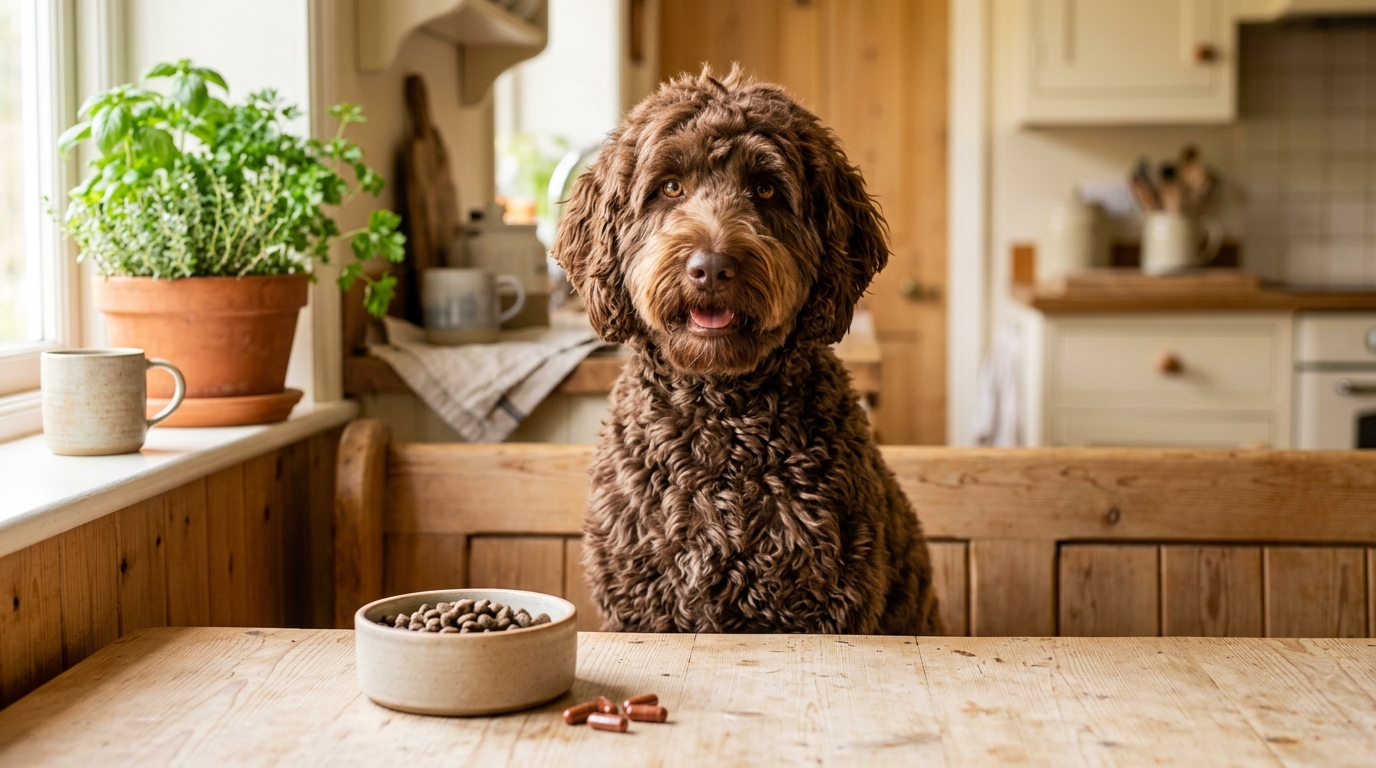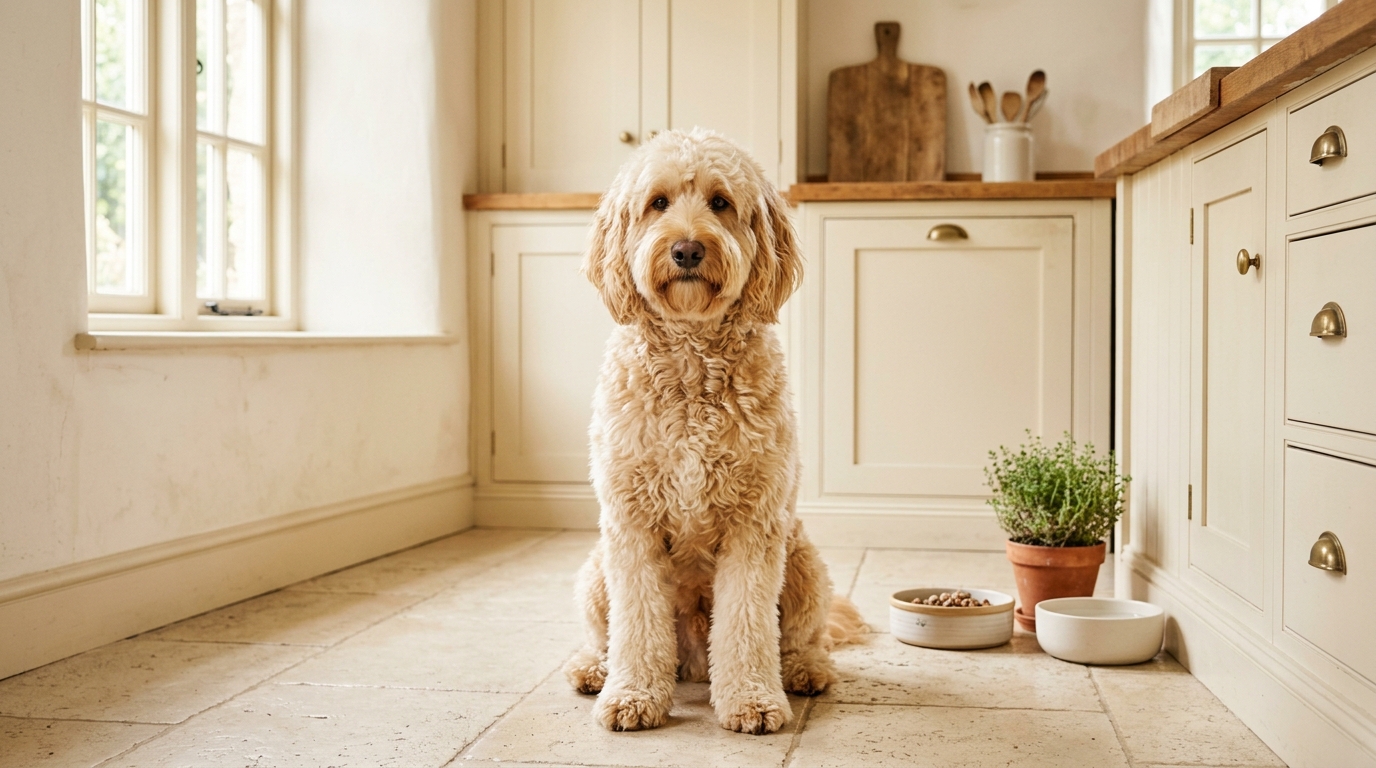
For full at-home doodle trims on a dense curly coat, the best clippers are corded professional clippers, our pick is the Andis UltraEdge Super 2-Speed (AGC2). A cordless clipper is honestly fine for a wavy fleece coat or light tidy-ups, but curly wool is tough on a motor and a cordless one tends to stall and heat up. Pair the clipper with a #10 blade for a short clip and attachment guard combs when you want more length.
We learned this the direct way. We groom all three of our Australian Labradoodles at home, and when we tried a cordless clipper it did a lovely job on Gösta's wavy fleece, and then choked on Sven's and Gunnar's curly wool. The curls were simply too tough for it. So we switched to a corded Andis, and that is what has trimmed our boys ever since.
This page is about full-body clippers. For paws, face and sanitary tidy-ups between trims you want a smaller, quieter trimmer, that has its own guide, Best Dog Trimmers for Doodles. If you already know you want a corded pro clipper and just want the shortlist, skip to the Top Picks below.
Why coat type decides everything
Doodles do not have one coat, and the clipper you need depends on which coat your dog actually has. Australian Labradoodles come in wool (curly/spiral), fleece (wavy or curly) and, less commonly, a straight hair coat, and the same variety shows up across Labradoodles, Goldendoodles, Bernedoodles and Sheepadoodles. If you want the full breakdown, we cover it in Australian Labradoodle coat types.
Here is why it matters for buying a clipper:
- Curly wool (Sven and Gunnar in our house) is dense and springy. It loads a blade heavily, so the motor has to work hard and the blade heats up fast. This is where a cheap or underpowered clipper fails.
- Wavy fleece (Gösta) is softer and less packed. It clips more easily, and even a cordless clipper can handle it.
Our curly boys get clipped short every 2-3 months, roughly four times a year, because a curly wool coat cannot realistically be kept long, even our groomer agrees. Gösta's fleece is a different animal: brushed thoroughly and often, he stays mat-free and can be kept long. If you have a curly wool doodle, buy for power. If you have a fleece doodle, you have more freedom.
For general, vet-backed guidance on coat and skin care, the American Veterinary Medical Association is a reliable place to start.
What actually makes a good doodle clipper
After grooming three doodles at home for years, this is what we look for.
Corded power for curly coats
A corded clipper has consistent, mains-driven power that does not fade as the battery drops. For a dense curly Australian Labradoodle or Goldendoodle coat, that steady power is the difference between the blade gliding through and the blade dragging and snagging. Cordless is more convenient and easier on a wiggly dog, but in our experience it is only enough for fleece.
Detachable blades
A detachable blade system lets you swap between blade lengths and, crucially, swap in a fresh blade when one gets hot. Every clipper on our list uses detachable blades for exactly this reason.
A motor that shrugs off thick coats
Two-speed is plenty for most home groomers. A five-speed lets you slow right down over sensitive spots, which some owners prefer on an anxious dog. What you do not want is a low-power kit that bogs down the moment it hits curly wool.
Now that you know what to look for, here are the clippers we would actually put on a doodle.
Top Picks
Every clipper below uses detachable blades. Four are Andis, the brand that in our experience is clearly the best for curly coats and the one we use ourselves, plus the Aesculap our groomer swears by. The first three are corded; the last two are cordless options for fleece coats and lighter trims, including the Aesculap our own groomer swears by. We chose them for real power on thick coats, cool-running blade options, and beginner-friendly simplicity. No prices here on purpose; the live price is on Amazon.
| Product | Best For | Notes |
|---|---|---|
| Andis UltraEdge Super 2-Speed (AGC2) | Best overall for curly coats | Proven 2-speed power, detachable blades |
| Andis EasyClip 7-Piece Ceramic Kit | Best budget full kit | Cool-running ceramic blade |
| Andis Excel Professional 5-Speed Kit | Best for sensitive, anxious dogs | Slow-down speed control |
| Aesculap Akkurata Cordless (GT405) | Best cordless for fleece coats (what we use on Gösta) | Groomer favorite, quiet, light |
| Andis Pulse ZR II 5-Speed Cordless | Best cordless Andis | Removable lithium battery, 5 speeds |
One thing worth knowing before you buy: a clipper is a once-every-several-years purchase, so buy quality rather than a cheap kit. A good clipper runs around $200 and lasts for years, while a professional doodle groom typically runs $100-150 per visit (check your local prices), so with one doodle it pays for itself in a couple of years, and with several it is a huge saving. Also plan to buy spare blades: blade heat is the real limit on a long session, and having more than one #10 to rotate is what keeps you working. If you want to browse blades, coolant spray and guard combs, the Amazon pet section has them all.
Blades and lengths: which number does what
The blade, not the clipper body, decides how short you cut. Blade numbers can feel confusing, so here is the plain version.
| Setup | Leaves coat about | Good for |
|---|---|---|
| #10 blade | 1/16 in (1.5 mm) | Short all-over clip, sanitary areas, shaving out mats |
| #10 + short guard comb | 1/4 in (6 mm) | A slightly softer short look |
| #10 + medium guard comb | 1/2 in (13 mm) | Keeping a fleece coat with some length |
| #10 + long guard comb | ~1 in (25 mm) | The longest realistic home length on a fleece coat |
We use a #10 blade on Sven and Gunnar for their regular short clip. For Gösta we use a #10 or a longer blade, or a #10 with attachment guard combs when we want to keep his fleece longer. Guard combs snap over a #10 and simply raise the cutting height, an easy, cheap way to get several lengths from one blade. Blades and combs are sold separately from the clipper, so budget for them when you buy.
Blade heat: the thing nobody warns you about
Blades heat up. Friction from the moving blade against a thick coat builds heat quickly, and a full doodle trim keeps that blade running a long time, long enough to get uncomfortably hot against skin.
Here is how we manage it, trimming all three dogs in one session:
- Check temperature on your wrist. Touch the blade to the inside of your wrist regularly. If it is too hot for you, it is too hot for your doodle.
- Rotate blades. We own four #10 blades (the ones we use come as a 3-pack that fits Andis clippers) and swap them as they heat up, so we can keep working without long breaks. This single habit changed our grooming days completely.
- Use blade coolant spray. A quick spray cools and lubricates the blade between passes.
- Take breaks if you only have one blade, let it cool, or work in shorter sessions.
After the clip: bath, dry, check
Our routine on the curly boys is a bath once a month with a conditioner, the conditioner is what helps against matting, then drying, then clipping when the coat is due. We no longer routinely blow-dry; an ordinary hair dryer can take an hour to dry a doodle to the skin. We use dog drying robes instead, and they work really well. Whatever you use, the coat must be fully dry before the blade goes on. For the full wash-day method, see how to bathe a doodle at home.
The other habit that matters more than any tool: checking. We feel through the coat by hand daily or several times a week and clip out any single mat right away with clippers. The hardest mats on our boys are between the paw pads, and those lead straight to constant paw licking, so we check and trim there too, using a small trimmer.
FAQ
For a dense curly wool coat, corded wins. We tried a cordless clipper and it only managed our wavy-fleece dog, Gösta; on our curly boys, Sven and Gunnar, the curly wool bogged it down. A cordless is genuinely fine for a fleece coat or light tidy-ups, but for reliable full-body trims on a curly Australian Labradoodle, Goldendoodle or Sheepadoodle, a corded professional clipper is the safer buy.
A #10 blade leaves the coat very short (about 1/16 in / 1.5 mm) and is what we use on our curly boys. For more length, put attachment guard combs over a #10 blade, common combs leave roughly 1/4 in (6 mm) up to about 1 in (25 mm). For Gösta's fleece we use a #10 or a longer blade, or a #10 with guard combs when we want to keep him longer.
Friction from the moving blade against the coat generates heat, and a full doodle trim keeps a blade running a long time. Check the blade against the inside of your wrist regularly; if it feels too hot for your skin, it is too hot for the dog. Use blade coolant spray, take breaks, or do what we do and own several #10 blades to swap as they heat up so you can keep working.
Yes, with clippers, if you are confident. Tight or pelted mats are shaved off with clippers using a short blade, never cut with scissors near the skin. If mats are widespread, the dog is very stressed, or there are sores, redness or broken skin under the mat, that is when to bring in a groomer or see your vet.
Yes. Never clip a dirty or wet coat. Dirt dulls and drags the blade, and a damp coat clogs it and pulls the skin. Bathe with a conditioner, dry fully, then clip. A clean, dry, mat-free coat is what lets the blade glide instead of snagging.
Where to go next
If you have your clipper and want the actual step-by-step, read how to trim a doodle at home, it walks through the whole process we use on all three dogs. For the paws, face and between-trim tidy-ups, pair your clipper with a small trimmer from our best dog trimmers for doodles guide. And if matting is your real problem, start with how to prevent and remove doodle mats.