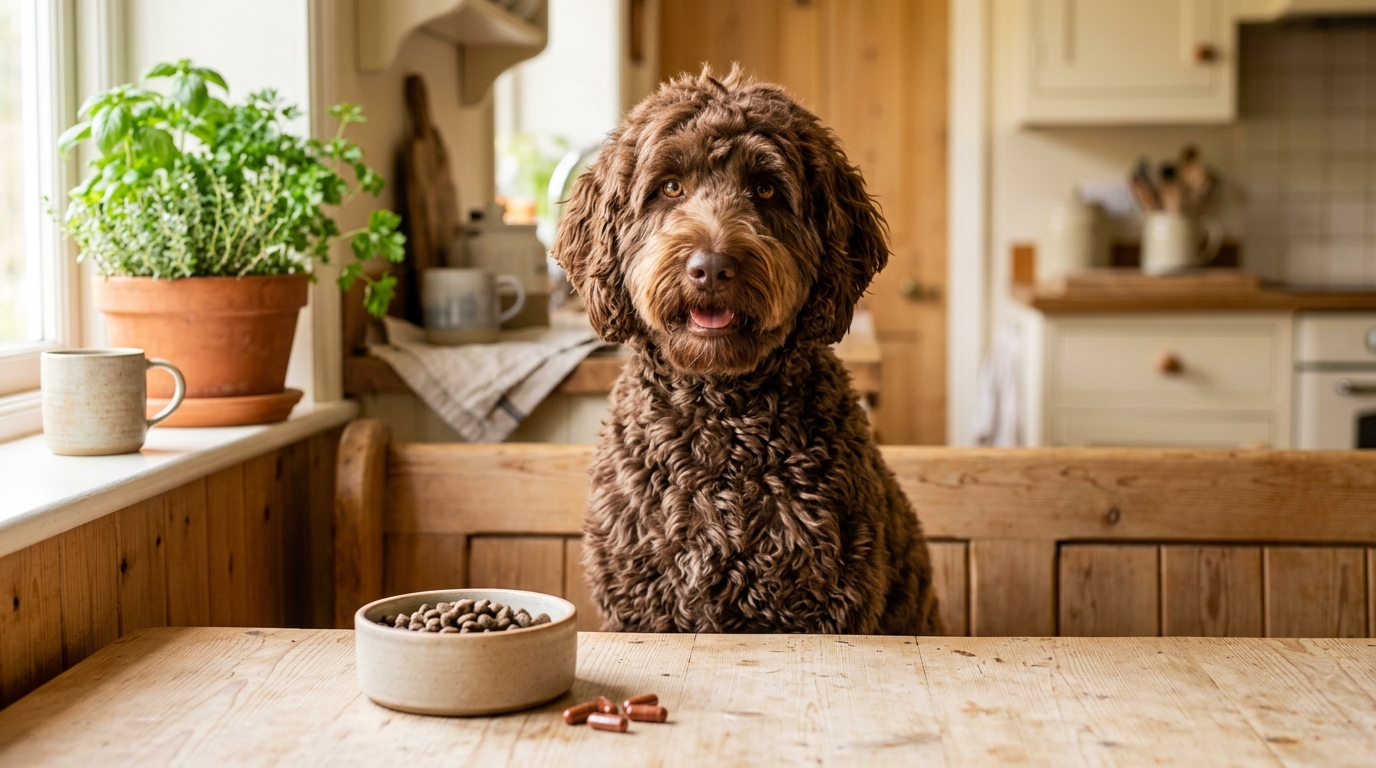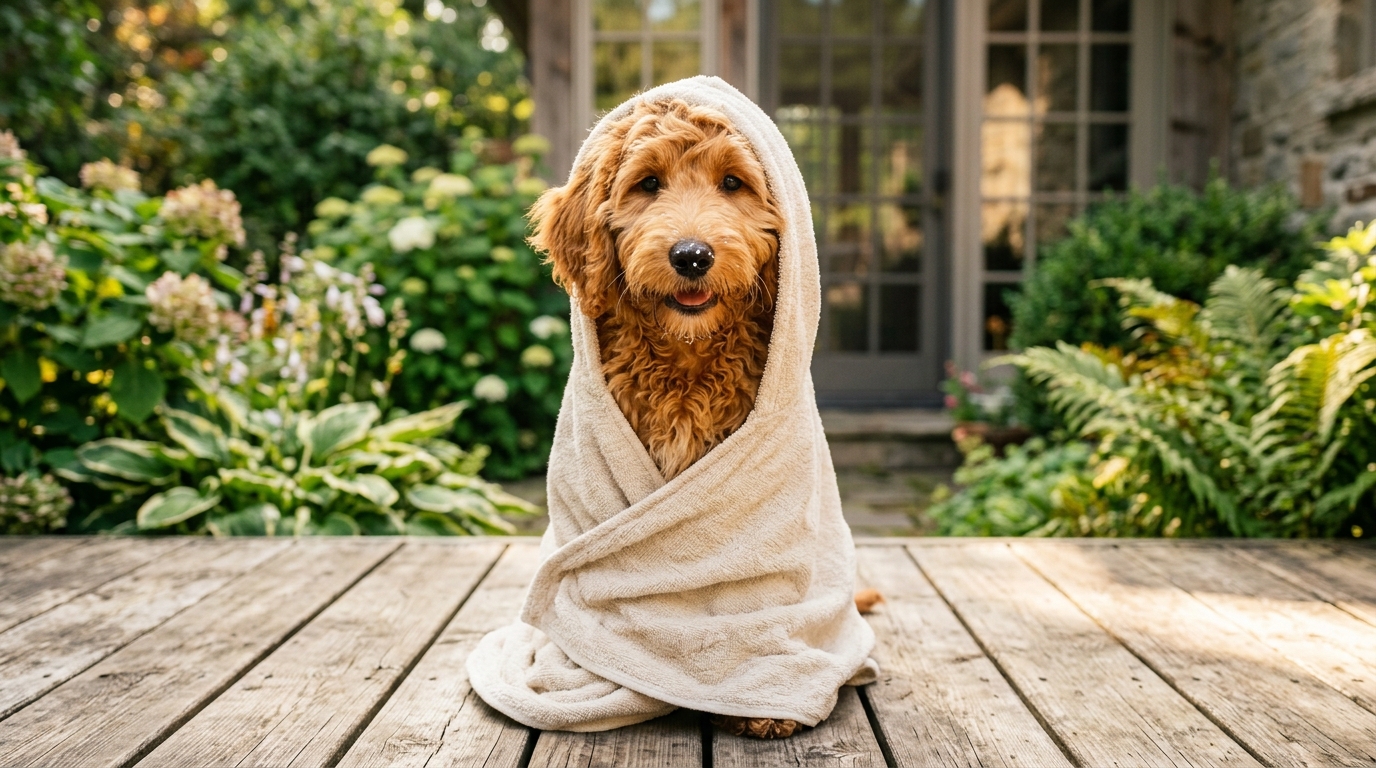
A dog drying robe is a super-absorbent bathrobe you wrap on your doodle straight after towelling, so a dense coat wicks dry without an hour under a hair dryer. For a Goldendoodle, Labradoodle or Australian Labradoodle it matters more than for most breeds, because trapped dampness under all that coat is exactly what invites hot spots and yeast. Look for absorbent microfibre or cotton fabric, sizing matched to your dog's back length, and a fastening a wriggly dog can't wriggle out of.
We stopped blow-drying as a routine in our house a while ago. With an ordinary hair dryer, getting a doodle coat truly dry to the skin can take the better part of an hour, and three doodles' worth of that is a whole evening gone. Drying robes are what we reach for now, and honestly they work really well.
Below is what to look for, our three picks, and how a robe actually fits into a real grooming routine.
Why drying to the skin matters for a doodle coat
A doodle coat is deceptive: the surface can feel dry while the coat next to the skin is still damp. Curly wool and wavy fleece both hold water, and they hide it. That warm, damp layer against the skin is the single most reliable way to grow a hot spot or a patch of yeast.
We know this closely. Gunnar is our ears-and-yeast dog, and if anything on him stays damp, the coat, the paws, those floppy ears, you can almost watch the trouble start. Drying properly after every bath, swim or soggy walk is one of the cheapest bits of prevention there is. If you've ever chased a hot spot, our guide on doodle hot spots and how to treat them explains exactly why damp skin is the trigger.
A robe won't take a thick coat to bone-dry on its own. What it does is pull out the bulk of the water fast, so the skin isn't sitting wet for an hour, and the rest air-dries much quicker.
For general, vet-backed guidance on coat and skin care, the American Veterinary Medical Association is a reliable place to start.
What to look for in a dog drying robe
If you already know you need one and just want the shortlist, jump to the Top Picks below. Otherwise, these are the things that actually separate a good robe from a wet blanket that falls off:
- Fabric and absorbency. Microfibre wicks fastest and dries quickest itself; bamboo and cotton terry are soft and absorbent but slower to dry between uses. For a heavy doodle coat, prioritise absorbency.
- Sizing by measurement, not label. Measure back length (base of neck to base of tail) and chest at the widest point, then use the maker's chart. A standard doodle usually lands L, XL, a medium M, L, a mini S, M.
- Neck and hood coverage. A hood or high collar covers the neck ruff, where coat is thickest and slowest to dry.
- Leg and belly coverage. The belly and chest stay damp longest. More coverage there = drier dog, less drip on your floor.
- A fastening a wriggly dog can't escape. Hook-and-loop plus a wrap tie holds far better on a shaking doodle than a single snap.
- Washability and its own drying time. You'll wash it constantly. Machine-wash, tumble-dry-low fabric that dries fast between baths keeps the whole thing practical.
Top Picks
We looked for robes that wick fast, hold on a shaking doodle, and survive a lot of washing, because a robe you use every bath needs to be genuinely low-maintenance. The differences come down to fabric, fit and coverage. Prices change constantly, so tap through for the current figure.
| Product | Best For | Rating |
|---|---|---|
| Tuff Pupper Fast Drying Bath Robe (800 GSM) | Best overall | 4.8 |
| Barkbox Dog Bathrobe Fast Drying | Best for a dog that bolts after the bath | 4.6 |
| SOGGYDOGGY Luxury Microfiber Bathrobe | Best premium microfibre | 4.7 |
One buying note before you pick: check the size chart against your dog's measurements every time, because "Large" means something different on every brand, and a robe that's too short on the belly is the one place a doodle stays wet. If you're stuck between two sizes, size up. You can browse fabrics and current sizing across the Amazon pet section if none of these match your dog's build.
How a drying robe fits into the routine
Our order is simple: bath (monthly, always with a conditioner, that's what really helps against matting on a curly wool coat), then a good towel-down to get the worst of the drip off, then the robe goes on. We bathe in the evening and the robe goes on for about an hour. Ours is a super-absorbent robe, so by then the dog is already fairly dry; the robe itself is soaked, so we take it off before the dog starts to feel cold, and the last of the dampness is gone by morning. That is also why we trim the next day rather than straight after the bath. For wavy fleece coats like Gösta's, we brush once the coat has dried a little and is still slightly damp; it brushes out mat-free without going frizzy. Gösta lets us do every grooming chore without any fuss.
For our curly wool boys, Sven and Gunnar, we don't brush routinely at all, with curly wool, brushing an adult coat just made it frizzy, so we stopped, a bit like the "curly girl method" for curly human hair. Instead we feel through the coat by hand for mats, daily or several times a week, and clip any single mat out ourselves right away. Roughly every 2-3 months (about four times a year) we clip the whole coat off short, sooner if the coat looks in poor shape. The robe still earns its place: it just gets the skin dry, which is the whole point for Gunnar.
When a high-velocity dryer is worth it instead
A robe is enough for most households, most of the time. But if you groom often, want a fully dry, fluffed finish at home, or have a very dense coat, a proper high-velocity grooming dryer does what a robe can't, it dries to the skin and blows the coat out. It's a real investment and takes practice to use calmly. Plenty of people do both: robe first to wick, dryer after for the finish. If you're weighing that up, our guide on how to bathe a doodle walks through the whole wash-and-dry sequence step by step.
Drying is only one link in the chain, though, and how you dry connects to how you handle mats. Because we don't brush the boys, hand-checking after the coat is dry is when we catch a mat early, while it's still a single mat we can lift out with a small trimmer. Where a mat has tightened right down to the skin or pelted, we shave it off with clippers, never scissors: scissors near the skin cut the dog. A confident owner can do this at home; if the mats are widespread or your dog is stressed, a groomer is a fair option, and anything with a sore or broken skin underneath is a vet visit. We learned this the hard way with Gunnar, our first doodle, his puppy coat was almost fleece-like and we thought regular brushing had him covered, but a poor brush and no technique meant we were only skimming the surface. When his adult curly coat came in and we first trimmed him ourselves, we found he was matted all over underneath. We had to shave him completely that first time and felt terrible about it. A proper slicker brush and learning how curly coats really work meant it never happened with Sven.
For the full picture on coat upkeep between baths, our guides on doodle matting and Australian Labradoodle coat types pair well with a good drying routine.
FAQ
Yes, with realistic expectations. A drying robe won't take a dense curly coat all the way to bone-dry the way a high-velocity dryer does, but it wicks a huge amount of moisture out in the first 20 to 40 minutes, cuts total drying time dramatically, and keeps a wet doodle from soaking your furniture. For most Goldendoodles, Labradoodles and Australian Labradoodles it replaces the towel-then-hour-of-blow-drying routine with something far calmer.
Measure your dog's back length from the base of the neck to the base of the tail, and the chest at its widest point, then match those numbers to the maker's chart rather than trusting labels like "Large." A standard doodle usually lands in L or XL, a medium doodle in M or L, and a mini in S or M. When you're between sizes, size up so the belly and chest are covered, since that's where dampness lingers.
It depends on the coat. For wavy fleece coats like our Gösta's, we brush once the coat has dried a little and is still slightly damp, and a robe makes that easier because the coat is damp-not-soaking and less prone to frizz. For curly wool coats like our Sven's and Gunnar's we skip routine brushing entirely and instead feel through the coat by hand for mats, clipping any single one out right away. Either way, never brush a coat bone-dry and matted; deal with mats before or after, not by force.
For most owners a robe is enough for baths, swims and muddy walks. A proper high-velocity grooming dryer is worth it if you want a fully dry, fluffed finish at home, groom often, or have a very dense coat, but it's a big investment and takes time to learn. Many households do both: robe first to wick, dryer after for the finish.
A dense doodle coat holds water against the skin long after the surface feels dry, and warm damp skin under all that coat is exactly where hot spots and yeast take hold. Floppy doodle ears trap moisture the same way. Getting the coat and skin properly dry after every bath or swim is one of the simplest things you can do to prevent recurring skin trouble.
Your next step
Pick the robe that matches your dog's measurements and your budget, then build it into a bath routine that actually dries the skin, not just the surface. The other half of that routine is what you wash with: our guide to the best shampoo and conditioner for doodles covers why the monthly conditioner is what really helps against matting. Get both right and you've handled most of what a doodle coat throws at you.