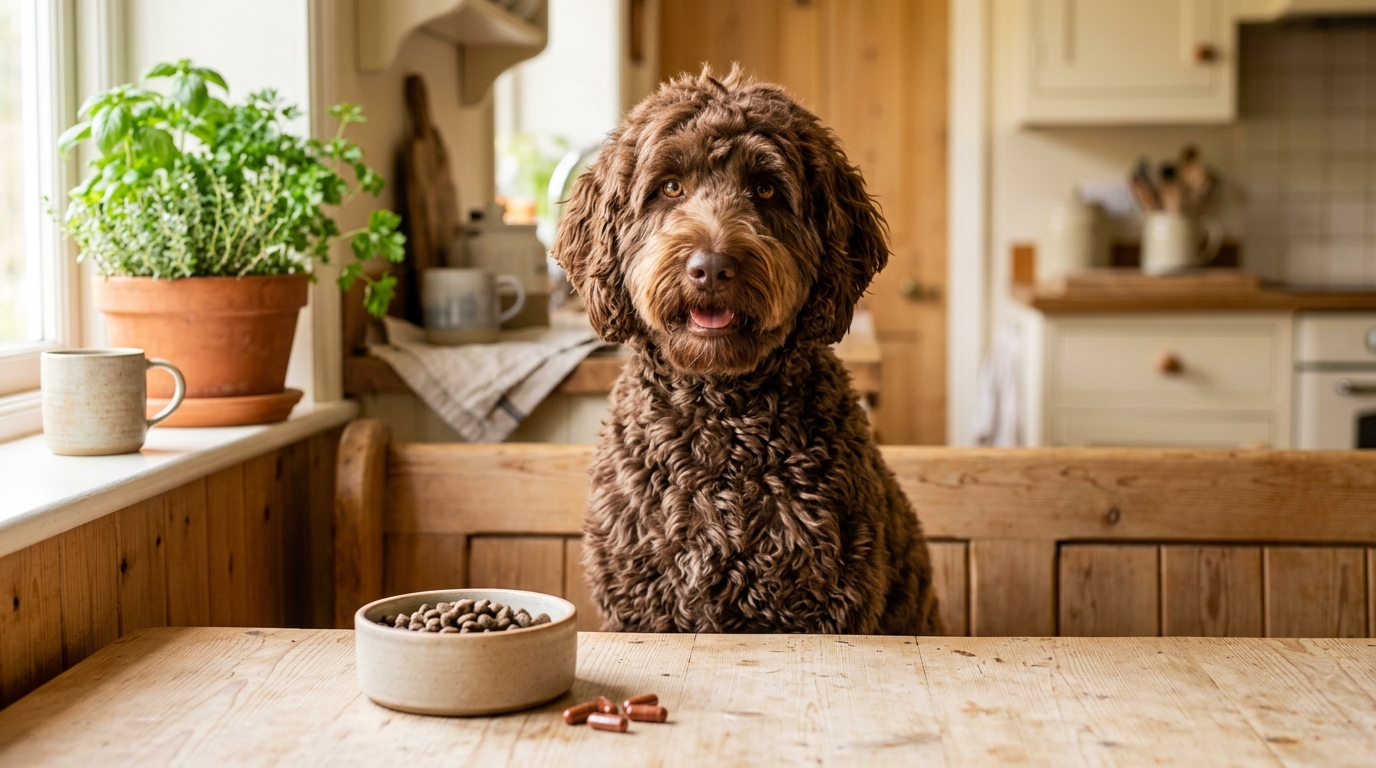
The best fiber supplement for a doodle depends on the problem you are solving: soluble fiber like psyllium husk or plain pumpkin absorbs water and firms up soft stool, and that same bulk can gently support the anal glands, while the right amount of added fiber can ease mild constipation too. For most sensitive doodles, a simple single-ingredient pumpkin or psyllium product is the smart first choice. Start low, always add water, and dose by body weight.
That one-size-does-not-fit-all point matters more than any brand ranking. Two doodles with "fiber problems", whether Goldendoodles, Labradoodles or Australian Labradoodles, can need almost opposite things, and the wrong product used the wrong way does nothing or makes the mess worse.
In our house we feed raw and we rarely reach for a fiber supplement day to day, but we keep plain pumpkin on hand for exactly these moments. If you already know you need a fiber supplement and just want the shortlist, jump to our top picks below. Otherwise, here is how to pick the right one for your doodle's actual problem.
Why Fiber Helps Doodle Digestion (Soluble vs Insoluble)
Fiber is not one thing, and that is the whole reason it works for both loose stool and constipation.
Soluble fiber absorbs water and forms a gel in the gut. That gel slows things down and pulls excess water out of a loose, watery stool, which is why soluble fiber is what firms a soft stool. Psyllium husk and pumpkin are the classic soluble sources. Soluble fiber is also food for the good gut bacteria, so it overlaps with the prebiotic side of gut health.
Insoluble fiber does not dissolve. It adds bulk and speeds transit, which is what helps move things along in a sluggish, constipated gut. Beet pulp and many whole-food fibers carry a mix of both.
The reason fiber can seem to do opposite jobs is that a firmer, bulkier, well-formed stool is the goal either way. When stool is too loose, soluble fiber soaks up the extra water. When stool is too hard and slow, added fiber plus water keeps it moving. The Merck Veterinary Manual describes fiber as a recognised tool for managing both chronic large-bowel diarrhea and constipation in dogs, which is exactly this double action.
Why doodles end up needing it
Doodles are not a single gut, so be careful with blanket claims. But the Poodle line does carry a real predisposition to food sensitivities and allergic skin disease, and that can show up as a gut that reacts to change. Our Sven is the sensitive-stomach one of our three, and he gave us loose stool after every single food change in his first year. Fiber is one of the mildest tools for smoothing out those wobbles while you fix the real cause.
Fiber also comes up for anal glands, a genuinely common doodle complaint. A firmer, bulkier stool presses on the glands as it passes and can help them empty naturally. It is worth a try for mild, recurring fullness, but it is not a fix for an inflamed or impacted gland.
Top Picks
We chose these four for clean ingredients, a clear fiber type, and a track record that real doodle owners can rely on. Products differ by country and we have not personally tested every US fiber brand, so these are researched picks: our own household experience is with plain pumpkin, which is the thread running through most of them. None of these contain chicken.
| Product | Best For | Rating |
|---|---|---|
| Fruitables Pumpkin Digestive Supplement | Best Overall / Best Value | 4.5 |
| Diggin' Your Dog Firm Up Pumpkin | Best for Sensitive Doodles | 4.5 |
| Daybreak Nutrition Psyllium Husk Powder | Best Concentrated Fiber | 4.5 |
| Bernie's Perfect Poop 4-in-1 | Best All-in-One | 4.4 |
One practical buying note before you pick: fresh, wet pumpkin products need refrigeration and get used up within about a week once opened, so a standard doodle can burn through a small can fast, while a dry powder (psyllium or dried pumpkin) keeps for months in the pantry and costs far less per dose. If you want a sealed, long-shelf-life powder for occasional use, that is the more economical route. You can compare current prices across the full range in Amazon's pet section.
What to Look For (and What to Avoid) in a Doodle Fiber Supplement
Before you shop, know what separates a clean, doodle-friendly product from one that will cause new problems.
Look for:
- A short ingredient list. Pumpkin, psyllium, maybe apple fiber. That is it.
- A single, clear fiber type so you know whether you are firming or bulking.
- No added sugar or sweeteners. Some "pumpkin" treats and cans are padded with sugar, which is the last thing a loose-stool gut needs.
- No chicken, no mystery flavorings if your doodle has sensitivities. Gunnar, our ears-and-yeast dog, reacts to chicken, so we read the full list, not just the headline.
Avoid:
- Added sugars and "flavor" blends with vague ingredients.
- Dairy if your doodle is sensitive to it.
- Big multi-ingredient tubs when you are troubleshooting, because if something disagrees you will not know which ingredient did it.
Soluble or insoluble: match the product to the problem
Here is the simple rule we use:
- Firming up soft stool or mild diarrhea: reach for soluble fiber. Pumpkin or psyllium.
- Mild constipation or sluggish anal glands: added fiber bulk plus plenty of water.
- Ongoing, unpredictable gut: a single soluble fiber is still the safest starting point, and you escalate from there.
Compare this with the overlapping tools in your cupboard. Plain pumpkin is covered in depth in our pumpkin for upset stomach guide, and slippery elm is a different soothing-mucilage approach for the same soft-stool problem.
How to Dose Fiber by Doodle Size
Always follow the product label first, because concentration varies a lot between plain pumpkin and psyllium. The table below is a cautious starting-point guide, not a prescription, and you should check with your vet for an unwell dog.
| Doodle size (weight) | Plain pumpkin (starting point) | Psyllium powder (starting point) |
|---|---|---|
| Mini, 15-30 lb (7-14 kg) | 1 tsp per meal | about 1/4 tsp per meal |
| Medium, 30-45 lb (14-20 kg) | 1-2 tsp per meal | about 1/2 tsp per meal |
| Standard, 45-70 lb (20-32 kg) | 1-2 tbsp per meal | about 3/4 to 1 tsp per meal |
Three rules we would not skip:
- Start at the low end. You can always add more in a day or two. Too much fiber too fast causes gas, cramping and looser stool, the opposite of what you want.
- Add water with psyllium, every time. It needs to hydrate in the bowl so it never swells in the throat.
- Give it time. Fiber usually shows an effect within two or three days. Do not keep bumping the dose daily.
If your doodle is a gulper who inhales meals, mixing fiber into a slow-fed bowl helps it blend evenly and slows the eating down too. We cover the tools in how to slow down a fast-eating doodle.
What Fiber Will Not Fix
This is the honest part. Fiber smooths out mild, occasional problems. It does not solve an underlying one.
If your doodle's soft stool is driven by a food trigger, fiber is a bandage. The real fix is identifying the ingredient, which is where an elimination diet or a switch to a limited ingredient food does the work. If it is stress-related, like the loose stool that shows up before a car trip or a vet visit, read our stress diarrhea guide instead.
And fiber is never the answer to a genuinely sick dog.
A note worth repeating: the FDA and AVMA both treat supplements as an addition to proper feeding and veterinary care, not a replacement for it. The AVMA is clear that persistent digestive signs warrant a proper diagnosis. Fiber is a helper, not a diagnosis.
FAQ
For soft stool, a soluble fiber works best because it absorbs water and firms the stool. Plain pumpkin or psyllium husk are the two most reliable options, and both are gentle enough for sensitive doodles. Start with a small dose, always add water, and give it two or three days to show an effect before you adjust the amount.
Both are soluble fibers that firm up loose stool, but pumpkin is a whole food that many dogs find more palatable and it adds a little moisture and potassium, while psyllium is more concentrated so you use a smaller amount per dose. For a picky or sensitive doodle, pumpkin is an easy first try; for a standard doodle who needs more fiber in a smaller scoop, psyllium can be more efficient. Neither is a cure for an underlying problem.
Sometimes. A firmer, bulkier stool puts gentle pressure on the glands as it passes, which can help them express naturally. Adding soluble fiber is a reasonable thing to try for mild, recurring anal gland fullness, but if your doodle is scooting constantly, the area looks red or swollen, or there is any discharge, that is a vet visit, not a supplement job.
Dosing depends on the product and your doodle's weight, so always follow the label first. As a rough guide, a mini doodle needs far less than a standard, and plain pumpkin is often given by the teaspoon while concentrated psyllium is given in smaller amounts. Start at the low end, add water, and increase slowly only if needed.
Fiber is for mild, occasional soft stool, mild constipation or minor anal gland fullness. If you see blood, black tarry stool, repeated vomiting, straining with nothing passing, lethargy, or diarrhea that lasts more than a couple of days, stop guessing and call your vet. Fiber can mask a problem that needs proper diagnosis.
Your Next Step
Pick the product that matches your doodle's actual problem: pumpkin or psyllium to firm up soft stool, added fiber plus water for mild constipation, and an all-in-one if you want daily broad support. Start low, add water, and give it a few days.
If fiber is only patching a recurring problem, the real work is upstream. Our gut health routine for sensitive doodles ties fiber, probiotics, feeding and food choice into one plan that actually holds, which is the thing that finally settled things down in our own house.