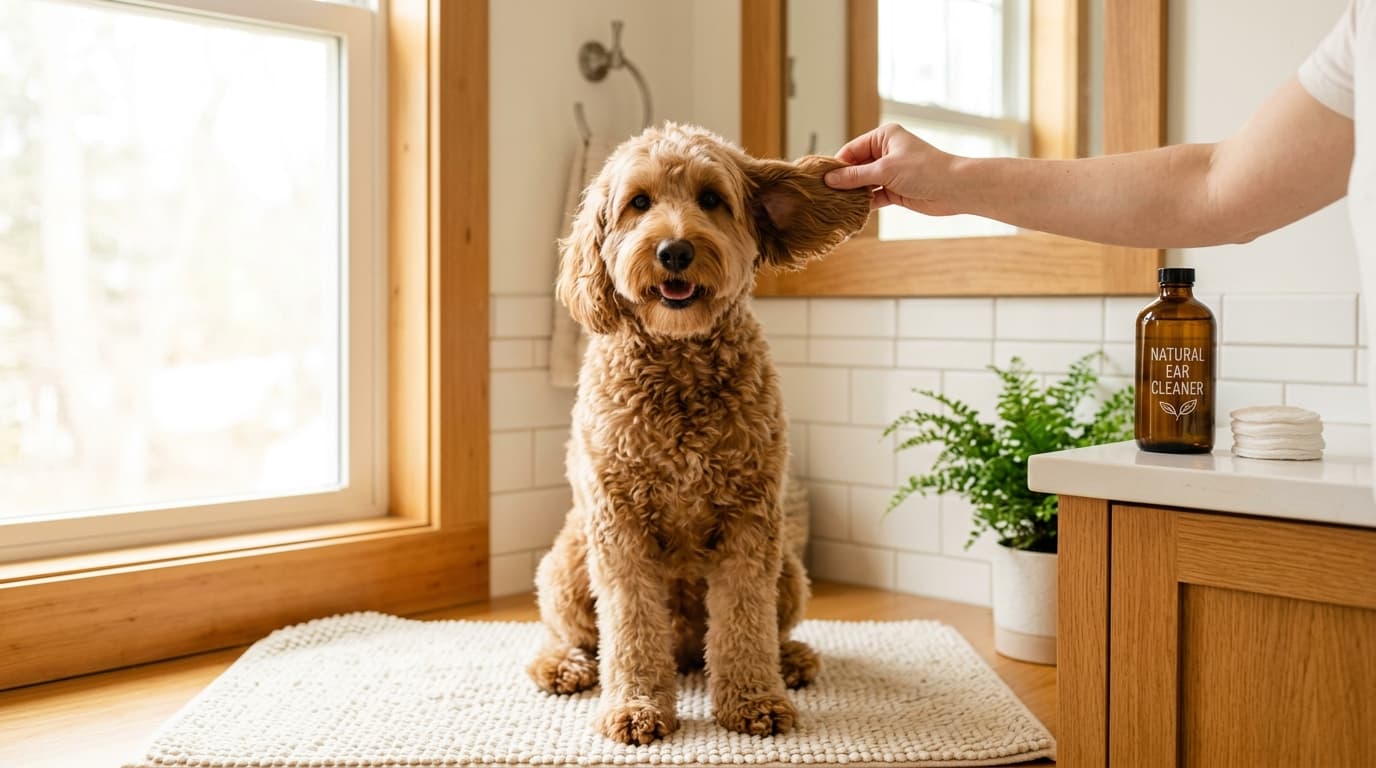
For routine doodle ear care, use a gentle, fragrance-free ear cleaner once a week and after every swim or bath. That is prevention, not treatment. A smelly, painful or discharging ear needs a vet before any product goes into it, cleaning an ear with a ruptured eardrum can cause permanent damage.
Ear trouble is the single most common thing doodle owners write to us about, and the reason is anatomy rather than neglect. A drop ear covers the canal, hair inside the canal slows the airflow, and a coat that holds water keeps the whole area damp after every swim. Yeast asks for nothing more than that.
If you already know you want a routine cleaner and just want the shortlist, start with the Zymox Ear Cleanser: enzymatic, no fragrance and no dyes. Below is which product does which job, and the line where a cleaner stops being the answer.
Why doodle ears specifically
Three things stack up in a doodle, and none of them is about how well you clean.
The ear hangs shut. A drop ear traps warm air over the canal, which is the opposite of what a canal wants.
There is hair in the canal. That is the Poodle-line coat doing what it does everywhere else on the dog, and it slows airflow further. Goldendoodles, Labradoodles and Bernedoodles all tend to show this to some degree, since it comes from the Poodle side of the cross.
The coat holds water. After a swim or a bath, a doodle stays damp long after a short-coated dog has dried, and the ear is the last place to dry out.
Gunnar is our case study for this. He was treated for ear infections three times before he was eight months old, and the cycle only broke when we stopped treating the ears and looked at his diet, the full story is in doodle allergy vs yeast infection. That is the honest frame for this whole article: cleaning manages the conditions, it does not fix the cause. Recurring infections are very often allergy-driven, and the Poodle line does carry a real predisposition to allergic skin disease.
Which cleaner for which job
| Type | What it does | Use it | Watch out for |
|---|---|---|---|
| Zymox Ear Cleanser | Enzymatic routine clean, no steroid | Weekly, and after every swim or bath | Nothing much, this is the routine one |
| Nutri-Vet Ear Cleanse | Drying flush with salicylic acid | After swims, on healthy ears | Contains alcohol: can sting a sore ear |
| Vetericyn Plus Ear Rinse | Gentle hypochlorous rinse | Sensitive dogs, quick rinses | Small bottle, light cleaning power |
| Zymox Otic Plus | Enzymatic with 1% hydrocortisone | Short courses, with vet guidance | Steroid: not for long-term daily use |
The practical shape for most doodle households is one routine liquid and a stack of cotton pads, with the hydrocortisone option in the cupboard only if your vet has confirmed your dog actually gets flares.
You will notice there is no "natural" tea tree wash on this list. Tea tree oil can be toxic to dogs, and an ear product is one a doodle shakes onto its coat and then licks off its paws, so we leave tea tree and other essential-oil cleaners out entirely. We also left out cleaners with undisclosed "fragrance" or synthetic dyes, which rules out several of the best-known bottles: every pick below publishes its full ingredient list, and none contains either.
Our picks
Best overall: Zymox Ear Cleanser
The routine cleanser. It works with the same enzyme system as the Zymox medicated line (lactoperoxidase, lactoferrin, lysozyme and glucose oxidase) but without the hydrocortisone, so it suits regular use on a healthy ear. The full ingredient list is short: purified water, glycerin, propylene glycol, benzyl alcohol, a mild cleanser, the enzymes and zinc gluconate, with no fragrance and no dyes.
The con: it is a maintenance product and nothing more, and it is not a strongly drying cleanser. If your doodle already has an active infection, this is not the thing that will clear it.
One bottle goes a long way. A weekly clean uses very little solution even on a big doodle, so a single bottle usually lasts months and multipacks are rarely worth it. Check the current price when you restock.
Best drying flush: Nutri-Vet Ear Cleanse
For the swimmer. This budget cleaner is a drying flush: water, propylene glycol, SDA alcohol, aloe vera, salicylic acid and sodium benzoate, and nothing else, so no fragrance and no dyes. The alcohol and salicylic acid help break down wax and leave the canal drier, which is the whole job in a floppy-eared doodle after a lake day.
The con: alcohol can sting an ear that is already red or sore, so use it only on healthy ears, and switch to a gentler rinse if your dog flinches.
Best gentle rinse: Vetericyn Plus Ear Rinse
The mildest option here. It is hypochlorous acid in electrolyzed water with salt and phosphates, which is about as short as an ingredient list gets, and it should not sting. That makes it the one to reach for with a dog who hates ear cleaning or whose ears are easily irritated.
The con: it is a light rinse rather than a heavy wax remover, and the 3 oz (85 g) bottle is small for a multi-doodle house.
Best for an active flare: Zymox Otic Plus with Hydrocortisone
When the ear is already itchy and inflamed and your vet has confirmed what you are dealing with, this is the widely used option. It works enzymatically rather than by antibiotic action, and the 1% hydrocortisone is there to take the itch down quickly, which matters because a dog who scratches an inflamed ear makes it worse by the hour.
The con: it contains a steroid (hydrocortisone), so it is a short-course product rather than a daily routine, and it is the one that most clearly wants your vet's guidance first, particularly because it should not go into an ear with a ruptured drum.
A weekly routine that works
Keep it short enough that it actually happens:
- Lift and look first. Healthy is pale pink, barely any smell. Note anything different before you touch it.
- Fill the canal with cleaner, then massage the base of the ear for twenty or thirty seconds. You want to hear it squelch.
- Let them shake. That is the part that brings debris up out of the canal, so stand back and let it happen.
- Wipe the outer ear with cotton pad or a wipe. Nothing goes down the canal, no cotton buds, ever.
- Dry after every swim and bath, without exception. This is the single habit that prevents the most trouble.
When the cleaner is not the answer
If you are cleaning weekly and the ears still keep flaring, the ear is a symptom rather than the problem:
- An underlying allergy is the most common driver. Start with doodle allergy vs yeast infection, then food allergies in doodles.
- Yeast that keeps returning usually has a gut and diet component, see yeast infection on doodle paws and can diet fix doodle skin problems. For the full gut-first framework behind scratching, paw licking and recurring yeast, see Doodle Itchy Skin, Paws & Yeast: The Gut-First Fix.
- Skin support from the inside helps some dogs more than any wash, see best omega-3 for doodle skin health and best allergy supplements for doodles.
FAQ
Once a week is a sensible baseline for a doodle, plus after every swim, bath or wet walk. Floppy ears with hair in the canal hold moisture, and moisture is what lets yeast take hold. Cleaning more often than that is usually counterproductive, because over-cleaning irritates the canal lining and can make things worse. If a weekly routine is not keeping the ears clean, the problem is upstream of the cleaner.
This is genuinely contested and worth deciding with your groomer and vet rather than from a blog. Plucking improves airflow, which matters in a hairy doodle canal, but it also creates micro-trauma that can trigger inflammation in a dog who was not already having trouble. A common middle position is to trim rather than pluck for dogs with healthy ears, and to reserve plucking for dogs with a documented recurring problem, on veterinary advice.
No, not before a vet has looked. A red, painful, smelly or discharging ear can mean a ruptured eardrum, and putting fluid into an ear with a perforated drum can cause lasting damage including hearing loss. It can also mean a foreign body or a bacterial infection that needs prescription treatment. Cleaners are for maintaining a healthy ear and for use alongside a treatment your vet has chosen, not for diagnosing one yourself.
It is mostly anatomy plus moisture. A drop ear covers the canal, hair inside the canal slows airflow, and a coat that holds water after a swim or bath keeps the whole area damp. Yeast thrives in exactly those conditions. Recurring infections are very often driven by an underlying allergy rather than by poor hygiene, which is why the dogs who stop having ear trouble are usually the ones whose diet or allergy management changed, not the ones who cleaned harder.
They do different jobs. Wipes clean the visible outer ear and the folds, which is genuinely useful for a quick post-walk tidy and for a dog who hates having liquid poured in. They do not reach into the canal, so they cannot flush out wax or dry the depth of the ear. Most doodle households want both: a liquid flush for the weekly clean, and wipes or a damp cotton pad for the days in between. If you buy wipes, check the label: many ear wipes contain fragrance and dyes.
Where to start
Buy one routine cleanser and a pack of cotton pads, clean weekly, and dry the ears after every swim. That covers the maintenance side for most doodles and costs very little.
If the ears keep flaring despite that, stop shopping for a better cleaner, the answer is upstream. Read doodle allergy vs yeast infection next, and see how Gunnar's cycle finally broke on his story.