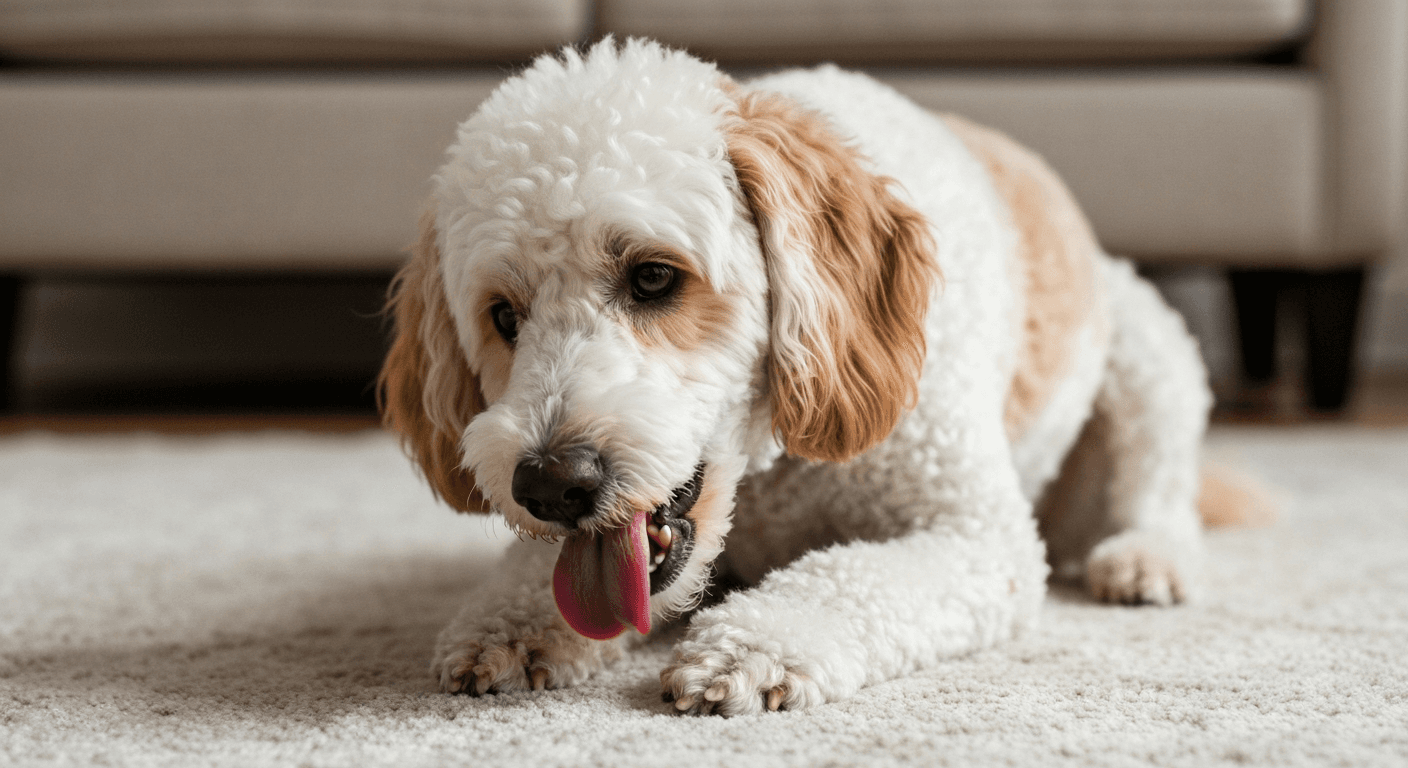
If your doodle is obsessively licking their paws and you notice reddish-brown staining, a musty "corn chip" smell, and greasy or crusty skin between the toes, you're almost certainly looking at a dog yeast infection on the paws, an overgrowth of a fungus called Malassezia. Australian Labradoodles, Goldendoodles and Bernedoodles are especially prone because their hairy, curly paws trap moisture where yeast loves to grow. You can often clear a mild case at home with antifungal soaks, thorough drying, and fur trimming, but recurring yeast is a symptom of something deeper (usually allergies or gut issues), so a vet visit matters when it keeps coming back. The Merck Veterinary Manual makes the same point that Malassezia dermatitis is often secondary to an underlying condition.
Most of the at-home work is washing and drying, and the wash you use matters more than people expect - our best shampoos for itchy doodles covers the antifungal options we actually reach for.
Here's the part most articles skip: yeast on the paws is rarely the real problem. It's a passenger. Something else, moisture, a food trigger, an out-of-balance gut, creates the conditions, and the yeast just moves in. If you only chase the symptom, you'll be back here in a month. So this guide covers both: how to get your doodle relief now, and how to fix the root so it stops.
We've lived this with our own three. Gunnar in particular is our "paw licker", the second his feet stay damp too long, he's working them over on the rug. So this is hands-on, not theory.
What yeast on doodle paws actually looks like
Yeast (Malassezia) lives on all dogs' skin in small amounts. It becomes a problem when it overgrows, usually somewhere warm, moist, and short on airflow, which describes the underside of a doodle's paw perfectly.
The classic signs of a yeast infection between dog toes:
- Constant licking or chewing of the paws, often to the point of it becoming a habit
- Reddish-brown or rust-colored staining on the fur between the toes and around the nails
- A musty, cheesy, or corn-chip smell ("Frito feet" is the usual nickname)
- Greasy, waxy, or crusty skin between the pads
- Redness and inflammation, sometimes thickened or darkened ("elephant skin") in chronic cases
- Occasional hair loss from the friction of licking
Why the brown stains happen
Those brown paw stains aren't the yeast itself. They're saliva. Dog saliva contains pigments called porphyrins that turn fur rusty-red over time. So brown-stained paw fur is really a "your doodle has been licking here a lot" flag, and on a light-colored curly-coated doodle, it shows up dramatically. The staining and the yeast usually travel together because the licking keeps the paw wet, and wet is exactly what yeast wants.
Why doodles are so prone to yeasty paws
This isn't bad luck. It's built into the doodle package.
Hairy paws trap moisture. Doodles grow dense fur between the pads and toes, far more than a short-coated breed. That fur wicks up dew, rain, snow, and the water from every drink and puddle, then holds it against the skin where it can't evaporate. Warm and damp is the yeast starter kit.
Curly coats hide the early stages. By the time you smell or see it, the overgrowth has often had a head start, because the curls conceal the redness underneath.
Poodle-line skin and food sensitivities. Doodles inherit a real tendency toward allergies and sensitive skin. Allergic inflammation makes skin oilier and leakier, a buffet for yeast. We go deeper into this breed tendency in Are Doodles Prone to Allergies?.
So the doodle-specific reality is that you're fighting on two fronts: the physical (moisture in furry paws) and the internal (allergy and gut triggers that fuel overgrowth).
Is it yeast: or something else?
Before you treat, rule out the look-alikes. Paw problems have a few common causes, and they overlap.
| Cause | Smell | Look | Tell-tale sign |
|---|---|---|---|
| Yeast (Malassezia) | Musty / corn chip | Greasy, brown-stained, red | Worse in humid weather; often ears affected too |
| Bacterial infection | Sour / rotten | Pus, oozing, scabs | Broken skin, sometimes a wound source |
| Allergies (food/environmental) | Little to none alone | Red, itchy, may look "clean" | Licking multiple areas; seasonal or diet-linked |
| Contact irritation | None | Redness on contact points | Started after a new floor cleaner, salt, or lawn treatment |
| Grass seeds / foreign body | None (unless infected) | Swelling in one spot | Sudden limping, focused on one paw |
Yeast and allergies specifically get confused constantly, because they so often occur together. We break the two apart in detail in Allergy vs Yeast Infection in Doodles, worth reading if you can't tell which you're dealing with.
The home-care action plan for yeasty paws
For a mild, uncomplicated case with intact skin, here's the routine that works. Consistency beats intensity, it's the daily habit, not any single product, that clears it.
Step 1: Trim the paw fur short
This is the step most owners skip and it's arguably the most important for doodles. Long fur between the pads and toes holds moisture indefinitely. Keeping it trimmed short lets air in and water out. If you're not comfortable with scissors near the pads, ask your groomer to keep the paws tight and the fur between the pads clipped, it's a standard "sanitary" request.
Step 2: Paw soaks
An antifungal or antimicrobial soak reduces the yeast load and calms the skin. Common approaches include vet-recommended antifungal solutions (like those containing chlorhexidine and miconazole) or a diluted soak your vet suggests. Soak the paws for a few minutes, per the product directions.
A word on the popular vinegar/water home soak: many owners use it and it can help mildly acidify the skin surface, but never use it on broken or raw skin (it will sting badly) and it's not a substitute for veterinary antifungals in a stubborn case.
Step 3: Dry thoroughly: especially between the toes
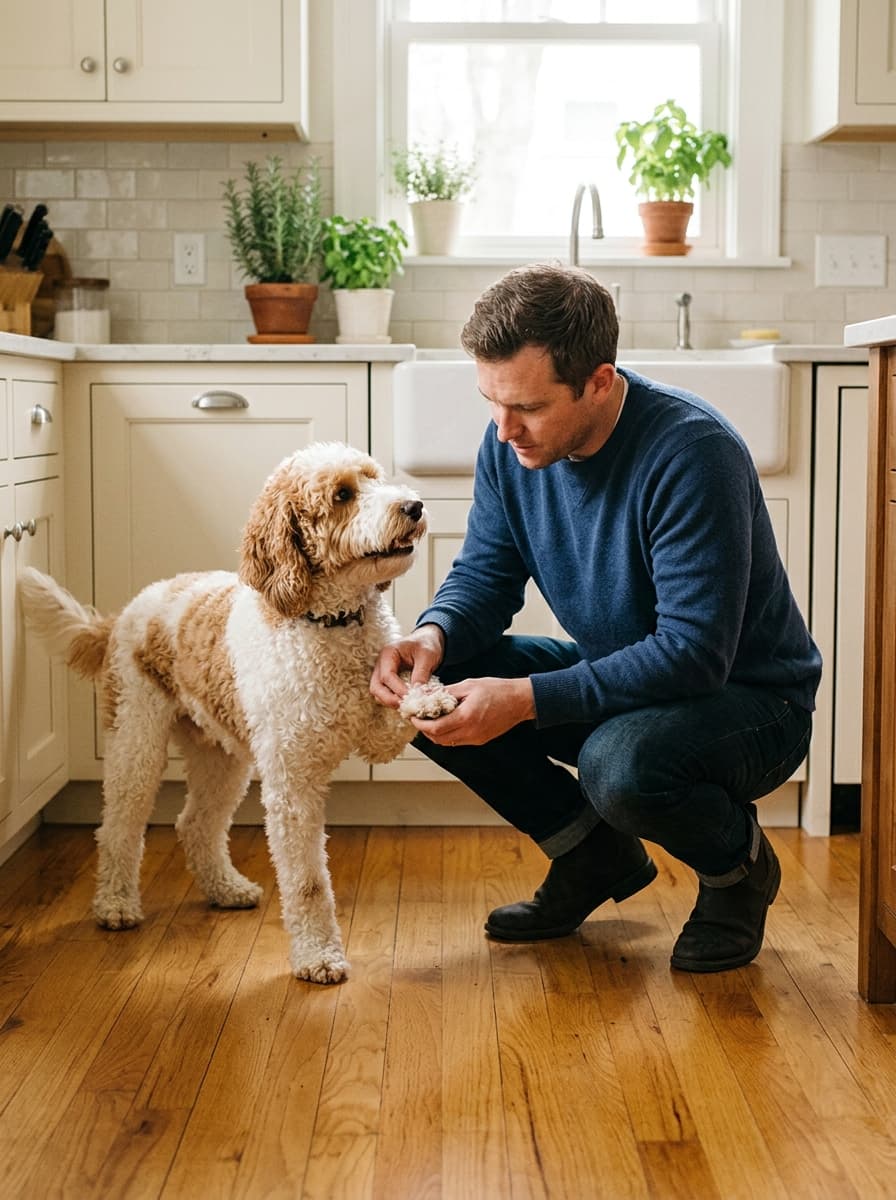
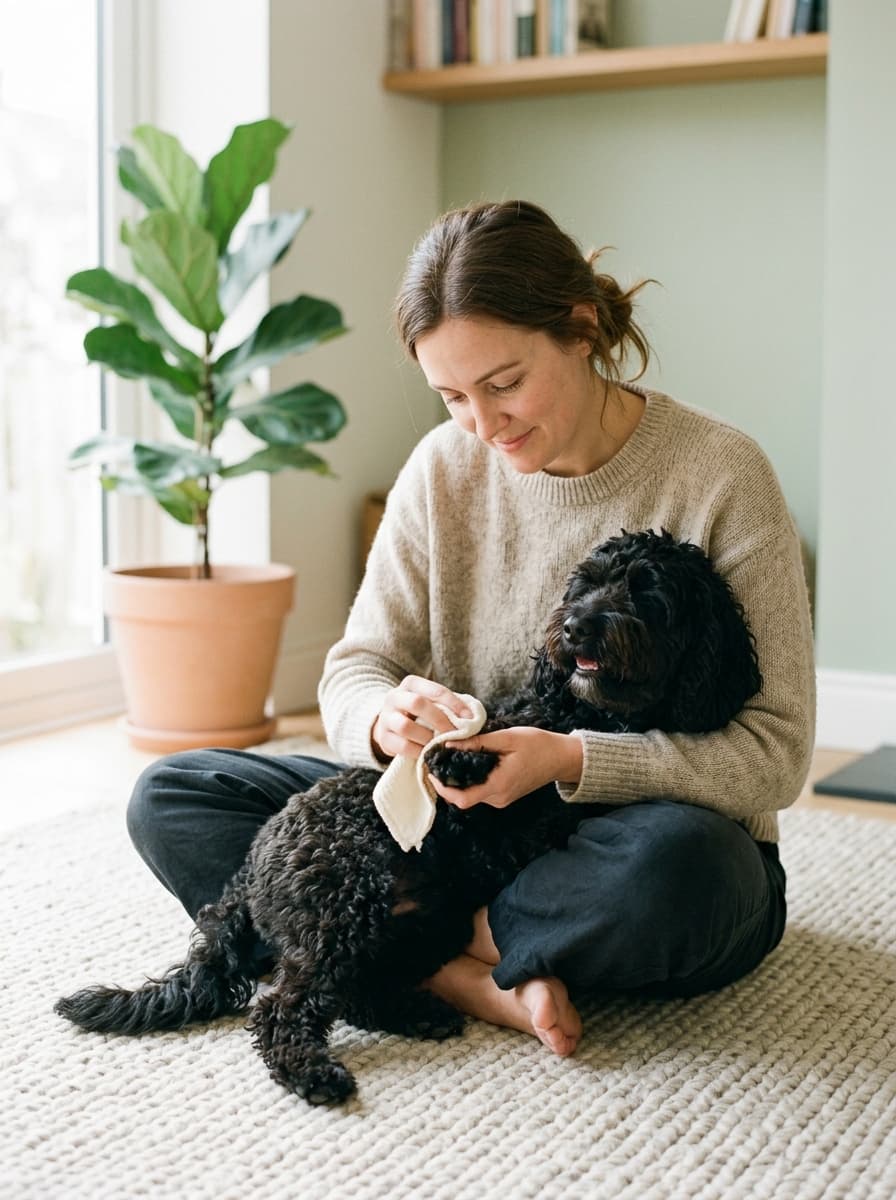
This is where doodle owners lose the battle. After soaks, walks, rain, or baths, the fur between the toes has to be dried, not left damp. We keep a stack of small towels by the door and go toe by toe. On humid days, drying is the whole ballgame.
Step 4: Wipe daily between deep cleans
Between soaks, a quick daily wipe of the paws (and between the toes) with a gentle antifungal wipe or a damp cloth followed by drying keeps the load down. For a broader routine and product picks, our Itchy Skin & Paws hub collects our approach.
Step 5: Break the licking loop
Licking keeps paws wet and feeds the cycle. Physical drying helps; so does giving your doodle something else to do. If licking is worse at night, Doodle Itchy Paws at Night covers that specific pattern.
Now fix the root cause (or it comes back)
Here's the honest part. If your doodle gets yeasty paws once, after a wet week, home care alone may fully solve it. If it keeps happening, the paws are telling you about something upstream.
Food allergies and intolerances
This is the big one for doodles. Food reactions drive skin inflammation that yeast thrives on, and the paws are a classic target zone. If your doodle also licks paws specifically after meals, that's a strong dietary clue, see Doodle Licking Paws After Eating.
Working out a food trigger takes patience and a proper elimination approach, not guesswork. Start with:
- Food Allergies in Doodles: The Complete Owner's Guide
- Elimination Diet for Doodles: A Step-by-Step Plan
- Common Food Triggers for Doodles, chicken and beef are frequent culprits
Understanding whether you're dealing with a true allergy or an intolerance also changes your plan; Food Allergy vs Food Intolerance in Doodles explains the difference.
Gut health
Skin and gut are linked. A balanced gut supports the immune regulation that keeps yeast in check, which is why chronic skin dogs often benefit from gut support. Our take on that is in Best Probiotics for Doodles with Digestive Issues.
Skin barrier support
A well-nourished skin barrier is harder for yeast to colonize. Omega-3s are the workhorse here, see Best Omega 3 for Doodle Skin Health. And if you're wondering how much diet can really move the needle, Can Diet Fix Doodle Skin Problems? is a fair, non-hype answer.
Environment and grooming
Humidity, wet walks, and even the timing of baths matter. If your doodle flares right after grooming, Doodle Scratching After Grooming covers why. And a yeast-friendly shampoo choice can undo your hard work, Best Shampoo for Itchy Doodles helps you pick one that supports rather than sabotages.
What the vet can do that you can't
Home care is powerful for mild cases, but a vet brings tools you don't have:
- Cytology, a quick skin swab under the microscope confirms whether it's yeast, bacteria, or both, so you're not guessing.
- Prescription antifungals, topical or (for severe cases) oral medication that clears deep overgrowth home products can't.
- Allergy workup, the path to identifying the real trigger, from diet trials to environmental testing.
- Ruling out other conditions, a few skin diseases mimic yeast, and some (like certain hormonal conditions) predispose to it.
If your case is recurring, the single most valuable thing a vet does is help you find the underlying driver. Chasing yeast forever is exhausting; fixing the cause ends it.
FAQ
Most owners describe it as a musty, cheesy, or "corn chip" smell, some people call it "Frito feet." A faint corn-chip odor after a walk can be normal, but a strong, persistent musty smell paired with licking, redness, or brown staining points toward Malassezia yeast overgrowth rather than just normal paw funk.
Reddish-brown or rust-colored staining on the fur between the toes usually comes from saliva (porphyrins) where your doodle has been licking and chewing. When it pairs with a musty smell and greasy skin, it strongly suggests yeast. Doodles show this easily because their light, curly paw fur traps both moisture and saliva pigment.
Mild cases often respond to home care: antifungal or antibacterial paw soaks, thorough drying between the toes, keeping paw fur trimmed short, and addressing the underlying trigger like diet. If the skin is broken, bleeding, very swollen, or the problem keeps coming back despite consistent care, that's a call-your-vet situation for proper diagnosis and medication.
It's usually both, allergies are the most common root cause, and yeast is the secondary infection that thrives on the inflamed, moist skin allergies create. You treat the yeast to get relief, but you have to address the allergy or gut trigger underneath to stop it recurring. A vet can confirm which is driving your case.
With consistent daily home care, mild yeast paws often look and smell better within one to two weeks. Deeper or recurring cases can take several weeks and may need vet-prescribed antifungals. The bigger timeline is the underlying trigger, a diet trial to rule out food allergies takes 8 to 12 weeks.
Your next step
Start today with the two easiest wins: trim the paw fur short and dry every paw, toe by toe, every time your doodle comes in wet. Those two habits alone break the moisture cycle for a lot of doodles. Layer in a gentle antifungal soak, and give it two weeks.
If it clears and stays clear, great. If it keeps coming back, and for many doodles it will until the root is addressed, the trail almost always leads to diet. Read Food Allergies in Doodles: The Complete Owner's Guide next and start thinking about what's actually feeding the fire, not just what's growing on the paws.
This article is educational and reflects our family's hands-on experience, it isn't a substitute for veterinary care. When in doubt, call your vet.